Even after the borders were marked, the songs remained
New Eastern Europe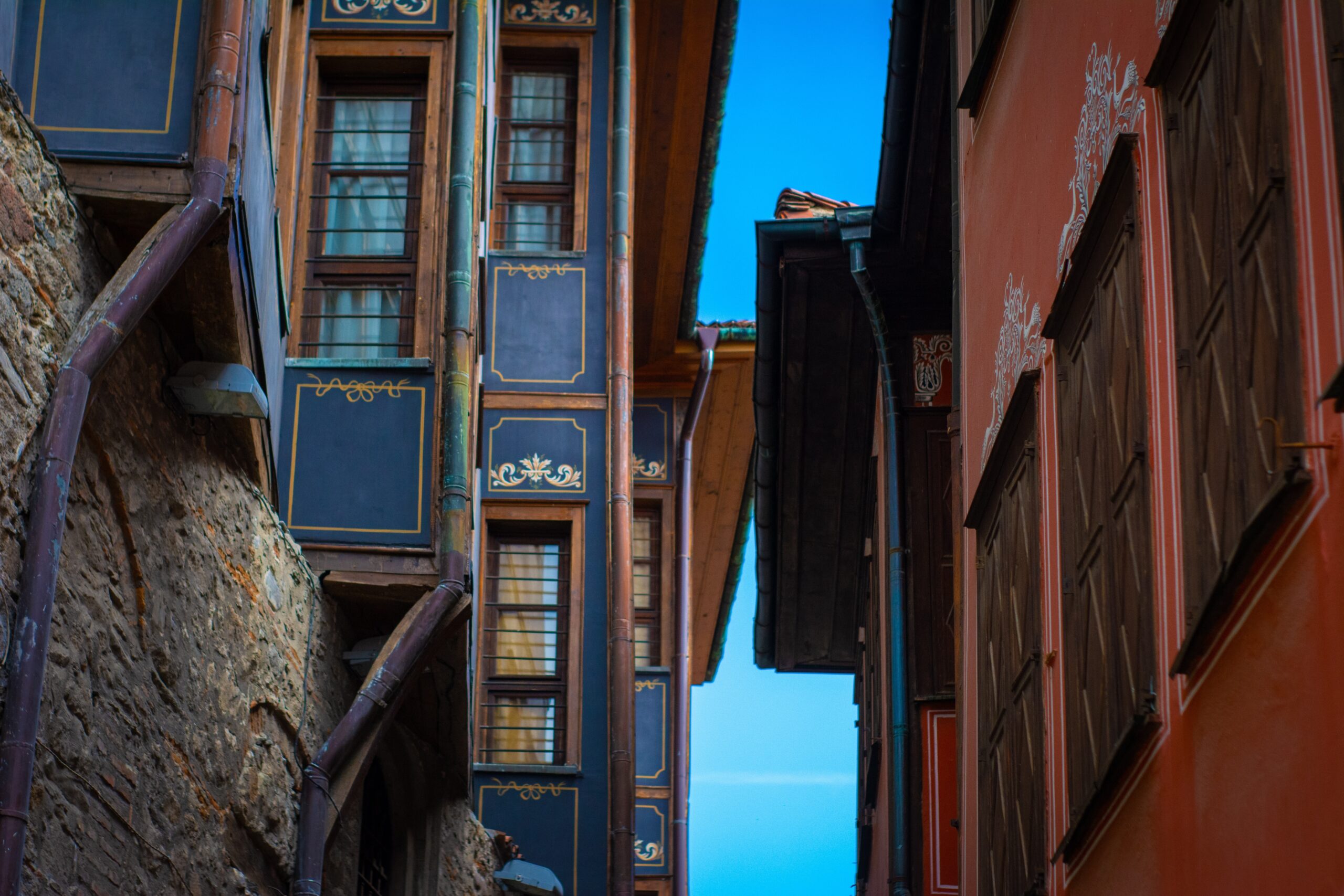
The Balkans is often thought of as an area marred by conflict and its legacy today. Despite this, a great number of cultural practices unite the varied peoples of the region. This is clear regarding many things that are part of everyday life.
At a wedding in Sarajevo, a melody rises that my grandmother would have recognized without being told its name. She never visited Bosnia. She was from somewhere I have never been — Şumen, in Bulgaria, and before that Selanik, before Selanik became Thessaloniki and the map changed beneath the family’s feet. But the melody would have been hers too. It was everyone’s, and no one’s. It existed before the borders did.
This is the quiet secret of the Balkans: the maps changed, the anthems changed, the textbooks changed — but something underneath all of it refused to be rewritten.
The separation that was not complete
The Balkan Wars of 1912–13 transformed the political map of Rumelia and the wider Balkan region. New states drew new lines across the same hills, river valleys, and market towns where Greeks, Turks, Bulgarians, Serbs, Roma, Albanians, Bosniaks and others had lived beside one another for generations. The lines were sharp. The separations were meant to be final.
What followed was not only political reorganization, but also a cultural reclassification. Each new nation-state needed a clearer story of itself, and shared layers of history were often renamed, narrowed, or selectively remembered. Music, language, cuisine, dress, and ritual were increasingly sorted into national categories.
The logic was simple: if we share too much, the borders make less sense.
But culture does not obey this logic. It never did.
The same fire
Every year, in early May, something happens across the Balkans almost simultaneously.
In Turkey it is called Hıdırellez. In Serbia and North Macedonia, Đurđevdan. In Romania, Sângiorz. In Bulgaria, Gergyovden. The names drift across languages like translations of a word that has no single origin. Bonfires are lit. Wishes are made. Branches of willow are hung on doors before dawn. Young people jump over flames. Spring is welcomed with similar gestures, in the same season, under different flags.
No one coordinated these events. No international body decided that the Balkans would share a spring ritual. It simply survived — in each country under a different name, wearing a different costume, but recognizable to anyone paying attention.
Goran Bregović’s “Ederlezi”, drawn from Romani musical tradition, made this shared ritual visible to the world. The song has been claimed by many listeners, but it cannot be reduced to a single nation. It belongs to the ritual itself, to the season, to the moment before culture was divided into ownership.
Whose börek is it anyway?
There is a particular kind of argument that happens across the Balkans, conducted in many languages, about food.
Who invented börek? Whose baklava is authentic? Does sarma belong to Turkey, Serbia, Bosnia, Bulgaria, Greece, or somewhere else entirely?
These disputes appear comic from the outside — and partly they are — but they reveal something real: everyone argues over the same dishes because everyone grew up eating them. The argument is proof of a shared inheritance, even when it tries to deny it.
The Ottoman kitchen was not the kitchen of one people. It was a culinary civilization that moved through courts, markets, villages, ports, and family kitchens. It left deep traces in the Balkans — in dough, spices, stuffed vegetables, grilled meats, sweets, and small cups of coffee drunk slowly at any hour of the day.
You can draw a border through a valley, but you cannot draw it through a recipe that has already entered thousands of homes.
The body remembers what official narratives sometimes forget.
The music that kept coming back
In many Balkan countries, there is a form of popular music that cultural elites often distrust and ordinary listeners continue to love.
Chalga in Bulgaria. Turbofolk in Serbia. Tallava in Albania and Kosovo. Manele in Romania. The names differ, but the structure often feels related: Romani rhythms, Turkish and Arabic melodic colours, local languages, electronic beats, wedding energy, heartbreak, exaggeration, humour, and longing.
Critics may call it kitsch, foreign, vulgar, or excessive. Yet people dance to it anyway.
This music is not simply foreign. It is a shared historical layer continuing to resurface through sound. When official cultural narratives tried to contain it, it often moved elsewhere — into weddings, cafés, cassette tapes, nightclubs, cars, and private memory. It returned because it had never fully disappeared.
The melody that travelled from an Istanbul tekke to a Macedonian village, from a Romani brass band to a Serbian wedding hall, did not stop at the borders drawn in 1913, 1945, or 1991. It simply continued.
What history could not undo
It would be sentimental — and wrong — to suggest that shared culture softened the violence of Balkan history. It did not. Shared songs did not prevent violence, and cultural proximity did not protect the region from tragedy. The Sarajevo siege and Srebrenica, among other wounds, remain part of the region’s difficult memory. The closeness of the region’s cultures made none of this less painful.
But here is what is also true: after the wars ended, the music came back. After borders hardened, recipes crossed them anyway. After flags were raised and anthems written, the spring ritual continued in different countries under different names, with the same fire.
Culture is not a consolation for history. It is a different kind of evidence — evidence that the separations people imposed on themselves were never as complete as the maps suggested.
The Balkans did not fully divide because some things cannot be fully divided: a melodic mode the ear recognizes before the mind can name it, a way of folding pastry dough, a shared rhythm at a wedding, a particular quality of grief in a minor key.
A region still entangled
The political borders of the Balkans are real. The wars that shaped them were real. The suffering they caused, and the memories they left behind, are real. None of this is minimized by noticing that the cultures on either side of those borders remain deeply entangled.
What this entanglement tells us is more complex than a story of simple unity or simple division. Identity in the Balkans has always been layered, multiple, and internally contradictory. A person may reject a political past while still loving a melody, a dish, or a rhythm shaped by that same history. Two families may inherit similar recipes and tell different stories about where they came from. A traveller may arrive in Thessaloniki, Skopje, Sarajevo, Plovdiv, or Prizren and feel an inexplicable familiarity — a recognition without a name.
My great-grandparents left Şumen, left Selanik, and carried something with them that had no simple name in the new language of the new country. In Turkish, we call it tanıdık — something known, something already yours before you can explain why.
The Balkans, for all its wars, borders, losses, songs, kitchens, and rituals, remains tanıdık to those who carry it.
Not because it was peaceful.
Because it was shared.
Tunacan Tuna is an Istanbul-based culture writer, journalist, radio host, and postgraduate researcher in Culture and Arts Management. His work explores cultural memory, cities, music, diaspora, museums, and the emotional afterlives of images.