For a sustainable peace, Russia must fundamentally change
New Eastern Europe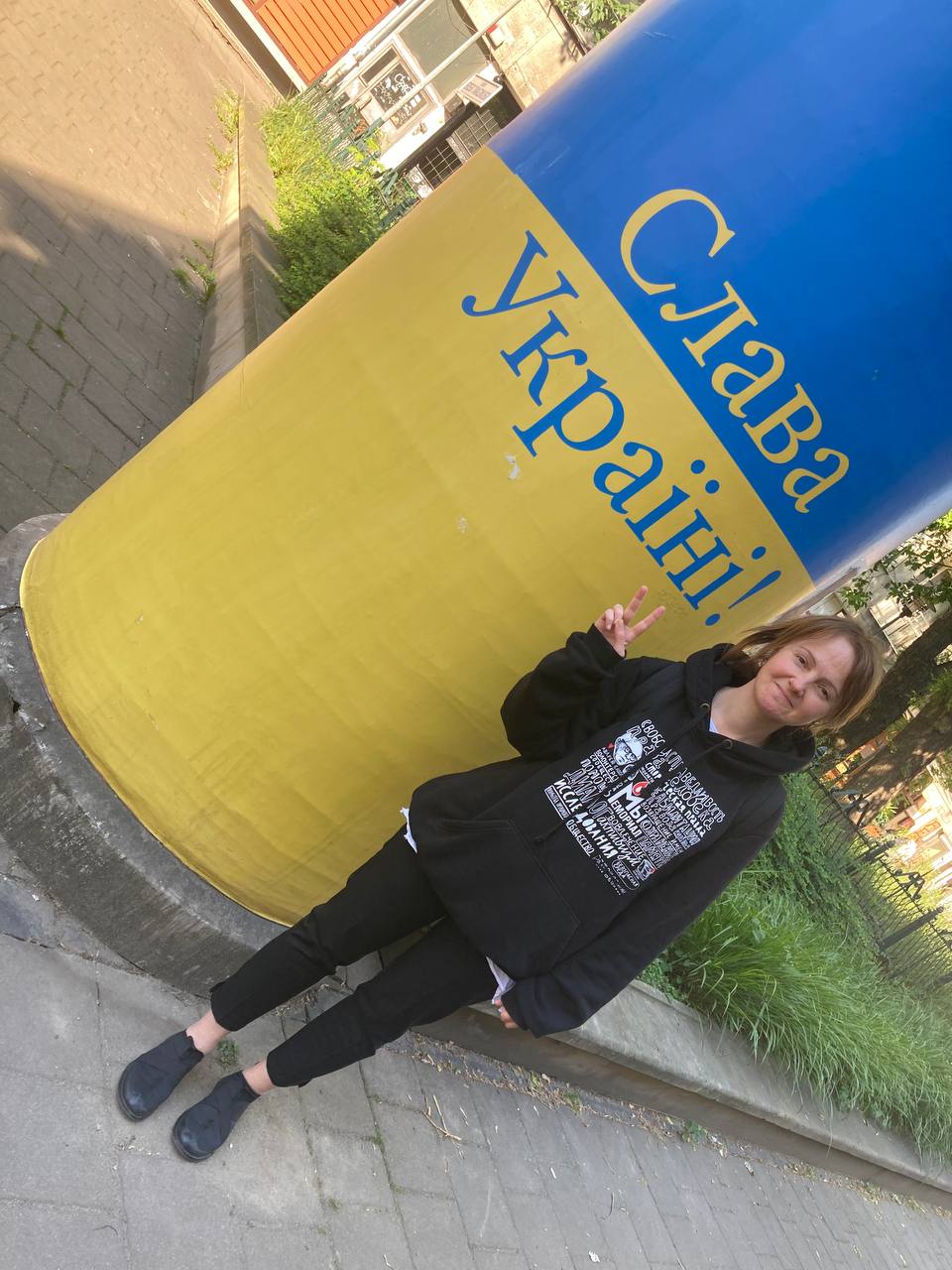
An interview with Alexandra Polivanova, a human rights activist with Memorial. Interviewer: Clara Sandgren
CLARA SANDGREN: In April 2026, your organization, Memorial, was labelled an extremist organization. How has this impacted your work?
ALEXANDRA POLIVANOVA: The events surrounding Memorial that took place in April 2026 should be understood in the broader context of the escalating persecution of Memorial and the wider crackdown on civil society in Russia over the past two decades. The systematic campaign against independent civil society organizations intensified after Vladimir Putin’s return to the presidency in 2012. However, at that stage, while organizations were increasingly restricted in their activities, they were still allowed to exist. It was only after the Bolotnaya protests when the regime introduced the “foreign agents” law, which came into force in November 2012 that the repressions intensified. In many ways, the law appeared to have been written with Memorial specifically in mind. Between 2013 and 2015, several regional branches of Memorial were added to the “foreign agents” registry. In 2016, the International Memorial network was also designated as a “foreign agent”. By 2020, nearly all the Memorial organizations operating in Russia had been blacklisted.
Starting in 2019, Memorial was subjected to a wave of court-imposed fines for allegedly violating the “foreign agents” law. This was primarily because our publications did not carry the mandatory disclaimer identifying us as a “foreign agent”. Between 2019 and 2020, the fines totalled around 70,000 euros. For NGOs, this was an enormous sum, especially as most funding is tied to specific projects and cannot be used freely. As a result, we launched a crowdfunding campaign and managed to raise enough money to pay the fines. However, by December 2021, it became clear that even this would not save the organization. The Russian justice ministry filed lawsuits seeking the liquidation of Memorial’s two largest legal entities. By 2022, both had been dissolved under Russian law. At the time, we still did not know what would happen on February 24th 2022, and therefore did not yet fully understand the reasons behind the intensifying repression against Memorial.
In 2021 and 2022, the Putin regime clearly feared that NGOs and civil society groups could mobilize opposition to the war against Ukraine. By that point, however, Russian civil society had already been so heavily stifled, marginalized and discriminated against that it was no longer capable of mounting meaningful resistance. At the same time, the regime’s fear of anti-war opposition was evident in the speed with which wartime censorship laws were introduced. It was within a week of the full-scale invasion.
Despite the dissolution of Memorial’s two largest legal entities in Russia at the start of 2022, Memorial’s work inside the country continued even after the start of the full-scale invasion on February 24th 2022…
Yes, there were still separate legal entities operating in different cities, alongside independent groups of researchers, activists and human rights defenders who chose to remain in Russia. They stayed in their communities, continued their work and served as beacons for Memorial’s values even during the darkest period of the Putin regime. There is another important context surrounding Memorial that must also be taken into account: the coexistence of different and often competing memories of Soviet terror in Russia. For many years, the state has promoted patriotic narratives that leave little room for critical reflection on the internal terror carried out by the Soviet state against its own citizens, or on the international crimes committed by the USSR – and even earlier by the Russian Empire. Naturally, the memory of the Gulag did not fit comfortably within this framework. At the same time, engagement with liberal audiences that shared Memorial’s values prevented the memory of Soviet repressions from being entirely erased from the public sphere. The authorities could hardly leave this field entirely to Memorial. As a grassroots network of associations spread across the country and operating beyond state control, Memorial represented something inherently threatening to the regime.
For this reason, the state actively supported institutions such as the State Gulag Museum, whose role was, in part, to divert liberal audiences away from Memorial’s work. The museum avoided topics such as the Molotov–Ribbentrop Pact, the Soviet invasion of Poland on September 17th 1939, the occupation of the Baltic states, the Winter War, the Katyń massacre, the post-war deportations, or the persecution of Ukrainian “nationalists” whose main “crime” was opposition to Soviet rule. These topics were absent from the museum’s narrative, unlike in Memorial’s work.
This more sanitized and carefully managed version of historical memory gained considerable acceptance within liberal circles. Beyond the Gulag Museum, regional history museums and commemorative initiatives were gradually brought under state control. For more than 30 years, the Russian state sought to construct parallel institutions and narratives that would divert public attention away from Memorial’s work. By 2026, however, the authorities no longer considered this necessary. On the one hand, the regime believed it had largely succeeded in dismantling independent civil society. On the other, it remained deeply fearful of any autonomous civic activity and therefore abandoned even its limited effort to engage the liberal audiences that had traditionally supported Memorial.
Can you explain what specifically happened in 2026?
In February 2026, two of Memorial’s exile organizations were designated as “undesirable”, effectively severing the remaining connections between activists inside Russia and those working in Europe. Then, in April, Memorial was declared an “extremist movement whose activities are prohibited in Russia”. This was a devastating blow to our work. For four years, Memorial had managed – remarkably – to bridge the divide between the part of civil society that remained inside Russia and the exiled community working in Europe. Memorial operated on both sides of this new “Iron Curtain”, with these interconnected networks supporting one another through shared expertise, resources and solidarity. Now that connection has been completely severed. Memorial can no longer operate in Russia in any form. The Putin regime has systematically targeted every chain of solidarity, whether real or merely perceived. What we are witnessing now is the deliberate destruction of ties between people associated with Memorial inside Russia and those living in free countries. This means that we now have even more reason to continue fighting for the day when Memorial can once again become whole.
What would you say is the most urgent task facing Memorial today?
As a part of Russian civil society, Memorial now faces the enormous challenge of shaping a new political culture – one capable of redefining Russia’s relationship to war and answering the fundamental question of what Russia is. How can this country overcome the imperial and aggressive impulses within itself and become a democratic state – or perhaps several states – that are safe for both their citizens and their neighbours? We are confronted with the immense task of reckoning with an aggressive war, a reality from which Russian society will never be able to escape. We must find a language with which to speak about the war and, ultimately, about ourselves. What is Russian civil society? Who are “Russians” today? We must find a way to confront the fact that a vast number of our fellow citizens are participating in the daily killing of Ukrainian civilians.
To claim that “we” are not “them” is, in many ways, an attempt to evade responsibility. Unfortunately, we are them. There is no separate “us”. That is why I see Memorial’s task as taking an active role in helping society identify its blind spots, confront issues it has long ignored, and expose the forms of violence that remain invisible or normalized.
Memorial’s perspective and expertise in the history of Soviet repression allow us to better understand the mechanisms behind today’s war. At the same time, the dynamics of the current war – which we witness every day – can also help illuminate many aspects of the past. The full-scale war in Ukraine forces Russian society to confront questions far deeper than the war itself: How did this war become possible in the first place? Did the Soviet empire actually collapse, or did it simply morph into a new Russian empire? To what extent does internal violence follow external violence? To what extent are imperial notions ingrained not only in the Russian state but also in Russian society? Does the “Russian Federation” even exist, or is our federation merely an illusion? What is the Russian language? Is it always and unconditionally a language of violence, or can we still overcome violence and make it a language of respect for others? And what can we as a society do to fundamentally change and guarantee to our neighbours and citizens of Russia that the past will not be repeated, and that there will be a new social consensus in the country and security in the region? Identifying these questions, making society face them, and discovering a new language to articulate the answers is likely the main challenge facing Russian society.
Looking at the situation of human rights defenders in Russia, we can see that almost all legal pathways are now blocked. Given that, where would you say the work of civil rights defenders in Russia even begins today?
The main task of human rights defenders is to seek justice – not an abstract justice, but in specific cases, for each individual person and family. Documenting every single crime, all the details, and all those responsible serves the purpose of eventually achieving that justice. It will need to be sought at various levels: in Ukrainian jurisdiction, in international jurisdiction, and, I hope, in Russian jurisdiction. This is what Russian society needs the most. Every Russian citizen who has participated in war crimes must be held accountable in proportion to their responsibility. I think the most meaningful action people can take right now is to help Ukraine win. In this regard, the support from the EU and other countries is crucial and important, but it will be very difficult to defeat Putin’s regime without support from Russian civil society. Human rights defenders are not politicians, but they can be agents of future change. By organizing and structuring the documentation of human rights violations, they can make sure society remembers them and how a just world ought to function. Even after Ukraine’s victory, it will remain a neighbouring country to Russia. For a sustainable peace, Russia must fundamentally change. While external measures will have some effect, there is internal work within society that no one will do for us. This is where civil society organizations play a huge role, and this work must be done not later, but now, including at the legal level.
The war against Ukraine is now in its fifth year. As Russia’s aggression continues, do you think achieving a just peace is possible?
As an activist with a human rights perspective, it is natural for me to defend ideals and, to some extent, utopian values. Full respect for human rights is a utopia; no country has achieved it perfectly, though some have made more progress than others. In this sense, I will undoubtedly always defend the idea of a just peace for Ukraine and do everything in my power to strive for it. However, I fully understand that defending the idea of a just peace comes at a very high cost, paid not by me personally but by the Ukrainians who are losing their lives. And I understand that for Ukraine and its allies, the most critical issue is not territory, but saving human lives, whereas for Putin’s regime, the value of a human life is zero.
It is important to remember for everyone supporting Ukraine that the temporarily occupied territories are not a matter of geography – they are a matter of people. Not everyone can leave, and the people in those territories are currently hostages of Putin. Since 2014, Russian security forces have been arresting people in Crimea and in the Donetsk and Luhansk regions. There are currently thousands of civilian prisoners from the occupied regions of Ukraine being held in Russia. We must remember these people when agreeing to temporary concessions in the name of saving lives. Peace with hostages is not true peace.
In your view, what specific conditions should the international community demand when dealing with Russia?
I believe it is crucial to closely monitor all of Russia’s crimes. Every crime must be thoroughly examined and investigated at both the legal and political level – it must not be allowed to slip from our view. We cannot simply turn a blind eye to crimes as if it is something insignificant. We must strive for a complete regime change and refuse to make concessions or compromises. If compromises are made to save lives, they must always be recognized explicitly as temporary measures. Under no circumstances should we normalize concessions or accept crimes as the status quo.
It is often said that Russia cannot become a democracy as long as it keeps its self-image as an empire. What does Russia need to undergo to free itself from the authoritarian, even totalitarian, system it is being wrapped into now?
This is the most difficult question, and I think there are many answers here. But I believe that one of the more important aspects relates to the mythology surrounding the Second World War. The years 1943-45 marked a complex historical juncture that allowed two empires – the United States and the Soviet Union – to rise to immense power. Stalin’s USSR became more powerful after the Second World War than it had been before it, and unfortunately, Europe and the US bear a great deal of responsibility for this. They simply handed over most of Central and Eastern Europe to Stalin’s sphere of influence. During the Soviet years there were still people alive who remembered how catastrophic the war had been, but under the Russian Federation this memory solidified into a myth of “victory”. To ensure that this victory would not have to be shared, the Kremlin systematically labelled all other nations that fought the totalitarian regime as “nationalists”, “Nazis”, or “collaborators”. This applied both to large groups of deported peoples, such as the Kalmyks, Ingush, Chechens, Crimean Tatars, and others, but also to the Latvians, Estonians, Lithuanians, and Ukrainians, who fought for their own sovereignty against the USSR.
Through this erasure, a victory achieved by tremendous inter-ethnic and international effort was appropriated by the Russians in Russia. This mystification allowed Russians to develop, whether consciously or subconsciously, a sense of dominance and an imperial self-image, which in turn helped construct the myth justifying the aggression against Ukraine. Therefore, we need Ukraine not only to win and survive, but we also need Ukraine, its allies, the colonized peoples of Russia, and its neighbouring nations, to liberate the memory of the Second World War from Russian occupation. For it is precisely on the shards of this “victory” that Russian imperial narratives and the justification for the war in Ukraine are built.
After the Second World War, Germany, under strong international pressure, underwent a process of denazification. It included, among other things, public apologies for the crimes committed. Do you see such a process ever taking place in Russia? Is Russia able to undergo “deputinization”?
The ultimate success of this process in Germany is still in doubt. For many years, it seemed that Germany was a model example of Aufarbeitung (the process of coming to terms with the crimes of the past), driven both by Allied pressure and German civil society, which asked many questions and initiated various practices of denazification. However, the rise of right-wing parties and extreme sentiments in recent years raises questions of how deep that critical reflection actually went. I think that while external pressure is extremely important – and in the Russian case, this would be pressure from Ukraine – internal pressure is even more effective. And this is precisely where the responsibility of civil society organizations and Russian activists lies: to bring these issues to light and articulate them.
So how can Russian civil society be empowered to lead the transition to a more democratic system from within?
That is a great question, and if anyone had the answer, we might already be living in a different reality! Unfortunately, it seems that no one really knows. Look at Alexey Navalny – he sacrificed his life to empower Russian civil society, and even that did not break the system. At least not yet. Since we do not know exactly what will spark success, I think it’s important to support every effort and believe that at least one of them will work. Crimes are committed in the dark; we must constantly shine a light on the places where crimes are being committed against those who resist. And we must see even the most fragile attempts of the resistance.
Alexandra Polivanova has been a human rights activist with Memorial since 2012; she worked in Moscow until 2023 and has been living in Poland since 2023. Memorial is an international network of organizations dedicated to preserving the memory of and documenting the crimes of the Soviet Union and modern-day Russia.
Clara Sandgren is a social scientist and linguist specialising in Russia and Eastern Europe. She is currently a student at the Central and Eastern European, Russian, and Eurasian Studies International Masters Erasmus Mundus programme (CEERES) and an editorial intern at New Eastern Europe.