Green Report Gala 2025 shows where the green transition is happening
Green Report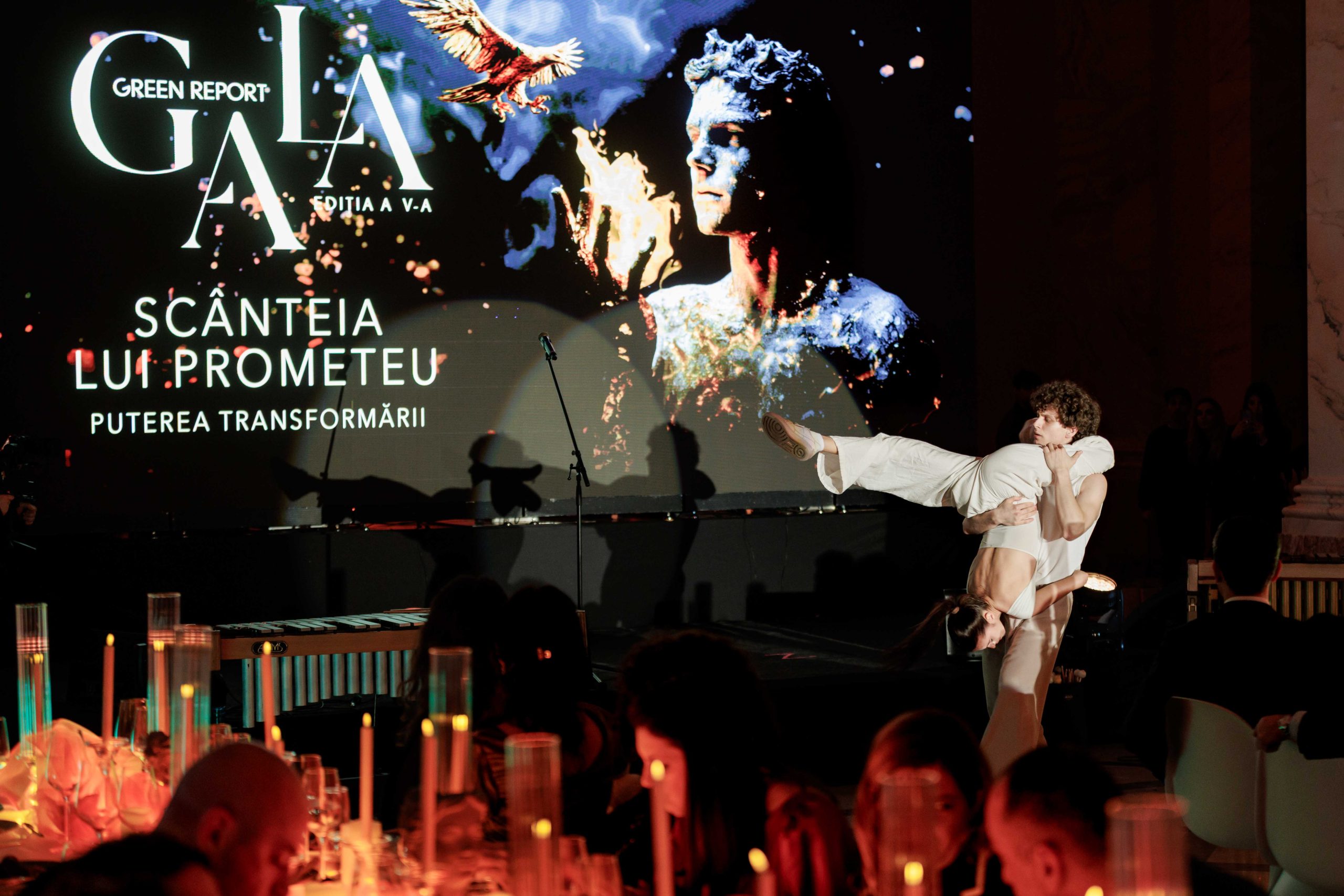
The green transition is becoming a reality, but how prepared are the projects for systemic impact? How can technology and innovation shape a sustainable future, in the context of climate and economic pressures? Discover the most important awarded initiatives in Romania and their challenges.
Billions of packages reintegrated into the economy, industrial technologies that reduce critical risks, public and private projects with clear impact indicators. The Green Report 2025 Gala, held on January 22, awarded initiatives implemented in Romania that turn sustainability into functional infrastructure.
The fifth edition of Green Report Gala arrived at a time when the green transition can no longer be evaluated through promises.
The awarded projects were analyzed based on results, scalability, and their capacity to produce long-term change.
The theme of the edition, "Prometheus's Spark", emphasized the responsibility in using technology and resources within a context of climate and economic pressure.
Message of the edition. Power requires discernment
Green Report founder Raluca Fișer spoke about the meaning of this year's theme.
“Prometheus brought fire to humans, a symbol of progress but also of risk. Today, we hold a similar power: technology, innovation, and the ability to shape the future. The question is whether we use this power to build a sustainable future or let it get out of control,” said Raluca Fișer.
From a public policy perspective, Environment Minister Diana Buzoianu highlighted the need to shift from reaction to planning.
“Romania can no longer make environmental policies with yesterday's tools. Adapting to climate change means risk management, digitalization, and data-driven decisions,” said Diana Buzoianu.
Judging panel members and evaluation mechanism
The fifth edition of the Green Report Gala was evaluated by a multidisciplinary jury, composed of experts with experience in sustainability, economics, energy, taxation, strategy, and circular economy.
The jury's composition was designed to reflect the complexity of the green transition and to evaluate projects beyond immediate impact, based on their capacity to build functional and sustainable systems.
For Ramona Jurubiță, KPMG Country Managing Partner, the context in which the projects were analyzed was marked by a structural change.
“Climate risks can no longer be viewed as external variables or handled reactively; they have become immediate operational and financial risks,” explained Ramona Jurubiță, emphasizing that sustainability is no longer a compliance issue, but one of economic continuity and natural capital management.
The same evolution was observed by Andreea Mitiriță, PWC Romania partner, who has been part of the Green Report Gala jury for three years.
She noted the maturing of submitted initiatives, “from bold initiatives to mature solutions relevant to our society,” appreciating the fact that sustainability is beginning to be treated as a strategic direction, not as an isolated exercise.
From an energy and industrial transformation perspective, Ovidiu Popescu, Deloitte Romania partner, highlighted a clear paradigm shift.
“Innovation and investments are gradually shifting from point projects with limited impact to integrated, scalable, and replicable smart solutions,” said Ovidiu Popescu, emphasizing the importance of projects capable of generating systemic effects.
For Raluca Popa, Tax Partner at EY Romania, the rigor of the evaluation process was essential.
“The project judging was based on distinct criteria for each award category, agreed upon by all jury members,” explained Raluca Popa, noting that the goal was comparability and clarity of evaluation, regardless of the project domain.
The foresight dimension was brought into the jury by Diana Stafie, Founder and Foresight Strategist at Future Station, who evaluated projects from the perspective of future preparedness.
In her view, “projects that build the infrastructure of the future are those that treat sustainability as a long-term investment, not as a momentary exercise,” with resilience and adaptability being key.
Similarly, Marius Brînzea, Strategy Director at Recilcad'or, pointed out the difference between point interventions and systemic impact.
“Projects with systemic impact require time, resources, and a vision that surpasses short-term decision cycles,” explained Marius Brînzea, emphasizing the importance of continuity and long-term building.
Judging mechanism
The judging process was structured in two stages.
In the first phase, each jury member independently evaluated the submitted projects based on specific criteria for each category, assigning scores from 1 to 10.
In the final stage, jury members justified their scores to ensure a coherent and transparent evaluation of each project.
The projects with the highest combined scores were declared winners, and where the competition level was very high, the jury decided to award multiple prizes.
The winners of the Green Report 2025 Gala
- Veolia Romania - Excellence in energy efficiency;
- TechBolide - Excellence in environmental innovation;
- GreenWEEE International - Excellence in environmental innovation;
- Reșița Municipality - Excellence in public administration;
- Decathlon Romania - Excellence in ;
- French Chamber of Commerce, Industry, and Agriculture in Romania - Excellence in environmental education;
- HEINEKEN Romania - Excellence in managing water consumption;
- Blue - Excellence in sustainable transport;
- Enten Systems - Excellence in agri-food;
- Locus Association - Excellence in natural heritage conservation projects;
- Let’s Do It, Romania! - Excellence in environmental education.
Who were the candidates for the excellence awards
Excellence in environmental innovation
Olympus Foods Romania submitted the new logistics center and High Bay refrigerated warehouse at the Brașov dairy factory, inaugurated in 2024, a €40 million+ investment.
The warehouse stores over 32,000 pallets, has a footprint six times smaller, reduces refrigeration energy by 20-25%, and emissions by approximately 500 tons of CO2/year.
Divanul Verde supported six tourism businesses, obtaining five EU Ecolabel certifications and a Travelife certification. Measures reduced water consumption by 5-10%, energy by 10-15%, avoided 10-20 tons of CO2/year per location, and diverted about 25% of waste from landfilling.
GreenWEEE International submitted GRINNER, an industrial system that detects lithium-ion batteries in WEEE with 99% accuracy, processes 4.5-5 tons/hour, and reduces fire risk by about 90%.
The project, validated in Buzău, is funded through Horizon Europe and has a return on investment under 3 years.
TechBolide participated with the platform for smart eco-islands PNRR, integrating over 4,000 points and recording 4.6 million collections and 75,000 active users.
The system optimizes routes, reduces costs and emissions, and ensures traceability via Power BI.
Genesis BioPartner transforms biodegradable waste into energy and fertilizers through anaerobic digestion, reducing emissions by about 80,000 tons of CO2/year.
Processes are fully traceable and audited via ISCC EU and ISCC PLUS.
Group Șerban Holding applies regenerative agriculture on approximately 10,500 hectares, with 2,378 tons of CO2 captured or avoided, certified by Agreena.
In 2024, it valorized 97% of waste, installed 250 kWp photovoltaic systems, and reduced water consumption through modern irrigation on about 2,500 hectares.
Ecoteca Association submitted the nuebine.ro platform, launched in 2024, with over 1,500 unique visitors and about 20 verified and forwarded reports to authorities.
Data is public and supports evidence-based interventions.
SGS Romania competed with IMPACT NOW, an integrated framework for climate, circularity, nature, and ESG assurance, supporting companies in evaluating and managing environmental impact.
Alliance for Forests Association proposed the Izvor Park project, with a management guide for sustainable urban parks based on scientific data and participatory planning.
Romanian Landscape Architects Association developed Green Register, expanded to 28 locations, with 1,514 direct beneficiaries and 42,567 indirect ones, for inventorying and monitoring urban green spaces.
Agricola International demonstrated through a pilot project that about 30% of the drinking water of a slaughterhouse processing 100,000 chickens/day can be replaced with reused purified water, equivalent to the monthly consumption of about 1,300 people.
Excellence in circular economy
RetuRO collected 7.5 billion packages and sent over 522,000 tons of PET, glass, and aluminum for recycling.
Collection rates exceeded 80%, peaking at 94%, and 93-96% of packages effectively entered recycling through a network of nine regional centers.
Group Șerban Holding achieved a waste valorization rate of 97% in 2024, recycling 16.5 tons of plastic and 13.2 tons of paper and cardboard.
The model is supported by photovoltaic systems (250 kWp) and certified by Agreena for 2,378 tons of CO2 captured or avoided.
Genesis BioPartner transforms biodegradable waste into energy and agricultural fertilizers, reducing emissions by over 80,000 tons of CO2/year.
Processes are fully traceable and audited via ISCC EU and ISCC PLUS.
Decathlon Romania operates repair workshops in all stores and a 1,000 m2 hub.
In 2025, 60% of sold skis and 18% of bicycles came from reconditioning flows, with a reparability rate of 74%.
Auchan Food Collection Program, active since 2019, operates in 43 stores.
By August 2025, over 1.6 million liters were collected, avoiding pollution of 1.6 trillion liters of water and approximately 2.3 kg CO2/liter emissions.
DGASMB - “Loved Again” - recovers and reconditions plush toys involving over 60 seniors.
By the end of 2025, the project aims to save at least 1,000 toys from waste.
Second DGASMB project collects and redistributes over 12 tons of goods annually, extending product lifespan and reducing the need for new resources.
FINAQUA recycles 400-500 kg of filters every 1-2 months and eliminates over 1 million PET bottles/year through filtration systems installed in households, offices, and HoReCa.
Excellence in agri-food
Enten Systems digitized vegetable farms with weather stations and the “Plant-as-a-Sensor” platform.
On a sample of 50 farmers, the solution saved approximately 350,000 m3 of water, reduced pesticides by 30%, increased yields by up to 200%, and reduced transport emissions by up to 40% through real-time traceability data.
Group Șerban Holding works on over 10,500 hectares in regenerative agriculture (no-till, cover crops), certified by Agreena for 2,378 tons of CO2 captured or avoided.
Precision irrigation on about 2,500 hectares reduces water consumption by 25-40%, and the integrated agri-food chain reported zero major food safety incidents in the last 5 years.
PepsiCo submitted a regenerative agriculture program conducted on 20 hectares over five years, in partnership with Romanian potato farmers.
In the second year, the pilot farm achieved net-zero emissions, with increased production, all monitored digitally via CropTrak and externally audited.
Auchan Retail Romania has been developing since 2019 the “Filierele Auchan” program, including 100 supply chains with Romanian products, many certified by GlobalG.A.P.
The model ensures full traceability, reduces water, energy, and pesticide use, and offers farmers stable partnerships and predictable prices for long-term investments.
Excellence in environmental education
Art Mirror represented Romania at the London Design Biennale 2025 with art and circular economy projects.
In its workshops, 50 people with disabilities reused 10 kg of cork stoppers, and waste-based installations were exhibited for a month in Cluj, using digital art for climate education.
Let’s Do It, Romania - #Doers School involved in 2025, 40 schools from 23 counties, with 8,200 students and 430 teachers, in over 150 local activities.
The program transforms schools into civic laboratories for environmental education, with transparent annual reporting.
Ecoteca Association - ECO School is Romania’s first platform that transforms environmental data from schools into measurable indicators.
In 2024, 76 schools generated public “ECO scores,” used to guide investments in green infrastructure.
Ecoteca Association - ECO Student Project installed RVM machines in 4 universities, collecting over 70,000 packages in 6 months from 47,000 students.
Vouchers are used in canteen networks and stores, integrating circular economy into campus life.
French Chamber of Commerce, Industry, and Agriculture in Romania - “Plant the CCIFER Forest” mobilized employees from over 100 companies, resulting in 23,000 trees planted and approximately 876 tons of CO2 offset.
The program links sports, environmental education, and reforestation, with clear impact indicators.
Future Forest Foundation - “The Forest in the Schoolyard” created Miyawaki mini-forests in 3 localities in 2024, with 950 saplings and over 100 students involved.
In 2025, the project expands with 1,400 saplings in a special school in Bucharest.
Social Mobility and Democratic Education Association - EcoFashion involved 370 direct beneficiaries, including 350 students, in activities related to ecology, biodiversity, and protected areas.
The project included 2 cleanup actions and non-formal workshops in the Turda Gorges.
Social Mobility and Democratic Education Association - EcoVenture created Action Groups for Environment in schools, involving 844 students and 21 teachers.
Over 40 activities were carried out, and the GAM structures continue functioning after funding ends.
DS Smith Recycling Romania - “Experience Room” transforms the recycling depot in Ștefănești into a sensory educational space.
Over 500 visitors have already participated, and the concept will be extended to Timișoara.
Civic Arieș Association - “Corner of the Forest” transformed a 65 m2 school garden into a living ecological education laboratory.
The project involved 500 students, 50 young mentors, and 40 teachers and parents.
Civic Arieș Association - EcoVibe involved 891 students and 15 teachers from Cluj-Napoca, with two Green School Festivals and outdoor classroom equipment.
The project is part of a long-term educational strategy.
Civic Arieș Association - Arieș EcoEscape developed an educational “escape room” game, tested with 135 young people and used in 12 educational sessions.
The tool is replicable in any school, including during Green Week.
The Da Vinci System Association - Forest BirdBox organized 40 workshops in 4 schools, involving over 1,000 students who built 50 birdhouses from reused wood.
The project includes educational guides used later by teachers.
The Da Vinci System Association – Arieș EcoLab involved 1,102 students and 49 teachers in 4 EcoTech laboratories, using 55 EcoKits Arduino.
20 students became environmental leaders and proposed 4 school policies.
The Da Vinci System Association - Arieș Ecological Laboratory. In 11 months, 1,033 students participated in over 150 activities in 3 fully equipped ecology laboratories.
The project included 4 science fairs and local mentor networks.
Environ Association - “Baterel, the Recycling Hero” involved 3,000 schools and 250,000 children over 14 editions, collecting approximately 520 tons of waste.
The program is a national benchmark in EEE and battery education.
Ecoteca Association - Environmental Library centralizes over 5,500 resources and has about 800 unique visitors monthly.
The platform is used by students, teachers, authorities, and companies for ecological literacy.
World Vision Romania / PepsiCo - “I Want to Enter 9th Grade” supported 90 rural students, with a total budget of USD 560,000 since 2021.
From 2025, the program includes education in sustainable agriculture and environment.
University of Bucharest - Țara Hațegului Geopark. EduGeoparc Network involved between 2015-2025, 15,000 students, 600 teachers, and 400 volunteers.
The projects include citizen science and applied climate education.
Tășuleasa Social Foundation - “Good Day on Via Transilvanica” mobilized in 2024, 3,400 people, 84 schools, and 151 groups along a route of approximately 1,600 km.
It is the largest simultaneous cleanup action along the route.
Potaissa Art Association - Green Generation involved 634 students and 30 teachers, modernizing two biology laboratories.
The project systematically works on 16 environmental themes.
Potaissa Art Association - EcoEdu involved 510 students and over 2,000 indirect beneficiaries, with 80% of participants reporting behavioral changes.
The project produced 7 digital brochures and over 40 media materials.
Pachamama Romania - “Be Part of the Change” reached approximately 8,000 students and teachers in 40 schools.
The program is supported by Roșia Montană Marathon, which generates over €25,000 per locality per year.
Romanian Banking Institute (IBR) trained over 1,100 participants through 21 ESG courses, including CESGA certification.
Through the MiCreS project, it develops European micro-credits in sustainable finance.
Șolea Mihai Florin - The volume “Municipal Waste” (2021) was printed in 500 copies and is used as a didactic support at UPB.
It introduces operational indicators for PAYT and Eurostat reporting.
Merci Charity Boutique Association - Economic Empowerment Project was implemented in 14 high schools, with 500 students and 20 teachers.
The project integrates sustainability and circular economy into high school curricula.
EFdeN - European Institute for Sustainability - developed TechnoBuild 4.0, a project awarded a €50,000 grant, with a pilot implemented in a technical high school.
The program develops skills for sustainable construction.
ADI ECO Buzău 2009 - “Junior Reciclării” involved 54 schools, 2,924 students, and 463 teachers, collecting 68.9 tons of recyclable waste.
The project is designed as an annual county-level program.
Orbán Balázs Middle School - Service learning projects involved over 1,200 beneficiaries, with local planting, composting, and ecological cleanup activities.
The impact is visible in the school-community relationship.
Maspex Romania - “Tedi and Nature’s Friends” involved 83,800 children and 3,844 teachers over 3 years, through free educational materials for preschoolers.
SALUBRIS SA - “We Educate, Create, Innovate, and Protect the Environment” program involved 1,000 students, collected over 2 tons of waste, and increased knowledge of separate collection from 40% to 80%.
Academy of Scientists - Environmental Almanac has been published annually since 2009 and is used as an ecological literacy tool by students and university students.
Imprim Center Total - Univers3D involved over 300 children in STEM workshops with PLA bioplastic, combining 3D printing with environmental education.
Bigger Picture - Interactive exhibition măBUCURcăEȘTI had over 5,000 child visitors, 52 schools, and over 150 teachers, mainly using recycled materials.
School No. 1 Orășeni Deal - “Forest Club” involved 250 students and 50 parents, developing the educational infrastructure “Poteca Teilor,” open to the public.
Excellence in environmental campaigns
Let’s Do It, Romania! - National Cleanup Day became an official event by law starting in 2025.
The 2025 edition mobilized 270,000 volunteers and collected 427,000 bags of waste, bringing the total to 2.9 million participants and 3.5 million bags since 2009.
Lidl Romania - “With Clean Waters” Program funded 13 NGOs in 2023 with nearly 2 million lei, collecting 164,576 kg of waste, including 23,378 kg of plastic.
The initiatives involved 26,889 direct beneficiaries and over 220,000 indirect ones, across all major river basins.
DS Smith Recycling Romania - “Experience Room” transforms the recycling depot in Ștefănești into a permanent educational space.
In the pilot phase, over 500 visitors from 15 schools participated, with 95% rating the experience as very relevant; the project will be extended to Timișoara.
Social Mobility and Democratic Education Association - EcoFluencer involved 1,057 students and trained 25 teachers, ensuring the integration of environmental education in schools.
20 students became content creators, and the digital campaign reached over 10,000 people, with measurable behavior changes.
Pastel Association - “Refresh Program” reached its 6.0 edition in 2025, with recurring cleanup actions in key natural areas.
Over six editions, more than 12 tons of waste were collected, involving over 500 volunteers and thousands of indirect beneficiaries.
Alucro Association - Every Can Counts, present in 21 countries, promotes aluminum can recycling through art and education.
In Romania, the recycling rate increased from 35% in 2022 to 74-78% in 2025, with better results in counties where campaigns are recurring.
Romanian Food Banks Federation - “The Art of Not Wasting Anything”, held at Art Safari in 2025, combined immersive art with education about food waste.
The campaign had over 2,000 participants at the opening, media reach of 1.3 million, 900,000 people reached via Edenred, and 571 completed questionnaires.
Environ Association - COMUNIDAR, “urban guide” of the circular economy, was implemented in 11 communities and office buildings, with 15,000 visitors and 7,500 reused objects.
The estimated impact is 565 tons of CO2 avoided, and the model is replicable in companies and neighborhoods.