Paula Herlo shows how journalistic investigations change laws and systems
Green Report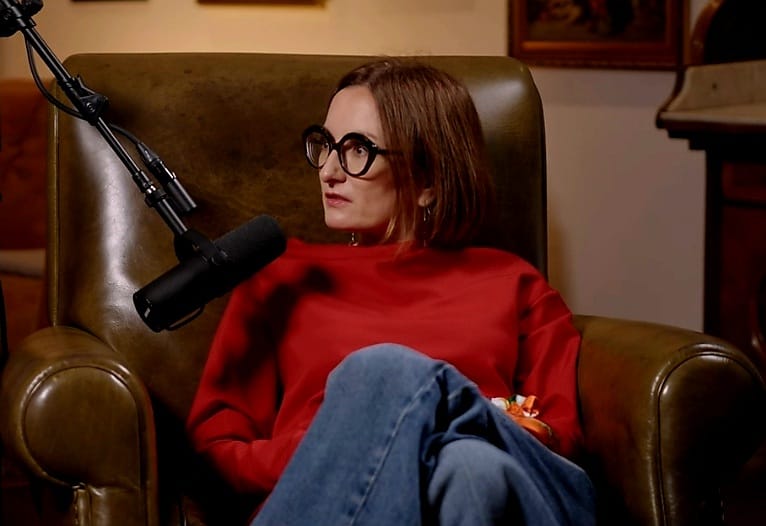
From overlooked incidents and details, investigations arise that shake institutions and change rules.
In the Green Report podcast - The Simple Guide to Becoming an Active Citizen, host Raluca Fișer discusses with Paula Herlo about investigations that have led to changed laws, shaken institutions, and real public pressure.
Investigations do not arise from theoretical plans, but from timely questions and the refusal to give up.
In a direct dialogue, Paula Herlo explains that investigative journalism means returning, solid documentation, and the ability to follow the consequences, even when the stakes become uncomfortable for those in power.
How did Paula Herlo get into investigative journalism
For Paula Herlo, investigative journalism was not an initial choice. She did not enter the press with the idea of making investigations or exposing corrupt systems.
The direction gradually took shape, from fieldwork and the need to tell broader stories.
A key moment was the campaign "Do you know what your child is still doing?", produced at Pro TV, about children left at home with parents working abroad.
The material was awarded an Emmy, a week before the launch of the show "Romania, I Love You!".
At that time, no one on the team had planned to do investigative journalism.
The show started as a space for longer reports. Topics that, in the news bulletin, did not have time to be developed.
Social reports, environmental campaigns, materials about vulnerable children and the healthcare system.
The investigation appeared later, with experience and taking on more uncomfortable questions.
Paula Herlo says that it took time and courage. Initially, direct confrontation with authorities was difficult.
The idea of entering a mayor's office and asking uncomfortable questions was met with much restraint.
Today, things are different. Public exposure and constant exercise have changed the power balance, and confrontation has become part of the profession.
Investigative journalism, in her case, was not a declared intention, but the result of a course. Of reports that required more context and threads that, once caught, could no longer be left behind.
How do you know you've reached a sensitive point
For Paula Herlo, the moment when you are no longer wanted somewhere is a clear indication that the investigation has reached a sensitive point. The reaction of authorities often becomes the first sign that the subject is bothering them.
"If they don't want me there, it's for the best. I'm where I need to be", says the journalist.
She explains that she quickly realizes if someone is hiding something, sometimes from the first seconds of the meeting.
The main indicator is attitude. How they look at you. Visible tension. Hesitation or rigidity in reactions. It’s not about the natural emotion of someone unaccustomed to cameras. That is easily recognizable.
"I realize when a person is hiding something because they have a reaction you can't have otherwise", explains Paula Herlo.
For Herlo, these signals serve as confirmation. The investigation is heading in the right direction, and questions are asked where they should be.
The investigation that changed a system - The Bone Marrow Donor Registry
One of the few situations where she feels her work remains "forever" is related to the bone marrow donor registry.
An investigation that started from a personal revolt and from information found by chance, outside Romania.
"The bone marrow donor registry was born from a personal revolt. From information I learned completely by chance in Spain, and which grew because I didn't give up", she says.
Initially, no one took her seriously. Paula Herlo recounts that she went to a prominent hematologist and told him directly what she had found.
"You know we don't have a registry. You know you can't do transplants from unrelated donors."
The response was blunt. "So, and...? These things haven't changed in so many years, and you think you can succeed?"
Paula Herlo's reply came immediately.
"People are dying."
The discussion went nowhere. Paula Herlo says she left the doctor's office disappointed and angry, but not discouraged. "I took my things and went to another doctor."
This time, she found someone who understood what she wanted to do. "She told me: well, let's get started." From there, the fight with the authorities began.
The journalistic campaign was launched during Emil Boc's government. At first, the Ministry of Health did not react at all. Paula Herlo put public pressure and clearly stated what would happen if things remained blocked.
"I said that if nothing happens, all reports will end with photos of those in government responsible for these people's deaths."
A few days after these materials, she was summoned to the ministry. She was told that the order to establish the bone marrow donor registry had been signed. In autumn, the registry was launched, and people began registering as donors.
Problems did not end there. Although launched, the registry was not functioning effectively. The reason given was the lack of legislation. "Legislation is being written", they told her. Deadlines were postponed. Already a year had passed without concrete results.
Paula Herlo revisited the topic and confronted Prime Minister Emil Boc directly. Followed government-level discussions and a meeting with those responsible.
The decisive change came when Cseke Attila took over the Ministry of Health.
"He understood immediately what it was about", says Paula Herlo. The minister changed the person in charge of the registry and appointed Dr. Dragomirișteanu, described by the journalist as "very capable".
Only from that moment did things start to work.
The campaign was launched in 2009, and the registry became operational in 2011-2012, when the first donors appeared and real results emerged.
The strongest impact came in a personal form. The registry saved a colleague's child's life. Thanks to it, doctors found a compatible donor in Poland, and the transplant was performed.
"This is where the circle closes", says Paula Herlo. "This gives me the greatest satisfaction. That, after all my journalistic work, something truly remains. The registry remains for all patients."
A law that kept children captive in the system
Another impactful investigation, Paula Herlo says, also started by chance.
Initially, she wanted to do a report about children in the protection system. However, the documentation led in another direction.
The problem was not the lack of adoptive parents or societal disinterest.
The problem was the law.
Paula Herlo discovered that the adoption legislation, modified before Romania's accession to the European Union, was designed to stop child trafficking and illegal international adoptions.
The goal had been achieved. But the price was the complete blocking of the system.
The law had become excessively restrictive. For a child to be adopted, the consent of relatives up to the fourth degree was required.
Identifying them took months or years. There were not enough people sent to the field. Procedures stalled. Meanwhile, the child grew up in the system.
"A child would reach six, seven, eight years in the system", explains Paula Herlo. And the reality was harsh. Families in Romania generally wanted younger children. Older children remained blocked.
Not because they were not wanted, but because the law kept them captive.
The investigation led to a journalistic campaign.
Paula Herlo says that was the moment she decided to go beyond just presenting cases. She focused on the legal mechanism producing this situation and explained step by step where the system breaks.
The effort had an effect. The adoption law was amended. Not definitively or completely. It continued to undergo changes afterward.
But that was the first step. The moment when it was removed from an extremely rigid regulatory zone that caused more harm than good.
Where the environment fits among society's major issues
Paula Herlo sees society's major problems placed on a clear first tier. Health and education. The environment is a natural extension of how we live and protect our lives.
Environmental topics, she says, are among the best received by the public.
Especially those related to forests.
Reports on illegal logging generated strong reactions, visible even in protests.
People recognize journalists, talk about issues, and react emotionally.
The explanation lies in a deep relationship with the forest. The forest is perceived as a personal space. As something belonging to the community, childhood, memory. When people see mountains or hills cut down, the reaction is not abstract. It is physical.
"Like a punch in the stomach."
This outrage grows when there is a sense of impunity. When deforestation is done openly, shamelessly, without fear. Empathy appears not only for the cause but also for the journalist who documents and takes risks.
At the same time, Paula Herlo notices a contradiction. In cities, people complain about the lack of green spaces and European standards for green area per inhabitant.
But, she says, concern for the tree next to the block often lacks. In summer, no one waters it.
In the forest, the same. There is a declarative concern, but less direct action.
However, awareness has increased. Especially after people started linking deforestation to floods.
After water entered their homes, many understood that the forest cut behind their homes is not a distant problem, but a direct danger.
All these accumulated things fueled a type of outrage that still exists.
Paula Herlo says she does not remember a report about forests that did not have an audience.
The subject continues to hit a deep nerve of Romanian society.
Where the impact of environmental investigations is most clearly seen
When asked where she felt the strongest impact of environmental investigations, Paula Herlo answers without hesitation:
"Forests."
But not only them. An equally sensitive area is water pollution and waste management.
The image of a lake full of garbage or a field suffocated by waste provokes an immediate reaction.
"It shocks you", she says. It is not an abstract problem, but a visible one that directly hits the perception of normality.
Paula Herlo gives a recent example. A post about a field full of garbage, in an area near Drobeta-Turnu Severin.
A post published by colleague journalist Alex Dima, not in a TV report, but on a personal page.
The reaction was immediate. The mayor quickly mobilized, gathered people, and cleaned the area.
"He was ashamed", says Paula Herlo. Ashamed that, in 2025, a journalist is needed to show the mess so that authorities react.
The question she asks is simple:
"Why does someone from outside have to signal an obvious problem? Why don't those managing the place see it?"
The difference, says Herlo, appears when the press intervenes. If an environmental activist or an NGO signals the same problem, the authorities' reaction is often indifference.
Sometimes, even rejection. "We don't generalize", Paula Herlo clarifies, "but often that's the reaction".
Fear appears when the media intervenes. The fear of exposure. The fear that the information reaches higher, to the party, to leadership, to other institutions.
A fear that suddenly triggers action.
Paula Herlo also talks about the role of NGOs. She says they actually have great power. But it is a power that comes with resources, legal knowledge, and a lot of determination. Lawsuits take years. They cost money and energy. Not everyone can afford this path.
From her experience, dialogue based only on good will is no longer enough.
"If we don't understand each other with good words, I sue you!", says Paula Herlo.
Public pressure, exposure, and sometimes threats of court have become necessary tools to make state institutions move.
How dangerous is investigative journalism
Paula Herlo says that the risk exists, but its form depends greatly on the context. The television station you work for matters enormously. A strong newsroom offers protection.
She has not received direct death threats. There have been threats of lawsuits. "I told them I look forward to seeing them in court", she says.
The explanation is simple. Investigations are supported by solid documents. "I am so shielded by what I say that they have no chance".
A lawsuit would only prolong the subject and attract more public attention to irregularities.
However, there have been tense situations on the ground. Moments when relatives of politicians or people targeted by investigations tried to intimidate. Unexpected appearances. Pressure. Messages like "we know who you are" or "we're looking for you up to the fourth degree relatives".
Paula Herlo says these attempts have the opposite effect. If you touch a journalist, you don't stay alone.
"You only strengthen others. Maybe even 20 more journalists".
The difference appears when there is no large media institution behind. That is when things become truly complicated.
Paula Herlo talks about Emilia Șercan, whom she deeply admires. After investigations into plagiarism, she was the victim of a serious abuse. Personal photos were taken from her computer and made public. The case was closed.
Emilia Șercan protested for days alone in front of the Prosecutor's Office. Later, investigative journalists went to support her publicly.
For Paula Herlo, that case shows the limits of institutional protection.
The state demonstrated how easily it can fail to protect a journalist. Even a well-known one. Even when the evidence is clear.
Nevertheless, investigations do not only come from large editorial offices. Paula Herlo emphasizes the role of small newsrooms, funded by donations and grants.
The case of elderly care homes, documented by independent journalists, led to Gabrielei Firea's resignation.
An investigation by Recorder, together with Ovidiu Vanghele, shook the administration in Sinaia, where Vlad Oprea was previously unshakable.
Small newsrooms with fragile budgets managed to change political and administrative destinies.
Not because they were protected, but because journalists were extremely passionate and persistent. "Only very passionate journalists can do this", says Herlo.
It is a profession that comes with pressure, fear, and vulnerability. But also with rare moments when the truth makes a real difference.
Continuity of investigations and the pressure that produces change
Investigative journalism does not end at the moment of broadcast. "The head of communication is always the investigation", says Herlo.
When a system fails, the response is not forgetting, but revisiting the subject, with names, responsibilities, and clear explanations.
Continuity, in her view, is essential. "It is extremely important to return. To show what happened and why it was not resolved".
An example is the investigation about Iulian Dumitrescu, vice-president of the PNL.
Paula Herlo says he was "quite low profile", despite holding an important position in the party.
The documentation started from curiosity about a poor county and led to discovering a mechanism through which he controlled the county via companies and associates.
"I looked at the companies he was involved in and found that many were closed or deregistered. The last owner was, each time, an Albanian citizen".
All came from the same city. From there, the key question arose.
"How are all companies sold to Albanians? What happens there?"
The investigation continued with the help of an Albanian journalist who spoke Romanian and some sources from the economic sector.
"Some didn't even know they were owners in Romania."
This way, a network was documented through which companies were formally transferred so that archives disappeared and money trails could no longer be followed.
Paula Herlo also explains how these investigations are built. "You have to talk to lawyers, economists, people who understand financial analysis".
In this case, she even discussed with an economic police officer.
"Practically, the company was sold along with the documents. If you went for an inspection later, you wouldn't find anything", the officer told her.
In Călărași, many believed the material would not be broadcast. They expected pressure.
"They thought it was so powerful it would block the investigation." Paula Herlo says that this did not happen.
"Who to call? Who to call, besides me?"
The foreign ownership and the lack of a political chain of pressure made it impossible to stop the material.
There were indirect attempts. A former colleague refused to call her before the broadcast, even though he was pressured. "He told them it was not good to call, that it would only make me angrier".
After the broadcast, he admitted the pressure. "The pressure was on me to find you".
Continuity is not an excess. It is the only way investigations can produce real change beyond momentary scandal.
LISTEN TO THE PODCAST HERE:
https://youtu.be/MSiOgv_koXg?si=4f1ZXi2YIRLCuFS6
READ ALSO:
https://green-report.ro/reportaj-padurea-nu-e-doar-lemn/
https://green-report.ro/sumal-ministrul-mediului-anunta-stoparea-metodei-offline-de-furt-de-lemn/