Rejected projects, huge debts: Ciucu accuses political deadlock at PMB
Green Report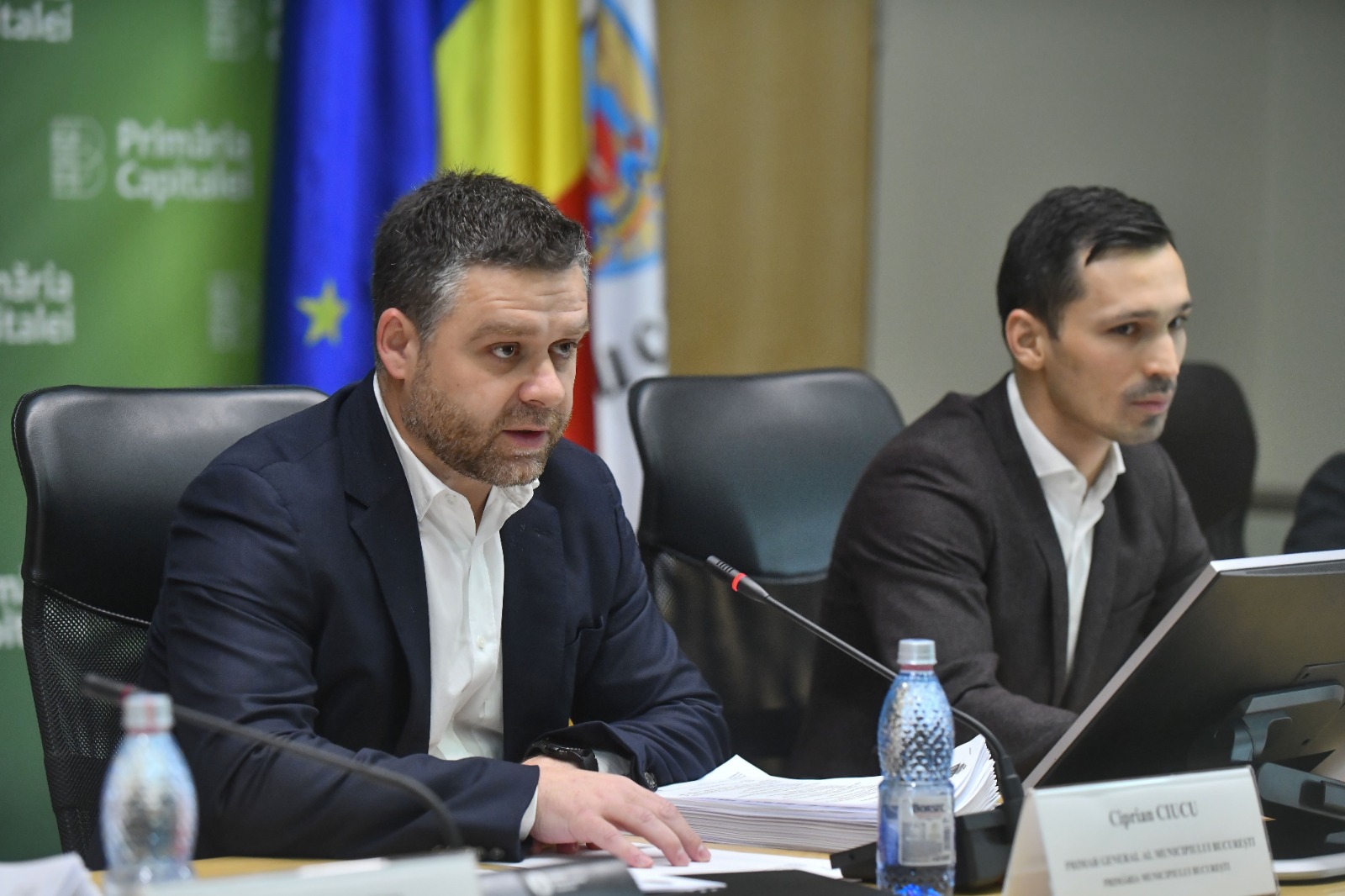
Ciucu blocked politically, reforms rejected, STB in crisis, huge debts.
The Mayor of Bucharest, Ciprian Ciucu, says that "essential projects to put Bucharest in order" were rejected in the General Council, in a meeting he describes as one of "political calibration". The goal: dismantling some institutions considered useless, evaluating the management at STB and Termoenergetica, and increasing public transport fares to avoid financial collapse.
Bucharest is at a critical point, and the political tensions in the General Council overlay a financial situation that the mayor describes as "so precarious that we are talking about dust on the drum". In a public post, Ciprian Ciucu states that he was elected to "put things in order" and that he is willing to bear image costs to make unpopular but necessary decisions.
However, he claims that some of these decisions were blocked right from the start. PSD, PPUSL, and AUR did not support several projects on the agenda, and the mayor interprets the vote as a political signal: without a negotiated majority, the administrative reform of the Capital cannot move forward.
Institutions "on a budget drip", with debts of millions
The first rejected package involved dismantling some institutions under the authority of the Bucharest City Hall, which Ciucu says have minimal or nonexistent activity but are now accumulating debts from public funds.
According to him, some of these structures have only one, three, or five employees and should have been closed about two years ago, including on the recommendation of the Court of Accounts. The law provides that institutions with fewer than 50 employees should be dissolved or absorbed into the organizational structure of other entities.
"Last year, they accumulated about 7.7 million lei in debts and will continue to accumulate"
warns the mayor.
STB and Termoenergetica: over 3 billion lei in debts, without evaluation
Another project that was rejected was, according to Ciucu, one "for transparency": empowering the mayor to request an evaluation of managerial decisions at STB and Termoenergetica.
The two companies, the mayor says, have accumulated debts of over 3 billion lei. Without a clear analysis of how management decisions were made, the city hall cannot build a solid plan for restructuring and efficiency.
"I want to know, and then you should also know, what is happening there," the mayor conveyed, emphasizing that the request was rejected.
STB fares: an unpopular decision, but "time gained"
However, the most sensitive point was the one related to raising the prices of STB tickets and subscriptions.
Ciucu clarifies that he did not initiate the measure but took over a proposal from ADITPBI (the association managing public transport in Bucharest and Ilfov), accompanied by a support study conducted earlier.
Raising fares would have been, in his view, a temporary solution to buy time and build a plan for restructuring STB.
"The situation is (more than) critical," says the mayor.
He also draws attention to an important administrative detail: the public transport service is not directly managed by the Bucharest City Hall, but by ADITPBI. "I will be the one receiving the curses, while others make the decisions," Ciucu states.
A "calibration" political meeting
The mayor interprets the vote in the Council as a signal that the old majorities no longer work automatically and that a period of political negotiations "from zero" is coming.
He says he already delegated responsibilities to the PSD vice-mayor since December 2025, but that this was not enough to ensure political support.
"Negotiations are normal in politics," admits Ciucu, announcing that he invites parties for discussions next week.
At the same time, he warns that the city's time and financial resources are limited.
The core message: reform or blockage
Beyond the political conflict, the mayor's post outlines a structural problem:
Bucharest has institutions considered inefficient, municipal companies with massive debts, and public transport under financial pressure.
Without administrative reforms and a functional majority in the General Council, the city's direction remains uncertain. And in this game, the bill risks to be paid by the Bucharest residents as well.