How citizens build power through information and education
Green Report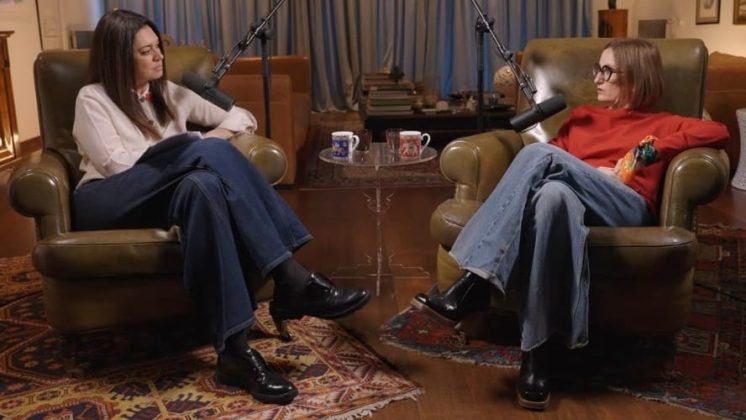
Paula Herlo says that education is no longer just a social issue, but a matter of national security, because its absence makes society vulnerable to manipulation and abuse.
In the new episode of the Green Report podcast - The Simple Guide to Becoming an Active Citizen, moderated by Raluca Fișer, journalist Paula Herlo talks about information, education, and public pressure as real forms of civic power, in a society where silence becomes complicity, and democracy is defended through actions.
Beyond indignation and anger, the power of citizens begins in a less spectacular place: correct information and education.
Without them, public pressure remains noise. With them, it becomes force.
In the dialogue from the Green Report podcast, Paula Herlo discusses how journalism, education, and public reaction have gradually linked together in a mechanism that changes the relationship between citizens and authority.
Not through symbolic gestures, but through verification, persistence, and refusal to accept empty explanations.
The experiences discussed show how people have started to pay closer attention to what they are told, to compare statements with reality on the ground, and to demand accountability.
From public investments that do not work, to blocked institutions and unresponsive systems, information has become the first step toward action.
In this context, education is no longer just a social issue, but a condition for the functioning of democracy.
And public pressure does not appear spontaneously, but is built step by step, from knowledge, civic exercise, and courage.
How has the relationship between people and power changed, and what tools do journalists still have
Paula Herlo says that, in nearly twenty years of reporting, Romania, I love you! has contributed to a visible change in mentality.
People no longer view authority with the resignation of the past. They no longer start from the idea that "nothing will change anyway".
Today, the reaction is different. There is revolt, but it is an informed revolt. People look at concrete things. At a sewage system that cost five million euros and does not work. At a public investment and its traces on the ground.
"They look and see what hasn't been done", says Paula Herlo. And they ask direct questions about how the money was spent.
In this context, investigative journalism has played a clear role. It shifted attention from promises to results. From discourse to verifiable facts. It created the reflex to compare statements with reality.
The problem, says Paula Herlo, is that in the meantime some essential tools have disappeared.
The Constitutional Court's decision to make asset declarations non-public directly impacted investigative work.
"Asset declarations were an extremely important ingredient", she explains.
Through them, journalists could track pathways. What companies a elected official had before taking office. Who they were associated with. Whether former partners won public tenders. It was a way to connect data and build evidence.
Now, this is no longer possible directly.
Without public access, investigations become complicated. Everything shifts to official requests, long deadlines, and delayed responses.
"This is a tool that was taken from us", says Paula Herlo.
In the absence of asset declarations, journalists rely on other sources. Public procurement platforms. Data about companies, ownership, and turnover. Public information, pieced together.
"We work only with public data", emphasizes Herlo.
Even so, things have changed on both sides. Authorities' representatives are more cautious, more prudent, and know how to better hide their traces.
But journalists have also adapted.
"We are each other's match", says Paula Herlo.
An ongoing game between power and those who verify it, where the rules constantly change, but the stakes remain the same.
How can NGOs become relevant and attract the press
Paula Herlo says that the press is interested in causes supported with passion, attitude, and courage in front of authority. Not in cautious formulas or diluted messages.
"The press is interested in people who are not afraid of authority", points out Herlo.
Journalists react when they meet people who are not afraid to confront power and who publicly assume the risk of a fight.
An NGO has real chances to be heard when it truly believes in its cause and defends it without hesitation.
Paula Herlo gives the example of organizations that have come to the attention of the press through firm positions, including direct accusations against state institutions. When the message is clear and documented, the press becomes attentive.
From her experience, authorities react much faster when public pressure appears. Lawsuits, threats of court, and media exposure work.
"They move immediately. Immediately, things start to happen", says Paula Herlo.
In contrast, polite dialogue, lacking firmness, rarely produces concrete effects.
A common obstacle for NGOs is fear. Fear of controls, administrative blockages, losing funding.
Paula Herlo questions this fear.
"What can the state do to an NGO that has all its documents in order, transparent budgets, audits, and internal discipline?"In her opinion, the state needs NGOs, not the other way around.
To be visible, an NGO needs a clear, well-documented case, with an easily explainable impact. It must demonstrate abuse, show victims, and consequences.
Without these elements, the cause risks getting lost in a tough competition among themes. Health, education, environment, culture, sports—all competing for public attention.
Paula Herlo admits that the press also makes difficult choices. There are many important causes, and not all can be followed. But the journalist will look at the potential for change.
If a cause can produce a real change in society, interest appears.
The journalist says she is not attracted to symbolic actions without structural stakes. Punctual plantings or cleaning actions are not enough.
The mission of the NGO and its ability to change a system matter, not just ticking visible gestures.
An example she gives is Ambulance for Monuments, a project built by Eugen Vaida and his wife Veronica, who laid the foundations of the initiative and grew it step by step.
A key moment in the project's development was the early support of King Charles III, at a time when almost no one knew about the existence of Ambulance for Monuments.
The support was also financial, through a foundation, and provided international legitimacy to an initiative at its beginning.
Paula Herlo recounts that she met Eugen Vaida in 2021, during the pandemic. At that time, Ambulance for Monuments was more visible in international media than in Romania. BBC reports, foreign press materials, stories about fortified churches saved.
"I said then that we need to focus more on making the project known here."
Today, the project has grown significantly. There are branches in several counties and regional ambulances, but the stakes remain huge.
The built heritage is in a critical state.
"We still have 800 monuments in collapse", says Paula Herlo, and the need for intervention is constant and urgent.
Regarding how communities perceive initiatives like Ambulance for Monuments, Herlo shares how communities mobilize during periods when monuments are consolidated.
"Women come with donuts, men want to help with consolidation. They are very impressed that the team is made up of students, especially girls restoring monuments".
Moreover, after restoration, either the mayor or local residents initiate ways to valorize the monuments through various events organized around them.
Fake news and reader responsibility
Raluca Fișer, the podcast moderator, says that today’s press is very different from that of 20 years ago.
The way a news story is made has changed, but especially how information reaches the public. In this context, responsibility no longer solely belongs to the journalist, but also to the reader.
"When I find information that seems too much, I feel the need to verify it", says Paula Herlo. That’s the first filter.
If a headline shocks, inflames, or confirms a personal belief too perfectly, it’s a warning sign.
The next step is to verify the primary source. A simple search can quickly show if the information is real or false. The tools exist. The problem is that many people no longer use them.
Paula Herlo observes that the public often seeks information that confirms their own beliefs.
Social media algorithms amplify this phenomenon. They keep you in a bubble of content you like, validate your opinions, and constantly deliver the same type of message.
"People want their own truth, not the truth", says the journalist.
The difference is made by exposure to different perspectives. Follow multiple news channels, from different angles. Compare. Listen.
When you see the same information presented differently, common sense helps you identify who is lying and who is not.
The problem becomes more serious when information is taken from dubious sources, without verification, and turned into certainties.
Paula Herlo talks about the extreme zones of disinformation, where conspiracy theories are treated as facts. In these cases, dialogue becomes difficult, sometimes impossible.
Herlo believes that relevant people, those with credibility and who do concrete things, should also enter these bubbles of disinformation and break them with facts.
Not through morality, but through information. "The truth is one", says the journalist. That truth based on facts, documents, and verifiable reality.
Even if not everyone wants to hear this truth, Paula Herlo believes there is a responsibility to tell it.
Not to convince everyone, but to provide landmarks for those still willing to seek.
In a noise-dominated space, verification remains the only act that can make a difference.
What advice does Paula Herlo have for young people who want to do journalism
The first piece of advice is simple and firm - Journalism is not done from an office.
"Go to the field", says Herlo.
Without direct presence, without on-site observation, there is no real journalism, only content.
The second essential thing is documentation. Information must be verified from as many sources as possible, down to the smallest detail. Often, seemingly insignificant details reveal the true story.
"Sometimes small things are what carry the investigation forward", she explains.
The third piece of advice, perhaps the most personal, is related to reading.
"You can’t write anymore without having read." Writing is a muscle trained over time, and reading is the foundation.
Paula Herlo says she constantly reads not only for information but also for style, rhythm, and construction.
"You load a type of writing, which then you pass through yourself, through your experience, through your voice".
For Herlo, journalism is not just appearing on TV. It’s also writing. It’s text construction. It’s rigor. That’s why she is concerned that many young people seem to lose their passion for depth, discouraged by the fast pace of news.
An investigation can last weeks or months, and after publication, public attention quickly shifts elsewhere.
Paula Herlo is not critical of the new generations. On the contrary, she says she appreciates that young people focus more on their personal lives and their limits.
"We worked in tough conditions. Without vacations, without weekends, with constant stress. I don’t think it was healthy".
In her opinion, the problem is not lack of involvement, but a system that does not know how to train them and convey the real stakes of the profession.
For Paula Herlo, journalism remains a pillar of democracy. The right to truth, transparency, and fact-checking are increasingly under attack.
In a landscape where any influencer or channel can invent information without proof, the press has the role of watchdog.
In this context, adaptation becomes inevitable. If the young audience is on TikTok, journalism must reach there too.
"Do journalism on TikTok", says Paula Herlo. Not as a renunciation of standards, but as a form of adaptation.
The profession does not fundamentally change, but language and channels must keep pace with reality.
For the journalist, the solution is not abandoning principles, but understanding new generations.
Journalism cannot demand blind sacrifices, but it also cannot abandon rigor. Between these two, Paula Herlo says, the balance must be found.
Education - a matter of national security
For Paula Herlo, education is the point from which most vulnerabilities of Romania originate.
"It all starts from here", she says.
Both the good things and especially the bad. Data confirm it.
Almost 40% of graduates are functionally illiterate.
The dropout rate is among the highest in the European Union. Teachers are demotivated, the system is fragmented, and inequalities deepen.
In this context, education can no longer be treated as just a sectoral topic or a strictly social problem.
Paula Herlo sees it as a matter of national security.
"When 40% of graduates do not understand what they read, you create a perfect ground for manipulation", she explains.
Disinformation, fake news, and radicalization do not appear out of nowhere. They rely on a lack of critical education.
A weak educational system produces vulnerable citizens.
People who cannot evaluate information, distinguish facts from propaganda, and are easily influenced. Over time, these vulnerabilities translate into social instability, poor public decisions, and weakening democracy.
Paula Herlo says solutions exist and do not need to be invented from scratch. Some are already visible, including in Romania.
She gives the example of a technical college in Pașcani, radically transformed in the last ten years. Through European funds and coherent management, the school now offers resources rivaling private education.
Robots, drones, tablets, modern laboratories.
When the current director took over, the admission average was just over 5. Today, it is over 9. Children even come from other cities and move to Pașcani to study there.
"In ten years, he turned a technical college into a top school", says Paula Herlo.
The example shows that change is possible when there is vision, continuity, and real local autonomy.
A key role is played by the school principal. Paula Herlo emphasizes the importance of training educational managers, not just teachers. A good director can change the culture of a school, attract resources, and build trust, even in a rigid system.
Private education sometimes offers models of the future, but remains accessible only to a very small part of society.
The solution is not children migrating to private schools, but transferring good practices to public schools. Examples exist, but are not widely replicated.
For Paula Herlo, any real reform in education must start from two fundamental things:
- resources;
- teaching staff.
Well-trained, well-paid, respected, and properly evaluated teachers.
Without these conditions, any other measure remains superficial.
In the absence of a long-term strategy, education will continue to produce ripple effects. From disinformation and polarization to the weakening of the state's capacity to function.
That’s why, says Paula Herlo, education is not just about schools.
It’s about the safety and future of an entire society.
When the state does not respond, the voice becomes a tool
There are situations where respecting the rules no longer produces any effect. Requests go unanswered. Complaints are lost. Files are shuffled around.
At that point, the voice becomes the main instrument of pressure, and public exposure the only form of defense.
"People need to learn to use institutions and not be afraid of them", says Paula Herlo.
"As long as your behavior causes me harm or discomfort, there’s no reason for me to stay silent"
The first example is children kept in improper conditions in a hospital. The situation was known but ignored. Only when someone entered, filmed, and made public what was happening, did things move. The director called. The children were moved. The case was resolved.
"Not because they cared, but because it became visible."
A second case goes further. A volunteer helping vulnerable children was not getting a legal permit for his pellet and organic briquette factory.
After months of blockage, he decided to act. He tied himself with handcuffs to a pipe in the institution and clearly stated he would stay there until he received the document.
"Until you bring me the permit you should have given me in 20 days, I won’t unlock these handcuffs", recounts the journalist.
The permit was issued.
The third example is a woman demanding the paving of a road. She did not negotiate. She did not wait for promises. She sued the city hall. She won. The court ordered the authority to pave the road.
"If talking nicely doesn’t work, you make a scene", says Paula Herlo.
"Not as an end, but as a tool. Otherwise, nothing happens"
When the state does not function, the citizen should not withdraw, but insist.
Use institutions. Document. Expose. Disturb.
"As long as you cause me harm, I have no obligation to protect you with silence", says the journalist.
"Silence is not normality. Silence is complicity."
SEE THE PODCAST HERE:
https://youtu.be/MSiOgv_koXg?si=edmqYhjTFMSsNyx7
READ ALSO:
https://green-report.ro/paula-herlo-arata-cum-investigatiile-jurnalistice-schimba-legi-si-sisteme/
https://green-report.ro/ong-meteo-bn-a-pus-pe-picioare-o-retea-de-35-statii-meteo-locale/