"Loto-Pensions" at CE Oltenia: The administrative arbitrariness that suspends the law and blocks the future of 1,400 families
SudvestWhile the energy system is rapidly decarbonizing, in Gorj, the human resources archive of CE Oltenia has become a tool for social triage. An analysis of how an arbitrary bureaucratic barrier—set for September 1, 2024—divided energy veterans into "lucky" and "dispossessed." By Marius Ilie Daea In Târgu Jiu, the conflict […]
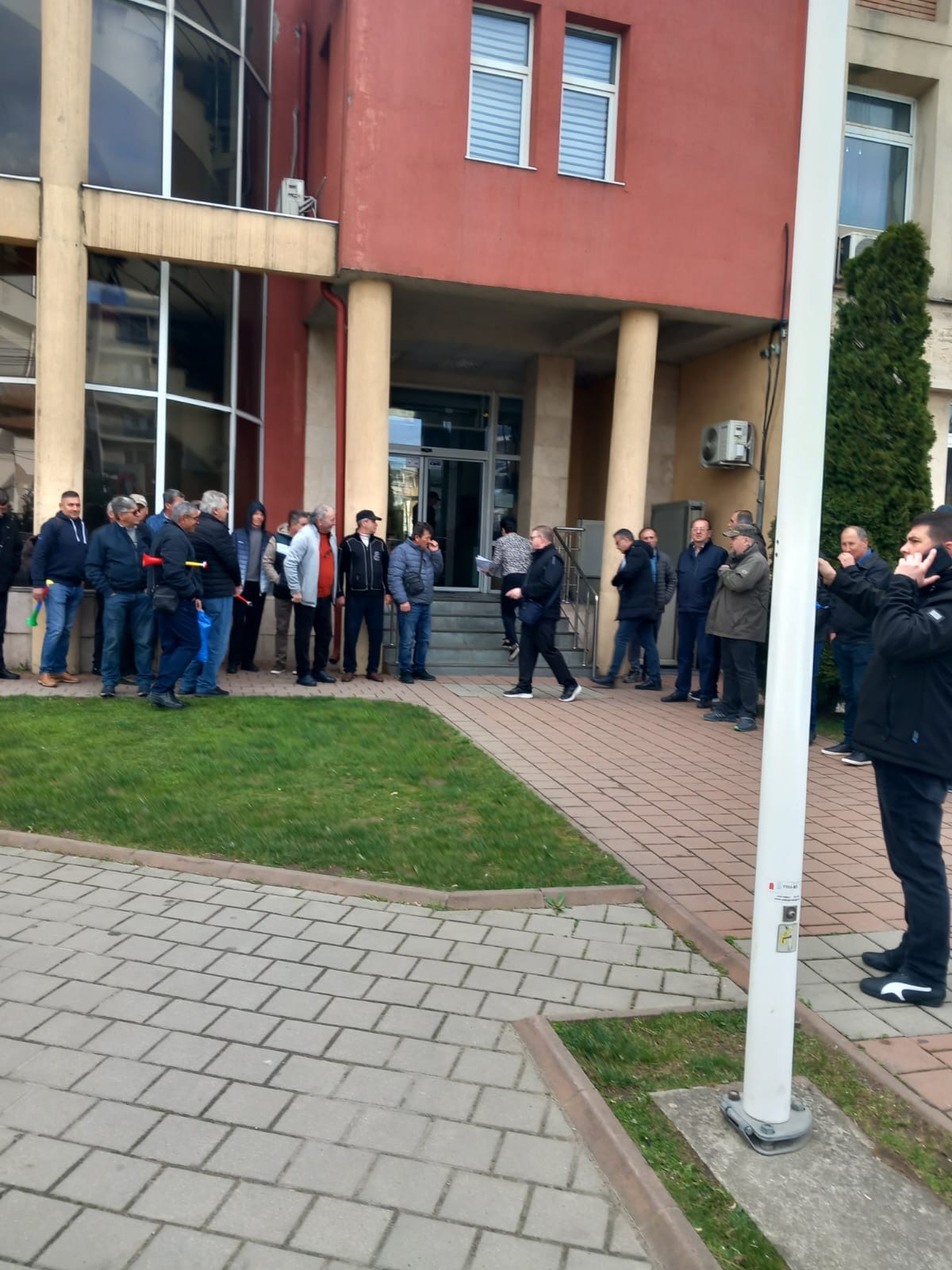
While the energy system is rapidly decarbonizing, in Gorj, the human resources archive of CE Oltenia has become a tool for social screening. An analysis of how an arbitrary bureaucratic barrier – set for September 1, 2024 – has divided energy veterans into “lucky” and “dispossessed”.
By Marius Ilie Daea
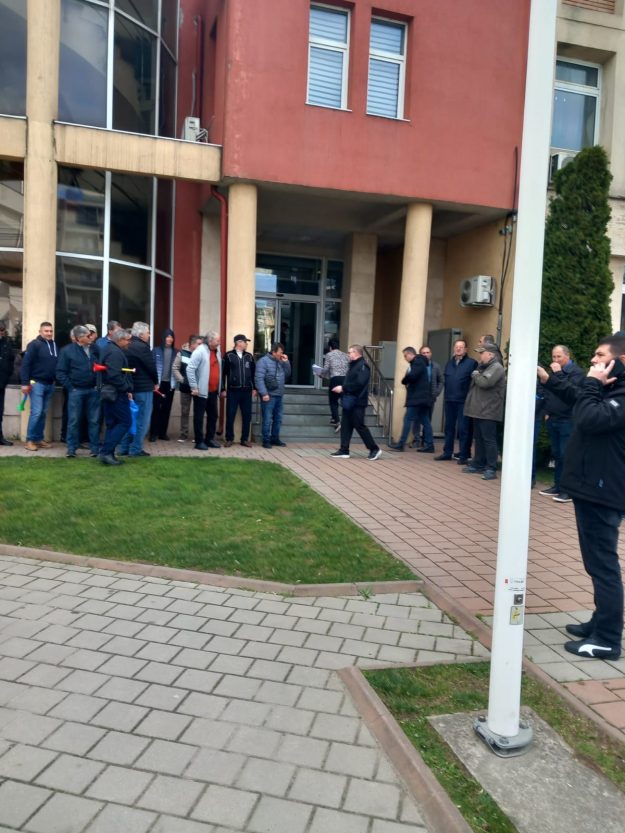
In Târgu Jiu, the conflict between maintenance veterans and the management of the Oltenia Energy Complex (CEO) has long ceased to be just a union dispute. It is, essentially, a process of “erasing” the past. About 40 former Termoserv employees protested again, denouncing what HR experts call a “legal mess” (a controlled administrative chaos), designed to block pension rights under Law 197/2021.
The issue is not a sum of money, but a certificate recognizing an uncontested technical fact: maintenance was part of the production flow. However, according to recent testimonies, the administration has erected a bureaucratic wall that defies legal logic.
“Cut the Macaroni” in Craiova: A two-speed justice
The fracture in the judicial system remains the biggest question mark. While the Gorj Court rules in favor of workers repeatedly, the Craiova Court of Appeal becomes a “cemetery” for favorable rulings.
“We won at Târgu Jiu, but in Craiova everything was overturned. They don’t recognize our Termoserv years,” explains a protester. Suspicion of “behind-the-scenes deals” between decision-makers at CEO and magistrates with vested interests has become the main topic of discussion outside the company’s headquarters. If these suspicions are confirmed, it’s no longer a matter of misinterpretation, but an assault on the rule of law, where the right to a pension is traded based on influence.
The technological flow: “It was like dealing with a small child”
Beyond laws, there is the reality on the ground, described by those who have “cared for” turbines for decades. Audio testimonies reveal a responsibility that is not visible in the job descriptions filed away in archives:
“I would start the recording devices across the entire panel. I had to monitor temperatures, vibrations, the gradient at the turbine. If the device didn’t record it, I had to ink it, like with a fountain pen. Like a small child, I had to take care of the machines,” recounts a veteran. This human-machine connection was the heart of the thermal power plant. The fact that today the administration claims these people “did not work in production” is perceived as an insult to 30 years of work at extreme temperatures and vibrations.
Technical analysis: The administrative trap of September 1
Ion Răuț, former head of the Human Resources department at CE Oltenia, provides the technical clarity needed to understand why that stamp is refused. The problem has shifted from one of “recognition” to one of legislative “opportunity”.
The blocking mechanism explained by Răuț is a fine one:
The entry into force of the new pension law (360/2023) on September 1, 2024 created an artificial fissure. The CEO administration seems to apply a discriminatory logic: issuing certificates only to those who retire after this date, ignoring those with prior rights or ongoing legal cases under the old legislation.
“It’s blatant discrimination,” observes Răuț in technical discussions. “Popescu, if you retired before September 2024, you don’t get the certificate, but Ionescu, who worked next to him and continued working, does. It’s a misinterpretation by the company’s HR department.”
This “mess” has a precise purpose: discouraging veterans and maintaining the workforce under uncertain conditions or pushing them toward much smaller pensions than they deserve through the recognition of the special group. Essentially, CEO is using the succession of laws to “save” people’s rights.
Risk of blockage: 1,400 criminal complaints at the gates
Exhausted by civil courts that decide differently 100 km apart, workers have resorted to “nuclear” weapon: criminal complaints for abuse of office. Pensioners from Turceni have already filed 65 complaints with local prosecutors. If all 1,400 employees in this situation file criminal complaints, the prosecutors’ offices in Gorj will be overwhelmed.
Probably, the Gorj prosecutors have already warned the CEO leadership: “You see, it’s serious, the reports are piling up, and we need to investigate you.” A single refused stamp, for administrative strategy reasons, risks paralyzing the judicial activity of an entire county.
Conclusion: A moral solution, not judicial
What is happening in Gorj is a failed social experiment. While in Craiova rights have been recognized, in Turceni, Isalnita, and Rovinari, a war of attrition is waged against their own employees.
Romanian justice, through higher courts and the High Court, has issued contradictory decisions until December 2025, amplifying chaos. But beyond lawyers’ interpretations, there remains a simple truth: if someone has put a turbine in parallel and controlled the temperature of an energy block for 30 years, no law change in 2024 can nullify the reality of their lungs and health consumed in 1995.
It is time for the Ministry of Energy and CEO management to stop the “pension lottery” and apply the law uniformly. Otherwise, the energy transition will be marked not by green energy, but by a black stain on the face of social justice in Romania.
Be more than a reader. Be the driving force of change in Oltenia.
Solution journalism and data-based investigations cost time and resources. We, at Sudvest.ro, have chosen the hard path: to write for citizens, not politicians. To pursue the public interest, not party interests.
The fact that you are here shows that we share the same values: transparency, responsibility, and the desire for a developed region. If this material was useful to you or confirmed a lived reality, we invite you to join the “moral shareholders” of this publication.
Through a direct contribution, you ensure our freedom to ask uncomfortable questions tomorrow as well.
Support the Sudvest.ro editorial team through Eurolife Association:
 IBAN Lei: RO93 RNCB 0149 1519 0979 0008
 IBAN Euro: RO66 RNCB 0149 1519 0979 0009

Editorial Note: Sudvest.ro commits to correct, objective, and source-verified information. In the spirit of transparency and professional ethics, we offer the right of reply to any individual or legal entity who considers that the information presented in this material is incomplete or erroneous. Opinions and correction requests can be officially sent to the email address: salut@sudvest.ro.