International promotion of Craiova: How the city's image ended up in the hands of an IT company with three employees from Pitești
SudvestBy Marius DAEA An exhaustive analysis of public procurement documents raises a major administrative and economic question: why does the Craiova City Hall – an institution that invests heavily to transform the city into a European tourist hub – choose to delegate its international promotion to a small IT enterprise from a neighboring county, without a portfolio in [...]
by Marius DAEA
An exhaustive analysis of public procurement documents raises a major administrative and economic question: why does the City Hall of Craiova – an institution that invests heavily to transform the city into a European tourist hub – delegate its international promotion to a micro IT enterprise from a neighboring county, without a portfolio in global publishing?
In recent years, the Municipality of Craiova has allocated considerable human, logistical, and financial resources to build a strong international brand. From the Christmas Fair, promoted as one of the best in Europe, to the IntenCity festival, the local administration makes sustained efforts to attract foreign tourists.
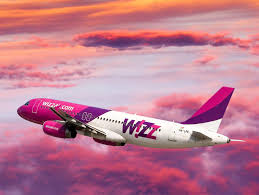
Logically, promoting these events on international airline routes is a natural step. The chosen tool: advertising pages in the in-flight magazine of Wizz Air (Wizz Magazine), the only major airline operator at Craiova International Airport.
However, official documents from the Electronic Public Procurement System (SEAP), the City Hall’s justificatory notes, and financial data reveal a severe discrepancy between the city’s ambitions and how the funds are actually spent. Behind the scenes, contracts are not signed with the airline’s media division but are intermediated by a small company with three employees, whose main activity is in information technology.
2025: What did Craiova receive for 40,000 euros?
To understand the procurement mechanism, the investigation starts from the results of the previous year.
In 2025, Craiova City Hall awarded a contract worth 201,650 RON (approximately 40,300 euros) for promotion services in five editions of Wizz Magazine. The awarding method was direct procurement, without public competition.
Contract beneficiary: S.C. DOTS TECHNOLOGY GROUP S.R.L., a company based in Pitești.
At an average cost of over 8,000 euros per edition paid from public funds, expectations were for a marketing product meeting international standards, capable of converting a passenger on a plane into a future tourist of Craiova.
However, the reality executed by the Pitești intermediary, analyzed by strategic marketing specialists, shows a completely different picture:
- Zero Traceability: Craiova’s layouts (e.g., spring edition) ignore basic industrial standards. There is no QR Code linking to a city tourism platform (a dedicated landing page in English). Instead, the page prints a lengthy link to a Facebook page – an ineffective Call-to-Action for a passenger at 10,000 meters altitude, often without internet access.
- Repetitiveness and rigid language: The content does not present a fluid editorial strategy. Pages are “bricks” of descriptive text, dull translated, supplemented with generic photos. Moreover, in consecutive editions, the same messages and images were recycled, a major targeting error for frequent travelers (business/diaspora) who read the magazine multiple times a year.
- Execution below the publication standard: While the official Wizz Air Media Kit relies on impactful (full-bleed) photos and airy space to create emotion, the materials delivered by DOTS Technology Group resemble hastily printed flyers, cluttered and visually unattractive.
Despite this completely unmeasurable and inefficient result, Craiova City Hall decided not only to retain the supplier for 2026 but to offer an even larger contract. The way the procedure was conducted raises questions about how public budgets are justified.
YOU CAN REVIEW THE PUBLISHED MATERIALS HERE
2026 Procedure Timeline: A “just right” increased budget
At the end of 2025, the administrative apparatus of the City Hall begins preparations for the next year’s campaign. Data from SEAP reconstruct, step by step, an atypical procedure:
January 27, 2026: Craiova City Hall initiates a direct procurement procedure (ADV1514335) for 5 editions in Wizz Magazine (April – December 2026). The specifications are explicit: “publication of an article on a full A4 page, maximum 300 words + 3 images”. Estimated value from the local budget: 203,563 RON. Result: The procedure expires on January 30 with zero offers submitted.
Normally, the lack of offers for a procurement targeting a single publication would require direct contact with the official publisher of the magazine.
February 12, 2026: The City Hall relaunches exactly the same procurement (ADV1516298). The specifications are identical word for word. The only difference? The estimated contract value was increased by over 10,000 RON, reaching 213,778 RON.
The official document from the City Hall (Justification Note no. 51239 / 03.03.2026) explains the increase through a “market survey”. Of the three requests sent, only one operator responded.
February 19, 2026: S.C. DOTS TECHNOLOGY GROUP S.R.L. submits the sole offer, worth 211,230 RON – perfectly fitting the new increased budget of the City Hall (just 2,500 RON below the maximum threshold).
The approved justificatory note by the authority (no. 62344 from 25.02.2026) reveals a lack of rigor on the part of the bidder: in the technical proposal for 2026, the company used a copy-paste document from the previous year, mentioning publication in “December 2025”. The offer was considered compliant.
Main Actor: Who promotes Craiova worldwide?
Data extracted from official financial reporting platforms (ANAF, Termene.ro) deepen the mystery of this institutional choice.
The strategic international promotion contract for Craiova was not awarded to a recognized advertising agency, nor to a global media giant, but to a company with only 3 employees. The main activity domain of DOTS Technology Group SRL (CUI 39366490) is CAEN Code 6202 – Information technology consulting activities.
Moreover, the company holds a list of over 50 authorized secondary codes, covering a staggering range of activities: from bars and catering to exhibition organization. This is a typical profile for a “front” company, legally designed to invoice a variety of goods and services to institutions, acting strictly as an intermediary, without directly adding value in the specified field (in this case, tourism journalism and advertising design).
Financial analysis of the company for 2024 clearly explains the motivation for intermediation. With a turnover of about 1 million RON, the three-employee firm reported a net profit of 357,231 RON. This represents a profit margin of over 34%. In the competitive advertising industry, agencies that actually produce strategies, campaigns, and graphic design have considerably lower margins. A 34% margin is a classic indicator of a “contract broker” – an entity that buys a product and resells it to the state with an exorbitant markup.
Economic logic: How much does avoiding the direct source cost?
The central question of this investigation is: why does Craiova’s City Hall avoid purchasing advertising space directly from the source, instead funding an intermediary?
The official and exclusive publisher of Wizz Magazine is the LXM Group trust (formerly Ink Publishing), headquartered in London with operations in Cyprus. According to the publicly available Media Kit for 2026, the official list prices for a full page (ROP) or an advertorial range between 28,000 and 33,000 euros per edition. However, these are the gross, catalog prices for occasional commercial clients.
Discussions during the documentation stage with representatives of the international media agency (LXM Media) confirm that the publisher offers completely different tariff structures when negotiating volume packages (e.g., 5 editions annually) or when dealing with governmental entities. The agency representative acknowledged the current practice of confidential pricing (net rates), where the parent publisher sells space at a reduced rate to the intermediary, which then invoices the final client (the City Hall) with a significant commercial markup, often set by the intermediary.
“I send you the real price and add the percentage for the client. The commission remains secure”, explained the sales representative the mechanism of reselling.
An estimated offer obtained during this investigation shows that the real value of the space contracted by Craiova (advertorial for 5 editions) would be around 20,000 – 25,000 euros. The difference up to approximately 42,500 euros (the value of the contract signed in SEAP) represents the “gray zone” of intermediation.
The conclusion is a simple efficiency equation in administration. By refusing to negotiate a direct contract with the publisher – perfectly legal and possibly feasible given its uncontested exclusivity on operated flights – Craiova’s City Hall pays an annual intermediary fee estimated at over 15,000 euros.
Conclusion: An administrative paradox
Facts, extracted exclusively from official platforms, outline a paradox.
On one hand, a local administration that claims to understand the importance of international marketing, investing colossal budgets from public funds to position Craiova on the European map. On the other hand, the same administration’s decision to delegate the execution of the most important external promotion channel to a micro IT company, accepting mediocre-quality materials and increasing the public budget to match this sole intermediary’s financial offer.
Emergency solutions: How to save the 2026 promotion campaign
Although the procedure for 2026 is already on the procurement table, the opportunity to promote Craiova in front of millions of international passengers must not be missed or again turned into a mediocrity exercise. As marketing and strategic communication specialists, we propose a clear remediation plan.
The issue is not Craiova’s presence in Wizz Magazine – the magazine is indeed an excellent channel with a valuable captive audience. The problem is execution. If Craiova’s City Hall still chooses to pay over 42,000 euros to an intermediary, it has the legal and moral obligation to behave as a premium client and demand a marketing product at global standards.
Here is what must happen urgently so that 2026 does not become another black hole in the promotion budget:
- Zero tolerance for mediocrity from the City Hall (KPI setting) Craiova must move away from the “just check a procurement” logic and adopt a demanding client approach. The specifications should not be limited to “a full A4 page with 300 words and 3 photos”. The institution must refuse to pay for any material that is copy-pasted from previous years, any text translated with Google Translate, or any design that looks like it was made in the 2000s. Quality clauses must be imposed: layouts should only be approved if they respect modern design guidelines (white space, hero images, excellent readability).
- Holding the intermediary accountable: Investing in real specialists If the Pitești IT company (S.C. DOTS TECHNOLOGY GROUP S.R.L.) still collects tens of thousands of euros and operates with huge profit margins (over 34%), the common-sense solution is for this entity to give up part of its net profit and outsource the creation. The intermediary must be forced (or at least publicly pressured) to hire true professionals: an art director for layout, a copywriter native in English specialized in tourism, and a professional photographer. Public funds should not only finance the transfer of a PDF from one email to another.
- Implementing Traceability (QR Codes and Landing Pages) It is unacceptable that in 2026 a tourism ad cannot be measured (Zero ROI – Return on Investment). No one will manually type a lengthy Facebook link from a printed magazine on a plane.
- Solution: Integrate a dynamic and personalized QR Code on each layout (e.g., Scan to discover Craiova).
- This code must lead to a Landing Page (a dedicated, modern web page, exclusively in English), created specifically for the in-flight campaign: e.g., visitcraiova.com/wizz
- Thus, the City Hall will know exactly how many passengers scanned the ad, from which countries they come, and what pages they visited, justifying the public investment’s effectiveness.
- Moving away from “Limbajul de lemn” (wooden language) towards Emotion (Storytelling) The Western tourist does not come to Craiova because they read a dry, administrative text about “infrastructure development” or dusty phrases like “the city like a spring carnival”.
- Solution: The message must focus on experience (Experience Marketing). Emotions must be sold: local gastronomy, the unique atmosphere of the Christmas Market, the energy of the IntenCity festival, or the vibe of the old town. Texts should be short, impactful, and answer a single question in the reader’s mind: “Why would I get off the plane to visit this city?”
- Creating a “Call to Action” (CTA) with real benefits An effective ad provides an immediate reason to act. Instead of simple archive photos, the layout in Wizz Air magazine could be transformed into a direct conversion tool.
- Solution: Introduce a benefit for the passenger. For example: “Keep your Wizz Air boarding pass and get free entry to the Craiova Art Museum” or “Scan the QR code for a free digital guide with the best cafes in town”. This is the only way the printed ad generates tangible tourism.
In conclusion, the 2026 campaign can be saved, but it requires a radical attitude change. Craiova’s budget is large enough to buy excellence. It remains to be seen whether the local administration will choose to protect the easy profit of a front company or will, at the last moment, impose the due respect for the city’s image and taxpayers’ money.
It is up to the paying public to decide whether delegating Craiova’s brand to three IT guys from Pitești is a sign of administrative professionalism or merely the perpetuation of a system where local budgets become safe profit sources for “smart guys” in the shadows. Facts and figures are public, in SEAP.
Verified information is your shield against lies
If you’ve reached this point, it means you are one of the Oltenians who do not settle for half-measures. The article you just read required hours of research, cross-checking, and the courage to disturb state institutions.
At Sudvest.ro, we have no “moguls”, political parties, or local barons behind us. We only have you. Our independence depends solely on community support.
We do not ask for a donation, but for a partnership. If you believe that Oltenia needs journalists who know how to count public money and bring the truth to light, support us to continue. Any amount helps an investigation to go further.
Invest in honest journalism through the Eurolife Association:
 RON Account: RO93 RNCB 0149 1519 0979 0008
EUR Account: RO66 RNCB 0149 1519 0979 0009
Editorial Note: Sudvest.ro commits to correct, objective, and source-verifiable information. In the spirit of transparency and professional ethics, we offer the right of reply to any individual or legal entity who considers that the information presented in this material is incomplete or erroneous. Opinions and correction requests can be officially sent to: salut@sudvest.ro.