The "state security" industry: How millions of euros were funneled into security companies in Gorj through the "loop" of those 30 days
SudvestUPDATE: April 27, 2026, 2:00 PM Following the publication of this material, the Gorj County Agency for Employment (AJOFM) has sent our editorial office a "Right to Reply." The institution indirectly confirms the vulnerability of the subsidy system, stating that it reported to national authorities as early as February 2023 the need to amend legislation to prevent the "carousel mechanism." [...]
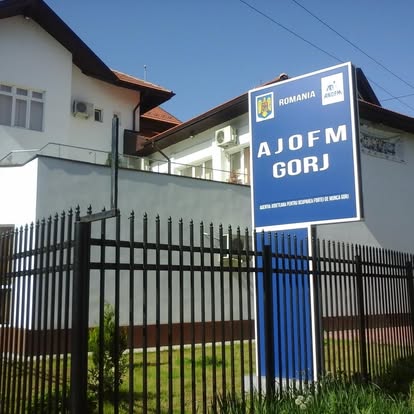
UPDATE: April 27, 2026, 2:00 PM
Following the publication of this material, the Gorj County Agency for Employment (AJOFM) sent our editorial office a "Right to Reply". The institution indirectly confirms the vulnerability of the subsidy system, stating that it notified national authorities as early as February 2023 about the need to amend legislation to prevent the "lever mechanism." Additionally, AJOFM cites a critically underdimensioned control department, operating with only one employee for over 8,000 companies.
The full investigation, updated with the new clarifications, can be read below. The complete documents (requests, figures, and reply) are available at the end of the article.
By Marius DAEA
(Investigation conducted based on information officially provided by AJOFM Gorj under Law 544/2001)
Behind the technical language of Law 76/2002 regarding the unemployment insurance system lies an industry that, in Gorj County, has reached alarming levels. Recently, the warning signals from the Government — concerning abuses in the security sector — have turned into mathematical certainties following an analysis by SUDVEST.
The official data obtained by our publication paint a picture of a manipulated labor market, where the "unemployed" is just a piece in a multi-million euro financial puzzle. When asked about these anomalies, AJOFM Gorj cites a "legal obligation" to pay and admits that the control system is numerically overwhelmed: one officer for over 8,000 employers.
Suspicion statistic: the "30-day" unemployed
The critical point of the entire scheme is the unemployment period. According to the official response from AJOFM Gorj, out of a total of 1,121 people subsidized in the security sector, a number of 1,011 people appeared in the institution's records as "non-beneficiary unemployed" for a period shorter than 30 days.
In investigative journalism, this is called a "staged opportunity window." It is statistically unlikely that 90.1% of a group of over a thousand people would remain unemployed for less than a month and be absorbed exactly by the companies requesting subsidies of 2,250 lei/month from the state.
The legislative "Trap": AJOFM claims it was forced to pay
In an official reaction sent later to SUDVEST's editorial office, the leadership of AJOFM Gorj clarifies: the institution observed "the employers' practice of re-hiring subsidized persons" and requested Bucharest to amend the law as early as 2023.
However, until the entry into force of OUG 11/2026, AJOFM claims it was legally impossible to refuse security companies, even if the figures were suspicious. "Refusing to conclude an agreement without a legal justification could lead to accusations or even legal action for abuse of office," explain the Agency's representatives. Essentially, the institution found itself transformed into a captive payer of a system it identified as flawed but could not stop.
Security billions: who are the major beneficiaries
The amounts allocated by AJOFM Gorj for 2024 and 2025 show a massive concentration of public capital towards a small group of companies:
-
TMG GUARD S.R.L.: The absolute champion, with a projection of 11,098,574 lei for 2025.
-
PROTECȚIA S.R.L.: A huge jump to 2,371,698 lei for 2025.
-
STONE HOUSE GUARD S.R.L.: Over 2 million lei scheduled for next year.
-
TOTAL FORCE MS S.R.L.: Collects 1,905,444 lei in 2025.
-
MERLIN SECURITY S.R.L.: Projection of 1,383,500 lei.
In total, the projected payments for the mentioned security companies exceed 19 million lei just for 2025.
A single person against 8,000 companies
Perhaps the most shocking revelation from the correspondence with the institution concerns the capacity to oversee public funds. AJOFM Gorj officially admitted that the control department is underdimensioned, with the activity of verifying over 8,000 employers in the county being carried out by "a single person".
This admission explains why, despite the millions of euros flowing to security firms, the institution found no irregularities. In a system where control is practically symbolic, compliance remains only on paper. AJOFM stated that during inspections, "all persons were present at the workplace," but without constant monitoring, these visits are just an administrative formality.
Conclusions: Forced legality
The SUDVEST investigation, based on figures provided by AJOFM under Law 544/2001, shows that the security industry in Gorj has exploited what the institution now calls "legislative gaps."
While AJOFM defends itself by claiming it respected the letter of the law and tried to change the system from within, the statistical reality remains unshaken: 1,011 people were "manufactured" as short-term unemployed to generate subsidies. Faced with these data, the justification of staff shortages or legislative chaos does not change the fact that the unemployment insurance budget has been used as working capital for the security giants.
DOCUMENTATION AND TRANSPARENCY:
-
 [LINK] INVESTIGATION FILE (questions asked, responses received from AJOFM
 -
-
 [LINK] Right to Reply AJOFM Gorj (27.04.2026) – The institution's full position.
SUDVEST.ro assumes the mission of informing the public accurately, providing space for all involved parties to express themselves, while maintaining the rigor of official data analysis.
A SUDVEST investigation based on official data obtained from AJOFM Gorj reveals an alarming mechanism: over 90% of the persons subsidized by the state in the security sector were "unemployed" for less than a month before being hired with public funds. While the institution claims everything is legal, the figures indicate a financial choreography executed on the back of the unemployment insurance budget, confirming suspicions of abuse raised at the government level.
By Marius DAEA
Behind the technical language of Law 76/2002 regarding the unemployment insurance system lies an industry that, in Gorj County, has reached dizzying levels. Recently, public statements by the Prime Minister and the efficiency model promoted by Ilie Bolojan targeted precisely the "subsidy bubble" for jobs — a system theoretically created to help disadvantaged categories but which seems to have been transformed into a vehicle for massive funding of the private security sector.
Official data obtained by our publication from the Gorj County Agency for Employment (AJOFM) turn suspicions of "systemic abuse" into mathematical certainties. The combined analysis of the figures paints a picture of a manipulated labor market, where the "unemployed" is just a piece in a multi-million euro financial puzzle.
Suspicion statistic: the "opportunist" unemployed
The critical point of the entire scheme is the unemployment period. According to the official response signed by executive director Romeo Chiriac, out of a total of 1,121 people for whom the state pays subsidies in the security sector in Gorj, a number of 1,011 people appeared in the institution's records as "non-beneficiary unemployed" for a period shorter than 30 days.
In investigative journalism, this is called a "staged opportunity window." It is statistically unlikely that 90.1% of a group of over a thousand people would remain unemployed for less than a month and be absorbed exactly by the companies requesting subsidies of 2,250 lei/month from the state. This "speed" of re-employment suggests that these individuals were not selected from genuine unemployed people actively seeking work, but were "trained" to enter unemployment to become eligible for subsidies.
The "Lever" mechanism and institutional blindness
When asked about the mechanism by which personnel are rotated between companies to re-subsidize the same individuals, AJOFM Gorj provides an answer based on formal legality: "None of these persons had previous employment relations (in the last 2 years) with the same company requesting the subsidy or with affiliated companies."
However, the institution admits the existence of "warning signals" identified in its own database: 6 persons have moved between different security companies, being re-employed with subsidies at intervals of only 9 days, 21 days, or 23 days. Although AJOFM claims it cannot verify what companies do in other counties, this "internal migration" shows that the system allows passing employees from one entity to another to generate new subsidized contracts.
Even more serious is the implicit acknowledgment of the lack of real control. When asked about the number of controls carried out to verify if these employees are actually performing activities or are just "names on a list," the institution mentions only 24 checks — a minimal figure compared to the 1,121 active agreements.
Control results: "Zero lei recovered"
The most striking conclusion of our analysis concerns sanctions. In a system haunted by suspicions of fraud nationwide, Gorj exhibits a "perfect harmony." AJOFM Gorj officially states: "No debts were found due to non-compliance with legal conditions." The only sums recovered come from delayed pension contributions, not from identifying any abuse in subsidy utilization.
This "administrative neutrality" undermines public intelligence. It is hard to believe that in a system where 9 out of 10 beneficiaries are "occasional unemployed," no rules regarding job retention or eligibility have been violated.
Verdict: Bolojan's suspicions become certainties in Gorj
By analyzing the combined responses from AJOFM Gorj, we can conclude that suspicions of abuse in job subsidy practices are confirmed by statistical and financial anomalies. While the institution hides behind signed documents, the reality of the figures shows that the 2,250 lei monthly subsidy is no longer a social protection tool but a guaranteed net profit for security companies.
When 90% of employees are "manufactured" as unemployed in less than 30 days, the system no longer fights unemployment but directly subsidizes private security businesses. And in Gorj County, this business costs the Romanian state over 19 million lei just next year.
Verified information is your shield against lies
If you have reached this point, it means you are one of the Oltenians who do not settle for half-measures. The article you just read required hours of documentation, cross-checks, and the courage to disturb state institutions.
At Sudvest.ro, we have no "moguls," political parties, or local barons behind us. We only have you. Our independence depends solely on community support.
We do not ask for a donation, but for a partnership. If you believe that Oltenia needs journalists who know how to count public money and bring the truth to light, support us to continue. Any amount helps an investigation to go further.
Invest in clean journalism through the Eurolife Association:
 Lei (RON) Account: RO93 RNCB 0149 1519 0979 0008
Euro (EUR) Account: RO66 RNCB 0149 1519 0979 0009

Editorial Note: Sudvest.ro commits to correct, objective, and source-based reporting. In the spirit of transparency and journalistic ethics, we offer the right of reply to any individual or legal entity who considers that the information presented in this material is incomplete or erroneous. Opinions and correction requests can be officially sent to the email address: salut@sudvest.ro.