Soma Majsternia: Arts and Space in Lviv
Reset! network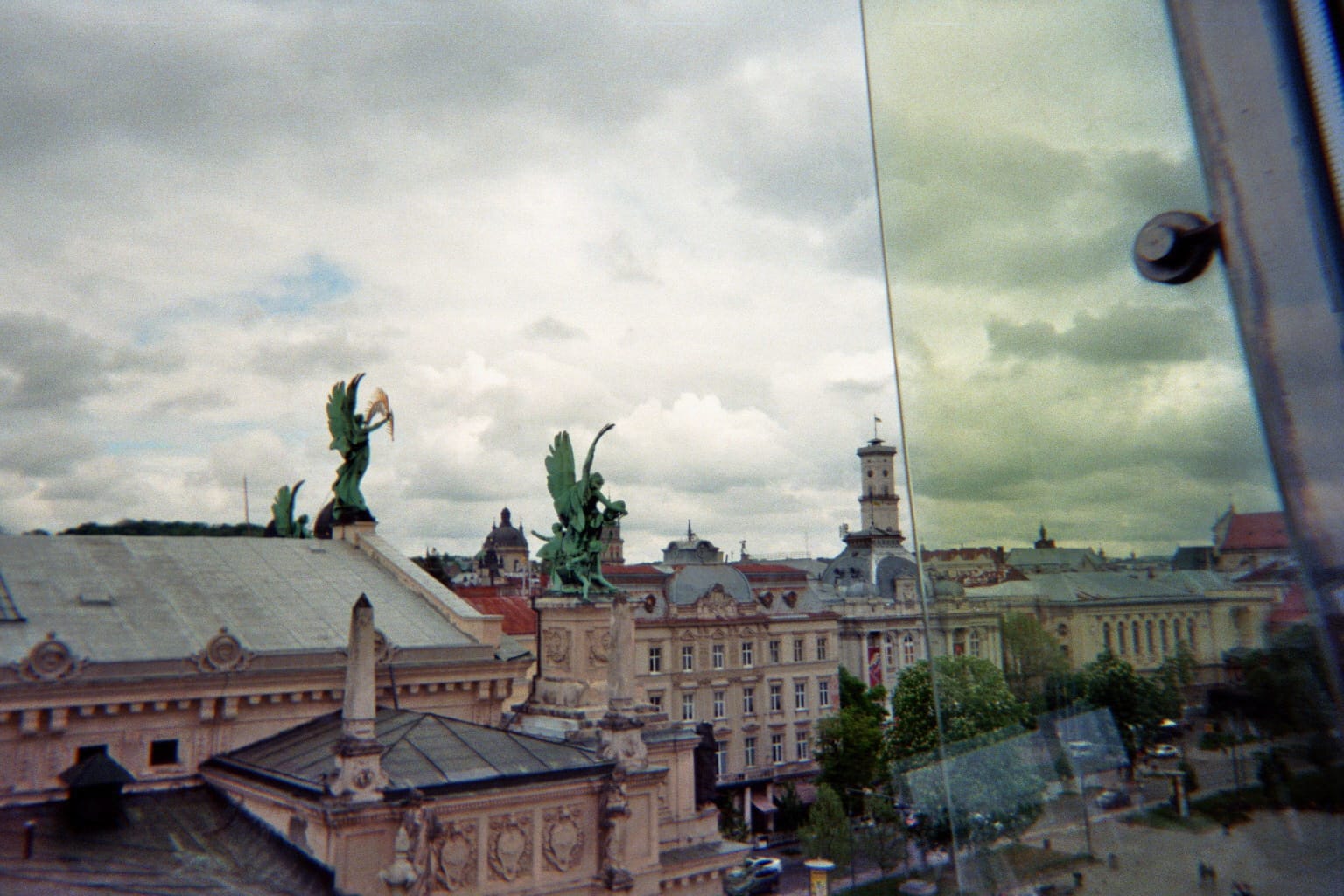
In Lviv's evolving arts scene, Soma Majestrina serves as a vital hub amid ongoing conflict and displacement. How does this collective sustain creativity and community support despite war's toll, and what role do external aid and local resilience play in maintaining Ukraine’s artistic spirit?
Author: Jamie Noone
In a former book factory in Lviv, you can find Soma Majsternia. Part recording studio, part performance venue, part community meeting point, it hosts everything from doom-sludge bands and experimental electronic artists to dance workshops and zine projects. Run by a collective of artists and musicians, Soma reflects the eclectic and collaborative mindset of Lviv's contemporary arts scene, bringing together local creatives and newcomers alike in a space built on mutual support and experimentation.
© Jamie Noone
Soma Majsternia is an artist collective based in Lviv. Their work ranges from hosting live events and recording local and national artists to providing space for displaced families. From day to day, there could be booming guitar fuzz from local ‘stoner/doom sludge’ bands, or interpretive dance in the main linoleum-floored room.
Lviv in Context
In May 2026, I spoke with one of Soma’s figureheads, Sasha, in Lviv.
I met Sasha in a car park outside Soma Majestrina’s studio. As we stood there, we paused and looked up at the concrete blocks surrounding us. He pointed out that the whole complex was an old book factory and that it now hosts dance halls, recording studios, and even a nightclub.
We made our way up to the second floor, passing through a recording studio with drum kits, guitars, amps, keyboards, as well as a craft area. While walking around, Sasha explained that in February of this year, Lviv was targeted in one of the most vicious attacks from Russia since the beginning of the full-scale invasion in 2022. St. Andrew's Church, a 17th-century church and historical landmark, was hit by a drone strike and partly destroyed.
This is the environment Soma is navigating.
© Jamie Noone
Help, Arts, and Mirrors
Jamie Noone: How long has Soma been running, and how did it start?
Sasha: Back in 2019, Olya, a local artist, rented this studio where she did performative art and yoga practice. She held all sorts of leftist, feminist events. It continued until 2022, and then the war happened, and this then became a shelter for temporarily displaced people from the occupied territories. It was chaos. They lived here. I don’t know how many lived in total, but they changed over time; people came and left. We had a volunteer kitchen here, where we cooked for the residents and that continued for a year and a half. That was before my time, though.
Some international volunteers helped, like the Mirror Soup Kitchen from Amsterdam, which got their name from the Soma Soup Kitchen. They wanted to mirror what was done here in Soma. They cooked the same soup in Amsterdam and sold it out of a food truck, and all profits went back to us here at Soma. That was amazing. In March 2026, they came, and we did a zine together! This is what this concept of mirroring is about.
The place sort of disappeared from the map for a while after this. There was no capacity to run things, I mean, there were residencies from local Lviv artists, some shows were organised, but a lot of people were mobilised and sent to the front line, which made it much harder. It is kind of a running theme, as you can imagine.
JN: How did you get involved with the project?
S: So, I was playing in a doom sludge band called bagno. We set up a festival for bands playing in similar genres. There were 6 bands, from all over the country, even from Kharkiv. Olya was playing in an ambient duo, and that was where we linked up. My band and I began rehearsing after Olya met us, and she gave us the place for free as she was in Poland. There wasn’t much stuff, but we brought our stuff and recorded our album in the place!
JN: I’m curious about the music scene in Lviv. What does the scene look and sound like?
S: Since the war started, a lot of people fled to Lviv from some of the regions in the east and that has influenced the sound quite a lot. The city went from roughly 800,000 people to about 2 million in a very short time. As you can imagine, it became a sort of mix of everything. The people continued doing their work; it’s strange. The last guy we recorded was a rapper from Dnipro, a city close to the frontline—it gets bombed every day. We wanted to do a promo post on Instagram and asked for a description, but he said he doesn’t know anymore whether he is a Lviv artist or a Dnipro artist. The artists came here, and they became part of this scene. People from Odesa, Dnipro, or wherever had their own vibe and scene, but they are now in this scene, so it really is a mix.
JN: Regarding funding, is it all based on volunteering?
S: I can only speak for our studio. Our friends in Mirror Kitchen in Amsterdam helped a lot with their donations. We are still using the money that they generated to pay part of the rent. That covers roughly half of what we need to keep the place running. It is not easy, but we also do the live sessions here. It is not the only reason why we did this, but at least all the money from these events can go back directly into the space. We have our sludge bands but also want to have electronica and rappers and so on. We want to host a whole range of music to be as representative as possible.
© Jamie Noone
JN: I don’t want to have the war and Russia at the forefront of this story, but I have to ask how the morale and energy are to continue to do this amid such trying times? I can imagine it is tough to keep going.
S: Yeah, I mean I can’t go on without mentioning this. It has been very tough. A lot of musicians in the scene have been mobilised—it happens every day. For example, I was recording this reggae band, but the main vocalist got mobilised this week and now they are finished. In our band, the bassist got mobilised last year. That’s the reality. 5 out of the 6 bands that we were playing with at the festival I mentioned previously have had members mobilised.
JN: I am blown away by the strength of the scene here and what you guys do.
S: It is a miracle. You have all these violent and crazy actions happening, but you need things like this. People live for music or art. This is why we do it because if not us, who? I am sure people will also find a reason to do art and host spaces. We are lucky we can do it.
Maintaining Efforts
Leaving Soma and walking through the streets of Lviv, you get an undeniable sense of empowerment. At night, there are concerts ranging from chamber singing to outright punk gigs. The scene is full of people who are either too young to be mobilised or who have already been in some capacity.
According to the International Organisation for Migration (IOM), there are currently 103,709 internally displaced persons in Lviv. Trying to assist in the effort to aid some of the incoming citizens, organisations such as Soma rely on the funding of their events and internal projects, but also on the donations and work of others.
Organisations such as Mirror Soup Kitchen in Amsterdam reflect the current perspective that external actors can have in aiding Ukraine and its people during a time like this. Mirror Soup Kitchen developed a magazine with Soma called ‘the finger.’
"As a performative act of feeding the connection between two cultural spaces in very different contexts."
© Jamie Noone
With this aim, ‘It’s the voice of two initiatives eager to find a position in the complex reality of art production.’
Soma and Mirror Soup Kitchen are part of a wider effort to maintain Ukraine’s artistic endeavours and to aid in the ongoing conflict spurred by the full-scale invasion.
Published on June 11th, 2026
About the author:
Jamie Noone is a freelance writer from Dublin, Ireland, based in Berlin, Germany. Specifically writing about underground music scenes across Europe and beyond.