Somaliland celebrates 35 years of independence. But no one recognizes the country except Israel.
Krytyka Polityczna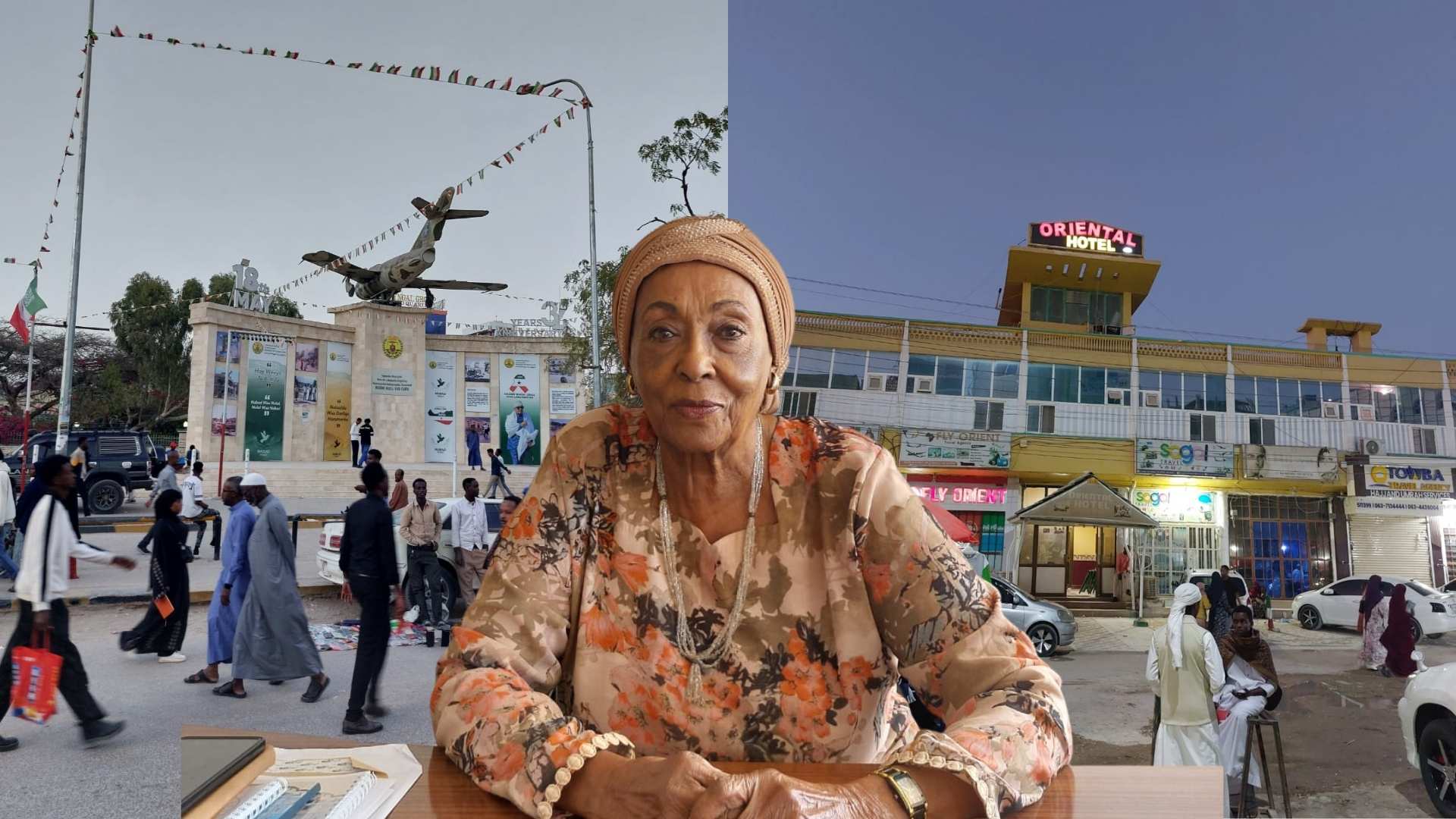
Somaliland has been functioning as an independent country for a decade. After being recognized by Israel, it hopes to attract investment and gain international legitimacy. The post Somaliland celebrates 35 years of independence. But no one recognizes the country except Israel first appeared on Krytyka Polityczna.
"Animal skins are sold here" – this is how the name of the capital of Somaliland, Hargeisa, is often explained. – We are a nation of traders, known for centuries. We trade and want peace. We have been known for this for centuries – says Dr. Edna Adan Ismail, once the First Lady, then Minister of Foreign Affairs. But above all: a midwife, nurse, tireless activist, and educator.
– We built our state without the International Monetary Fund, the World Bank, or international conferences. We have our own currency and passports. Elections are held regularly and peacefully. We have clearly defined borders, dating back to when we were a British protectorate. We have an engaged society, consciously participating in democracy. We fully deserve the friendship and recognition of our statehood from the international community – she asserts.
At the end of December last year, Israel was the first to recognize Somaliland's sovereignty. – It will be the safest place in the world – say residents of Hargeisa about the embassy of Israel that is to be established in the capital. – Not because of the forces used for protection, but because of our love and gratitude. We waited for this for over thirty years.
Independence is just the beginning
Until 1960, today’s Somaliland was a British protectorate – on June 26, it gained full independence. It was immediately recognized by 35 UN member states, including five permanent members of the Security Council. A bilateral agreement between the Somaliland government and the United Kingdom was assigned number 5349 and was recorded in the UN registers (UN Treaty Series, Volume 374). According to Article 102 of the United Nations Charter, such registration can only occur between sovereign states.
On July 1, 1960, Italian Somaliland gained independence. On the same day, completely voluntarily, Somaliland joined a union with the newly formed state, creating the Republic of Somalia – which it still regrets today. The agreement between the two countries was never ratified, as confirmed by a special reconnaissance mission of the African Union in 2005.
In 1991, Somalia collapsed as a state, and on May 18, Somaliland withdrew from the failed agreement, returning to the status of June 1960, i.e., independence from Britain. The country had gone through ten years of independence war, which was part of the civil war in Somalia that began in 1978. It was not peaceful before that either.
In October 1969, General Siad Barre seized power in Somalia. In the middle of the month, President Abdirashid Shermarke was murdered – the fatal shot fired by a bodyguard was not an uncontrolled burst of aggression or part of clan fighting. Although Siad Barre’s son-in-law effectively removed all documents and tapes with testimonies, the political assassination prepared the ground for military rule. It was necessary to get rid of the civilian president, and Siad Barre most likely had a role in this.
On the day of the funeral (October 21), the junta took power, and he became the head of state. Parliamentarians and ministers were imprisoned. Prime Minister Mohamad Egal, who was in the United States at the time, decided to return to the country. “Siad Barre will protect me” – he told his wife farewell. Edna Adan remained in London – that’s where they said goodbye. In Somalia, he was immediately imprisoned.
“The general was strange from the beginning. As soon as we were in the city, every evening at exactly nine o’clock, he would come uninvited to our residence to present the security report to the prime minister. Hitler’s mustache and heavy military boots smeared with paste as if it were jam. A thick layer of jam” – describes Dr. Edna in her 2019 book A Woman of Firsts those meetings from 1967-1969. As soon as she returned to the country, she was placed under house arrest for many months.
“We started completely alone”
Siad Barre began implementing scientific socialism. At first, he had support. People wanted reforms, basic rights, and public services. He assured skeptics that there was not a single line in the Quran that would contradict his idea.
In 1978, full-scale civil war broke out in Somalia, and three years later Somaliland began a ten-year struggle for independence. Assassinations, bombings, mass rapes, forced displacements on a large scale. Mainstream media – like “The Guardian,” “The Washington Post,” or Al-Jazeera – used the term “genocide” to describe what the Siad Barre regime was doing at that time.
Barre was ten years old when he witnessed the death of his father and brother at the hands of the Isaak clan. It could have been 1929. But even today – as admits Martin Plaut, a British journalist and former BBC Africa chief – for most people in the Horn of Africa, nothing is more important than clan and family. Then come herds, ensuring water and pastures. Borders are not that important. Apparently, Siad Barre from a young age wanted revenge. All members of the Isaak clan had to be murdered. That was the order – to kill everyone aged 15-35.
Hargeisa was destroyed in 90 percent. Over 50,000 civilians were killed in the city itself. Over half a million had to flee. It was the Dresden of Africa. There are over two hundred mass graves, containing remains of even over 200,000 people.
– That’s how we started. Completely alone. We brought refugees home and began building our country. Today, Somaliland has no terrorist groups, no pirates – says Dr. Edna.
There is energy and money
In neighboring Somalia, the central government controls less than 70 percent of the territory – the rest is in the hands of Al-Shabaab. It also does not fully control the capital, Mogadishu. Somali pirates, after a short break, resumed activities. Along with pirates from Puntland, they have an agreement with Yemeni Houthi rebels and a clear profit-sharing division.
– There is energy and money – says an Indian entrepreneur from Jaipur. We are standing on the roof of the Oriental Hotel in downtown Hargeisa. The building is considered one of the oldest in the city – somehow it survived bombings. – Look at all these small shops downstairs. That’s even three thousand in daily turnover, sometimes five. There are card payment terminals.
Cash is also present. It’s lying on the pavements. Brought in with wheelbarrows, without any protection. Sometimes it’s easier to weigh stacks of banknotes than to count them. The shilling exchange rate is low – even 10,000 for 1 dollar. It’s not just honesty and a sense of security. Running away with a big bundle of banknotes would be impossible.
However, in most shops, even water is paid for in dollars. It is also the currency used at huge animal markets. Millions of sheep, goats, and camels are exported to Gulf countries, mainly to Saudi Arabia. They account for over 60 percent of Somaliland’s GDP.
But the greatest wealth is strategic location. The port of Berbera has been invested in for years (by DP World) by the United Arab Emirates. Recently, Taiwan also invested millions in a quarantine facility for animals at the port. The Prime Minister of Ethiopia has been talking for years about developing a navy and a merchant fleet. Ethiopia has no access to the sea. Most exports go through the port of Doraleh in the capital Djibouti. On January 1, 2024, Ethiopia signed a Protocol of Understanding with Somaliland. Somaliland hoped this would be the first step toward recognition of sovereignty. However, the matter has fallen silent. Years ago, Ethiopian Prime Minister Meles Zenawi used to say: “If another country recognizes Somaliland, I will be the second.”
Today, only Israel recognizes Somaliland’s independence. There are expectations that the next will be the United Arab Emirates, perhaps the United States, perhaps India. It is definitely worth being there. Not only because the movement through the Strait of Hormuz does not look the same as before the American-Israeli attack on Iran.
Somalia, despite being a failed state, has an efficient diplomacy. It seeks allies and considers the recognition of Somaliland’s sovereignty an attack on its sovereignty and territorial integrity. Djibouti does not want to lose Ethiopia as a client for its ports. Turkey is also clearly present in Somalia. Since Ethiopia is in one camp, Egypt must be in the opposite. The African Union has been against all divisions since the 1960s, believing they weaken the continent. However, it recognized South Sudan’s independence (2011) and Eritrea (1993). It is Eritrea, after thirty years of a war emphasizing its solitary fight, that should be the first. But it is allied with Somalia and Egypt, against Ethiopia, which does not want to open its two ports (Assab and Massawa).
On important occasions – such as the anniversary of independence on May 18 or the recognition of sovereignty by Israel on December 26, 2002 – residents of Hargeisa celebrate under the monument in the city center. It is a MIG 17, a Soviet fighter shot down during the Battle of Hargeisa.
Very differently, President of Somaliland Abdirahman Mohamed Abdullahi arrived at this year’s Forum in Davos by a different aircraft. A luxury helicopter, dark glasses, and lots of photos on social media. It’s not entirely clear how he left the country. The helicopter is registered in Switzerland. When comparisons to James Bond appeared, hardly anyone denied it. There was a sense of humor and a lot of freedom in media appearances. But it was the organizers of the Forum who decided that the President of Somaliland should be invited. There, he met, among others, with the President of Israel. And in all his speeches, he emphasized that he does not ask for help. He invites investors and investments.
The post Somaliland celebrates 35 years of independence. But no one outside Israel recognizes the country first appeared on Krytyka Polityczna.