Drone war of nerves and more and more questions. Baltic countries do not blame Ukraine
Krytyka Polityczna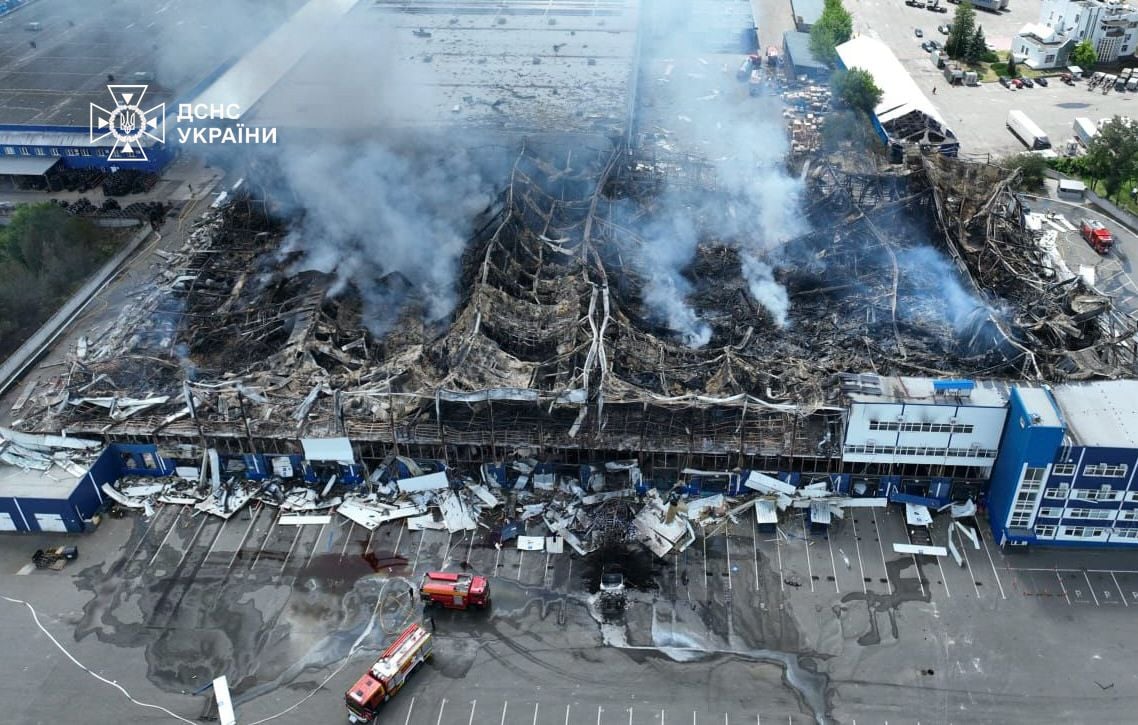
Recently, incidents involving drones—Ukrainian, Russian, and of unknown origin—occurred over Latvia, Lithuania, Estonia, and Finland. The post Drone war of nerves and more and more questions. Baltic countries do not blame Ukraine first appeared on Krytyka Polityczna.
Russia carried out a massive night-time attack on Kyiv from Saturday to Sunday. A total of 90 missiles and several hundred drones were launched at targets in Ukraine. The Russians struck the Ukrainian capital with a missile, a ballistic missile, allegedly hypersonic (due to its attributed speed), which they plan to introduce into service in 2024.
Reports from Kyiv are terrifying. Many residential buildings have been destroyed, almost in every district of the city. Four people have died, and dozens are injured. Ukrainian sources claim that this was the largest attack on Kyiv since the start of the full-scale war.
In Poland, however, more attention is drawn not by further victims of Russian aggression, but by a Ukrainian patoinfluencer who parked above Morskie Oko. What can you do. The Polish society has grown tired, even bored, of the war, and a significant part of it (the society) does not believe in it, because as long as shops and cafes are operating somewhere in Ukraine, it means there is no war.
Lithuania has things to improve
Apparently, the footage from Lithuania also did not make a big impression, where on Wednesday authorities called on residents of some regions of the country to hide in shelters due to a drone that violated Lithuanian airspace on Wednesday morning. Photos from Vilnius, where people are waiting out the alarm in underground garages, remind us that – contrary to social moods in Poland, as I read them – the war is not coming to an end. On the contrary, it is spreading wider and wider.
The Lithuanian alarm lasted about an hour. Now, Lithuanian authorities are trying to draw conclusions from what happened. It turned out, for example, that some shelters were closed and it was difficult to determine who had the keys. There was also controversy over shelters for schools and kindergartens, where staff did not want to let in outsiders. According to authorities, this should be the case, but the problem was that these shelters appeared on the map of publicly accessible shelters, which should not have happened. Similarly, as sending information about the threat to residents of regions not covered by the alarm.
The alarm was canceled after about an hour. That hour was a real stress test for the Lithuanian state. The overall balance is that it went quite well, institutions and appropriate mechanisms worked, but there are things to improve, rather urgently.
Baltic countries do not blame Kyiv
What happened to the drone is unknown. The Lithuanian army lost it from radar around 11. The Lithuanian Crisis Management Centre admitted that it cannot determine whether the drone crashed on Lithuanian territory or left the country. NATO fighter jets also failed to locate it. Initially, it was believed that the unmanned aircraft came from Belarus, but the Lithuanian command later corrected this information, stating that the drone crossed the border from Latvia.
Another issue is, whose drone it actually was. Until recently, Russia was responsible for incidents involving drones and airspace violations. We remember, after all, Russian drones over Poland in September 2025. But for several months now, Russia has been increasingly attacking Ukraine with drones, and some drones that recently fell in Baltic states belonged to the Ukrainian army.
On May 7, two drones, believed to be Ukrainian, deviated from their course, flew over Latvia from the direction of Russia, and hit a fuel base in Rezekne. The tanks were empty, and no one was injured, but the incident cost the Latvian defense minister his job.
Meanwhile, on May 19, a drone was shot down by a Romanian F-16 fighter jet over Estonia. The Baltic states do not have their own air forces; their airspace is protected by allies under the Baltic Air Policing mission. A day after the alarm in Lithuania, on May 21, residents of several regions bordering Russia and Belarus received an official message asking them not to leave their homes. This situation also has its drone background. On Saturday morning, an unidentified drone fell into Lake Dridrza in Latvian Latgale.
Similar incidents have also occurred recently in Finland, which, like the Baltic states, is a declared ally of Ukraine in the war against Russia. Kyiv admitted that in several cases, it was indeed Ukrainian drones flying into or falling on the territory of allied countries, for which the Ukrainian foreign minister apologized.
Watch the new videocast:
However, Ukraine maintains that Russia is responsible for these incidents, which uses electronic warfare devices to deliberately redirect drones over Lithuania, Latvia, and Estonia, attempting to exert psychological pressure on those societies.
Governments of the Baltic states generally agree with this and do not blame Kyiv. Instead, Russia spreads the theory that the drones, which have been effectively attacking targets in Russia this year, e.g., terminals in Russian ports in the Gulf of Finland, originate from Baltic territories – and threatens retaliation. What next?
The post Drone war of nerves and more and more questions. Baltic countries do not blame Ukraine first appeared on Krytyka Polityczna.