The doctor must speak Polish. This is not an attack or discrimination.
Krytyka Polityczna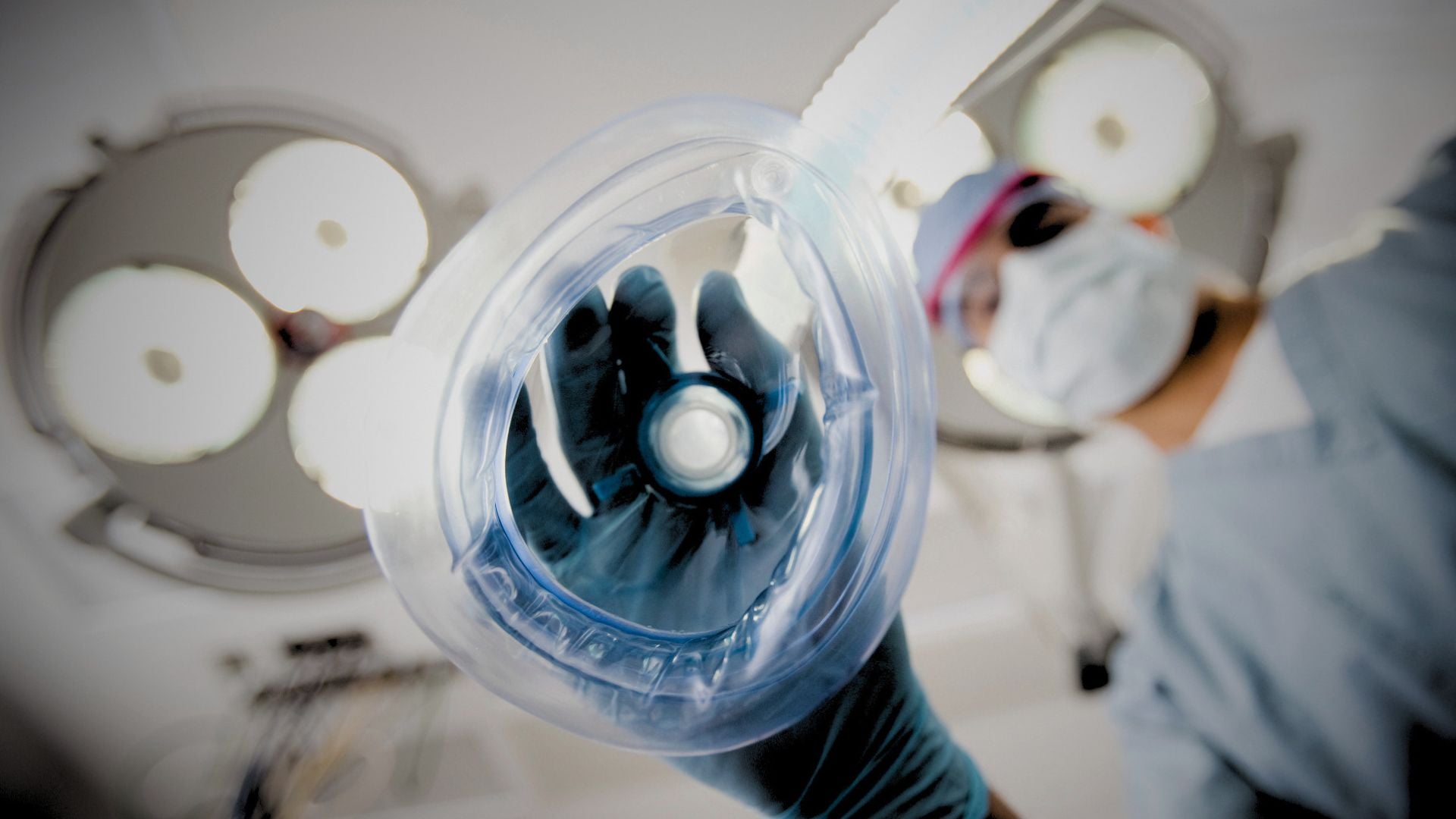
Medicine is not just pills and procedures. Patients need to be given a sense of security during a moment that is often one of the most difficult in their lives. A doctor cannot use gestures to show what the patient should do – says Maria, a Polish-Ukrainian anesthesiologist. The post "The doctor must speak Polish. This is not an attack or discrimination" first appeared on Krytyka Polityczna.
Paweł Jędral: How to become a doctor, and then an anesthesiologist?
Maria (name withheld): Even as a fifteen- or sixteen-year-old, I knew I wanted to go into medicine. I simply felt that working in a hospital, with and for people, was something for me. I chose anesthesiology later, during my postgraduate internship. It seemed very diverse: you can work in the operating room, in intensive care, and at the same time it combines pharmacology, physics, and biology. Everything focuses here and now, on one patient. That was fascinating to me.
Anesthesiologists often meet people at critical moments in their lives. How does that affect you?
It can be tough. I have been in the profession for 15 years, and now I mainly work with children. I anesthetize for simple dental procedures as well as very serious surgeries. Even if the patient is healthy, the anesthesia itself is a difficult experience. It’s a matter of trust: you give medications after which a person completely entrusts themselves to the medical team, often losing consciousness and not knowing what is happening to them.
Anesthesiologists not only ensure safety but also comfort, privacy, and peace of mind for the patient. Of course, saving lives is more important, but these aspects are still very significant. Every patient comes to us at a difficult moment—maybe due to illness, maybe pain—that has brought them to the hospital or clinic. Sometimes it manifests as anger or fear. And since part of my job involves communication, you cannot ignore that pain, anger, or fear; you have to engage with it.
What does contact with a patient before anesthesia look like?
You talk to the patient constantly, unless they are unconscious. For scheduled surgeries, I explain the anesthesia process the day before and answer questions. We clarify what medications will be administered and what sensations they might experience.
During general anesthesia, contact is brief, but with local anesthesia, the patient may be conscious throughout the procedure. Some want to talk, others listen to music, and sometimes even watch the procedure. Some patients want to be explained in real-time what is being done and why. That’s also a form of support.
With children, it’s different. A child cannot consciously give consent, so we try to minimize stress as much as possible. Usually, children receive premedication—medications that calm them in some way before the actual anesthesia. Then our task is to anesthetize the child as quickly as possible, and along the way, we simply entertain them, try to distract them—using toys, conversation, singing. The goal is to ease the moment of separation from parents and entering the operating room.
How did your path to medicine in Poland look?
I completed the Ukrainian high school exit exam, had a good result, and knew I wanted to become a doctor. I considered studying in Kyiv and Lublin, but in Kyiv, my parents were told outright that they would have to pay a bribe. In Poland, it was enough to pass the Polish high school exam and get into university normally, without bribes or tricks. So I took the exam and chose Lublin.
My grandmother was Polish, and we often traveled to Poland, so I didn’t see it as moving to a foreign country. I was more choosing a university than a country. After two years, I transferred from Lublin to Warsaw because my father lived here. After university, I did an internship, then started my residency at the Children’s Health Center because I wanted to work with children. It was the only pediatric center offering training in anesthesiology and intensive care.
Where are you from? Western Ukraine, Galicia?
From Równe. Nice city, not too big, but not small either, although I basically left it behind as a teenager and have already stayed in Poland.
Why?
Because I was already living here and didn’t think about returning right after studies. Also, as far as I knew, the Polish diploma wasn’t fully recognized in Ukraine at that time. The level of medical education and the specialization system were also important—my opinion is that Poland offers greater opportunities for learning and development.
How do you remember the beginnings after moving?
It was a bit like someone moving from Warsaw to Kraków for studies. From Równe to Lublin is about 250 or 300 kilometers. I already knew Polish, so language wasn’t a problem. I moved into a dormitory in Lublin and quickly met people. I remember that time very fondly.
In essence, you are very close to Polish culture. How would you like to be described? A Polish Ukrainian, a Pole of Ukrainian origin, or simply a Polish doctor, without any adjectives? How do you think of yourself?
That’s a very difficult question. I am a Polish woman working in Poland, I am a citizen, but I am also Ukrainian, I was born there. I speak Polish, but I also speak Ukrainian; I think in Ukrainian… and sometimes in Polish. I believe I am both.
From your perspective, how does the work of a doctor in Poland differ from that in Ukraine? What works better, what worse?
I haven’t worked in Ukraine, so I can only speak about what I’ve heard. In my opinion, the Polish system of training students and residents works significantly better. In Ukraine—so I was told—a big problem is corruption at universities.
I remember a story of a school friend who studied in Kyiv. She was surprised that in our first year we had to study anatomy very intensively. She said outright that in their country, some credits could be “got” for $300. That was shocking to me.
There’s also a difference in the career path itself. In Poland, residency lasts five or six years to obtain specialization. In Ukraine, a doctor becomes a specialist faster, but in my opinion, that’s too short to gain proper experience.
On the other hand, Ukrainian doctors, like Belarusians, often impress with their practicality. They work under conditions with less access to equipment, so they learn to manage and do things “with nothing.” This results from shortages, but their resourcefulness is truly impressive.
That’s somewhat related to war experiences. I remember a situation in a hospital in Mariupol where doctors used improvised equipment. Do you think Polish doctors would cope in such conditions?
I think so, in extreme situations. We have very good surgeons.
In which areas do Ukrainian doctors, in your opinion, have experience that might be lacking in Poland?
Certainly in emergency medicine and “field” medicine, including military. My generation of doctors in Poland doesn’t have such daily experiences.
Here, some things like manual ventilation or quick improvisation of equipment are not as common in everyday practice. Over there, it was often a necessity. Unfortunately, this experience results from the working conditions. Among Polish doctors of my age, such skills are rare. Of course, there are Polish doctors around 60 who could assemble anesthesia equipment or manually ventilate with a bag and mask.
Have patients in Poland ever commented on your origin? Did they comment on it in any way?
Yes, the accent is probably noticeable, especially when I am tired. Now, after a shift, it probably comes through more, but I don’t control it or try to change it.
Honestly, I’ve never had problems or unpleasant situations with patients because of it. On the contrary—if someone notices my accent and asks where I’m from, I say I’m from Ukraine. Most reactions are very friendly. Sometimes there are comments like “we’re in this together” or “it’s good to support each other.”
On the other hand, my brother, who has lived in Poland as long as I have, sometimes hears comments—suggestions like “I wonder if Ukrainians who get Polish citizenship are really Poles now.” Maybe such teasing happens more to men, because it’s a more competitive environment? It also matters that you simply can’t tell from me that I wasn’t born in Poland. For people with a different skin color, the perception is completely different.
In Poland, different approaches to work and motivation are visible. How do you think it looks in medicine? You came to Poland partly because you didn’t have to pay bribes and the level of studies was higher. I, on the other hand, know people who went to Ukraine to study dentistry because it was faster, cheaper, and easier.
Yes, I know that from the medical community too. I’m not saying those are bad doctors—passing the high school exam is just one test and shouldn’t define a person. I simply know cases of people who didn’t get into medical school in Poland, so they went, for example, to Lviv, to get into university—and they became doctors.
Some of them later transferred to Polish universities or finished their studies there and then had their diplomas recognized. So yes, obtaining a medical degree in Ukraine can be easier than in Poland. But many doctors are more ambitious or prefer to study in Poland because of fewer barriers of a different kind.
And how do you view the Polish healthcare system? What works well, and what needs change?
Oh, that’s a topic we won’t finish discussing! The hardest part for me is that in public debate, there’s often a narrative that the National Health Fund “has no money because of high salaries/raises for doctors and nurses,” as if the problem is the medical staff. That’s very unfair—to doctors, nurses, and paramedics, without whom the system doesn’t function.
I also find it hard to accept the idea that a hospital should “make a profit.” A hospital is for treating patients, not for generating profit. In my understanding, it’s an institution that by definition spends money on healthcare—and that shouldn’t be judged like a business.
From a doctor friend working in Silesia, I hear that hospitals sometimes experience organizational chaos—for example, psychiatric patients are moved to internal medicine wards and vice versa. Cost-cutting is also an issue: hospitals don’t always have access to the full range of medications, so treatment can be “partial”—for example, a psychiatric patient during internal medicine hospitalization doesn’t receive full pharmacotherapy, only the medications that are available. So the internal medicine problem disappears, but the psychiatric one worsens, and the effects of previous therapy fade. For outsiders, it’s shocking. Meanwhile, financial logic and the debt of facilities lead to such limitations.
I agree, but again, it’s largely a matter of funding. I’ve worked in several hospitals for adults, now at the Children’s Health Center, and partly in private practice. At CZD, these problems are less frequent because it’s a well-funded facility, but it’s true that systemically, there are significant gaps.
And this isn’t only a Polish problem. For example, children from the UK come to us who haven’t had diagnostic imaging. They were treated symptomatically for a long time, e.g., with paracetamol—and it turns out they have serious diseases, like a brain tumor. In Poland, such a child would be diagnosed and treated much earlier.
However, in Poland, the situation is worsening. Limitations on diagnostics and preventive measures (including MRIs, CT scans, endoscopies) are very concerning. The imposed limits on tests will lead to more patients with advanced disease. If preventive care is restricted, long-term treatment costs increase, and health outcomes worsen. Colonoscopy is cheaper than treating colorectal cancer—that basic fact is often ignored.
In public debate, the topic of Ukrainian doctors and the rules for their employment in Poland often comes up. After 2020, especially after the full-scale invasion, many Ukrainian doctors came here. On one hand, it helps with staffing shortages; on the other hand, there are requirements from medical chambers regarding their qualifications and licensing. How do you assess this discussion and the entire process?
I think standards must be maintained. Training systems differ between countries, so full recognition of diplomas and exams are necessary. I myself chose to study in Poland because I knew I would learn here and not have to pay a bribe.
Regarding conditional medical licenses (PWZ) for Ukrainian or Belarusian doctors, I believe it’s a fair solution. They get time to meet the requirements and fully recognize their diplomas.
And if they haven’t met all the conditions, for example, failed the language exam? Recently, there was publicity about doctors who didn’t pass the exam at the required level and lost their conditional licenses. Do you think that’s how it should be?
Yes. If you work in a hospital, you must know the language. It’s not discrimination, but patient safety and communication. That’s obvious.
Have you encountered situations where the language barrier caused real problems?
Yes, during COVID-19, when I worked in a dedicated COVID hospital. At that time, temporary licenses (PWZ) for doctors and nurses were easier to obtain. It was often difficult to communicate when dosing medications or ordering tests. Even if someone knew Ukrainian or Russian, precise communication in Polish was still essential in hospital work. I can’t imagine working without it.
I also heard opinions that some smaller hospitals in Poland heavily relied on Ukrainian or Belarusian doctors, often without full specialization. Directors said that when some of these people left or didn’t meet requirements, staffing and organizational problems arose.
That’s a matter of the system, where the priority is cost-cutting. It’s hiding behind the good of the patient, although it really doesn’t serve them, and they end up paying for it. How can you conduct interviews or treatment without a common language?
Listen to the new video podcast
The solution would be simply better funding, additional positions—then it would be possible to hire more staff or organize language courses and lighten shifts so that doctors have time to learn.
After a shift, a person often has neither the space nor the strength to study. And Polish is a difficult language. If I moved to Scandinavia, I would get an intensive language course paid for by the system. I’m not saying Poland must do exactly the same, but if someone comes to the country and wants to work here as a doctor, I believe they must learn the language to function normally and be a full member of the system they work in.
But that also raises broader questions. When a Ukrainian doctor comes to Poland and starts working here, I can’t say definitively who helps whom more and who should adjust their requirements. Does Poland give them a chance to work and integrate into the system, or do they provide Poland with their work, which is often lacking and very much needed?
Yes, and I think it shouldn’t be a contest of who helps whom more. In practice, it’s mutual benefit—the system needs doctors, and doctors need a system where they can work.
And I believe that also entails responsibility on the part of the state and the system. Because if we accept someone into work, we should create conditions for them to find their place in that system. For example, providing language courses, but also organizing work so that they have time and space to learn the language, rather than endlessly working shifts and losing their licenses because over the last two years they accumulated 400 hours a month.