There will be no "Macedonian Mamdani," but at least Skopje has been cleaned up.
Krytyka Polityczna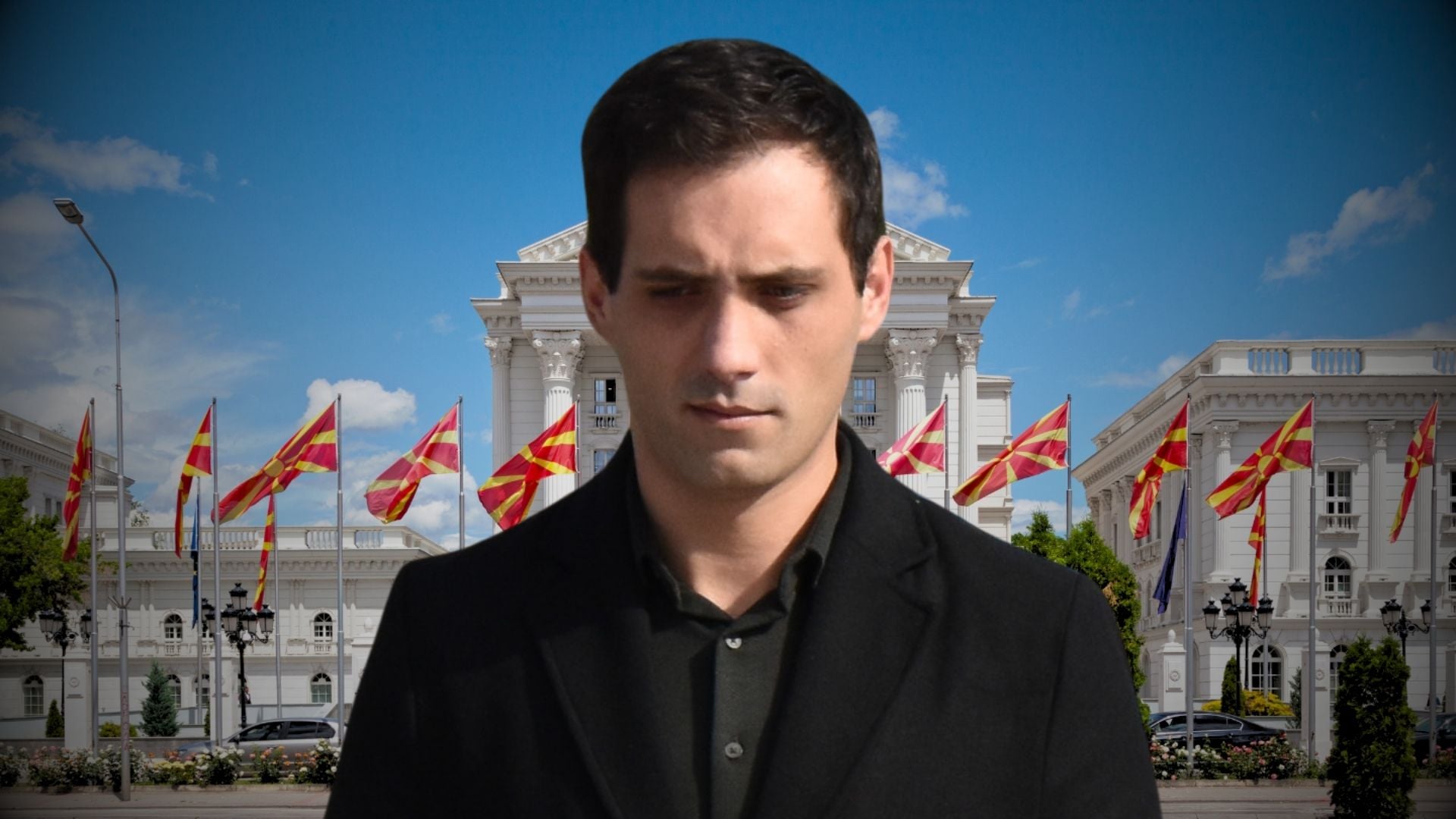
In Skopje, a right-wing mayor promised to clean up the city in 72 hours – and built a political narrative around this image. Behind this image lies a state where, for years, networks, favors, and private interests have been more important than institutions. The post "Macedonian Mamdanie" will not happen, but at least Skopje has been cleaned up first appeared on Krytyka Polityczna.
For the past few days, Skopje has been living the story of a wolf that broke loose from its chain and wandered through the neighborhoods of the capital. The fact that all services were put on alert was announced on Facebook by the city mayor, Orce Gjorgjievski. “Order must be maintained in Skopje!” – he wrote, as usual portraying himself as the host who rules the city with an iron fist.
Last autumn, under this motto, he ran his election campaign as a nominee of the ruling right-wing party in Macedonia. He promised to put an end to traffic jams, pothole-ridden streets, catastrophic air quality, and the arbitrary “urban mafia” that was rapidly building multi-story buildings without order or legal permits. As well as waste, which had been piling up for months from unemptied containers and illegal dumps.
Great cleanup of Skopje
It looked strange to watch the televised debate before those elections. On the screens behind the candidates’ heads, looped footage of the Vardar River was displayed, flowing like an oriental kilim, dotted with plastic trash. Gjorgjievski promised that if he won, he would clean the capital within 72 hours. He kept his word.
In the evening, after the swearing-in, a hundred garbage trucks arrived at the parking lot under the entertainment hall. The new mayor personally supervised the cleaning, in front of the camera flashes and the whirling yellow lights of the beacons. The prime minister also strolled nearby, occasionally shaking hands with those involved in the big cleanup operation of the capital. At the end, Gjorgjievski announced that the weight of the collected trash was nearly five thousand tons.
He didn’t even have time to dispel the pungent smell of detergents, and the new mayor dismissed several hundred employees of the municipal administration who were receiving salaries but not coming to work. A new sidewalk and fresh asphalt appeared here and there, the fountain in the city park was restored. In February, almost on the anniversary of the death of a girl hit on a crosswalk in the center of Skopje, the Safe City program was launched – an automatic camera system that detects traffic violations. The number of road accident victims, which in Macedonia exceeded the EU average by 70 percent, was successfully reduced. In the first 24 hours, almost 110,000 violations were recorded nationwide, and now these numbers are steadily decreasing. Driving through Skopje at 50 km/h – like never before.
But it’s not entirely due to the managerial talents of the new mayor. Equally important are the arrangements. The previous mayor of Skopje had a tough time because the councilors from the ruling right-wing party boycotted all her initiatives: from buying new buses to building bypass roads. Meanwhile, the municipal waste management company ensured that tons of trash appeared on the streets of Skopje before the elections. The same trash that the heroic Gjorgjievski cleaned up after the elections.
Collective moral compromise
Networks of political-private arrangements keep the country in a grip, and the state in a state of collapse forces people to fend for themselves. Efficient functioning in Macedonia involves seeking solutions through favors, connections, and the ubiquitous “fixing”: from finding a place in a nursery to getting approval for building a balcony. Circumventing regulations and knowing the right people are sometimes the only ways to, for example, save a loved one’s health. And sometimes simply to earn money or to repay someone. Such is the collective moral compromise.
That’s why, in 2019, in the infamous bus accident in Laskarci, fourteen people died, and six were convicted: from the owner of the company, through the driver, to the employees at the inspection station who approved the technical review despite a brake defect.
Meanwhile, a year has passed since the greatest tragedy in modern Macedonian history. During a nightclub fire in Kočani, 63 people lost their lives. According to an expert report, the event took place in an illegally built building with a sealed ventilation system, windows covered with metal sheets, an escape route locked with a key, and a ceiling lined with polyurethane foam, which releases cyanide during burning. The club had not been inspected for 13 years, throughout its entire period of operation, for which the owner rewarded officials with watches worth 100 euros.
The OSCE/ODIHR commission’s report indicates that the Kočani disaster contributed to an even deeper crisis of trust in public institutions. This social distance is well illustrated by the turnout in the last elections – the lowest since Macedonia declared independence.
Boy from the block versus party loyalist
The biggest surprise of last year’s mayoral elections was that, for the first time, someone outside the two-party system advanced to the second round. Gjorgjievski’s opponent in the runoff was Amar Mecinović, who identifies as a Marxist – one of six MPs representing the radical Left in parliament.
Mecinović only became recognizable during last year’s campaign. A campaign different from all others because it was positive and fresh. Entirely online, as the electoral commission did not grant the Left the right to run spots on public television.
This did not prevent Mecinović from reaching the young generation, which mostly does not watch television anyway. He won hearts with videos where he plays guitar in front of a youth cultural center, rides his bike recklessly along the river, and high-fives baristas at a neighborhood cafe.
This sincere and eloquent young guy became a pleasant alternative to the same old faces talking since the breakup of Yugoslavia. But also someone with whom the new, sprekaryized generation could finally identify. And hope for a miracle, that “Macedonian Mamdani” would defeat a well-established rival (the analogy to the mayor of New York is even stronger because Amar belongs to the Bosniak minority, associated with Islam, although he is an atheist).
Amar outpaced the more politically experienced competitors by a long shot. However, in the second round, he had no chance for a fair fight. Before the only debate, only the right-wing candidate’s spots were shown. The program was prepared by a station that had been in the hands of a ruling party MP for years. The tone of this confrontation was set by personal jabs from Gjeorgievski.
Gjeorgievski pointed out Mecinović’s failure to submit his diploma thesis. Being the son of an MP himself, he mocked that his opponent had worked at a gas station and slaughterhouse to make ends meet during his studies. He called this a flaw. It’s hard to find a more telling illustration of the unequal duel between a party loyalist from the blocks and a young, ambitious guy from the neighborhoods.
The internet erupted. Comments appeared that even Josip Broz Tito himself had only a technical high school education. However, the emotions did not translate into turnout at the polls. Gjeorgievski won with the support of just over 20 percent of all eligible voters in Skopje. It was a historically low result.
Casinos instead of a future
Macedonia seems to be shrinking inward and closing itself off without much faith. The words most often heard locally are alternately: “circus” and “disaster.” Successive governments fail to deliver on their promises and fall due to corruption scandals. Nostalgia for Yugoslavia is not about romanticizing youth but about remembering better times. Macedonia was then closer to Europe than ever after 1991. Especially since the dreamed accession to the European Union is not coming, and the euroenthusiasm has faded.
Social dissatisfaction, however, does not translate into participation in elections or even street protests. In Serbia, a construction disaster – similar to the nightclub fire in Kočani – led to mass demonstrations in 2024. The main difference is that Macedonian environments are smaller and less organized. Young people are looking for opportunities to leave the country, and the ethnically divided society is simply tired of ongoing political crises.
Under the rule of the hard hand of Orce Gjorgjievski, the trash has disappeared from Skopje’s streets, but the cityscape remains unchanged with hundreds of casinos and betting shops selling fantasies of wealth. The gambling industry employs tens of thousands of people who cannot count on better job offers. The need for a legal ban on gambling has been advocated by Levica for some time, but this profitable business seems too tightly intertwined with political interests.
**
Marek Matyjanka – born in 1991 in Lublin. Graduate of Balkan Studies at UAM, doctoral student at the School of Humanities at Jagiellonian University. Writes about the Balkans. Lives alternately in Krakow and Skopje.
The post “There will be no Macedonian Mamdani, but at least Skopje was cleaned up” first appeared on Krytyka Polityczna.