Are you also orphans of America? There's nothing to be ashamed of.
Krytyka Polityczna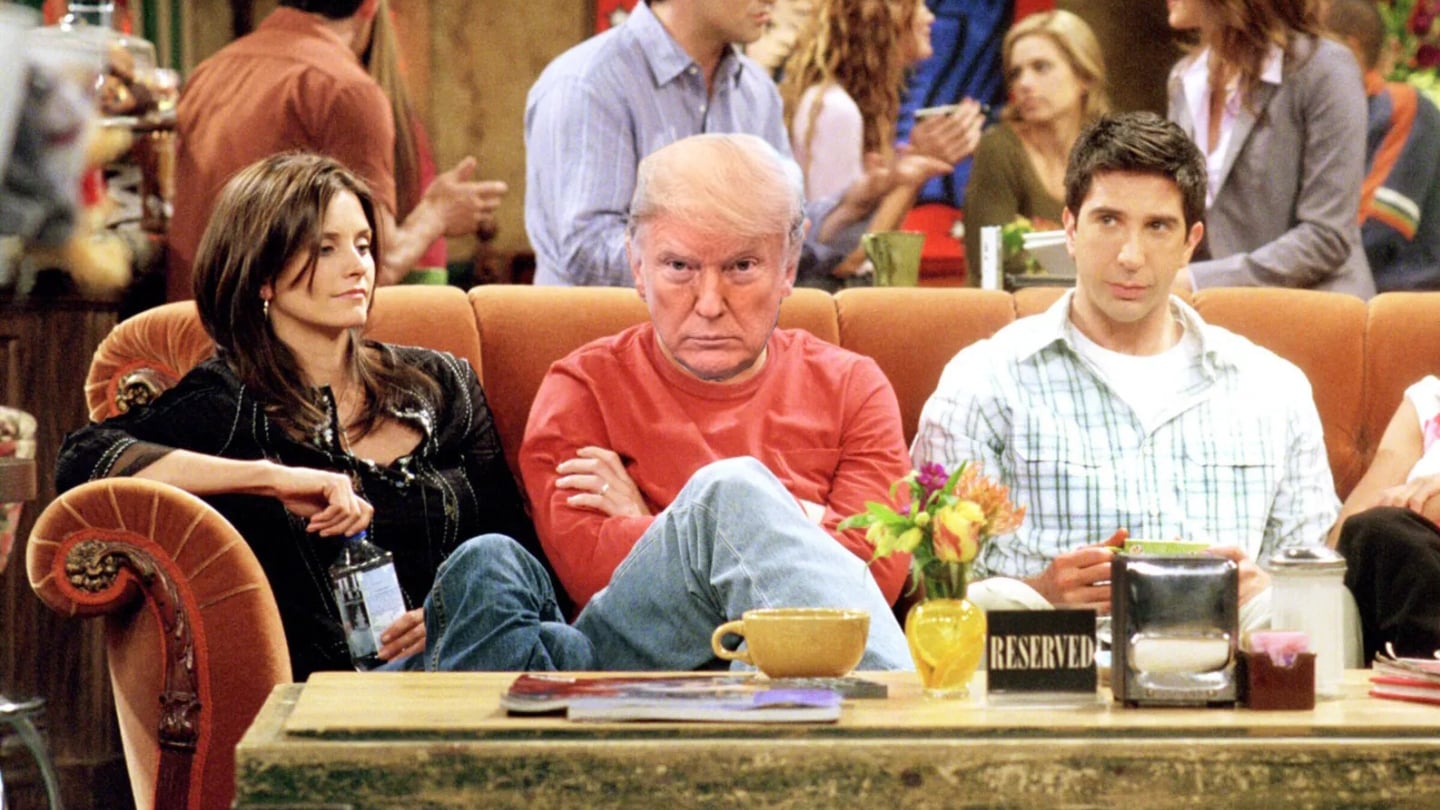
Even if America has never been the country people wanted to see, at least it tried to pretend to be such a country. Where is the key to understanding the mourning for America buried by Trumpism? The post Are you also orphans of America? There is nothing to be ashamed of first appeared on Krytyka Polityczna.
"Rhode Island: state in the northeastern part of the USA in the New England region. Area: 3.1 thousand km²; the smallest state in the USA. Flat surface, in the northwest partly hilly. Industry: machinery, metal, electrical engineering, textiles, jewelry making, lace. Dairy cattle breeding, poultry, fishing."
I am nine years old and I copy information about each US state from the beige volumes of the PWN encyclopedia into my notebook. The notebook is A4 size and is probably the most beautiful artifact I own: on the hard, glossy cover, there are two towers, red and gold from the glow of the setting sun over the Hudson River.
I have never seen New York. For now, I have to be content with notes about corn cultivation in Dakota and a cutout from "TeleTydzień" of the Los Angeles horizon or the Statue of Liberty (there were photos during previews of action movies). It would be useful to stick in photos sent by relatives from America, but I can only see those at the aunt's place on weekends. The photos show aunts and uncles who emigrated to the States before the Iron Curtain was torn down or shortly after. Dressed more casually than I am used to, they pose against the backdrop of Niagara, the George Washington Monument, or simply, against the open garage of a two-story house with a facade of white planks.
Soon after, my favorite uncle is leaving for America. After three months, I get a letter from him: "When we landed, I saw a car explode. That’s exactly America," said grandpa. Grandpa (whom I call my uncle's) was one of the first to emigrate. Apparently, he first arrived in the USA by ship, on which he romanced some beautiful Krystyna for two weeks. Later, he switched to airplanes, systematically escorting other family members on their journey to the USA.
The beautiful Krystyna might have been made up. I come to this conclusion when, a few years later, I travel with my uncle's grandpa from a small town in northern New York to Pennsylvania. I have winter break, and my uncle has some goods to sell that he bought at a garage sale. He tells me a story about a friend who lost his arm at work, and then that arm was still visible in X-ray images. If I don’t believe him, I can call that friend and ask. Sure, I might also call the Friends TV show and ask how it’s possible that Monika is a head chef at a popular restaurant on Manhattan, yet spends afternoons and evenings on an orange sofa in a café under her block?
Then I myself switch from the orange sofa in Central Perk to the sofa from The Right Side of the Street. The Right Side of the Street is drugs, violence, poverty, racism, and the helplessness of the system, but also a reassuring awareness that in the States, you have to work quite hard to even file an indictment against obvious thugs.
Meanwhile, I go to school in a small American town. They organize an active shooter drill, where we practice positioning ourselves in dead spots within the potential shooter's line of sight, who would look into the classroom through a square window in the door. We treat it as a carefree break from lessons, which displeases the teacher. He frowns and says we should pray that these exercises never become necessary. The classroom becomes much quieter.
My school friends are usually unruly, loud, and ask stupid questions with enviable ease. They ask me if I understand what Gary Oldman is saying in Russian in Air Force One (played for us before summer break in civics class) and if in Poland we have hairstyles (I am still in the era of high school grunge with perpetually tousled hair). I mock this in letters to my friend in Poland. They supposedly have some sense of humor, but when I start mocking my own stupidity after failing a test, they rush to comfort me and assure me that next time it will work out. So lame.
Their confidence and verbosity are overwhelming. Occasionally, in conversation with someone from Poland, I hear that they only pretend, but I don’t care, just as I don’t care whether the waitress Rachel could really afford to rent a spacious apartment in West Village. I confide in my friend that if I were to faint anywhere, it would only be on a bus full of Americans.
Maybe if I were younger and more social media-savvy, I would record this as an Instagram reel, which would then be commented on in the media along with other videos of foreigners visiting the States during the World Cup, amazed by Americans, their friendliness, and absurd food. “They really want to like us,” – recently said American journalist Kara Swisher, recounting her trip to France. “They check if I support Trump, and then it’s all nice.”
After returning, I take America seriously, academically. In practice, this means roughly exposing American hypocrisy and discovering the gap between grand declarations and actions. For a while, I delude myself that it’s simply academic to adopt the most cynical interpretation of events. One professor stubbornly claims that the Civil War was only about money, and another that it was about money and the emancipation of slaves.
I fall into historical rabbit holes, but I remain impressed by how fierce the debates are in every hole. On the orange sofa next to Rachel, Ross, and Baltimore police officers terrified of the consequences of their brutality, sits a society eager to reduce internal tensions and understand what it is and what it aims for.
The greatest impression, however, is still made by delving into cases decided by the Supreme Court. Instead of information about cattle herds in Rhode Island, I write down excerpts from landmark rulings.
For example, you can burn the American flag at a demonstration because “by punishing its desecration, we weaken the freedom it symbolizes” (Texas v. Johnson, 1989). “Students or teachers do not lose their constitutional rights by crossing the school gate” – ruled in Tinker v. Des Moines (1969) after the high school suspended students for wearing black armbands in protest against the Vietnam War. “The freedom to marry is essential in the pursuit of happiness by free people” – this is the case Loving v. Virginia (1967), when all state laws banning interracial marriage were invalidated.
American pay officer Paul Weems was accused of forgery and sentenced to 15 years of hard labor in chains. In the appeal, the Supreme Court ruled in favor of Weems, deeming the sentence cruel and unusual. The Eighth Amendment to the Constitution prohibited cruel and unusual punishments (cruel and unusual punishment), but it was originally intended only to ban the most barbaric, such as breaking on the wheel. The Supreme Court extended the scope of the amendment, justifying that “as circumstances change over time, new needs and new goals emerge. Therefore, the principle that must retain its power and significance must evolve and adapt to social changes.”
Subsequent victories based on the Eighth Amendment, such as ruling the death penalty unconstitutional for people with intellectual disabilities (Atkins v. Virginia, 2002) and minors (Roper v. Simmons, 2005), directly derive from Paul Weems. The most famous statement interpreting this amendment was in the ruling in Trop v. Dulles (1958). The Supreme Court then ruled that depriving a citizen of citizenship as punishment for a crime is unconstitutional. It is a more primitive form of punishment than torture, the court held, because it causes “the complete destruction of an individual’s status in organized society,” and the meaning of “cruel and unusual” must change with “evolving standards of decency that mark the progress of a maturing society.”
On the orange sofa sit evolving standards of decency.
Meanwhile, I come across the book Ordinary Vices by American political theorist Judith Shklar, which I forget for years until now, when I wonder what America has become. Shklar gives me the key to understanding the mourning for America buried by Trumpism.
Shklar argues that the way society decides to rank vices such as cruelty, hypocrisy, snobbery, betrayal, and misanthropy determines its political character. Modern liberal democracy considers cruelty – the deliberate infliction of physical or emotional pain on a weaker person or group by a stronger – as the worst vice. Cruelty provokes fear, and fear kills freedom. When people fear that the state or neighbors might hurt, humiliate, or torture them, they cannot live as free citizens.
Because cruelty is condemned in liberal societies, citizens and politicians go to great lengths to hide it. Thus, they become hypocrites, disguising their private wickedness with virtuous rhetoric. According to Shklar, hypocrisy is an essential vice in liberal democracy. First, it’s simply better when people at least pretend to be tolerant and kind rather than openly showing their cruelty. Second, hypocrisy itself is evidence of the existence of some commonly accepted virtue – and that gives citizens a lever to hold politicians accountable for discrepancies between their words and deeds.
With Shklar’s thesis, as with almost any thesis, others—philosophers and social researchers—naturally debate; that’s a topic for a completely different text, perhaps also about how the excess of hypocrisy brought Trump to power.
As David Rieff noted in a 1999 article, the effectiveness of Human Rights Watch stemmed from its ability to expose the hypocrisy of Reagan’s administration. Reports documenting crimes supported by the US-backed regime in El Salvador exerted pressure on Reagan and forced him to respond to the most serious abuses. This mechanism weakened during Clinton’s administration, which openly subordinated human rights issues to economic interests regarding China. As a result, subsequent reports on repression, including in Tibet, no longer influenced the direction of policy.
“We should care less about hypocrisy and more about its absence,” – noted Jacob T. Levy during Trump’s first term. Although the United States repeatedly committed criminal acts, and condemning authoritarian regimes was often selective, the very need to justify policies morally indicated that certain norms still held. Both society and political elites recognized the superiority of these values, at least declaratively. Only the Trump administration outright rejected this facade, adopting an openly shameless stance.
That’s why Stephen Miller arrogantly states that the world is ruled by force and America has no intention of pretending otherwise. And if they want Greenland, they will take it. That’s why Trump tells Zelensky that he has no cards and it’s better for him to capitulate to the aggressor.
Moreover, this is not just about discarding an uncomfortable moral standards corset for aggressive foreign policy, but also paving the way to use cruelty as a means of building community within one’s own country. Cruelty is the essence of the matter – writes Adam Sewer in an article for “The Atlantic”:
“The only real skill Trump has is deception, and his only genuine pleasure – cruelty. The joy caused by cruelty bonds him to his most fervent supporters through shared contempt for those they hate and fear: immigrants, Black voters, feminists, and treacherous white men showing empathy toward anyone who might take away their inherited right to America. The president’s ability to enact this cruelty with words and deeds excites them. It makes them feel strong, proud, happy, and united. And as long as [Trump] provokes these emotions, they will allow him to do anything, no matter the cost.”
That’s why official White House profiles feature “funny” videos suggesting Americans relax to the sound of chains, in which deported immigrants drag themselves onto planes heading to God knows where. That’s why, after shooting two American citizens protesting, members of the administration come out and lie blatantly, calling them terrorists. That’s why Trump publicly humiliates his own cabinet members, testing their loyalty boundaries.
On the sofa, there are no longer Rachel, Ross, Cedric Daniels, or the evolving standards of decency. Today, America does not bother with hypocrisy. The sofa is gilded, Trump sits on it, and reposts a video where he dumps feces on Americans’ heads and all the orphans of American soft power, its soothing hypocrisy, and bombastic freedom-messianic ethos.
Happy birthday, America. Maybe in the next season, there will be some plot twist. Or maybe on the X-ray, I will actually see my uncle’s friend’s severed hand.

The post Are you also orphans of America? No shame in that first appeared on Krytyka Polityczna.