We must save multilateralism
Kapitál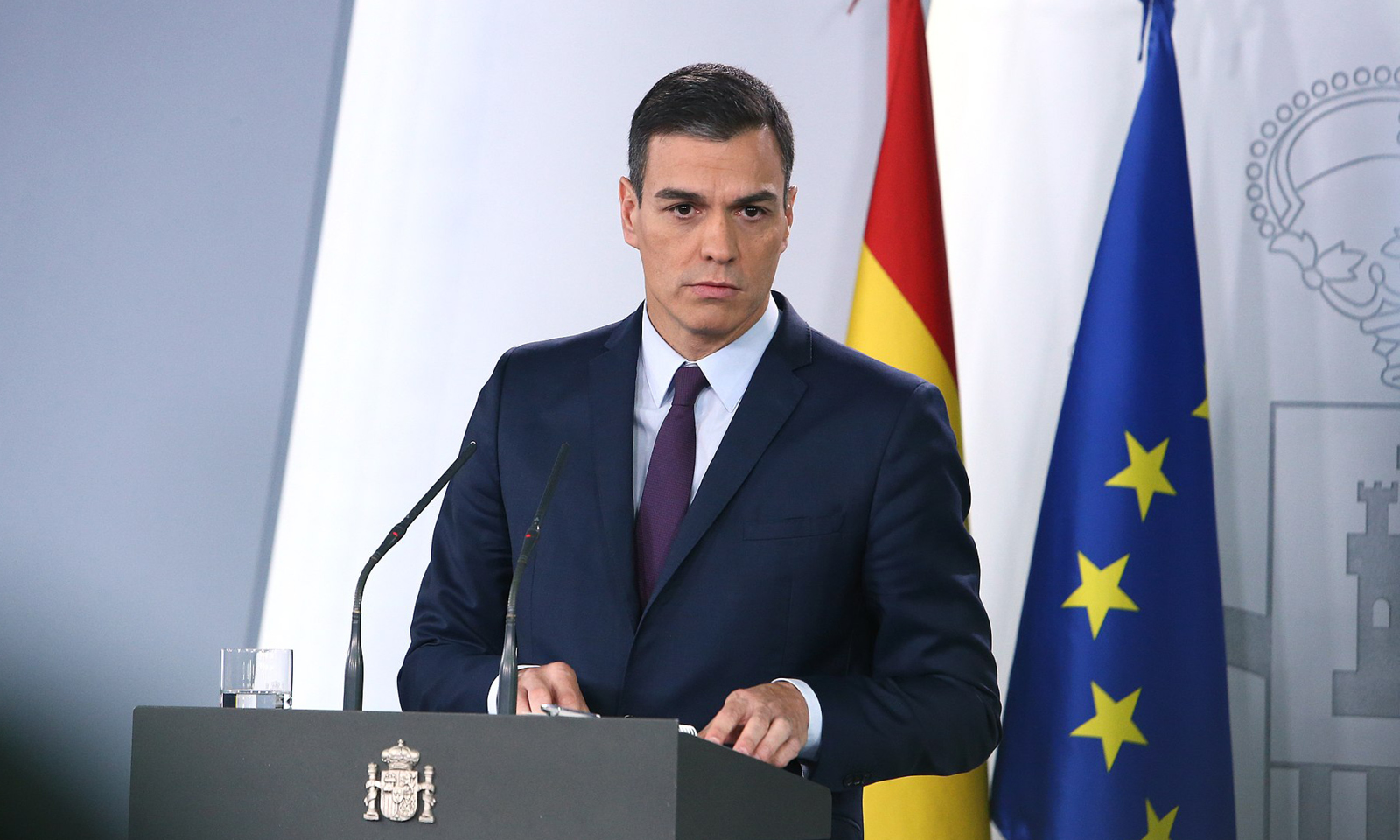
“No to war.” Spain has decided that in the international community it will defend its own position – both regarding the American attack on Venezuela and the Genocide in Gaza. The Spanish Prime Minister explains in his article for Le Monde diplomatique the reasons why his country rejects the rule of force.
"No to war." Spain has decided that in the international community it will defend its own position – both regarding the American attack on Venezuela and the Genocide in Gaza. The Spanish Prime Minister explains in his article for Le Monde diplomatique the reasons why his country rejects rule by force.
Looking at scraps of paper, no one changes. Until someone tells him that it’s about money.
John Searle, one of the most prominent philosophers dealing with the functioning of institutions, used this simple example to illustrate something with much deeper validity: a large part of social reality exists only because we, as a collective, have agreed upon it. The line drawn on the map is recognized as a border. Words written in a contract are considered binding. And, as already mentioned, ordinary pieces of paper can make us rich people.
These collectively shared fictions enable the existence of social reality. One such fiction is money, another is the multilateral system and the rules of international law that determine the nature of relations between states. Many people, however, without hesitation, recognize the first of these fictional constructs, while firmly rejecting the second, for a simple reason: a certain type of shared fictions determines the boundaries of power. Violating the order based on rules also brings advantages to some – at the expense of all others.
In recent years, pressure on the international order has intensified mainly on two fronts. In the first case, some major and developing powers have bet that they can weaken established norms and adapt them to their advantage. This trend manifests most brutally in the form of military conflict. Russia’s invasion of Ukraine, the devastating genocide in Gaza, the US initiatives aimed at regime change in Venezuela, and most recently in Iran – all these operations carried out without the slightest attempt to gain international approval confirm that some governments openly question the very foundations of the international system. A similar logic can also be observed outside the front lines, specifically in the increasingly frequent abuse of trade, technology, and even migration flows as tools to exert pressure on rivals and promote their own geopolitical interests.
When political leaders prefer silence over defending international law
All of this must be added to the fact that the world order based on rule adherence is seriously undermined when political leaders choose to remain silent about ongoing aggressions or speak very ambiguously – instead of loudly defending international law. In an effort to avoid confrontation, they opt for appeasement policies (appeasement), because they mistakenly believe that restraint will persuade aggressors to stop violating the rules. They think words have much less influence on international affairs than bombs. They are wrong. When it comes to rule enforcement, words are very important and have the power to change the world. As soon as even medium-sized powers show incapacity or outright unwillingness to defend international law, they accelerate its erosion even more. Their failure will not go unnoticed – allies, large and small states will notice, and as soon as a sufficient number of actors conclude that norms are no longer binding, the system will start to collapse. These powers may seek a secure position, but what they ultimately create is chaos, which they fear so much.
The trends mentioned stem from a simple but mistaken assumption that in a multipolar world, restoring spheres of influence would benefit power relations because it would create a balance among great powers, bringing benefits to their citizens as well. However, history has shown us the opposite. As soon as common rules cease to apply, balance does not emerge, but rivalry, provoking conflicts and spreading (or nearly everywhere) poverty. We must realize that a dignified life, associated with economic growth, functioning markets, and social protection, which we now take for granted, depends precisely on international stability and peace. Multilateralism is not some abstract ideal but everyday reality. It is a working position in a Detroit factory, a well-stocked supermarket in Paris, a student’s life in London, a holiday in Japan. Our prosperity is based on something as fragile as it is essential: maintaining order based on respect for rules. And if someone doubts this, just imagine how difficult it would be to sustain a prosperous state if, as a result of a prolonged war in the Middle East, the price of oil rose to $150 a barrel, if a third of global fertilizer supplies were blocked due to conflict, if other trade flows were interrupted, and energy markets were subject to constant fluctuations. These are not improbable scenarios. They will become reality as soon as the law of the stronger prevails. And that’s why the choice is not between multilateral order and some new balance, but between multilateralism and chaos.
No matter what some people think, this system does not operate at the expense of people. Quite the opposite – over the past seventy-five years, it has contributed to creating the most prosperous and most stable period in human history. The number of victims in armed conflicts has decreased by about half over recent decades, although it has begun to rise again in recent years. The average global income per capita has increased fivefold. International trade has experienced unprecedented growth, with its volume worldwide increasing approximately fortyfold since 1950, contributing to improved living standards across all continents. Extreme poverty has decreased from about 60% of the world’s population to less than 10%. While this result is far from perfect, it is significantly better than all other models humanity has known so far.
However, these successes must not distract us from the shortcomings of the multilateral system. It is evident that it is not sufficiently representative, as shown by the example of the United Nations Security Council, which still reflects the power relations of 1945, not those of the 21st century. Some norms are evidently applied very selectively, and when they are violated, institutions often lack the authority or means to enforce them.
The fact that the structure of international relations contains cracks cannot lead to the decision to demolish it entirely and then be forced to sleep under the open sky. A world without a rules-based order is a world ruled by brute force, where exerting pressure is easier than pursuing coordinated solutions to humanity’s problems. We cannot afford that, especially not now.
Today, we need more than ever effective tools for global cooperation: national states remain actors in international politics, but many current challenges transcend national borders, and no country can deal with them alone. These challenges are more complex and urgent than those faced when the multilateral architecture of international relations was still being built. Climate change threatens to disrupt conditions for life across vast areas of the planet. Migration reveals deep global inequalities and has become a key political issue in many countries. The introduction of artificial intelligence and rapid technological progress also bring new risks spreading across borders.
All these challenges require global cooperation, which is only possible through a multilateral system. Achieving desired results will require reforms – structural and urgent reforms.
First, we must dispel the illusion that the multilateral system exists to serve as a tool for enforcing old power relations. For it to survive, it must reflect power relations adapted for the 21st century. The UN Security Council is again the most striking example of this anachronism: its composition, structure, and veto system are at odds with the very principles on which the multilateral order was built. If today it often seems that this institution cannot respond to international security challenges, it is largely because it has failed to adapt to them in practice.
Second, it is necessary to build a more democratic, comprehensive, and inclusive system. Countries of the Global South cannot remain passive recipients of resources. They must become actors in their own future – with the right to express themselves, vote, and have real influence in multilateral institutions. Major democracies of the Global South must have their place in bodies where the most important decisions at the global level are made.
Finally, we must strengthen the oversight and enforcement powers of institutions responsible for global security. Rules only make sense if their compliance can be ensured, defended, and their application promoted. Those who violate rules have been behaving ignorantly for too long, while those respecting them often only settle for statements expressing their “deep concern.” This cannot continue. Concern must turn into action: it is time for those who violate rules to face international pressure, and for those who defend them to act with the resolve appropriate to the gravity of the situation.
Reforms must be effective and representative: we need faster decision-making, clearer mandates, and more reliable mechanisms for implementing collective decisions. At the same time, we must increase the efficiency of international institutions, reduce bureaucracy, and strengthen their ability to respond to urgent crises. Otherwise, the credibility of the multilateral system will continue to decline.
The logic of multilateralism is most tangible in Europe. The European Union was born from a hard historical lesson: rivalry, which we could not prevent, led to two great catastrophes. It destroyed nations, economies, states. The turn to international law, shared institutions, and joint governance was not just an expression of idealism but a way to survive, and later a path to prosperity.
The European project shows what it can look like when mutual dependence functions through organized and control mechanisms instead of being questioned. Thanks to common rules and institutions, European states transformed their continent – once torn by constant wars – into a territory based on cooperation, integration, and development. Today, European countries are among the most advanced in terms of living standards, life expectancy, social development, and democracy. And most importantly, they have maintained peace on a continent that was for centuries the epicenter of world conflicts.
For Europe, therefore, multilateralism is not just a moral obligation – it is also its structural necessity. In a world governed by rules and institutions, the old continent wields much greater influence than would be expected based on population or GDP. The European Union enhances its influence by embedding it in a system of laws, rules, and cooperation.
The same applies in reverse. In a world dominated by spheres of influence and brute force, Europe’s structural position is doomed to disappear. The “power against power” policy favors larger and more brutal players. Mutual economic dependence becomes more a means of exerting pressure than a source of prosperity. Alliances focused on collective security are becoming fragile, and Europe’s openness – one of its greatest strengths – is turning into its weakness.
The consequences of weakening European openness are already visible today. While a rules-based system degrades, geopolitical competition, economic problems, and external pressures have begun testing the cohesion of the European community. In an increasingly divided world, the persistent temptation to prioritize national interests alone is growing.
However, this path does not lead to true security. The demise of multilateralism will not restore sovereignty to Europe but rather diminish its influence. The European project itself demonstrates that cooperation can reduce rivalry and that rules can turn mutual dependence into a source of stability and prosperity, not vulnerability.
International order rests on a shared belief: that power can be limited by law, that commitments can outweigh immediate interests, and that cooperation can reduce rivalry. For some, this belief may be just fiction. Yet, this fiction allows billions of people to cooperate, trade, prosper, live in peace, and enjoy a standard of living unprecedented in history.
Therefore, we need not see the current crisis as an inevitable decline of multilateralism but as a test that will show us how committed we are to restoring this system of mutual cooperation. Today, we have a once-in-a-generation opportunity – to reform our shared rules, norms, and institutions that enable global cooperation instead of abandoning them. Without them, international realism will quickly turn into a fight for the victory of the strongest.