We must learn to live with war
New Eastern Europe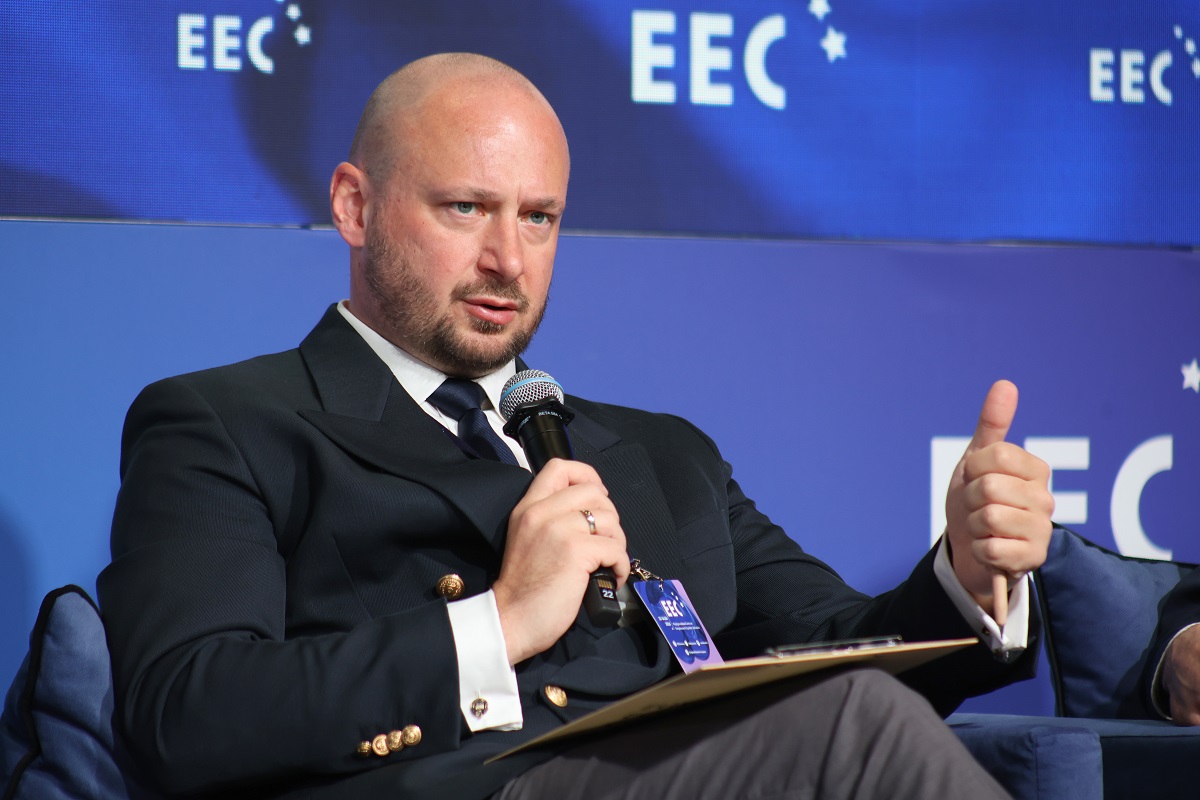
An interview with Jacek Siewiera, former head of the National Security Bureau in Poland. Interviewer: Aureliusz M. Pędziwol
AURELIUSZ M. PĘDZIWOL: We have both heard the words of Nataliya Panchenko, the head of the Euromaidan-Warsaw initiative, who said that the war in her home country, Ukraine, might accompany her for the rest of her life. What impression do those words make on you?
JACEK SIEWIERA: I fear that we must all get used to a situation where an armed conflict is an integral part of our reality. Russia’s war against Ukraine clearly shows that the consequences of military action, such as loss of life and economic destruction, occur far from the front line. Cities are on the front line, so to speak. It is they, above all, that are under threat, not only from hybrid warfare but also from conventional military operations, missile strikes and air strikes. The Middle East only confirms this. The capitals of Saudi Arabia, the United Arab Emirates, Qatar and Bahrain have found this out the hard way. Riyadh, Abu Dhabi, Doha and Manama – each of these cities has experienced the violence associated with military operations, having been attacked in a war in which they were not a party.
Does this mean that wars which last for a long time, say seven or maybe even 30 years, are not necessarily a thing of the past?
On the contrary, as battlefields become increasingly technologically advanced, the idea that wars can be short with precise operations relying on surprise to achieve rapid political objectives is being dispelled. Such wars are only possible with a significant technological advantage. Large-scale conventional wars will take the form of protracted conflicts, as similar access to advanced technologies will make it very difficult to achieve political objectives through military action.
So what Russia is doing now cannot be regarded as the death throes of a state that would like to be an empire once again?
I believe that, in the long term, the Russian Federation’s prospects are bleak. It is, however, a vast, and diverse country, yet one strained by a war. Its economy relies mainly on the sale of raw materials – and subsequently on countries once dependent on fossil fuels, which are slowly moving away from this form of energy production. The future of Russia as we know it is therefore uncertain. This country will certainly become more radical. What remains of it, however, will certainly not be a void. We will therefore have to learn to live for decades alongside a society that has been indoctrinated, deceived and subjected to anti-western propaganda. Children in schools are taught to shoot at the enemy and defend their homeland through acts of cruelty committed against their peers from neighbouring countries. After all, such educational materials are the norm in the Russian education system today.
Do you see the possibility that Russia could attack another European country?
Russia not only possesses strategic nuclear forces, it has also never renounced the possibility of using other weapons of mass destruction, including chemical, biological and radiological weapons. This is why European cities will have to prepare for such threats. I mean this quite seriously. Few people realize that in Russia’s war against Ukraine more than 5,000 cases of chemical weapons being used have been recorded to date.
After the elections in Hungary, the European Union managed to unblock a loan for Ukraine and approve another package of sanctions against Russia. How significant will the 90 billion euros be for Ukraine?
It means a great deal. Today, Ukraine’s military effort is largely funded by the European Union. Its level of dependence on European countries remains very high. Ukraine has tried to compensate for the lack of these funds by sending experts and weapons to the Middle East, where the arms it has supplied have proven effective against suicide drones and other means of aerial attack used by Tehran.
In that sense Donald Trump has inadvertently helped Ukraine…
It seems that Ukraine is carving out a new role for itself both within the global security architecture and in the defence industry. Meanwhile, the decisions taken by the US president show that it is very difficult to predict the consequences of one’s own actions. Ukraine is filling a gap where the American arms industry is unable to provide cheap, yet effective, means of intercepting airborne attack weapons, namely simple missiles and drones.
Which cost not millions, but at most tens of thousands of US dollars each.
Exactly. Ukraine has mastered the technology in this area and is now using its capabilities to bridge-finance its own military effort and stabilize the front line. Along this line, small but numerous counter-attacks have recently been observed in many places, which indicate that the morale within the Ukrainian Armed Forces is also rising. These 90 billion euros will not only support arms purchases, but will also enable additional recruitment into the armed forces, all while further boosting the morale of soldiers fighting on the front line and providing them with motivation.
Does this support from the EU provide Ukraine with a chance of winning the war? Of course, it remains an open question what winning actually means…
Unfortunately, if victory means regaining lost territory, Ukraine has little chance of achieving that. And indeed, it is very difficult to say how far Ukraine is from achieving success. We must get used to the fact that this war will be a protracted conflict. That is why it is in Europe’s interest for Ukraine to join the European defence industry and the European economy.
And this means membership in the European Union?
In the long term, definitely yes. First, however, the EU itself must develop its own security policy. It must decide what role within the security architecture it should play – coexisting with NATO and cooperating with the United States, its increasingly assertive strategic ally which is scaling back its activities in the European theatre.
Would you agree that the EU is striving to do just that?
This dialogue is certainly ongoing, and we are also seeing concrete and – interestingly – rather swift action by European Commission standards. The EU has recently been making a number of sound decisions, though there are certainly some that deserve criticism. The planned internal standardization of armaments, outside the NATO STANAG (Standardization Agreement), is a mistake. Such a move could only speed up arms production in selected European countries; it would not, however, translate into greater competitiveness for the Union as a whole, and certainly not into greater interoperability between armies or the development of the European Union’s partnership with the US. The EU also has a great deal of work to do in terms of strengthening the resilience and security of urban areas, i.e. where we are not talking about hard defence capabilities. Crisis communication, the detection and countering of weapons of mass destruction, civil protection and civil defence, and resilience to hybrid threats and sabotage are further major challenges facing the Union. In this area, the Union already has a mandate to act.
How do you assess the evolution of attitudes in Poland and Germany, and perhaps also France, over these four years of war?
I have the impression that within the Weimar Triangle, which brings these countries together, this dialogue was much more dynamic in the early months of the war. I had the honour of accompanying the former Polish president, Andrzej Duda, to the Triangle’s meetings, and I remember those discussions. Today, Poland’s relations with France – and, since the Christian Democrats came to power, with Germany as well – are being deepened on a bilateral basis. It would be good if the Weimar Triangle were to become a new catalyst for political processes in Europe. It should be permanent, enduring and operate on a more regular basis.
Returning to Ukraine and its arms industry. How have the Ukrainians managed to develop this industry despite constantly being under attack?
They are being attacked and destroyed. They are subject to the same targeting as that carried out by western armed forces in Russia.
What do you mean?
It is no secret that American and European allies are providing Ukraine with intelligence support, satellite imagery, and target identification. The Russians also have their own capabilities in this domain. They use them, among other things, to identify targets within Ukraine, including its arms industry. And they are doing it more effectively than in the early stages of the war. The Russians are also learning.
And the Ukrainian arms production?
The Ukrainians have mastered the ability to decentralize their defence industry in such a way that the contributions of many small plants are combined into a final product, which is manufactured directly to order for commanders, bypassing the entire state central procurement system, and is delivered to the brigades conducting military operations in the demarcation zone. I deliberately say “demarcation zone” rather than “line of contact” because these forces no longer actually come into contact anywhere, and in places the strip separating them is as much as 50 kilometres wide. This is a result of the ubiquity of drones on the battlefield. The Ukrainian defence industry has become a model for how to build highly resilient supply chains, in which decentralized production contributes to high efficiency, even if it involves additional organizational effort. This is evident from the numbers of unmanned systems and platforms being produced, which are sent directly into combat and, today, even for export.
Has the Ukrainian defence industry become a model for the EU or NATO?
We still have a great deal of work to do to reach the level of production decentralization that Ukraine has achieved. In Europe, the heavy defence industry still dominates, managed by large conglomerates rather than by a multitude of small entities producing unmanned systems.
Jacek Siewiera was the head of the National Security Bureau in Poland (2022-25). He is currently a senior fellow at the Atlantic Council.
Aureliusz M. Pędziwol is a journalist with the Polish section of Deutsche Welle.