Searching for cracks in the city and in the system. Reflection on the book "Beranidlo imaginace"
Kapitál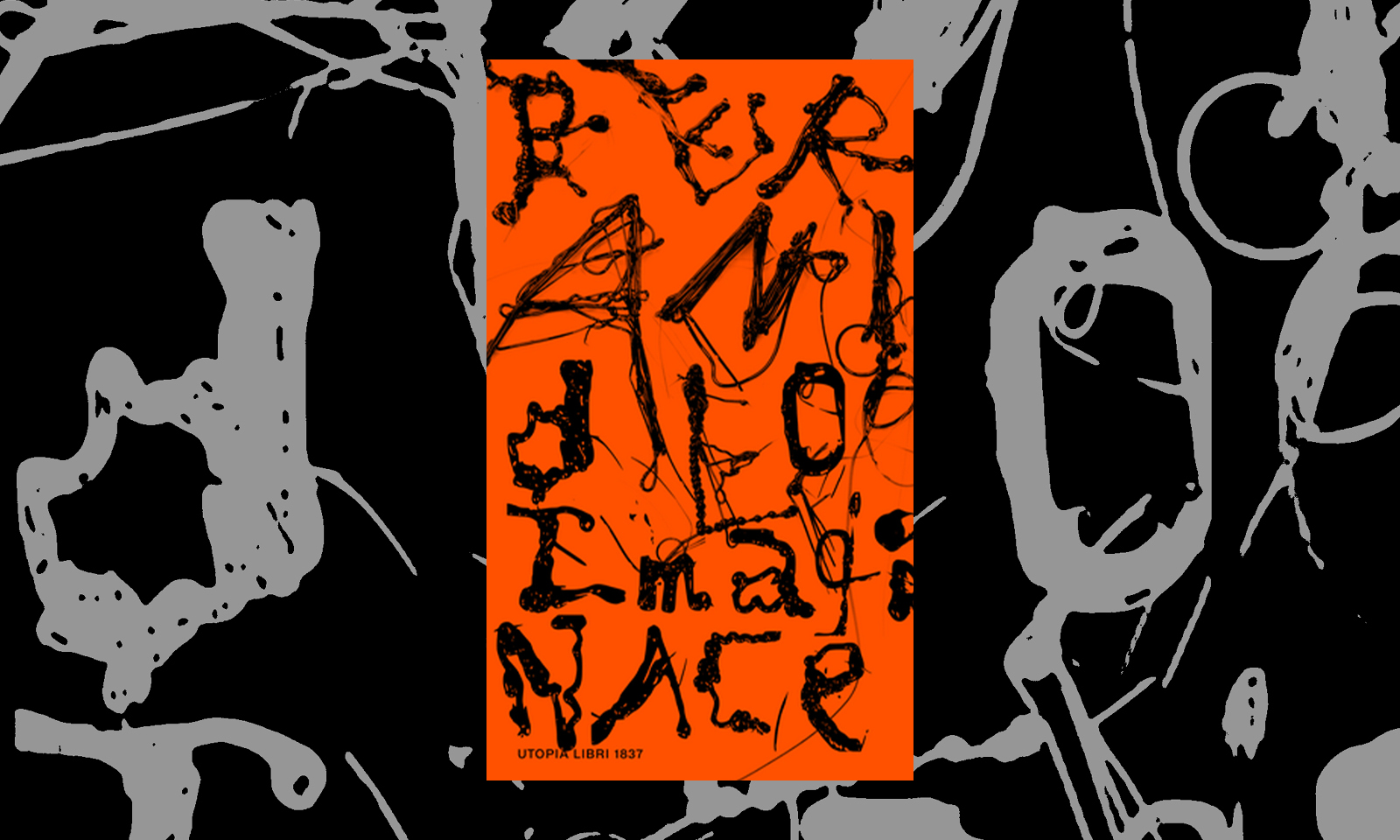
Independent cooperative publisher UTOPIA LIBRI released this year a book dedicated to urban interventions and activism titled Beranidlo imaginace – A Guide to Urban Disobedience . It is a rather eclectic collage of texts, documentary photographs, notes, memories, and interviews edited by artist and activist Vladimír Turner. It introduces us to the history of Czech and Slovak urban interventions, from anonymous street rebellion to philosophical artistic interventions. My text does not aim to organize or clarify this playful disarray. I use the book in a similar way as its author uses the urban space. As an opportunity for wandering, creative deviation, and unexpected encounters. No other reading is conceivable, as the book has fallen apart into individual pages, and I could no longer arrange them correctly.
Independent cooperative publishing house UTOPIA LIBRI released this year a book dedicated to urban interventions and activism titled Beranidlo imaginace ̶ A Manual of Urban Disobedience. It is a rather eclectic collage of texts, documentary photographs, notes, memories, and interviews edited by artist and activist Vladimír Turner. It introduces us to the history of Czech and Slovak urban interventions, from anonymous street rebellion to philosophical artistic interventions. My text does not aim to organize or clarify this playful disarray. I use the book in a similar way as its author uses urban space. As an opportunity for wandering, creative deviation, and unexpected encounters. Other reading is simply out of the question, as the book has fallen apart into individual pages, and I could no longer arrange them correctly.
First Encounter: The Aesthetics of Everyday Life
On my way to work, I often think about how automatically and inattentively we move through space. Every day, we describe the same trajectories and mechanically walk or drive toward the same goal. Along the way, we intuitively avoid irritating emptiness and the automatism of others, especially if they are drivers of large cars. Our minds are often in another time and place than where we physically are. Sometimes, the memory of our own body takes us to the places we visit most often – regardless of where we originally intended to go.
There are understandable reasons for selective perception of the environment – our blindness to random events and small details that surround us: whether it’s a injured animal, a tree marked for felling, a homeless person, or a monument deliberately neglected by its owners. Sensory numbness, habit, repetitiveness, and utilitarianism are necessary for survival in a turbulent city, to function effectively in society, work, or family. To break free for a moment from the work-consumption cycle and fully experience the city we walk through, along with all human and non-human entities within it, requires either a special event or a strange wandering.
For creative “lazing around,” the French Situationists coined the term dérive. “Dérive is a way of wandering through the city ̶ the aim is to perceive what psychogeographical qualities are found in the urban space. It’s a balancing act between aimless wandering and observation, analysis of urban ecosystems you pass through. Based on the insights gathered this way, different urban atmospheres can be connected,” explains French artist Mathieu Tremblin in the book Beranidlo imaginace. The Situationist International is an important reference in the book – along with the Dutch anarchist movement Provo and Czech Surrealism.
A similar mindfulness training is described by Anna Mírková in another text of the book. She strives to extend the concept of the right to the city – originally formulated by Henri Lefebvre – to non-human beings. Attention is therefore focused on the system of relationships that sustain life and even wild nature in the city. “The art of mindfulness can be practiced, for example, by going to a square, spending some time with pigeons, and observing where they flock, how they interact, and who feeds them. Or we can watch where bees fly and where water flows, and who follows them and why, where shade and coolness gather... Being with others differently than expected, claiming the city together means being somehow out of place. We need places for out-of-place-ness. Of course, it’s safer for us to have parks lit at night, and it’s necessary to have clear places where we don’t fear to walk. But equally important are places where we can hide and be a little unpredictable, whether it’s a brownfield, a cemetery, an alley behind a shopping center, or an occupied building.”
In Bratislava, such places are decreasing each year. Recently, “cultivated” were Calvary, Hradný vrch, or Koch’s Garden – places where neither people nor animals can hide anymore. The subtle sense of wildness, authenticity, and abandonment, which no single intervention can create, has gradually disappeared. It’s also about many small places, overgrown staircases and alleys, abandoned quarries and factories, historic cemeteries, and hidden corners that are not part of the planned city and are not “nothing,” but together make the city bearable and remarkable. Their opposite are anonymous, marble-paved interspaces of new development districts. These cannot be claimed by anyone, as they are merely facades of public or recreational spaces, continuously monitored by cameras and security. “Their visualizations are full of green roofs, facades, and balconies. But do they account for the birds that will sit and defecate on café tables and SUVs parked underneath? Do they consider that a pigeon or other bird might nest on a green balcony and want to raise its young there? (…) Visualizations of future cities ignore needs beyond the imperative of production ̶ consumption. In such visions, there are no mutual relationships, only transactions,” writes Mírková. Perhaps it’s time to consider whether sensitive urbanism can acknowledge the need for such out-of-place places, where life takes its own course. It costs nothing, it just requires leaving certain areas alone, without development or beautification.
Second Encounter: Materialized Ideology
Our pragmatic, goal-oriented “I” prefers automatism and habit as the most effective modes of daily human existence. Gradually, we begin to accept such routine and worry-controlled life as normal. We do not realize that our lives could develop differently, that our living space could be organized and planned in a completely different way. Gaps in the functioning of the system are not perceived, also due to ideological normalization. We all experience an automated part of life, followed by moments of sensory and mental awakening. Every day, we witness the most glaring contrasts: homeless people sleeping under the windows of empty investment apartments, the demolition of recently renovated buildings, the felling of trees for the construction of a new ecological district. These contradictions are so deeply ingrained that they create a new standard. There is a growing fear that correcting them would cause the entire world as we know it to collapse. Moments of awakening have both existential and political significance, which can be worked with either primitively and conspiratorially – they lied to you about everything and now we offer you the red pill of truth – or more sophisticatedly – through critique of ideology, education, emancipation, or stimulating creativity.
But what do we actually awaken from? Not always from false ideas and indoctrination. Our everyday life is also shaped by materialized ideology. Every new product, every new route, every new complex of buildings, every service provided reproduces a narrow idea of humans as producers and consumers. This limited image of humans is constantly presented externally and copied. The feedback effect is that we derive our experience from ideologically biased representations of the world. The ideology we face no longer has a single source. It has seeped into what we believe as the natural world, as our most personal motivations and experiences. The spectacle, as Guy Debord called this form of materialized ideology, expands into all areas of life: “The success of autonomous economic production leads to the materialization of ideology in the form of spectacle: social reality can hardly be distinguished from the ideology that has managed to transform all that is real according to its model.” The spectacle mediates most communication and images, not only advertising: “The spectacle-consciousness trapped in a flattened universe bounded by the screen of the spectacle, which has forcibly displaced its own life, now only recognizes fictional participants in conversations, who unilaterally inform this consciousness about their goods and the politics of their goods.”
Political campaigns are just the most visible fragment of the kaleidoscope of the spectacle. They focus on accumulating political capital, but compared to the permanent campaign of the private sector, they are laughable. The certainty they promise is in stark contrast to their own competence and the revolving door of the current economic system. The bright future must inevitably fall apart after the elections. No one believes it will come, yet it still functions as a mobilization tool. Vladimír Turner, in one of his urban interventions, stole political advertisements that were illegally placed in public space before elections, and turned them into symbols of uncertainty and illusion – a house of cards. This clearly signaled that he expects nothing from the elections but still awaits a gift from Karl Marx. In another urban intervention called Marx Christmas, he placed a Santa hat on a giant statue of Marx in Berlin and positioned himself on his knees, in a childlike state of eager anticipation.
Third Encounter: Totems
The intervention titled Protection of the Totem consisted of piles of sand stacked like a protective dam around a fuel price indicator. The fuel totem at the pump is truly the axis of the world – axis mundi – from which we derive our lives. It expresses our entire value system and hope for a better tomorrow. During the war in Iran, this is even more blatant. Just watch any news coverage, and you will be flooded with reverence for oil as the foundation of our prosperity. Moderation and discussion in TV shows are slowly reduced to just two nouns: oil and dollar. Statements by world leaders fluctuate according to oil prices and vice versa. If the price of oil on global markets rises above $130 per barrel (during the Hormuz Strait blockade, it briefly rose to 126 dollars), all values would be cast aside, and a return to “normal” could be pushed through by any means. The totem is untouchable.
Another totem of our cities is, of course, the advertising billboard. Beranidlo imaginace represents all forms of resistance against this form of veneration of commodities: from primitive destruction of billboards by fire, cutters, or spray paint, to refined forms of rewriting the message or highlighting what is hidden behind the image – emptiness at the head, a view into the landscape behind the billboard, or ironic revelations of older advertising layers. A billboard is not just a promotion of specific goods; it is itself a private commodity, whose destruction is a criminal act of damaging someone else’s property. The fact that advertising long-term damages the space for all of us is of no concern. Illegally destroying billboards is not just vandalism. It exposes the unequal position of private and public ownership in capitalism, as well as the complex relationship between legality and legitimacy.
An abandoned totem of the former regime was also recycled within the collective Jezevky’s action: We Exorcise Evil from the City Hall. It’s always amusing when someone on the left takes to heart the long-standing nonsensical accusations of authoritarianism. When it’s possible to disrupt the toxic post-socialist atmosphere, where every proposal for social reform is considered social engineering, every expression of equality suspicious of communism, every critique of the free market labeled as totalitarianism, and every protest against Israeli or American aggression as terrorism. The totem of the hanging giant Lenin is the most suitable tool to open the doors of Prague City Hall even to the socially excluded.
Fourth Encounter: Making the Invisible Visible
Sometimes, very little is needed for something repressed to become present in public space. A metaphor for such situations could be an action called Enlightenment, when a group of artists redirected the spotlights from a Kia billboard on the Barrandov Bridge elsewhere – aimed at the brutalist sculpture by Josef Klimeš, which the billboard overshadowed. The group Nová věčnost managed to make visible the suffering of Syrian migrants during the migration crisis. They placed a sign resembling the entrance to Auschwitz over the detention center Drahonice, where Syrians were imprisoned based on the principle of collective guilt. The sign bore the neoliberally charged slogan “Happiness is a Choice.”
During one of the Czech Klimakemps, I witnessed a clever intervention that also worked on the principle of visibility. During a two-day blockade of the main entrance to the coal power plant in Chvaletice, chemical formulas of emitted substances, such as mercury, were projected directly onto the dense smoke rising from its chimneys. Local residents could fully realize the daily threat to their environment and health. The atmosphere of helplessness of individuals against climate change, or perhaps mockery of techno-optimistic solutions, is symbolized in the book by an intervention called Mitigation Plan. It shows cracked ground at the bottom of a dried-up lake, hastily patched together with expanding foam. Vladimír Turner, the author of this intervention, has extensive experience in making invisible threats visible. With the collective Ztohoven, he once hacked into Czech Television’s broadcast to insert an idyllic scene of the Czech landscape into the program Panorama, along with an atomic explosion. This action brought them international attention and, importantly, the attention of police, investigators, and judges.
Interventions of this kind are, in my view, effective when they manage to highlight hierarchical patterns of behavior, hidden violence, invisible externalities of business, subtle erasure of historical memory, and the fact that capitalist urban development is one long blind alley, skillfully marked by signs of success and wealth. Humor and the challenge to current cultural hegemony or political power are welcome. Conversely, annoying and toothless are interventions that use a totem to force open long-standing doors, such as the delayed anti-communist interventions of Ľuboš Lorenzo or Peter Kalmus. Such actions only reveal what everyone already sees, and primarily the authors themselves.
Fifth Encounter: Hands Off My Imagination
The figure of Vladimír Turner runs throughout the entire book. The autobiographical conclusion can be read critically as a retrospective stylization of an old partisan who experienced the true alternative scene when it was still possible to regularly fight neo-Nazis in the streets. It can be read as a confession of a generation that tried to resist but ultimately seeks grants for resistance and writes chronicles of activism as a form of compensation for years of anonymous interventions. With a more lenient view, the book is a guide on how to maintain the continuity of struggles for a more solidaristic future – despite changing political contexts, actors changing masks, and words like “alternative” taking on opposite meanings.
The final paragraphs are the best expression of the value and mental world that we access through the book: “All of us are united by a romantic approach to the world, rushing with self-destructive speed toward an emancipated, solidaristic future, while the world around us has an unlimited budget for lying, manipulation, and warfare. At night, we walk masked through the streets, like Pérák once did. Someone is collecting trash and cooking for homeless people. Others are sued because they had to report their electricity consumption at an evacuated squat. We try to rename the alternative after it was stolen by nationalists. Institutions close their doors when we oppose Zionist genocide. We stand at the forefront of environmental protests alongside high school students who see no future because their parents sold it to oligarchs at the elections. We seek ways to use social networks to promote our agenda, which traditional media ignore, even though we would prefer to live with a button on trees. We are naive dreamers, but it is more important for us to dream of utopia and try to find it than to submit to all-encompassing hypernormalization. There is not just one fight, but a series of interconnected struggles on many levels, and the only way not to go crazy is to stick together and build a collective consciousness based on the ability of imagination.”
It sounds good, almost heroic. However, this dreaming also unites as much as it divides. Ultimately, we have a multitude of factions and collectives dreaming of a better future, but most often with immeasurable social impact. Moreover, let’s admit it, we support imagination mainly when others imagine exactly the same as us. I wouldn’t overestimate imagination when it comes to the political camp’s cohesion. We have long been able to imagine different functioning – only we don’t know how to develop and implement a system of practical steps that would turn these ideas into real policies. For imagination to leave at least a small mark on reality, paradoxically, a lot of dull organizational, negotiation, and bureaucratic work is needed, which kills imagination and which no one really wants to do. We are still searching for a way of communication that makes our message more attractive and trustworthy to the majority than open vulgarity and insensitivity of conservative reactions. Collective consciousness cannot be based solely on the ability of imagination; we imagine best each in our own way. It could be based on a common project that no one has attacked (not even Marx), but which has historically formed as an alternative interpretation of history and social or economic phenomena. An interpretation that keeps certain questions in play and reveals contradictions of the system regardless of risks or the political regime in power. One that works with basic emotions, such as compassion, joy from caring for the environment and life, fulfilling work, recognition, and solidarity with the weaker, and helping others.
If we want to have hope for change, let’s offer something even to those who cannot imagine anything radically different, because they simply lack the energy and time to dream, or are even afraid of difference. Let’s not present it as revolutionary avant-garde speaking in a language full of correct neologisms, nor as masked rebel superheroes in the streets. And certainly not as door-to-door salespeople of a ready-made worldview, handing out an ecosocialist version of The Watchtower. We must continue to stand on the side of minorities and nature, but at the same time, be able to effectively reach the majority – perhaps with inventive interventions in the streets. Ones that allow stepping out of agitational clichés into a hypothetical intersection of all basic ideas of a good life. Safety, dignified sufficiency, a healthy environment, community life, meaningful work for the future – these are concepts that do not require imagination. They are deeply rooted in our subconscious and desires. They are not the product of elite universities or professional activism, but we all almost instinctively identify with them, except for a narrow group of sociopaths and businessmen.
Ironically, highlighting the simplest things is very complicated. Sometimes, we don’t need to explain, instruct, shout, or moralize – just point at the right place and time. Instead of spreading naive ideas about what exactly awaits us when we finally wake up and hatch from the egg of late capitalism, it’s enough to point to a crack in the ideological shell. Several successful interventions presented in this book have demonstrated exactly that. At this moment of revealing, leftist politics and art can effectively meet to stimulate activity and creativity. Without imposing a single “correct” – that is, imaginary – world.
Vladimír Turner (ed.): Beranidlo imaginace : Příručka městské neposlušnosti. UTOPIA LIBRI, 2026.
The author is (not only) an activist
The text was created with the support of the Rosa Luxemburg Foundation, with a branch in the Czech Republic. The publisher is fully responsible for the content; the views expressed in the text do not necessarily represent the foundation’s position.