There will be no democracy as long as billionaires exist.
Krytyka Polityczna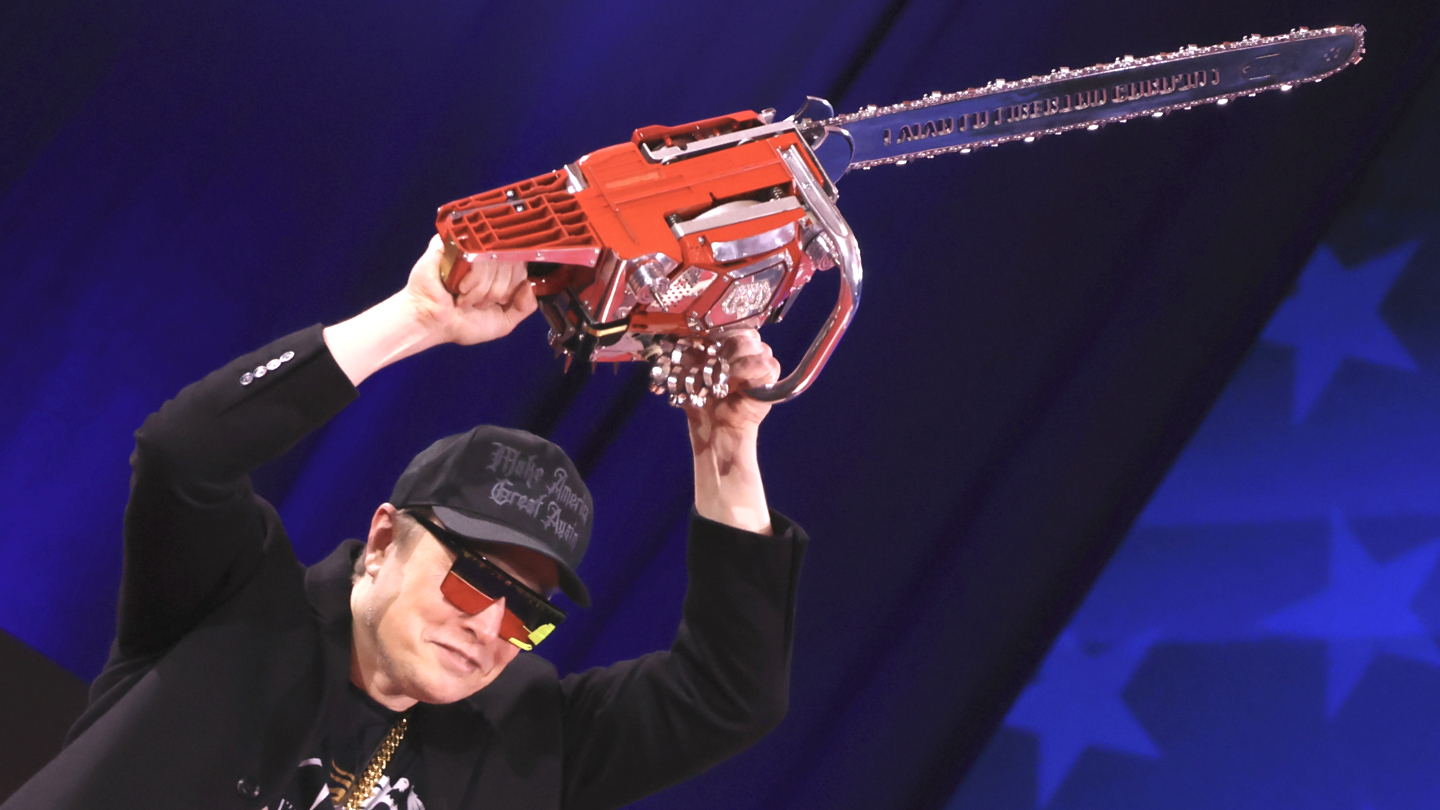
Billionaires not only amass unimaginable fortunes but also buy media, finance politicians, influence laws, and increasingly decide the direction of entire societies' development. In the era of the first trillionaire, the existence of super-rich individuals is no longer just a problem of inequality. The post There Will Be No Democracy as Long as Billionaires Exist first appeared on Krytyka Polityczna.
Why bother with the increase in the number of billionaires in the world at all? According to some, there is nothing wrong with this phenomenon. Others are even pleased. For example, a rather bizarre book Why Democracy Needs The Rich was recently published, in which John O. McGinnis argues that billionaires are a key element of democratic systems and contribute to the increase in the prosperity of the entire society. However, as critical reviewers point out, almost none of this is true, and all data rather suggest the opposite conclusion – democracy and billionaires are incompatible.
The problem is not so much the fact of possessing enormous wealth – companies, houses, airplanes, and private islands – but the ability to transform it into political power. Billionaires can finance election campaigns, take over media, hire armies of lobbyists, and exert pressure on governments. They can – and increasingly do so openly. As a result, formal equality of citizens becomes an illusion, and the surrounding reality more and more resembles an oligarchy.
The first trillionaire, or the road to wealth by any means necessary
There is no doubt that despite all international crises and economic upheavals, we are currently experiencing good times for the ultra-rich. According to Oxfam data the wealth of billionaires has been growing many times faster than the global economy for decades, and every year the number of people crossing the billion-dollar threshold increases. The twelve richest people own more than half of humanity combined. While entire societies have been struggling with pandemic crises, rising living costs, and various economic problems in recent years, billionaires’ fortunes only grew, reaching record sizes.
In this context, the actions of Donald Trump’s administration after his return to the US presidency are also significant. Sometimes support for billionaires is more indirect – through deregulation, weakening oversight agencies, or further tax cuts – and sometimes it takes the form of direct transfers of money straight into the pockets of the wealthiest Americans. This mainly involves huge federal contracts and subsidies directed to private companies owned by the richest people in the world. At the same time, funds are cut from social policy or humanitarian aid for the poor.
The embodiment of this “reverse Robin Hood” policy is Elon Musk. As head of the Department of Government Efficiency (DOGE) in the early days of Trump’s second term, Musk was responsible, among other things, for halting funding for fighting hunger, malaria, and other diseases in developing countries, which, according to cautious estimates has already led to over 750,000 excess deaths, half a million of whom were children. Meanwhile, Musk himself received lucrative government contracts through his companies, helping him reach a new milestone in the process of the pathologicalization of modern capitalism – the founder of Tesla and SpaceX became the world’s first trillionaire.
Not only American tycoons are doing so well. The wealth accumulation of billionaires and the deepening of economic inequalities are global processes. They also lead to changes in the political arena because when individuals possess resources comparable to national budgets, they can increasingly influence laws, public opinion, and government decisions in their own interest.
How billionaires shape reality
An integral part of the functioning of the capitalist system is transforming assets into power. One of its foundations is media owned by billionaires. Since the rich cannot be outvoted by the poor in elections, they must influence them accordingly so that at least some votes align with their interests. Hence the often obsessive desire to control the media narrative. A longstanding example is Rupert Murdoch’s empire, which includes, among others, popular newspapers in the UK, Australia, and the United States. In the latter, he wields enormous influence through Fox News television.
Currently, in France, even greater control over the media market is held by Vincent Bolloré, owner of television and radio stations, magazines, publishing houses, kiosks, and soon cinemas. The ultraconservative billionaire is building a closed ecosystem within which he can decide not only what the French will see on TV or hear on the radio but also which books will be available in stores and which films will have the widest distribution. His production companies have already announced plans to censor selected artists, and Bolloré’s political influence can be even more direct – in agreement with the media magnate, leaders of major right-wing parties plan their moves.
Murdoch and Bolloré are particularly conspicuous examples, but not the only ones. As regularly highlighted by infographics from “Le Monde Diplomatique”, French media are mostly owned by various tycoons, from Bernard Arnault (“Le Parisien”) to the Dassault family (“Le Figaro”). In the USA, Jeff Bezos has taken control of “The Washington Post”, imposing a “free-market” editorial line, and numerous other examples from different countries could be long enumerated. Wealthy individuals also fund foundations, research institutes, and think tanks that provide politicians and media with ready-made arguments to justify solutions beneficial to big capital.
Control over social media platforms
Today, control over social media platforms is equally important, and these are also in the hands of billionaires. Again, we must mention Elon Musk, whose management of the platform X (formerly Twitter) is clearly driven by a desire to strengthen the far right. The world’s richest person regularly boosts the reach of racist and xenophobic propaganda, as was recently seen in the UK, where nationalists set fire to immigrant homes. Even if other social media platforms generally do not serve the ideological goals of their wealthy owners as openly, their algorithms still favor disinformation and extreme polarization more than factual discussion.
Dominance over the narrative and shaping public debate allow promoting certain politicians and effectively diverting attention from the sources of real social problems. It is easy for billionaires to point to surrogate enemies – sometimes blaming immigrants for all the problems of the modern world, and sometimes blaming “elite” figures – such as journalists not subordinate to billionaires, academics, artists, and all those who can afford to look down on others due to higher cultural capital but lack real power or economic resources.
Many self-proclaimed populists display an extraordinary satisfaction with anything that stirs the “New York Times” or “The Guardian” editorial offices, these famous bastions of intellectuals and enemies of the people – and since these populists often stand on the same side as billionaires (the true elites with real power), that is secondary. A symbol of capitalism’s victory is the displacement of class antagonisms by such superficial conflicts: native workers versus immigrant workers, men versus women, people versus intellectuals.
Wealth or democracy?
Finally, control over discourse involves keeping politicians on a short leash. The situation is again particularly pathological in the United States, due to a system based on begging the rich for campaign donations. Candidates whose programs do not threaten the pockets of billionaires can obviously expect more funding.
But the problem is not limited to the USA. Lobbying in Brussels is professionally conducted by 30,000 people, and the most influential are business associations and corporations, of which in 2024, as many as 162 will spend over a million euros on lobbying. Sometimes oligarchs have influence over state leaders even without direct payments.
During the last G7 meeting, alongside presidents and prime ministers, the CEOs of the largest tech companies sat – thus, individuals without any democratic mandate, driven solely by personal profit, become participants in discussions at the highest possible level. The biggest corporations are not so much subject to state decisions but are co-designers of them. The line between democratically elected authority and private capital now exists only in theory.
In the USA, legislative initiatives supported by the wealthy have nearly three times greater chances of approval in Congress than those opposed by the richest. The preferences of people with average incomes have minimal influence on the final shape of federal policy, especially when they conflict with the interests of the wealthiest. Can we still call it democracy when political influence depends almost entirely on the size of one’s wallet?
The aforementioned Oxfam report notes a correlation between economic inequality and the crisis of democracy. The other consequences of the growing dominance of billionaires in politics are unequivocal. It leads to weakening public services, which the wealthy do not need, and to the reduction of redistribution mechanisms, which the rich lose out on. At the same time, the state increasingly takes on the role of guarantor of private profits – funding large corporations, easing regulations, or privatizing further areas of social life. Instead of limiting wealth concentration, public institutions reinforce it.
Moreover, contemporary plutocracy more and more often does not limit itself to defending its own economic interests. It is accompanied by the development of an ideology that claims democratic politics is too slow, that the welfare state demoralizes citizens, and that the future belongs to entrepreneurs and engineers who should not be subject to social control. In this vision, the billionaire ceases to be just a participant in democracy and is placed above the law and the will of the majority. Additionally, there is the possibility of practically committing the most degenerate acts without consequence, from hunting humans to pedophilic games on a certain island. The rich are allowed to do more.
In the end, the choice is simple – either democracy or plutocracy. In the long run, it is impossible to reconcile the existence of democracy and civil society with the fortunes and political influence of billionaires (and even more so, trillionaires). The latter will constantly strive for further capital accumulation, using all available methods, and the institutions meant to limit their greed are dismantled (at their request).
A positive side effect of social inequalities reaching record sizes is that it becomes increasingly difficult to hide them. That is why the popularity of initiatives such as taxing the super-rich is growing. If, years ago, the United States had introduced the wealth tax proposed by Bernie Sanders, Elon Musk would still have paid tens (or even hundreds) of billions of dollars, contributing to the functioning of the state. A currently popular idea promoted by economist Gabriel Zucman is a global minimum tax on billionaire wealth, which would limit the race of countries for the favor of the richest and make it harder to hide fortunes in tax havens.
However, there is a long way from devising a remedy to implementing it, and billionaires like Musk, Bezos, or Bolloré will fight with all their might to preserve their privileges, even if it requires inciting hatred against minorities, starting pogroms, or starving hundreds of thousands of people.
The first step to oppose the dictatorship of the rich is to understand that it is not individual corrupt persons, but representatives of the entire social class, whose very existence is incompatible with the principle of popular sovereignty. Democracy is based on political equality of citizens. Billionaires base their position on economic inequality. The greater the gap between the two, the harder it is to reconcile both orders.