Dissuading politicization, maintaining continuity? What do the results of the trade union elections tell us
Kapitál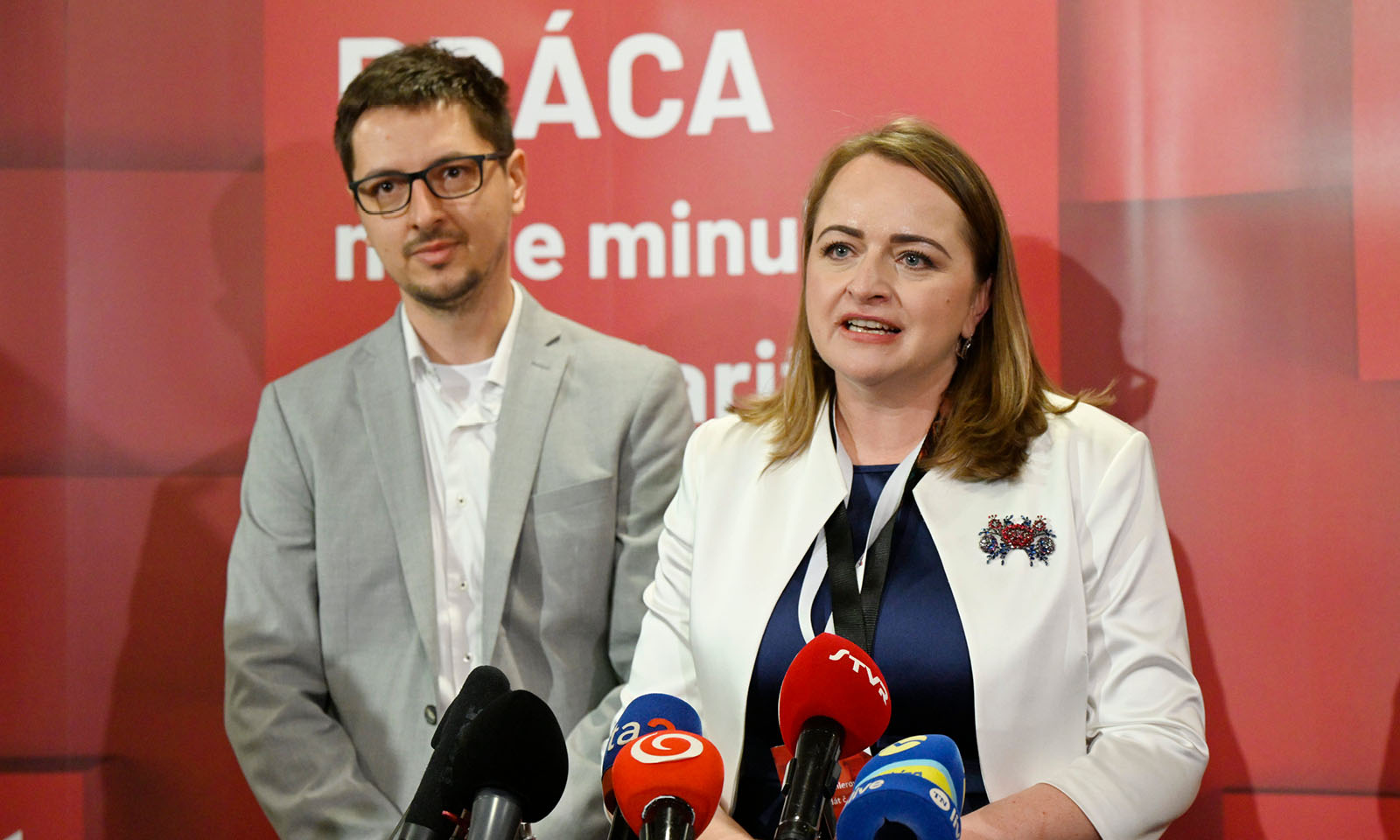
Last week, the 12th Congress of the Confederation of Trade Unions of the Slovak Republic (KOZ) took place. It attracted more public attention mainly due to Branislav Ondruš's candidacy for the position of president. Ondruš, as a Member of the European Parliament for the Hlas party, previously also linked to Smer, was controversial. This happened in the context of one of the important results of the previous four-year period, when KOZ finally managed to terminate the old and practically non-functional cooperation agreement with Smer.
Last week, the 12th Congress of the Confederation of Trade Unions of the Slovak Republic (KOZ) took place. It attracted more public attention mainly due to the candidacy of Branislav Ondruš for the position of president. Ondruš, as a Member of the European Parliament for the Hlas party, previously also linked to Smer, provoked controversy. This happened in the context of one of the important results of the previous four-year period, when KOZ finally managed to terminate the old and practically non-functional cooperation agreement with Smer.
Ondruš's defeat and the question of politicization
Ondruš ultimately narrowly lost. He received 71 out of 158 delegate votes, compared to 81 votes for Monika Uhlerová, who thus defended her position. However, the vice-president position was won by Milan Kuruc, also known from the Working Poverty project, who defeated the previous number two of the confederation, František Gajdoš, in a 81:73 ratio. It became clear that Ondruš made a mistake in unclear communication regarding his union membership. Nevertheless, he cannot be accused of not genuinely dedicating himself for years to issues of labor and workers' protection. His candidacy was also significantly strengthened by his cooperation with Kuruc, who, alongside his role as a labor law activist, has already proven himself directly within the trade union movement.
Generally, Ondruš was most criticized for the politicization of the unions. Some journalists and politicians even commented on it with a conspiratorial tone as an attempt by the current coalition to reverse the situation in the unions and allegedly regain control over them. However, I consider this an overinterpretation. It is reasonable to assume that under Ondruš's leadership, negotiations with the government would probably not be highly confrontational. However, this would not automatically mean political control over the trade union movement.
What is important is its decentralized nature. Although most people associate the term unions mainly with KOZ, the decisive organizational power lies with the trade unions and basic organizations at workplaces. It is at this level that decisions are made regarding collective bargaining and possible protest or strike activities. This is related to the way of financing, which in Slovakia differs from the model of many European countries, where the treasury, and thus greater decision-making power, is held by the union centrals. I therefore perceived Ondruš's candidacy more as a reflection of his personal ambitions.
In any case, the so-called apolitical nature of the unions, often requested and frequently mentioned, is a nonsense. Unions, unless we talk about their yellow form, are inherently highly political actors. After experiences with the previous regime, we are talking about a reasonable demand for non-partisanship. Even the infamous agreement with Smer should be viewed in the historical context, where there were several reasonable arguments in favor of its adoption. In interwar Czechoslovakia, practically every party had its own unions. Similarly, today in some European countries, politically affiliated union centrals operate, usually with multiple organizations. In our context, it is reasonable to demand non-partisanship that would dispel the image of unions as automatic allies of one party. At the same time, however, unions must have the opportunity to cooperate with political entities willing to promote workers' demands.
Limits of the “service-oriented” approach
The issue of party independence was not the only criterion for evaluation. Regarding the presented agenda, the Ondruš–Kuruc tandem was overly focused on a legalistic approach. Although they tried to explain it and their arguments made sense in several points, they failed to completely dispel the image of union representatives as “deal-makers” who aim to secure benefits for members through behind-the-scenes negotiations with the government. In Kuruc’s case, this emphasis is even more surprising because the service model of unions has openly criticized and clearly advocates for organizing and active member engagement.
The limitations of this long-dominant approach in Slovakia are clear. It creates a hierarchical and service-oriented model that can deliver tangible results but weakens the mobilization potential of the membership itself. Members may then perceive unions more as service providers rather than organizations based on active participation of members. Such a model also strengthens individualistic solutions to work problems and weakens the core source of union power – collective action of workers. The consequences of this approach are still visible today in the ability of unions to act, especially regarding collective actions. Without regular involvement of the membership, the willingness of employees to publicly support union demands, whether through participation in demonstrations or strikes, diminishes.
The legalistic approach is also too tied to the electoral cycle. While a more union-friendly government may implement some measures, a subsequent, differently oriented government can quite easily reverse them. The continuous power of unions, stemming from their own activity, cannot be replaced by legislative lobbying. This does not mean that lobbying has no place; rather, it is a matter of proportions and their relationship to building a strong union organization. I only briefly caught the idea of so-called organizing in one pre-election podcast, which involves systematically building union organizations through active recruitment, identifying problems at workplaces, and engaging employees in collective actions. Even within the Energy and Chemical Union, from which Kuruc comes, inspiring organizational activities took place. Such an approach is also important because the ability of Slovak workers to recognize and collectively promote shared interests remains relatively weak.
However, well-thought-out and professionally grounded legislative lobbying also has significance, for example, in strengthening the protection of union officials, because the ability to represent employees without fear of losing employment directly influences the functioning of basic organizations. Despite recently adopted legislation, to which Ondruš and Kuruc also contributed, the ongoing problem of illegal dismissals of union members is evidenced by a current example: the state railways dismissed the union chairwoman at the station in Spišská Nová Ves despite the opposition of the union organization.
Finally, actively commenting on legislative proposals and submitting own suggestions are among the standard activities of the union confederation, especially within tripartite negotiations. Legislative work and social dialogue are therefore not problems in themselves. The problem arises when they start to replace the building of union strength from below.
The need to maintain continuity
In the assessment of the result of the 11th Congress four years ago, I viewed positively that the then-winning tandem Uhlerová – Gajdoš introduced a program responding to the challenges of the 21st century in the field of work. This included influences of digitalization, automation, climate change, and emphasis on new forms of work. None of these topics have lost their relevance. The resolution of the current congress also builds on this by emphasizing the future of work, development of the membership base, modern organizing tools, and strengthening collective bargaining. In terms of program, it is thus a continuation and expansion of the established direction.
Alongside shedding the Smer political label, KOZ managed to improve the media and social image of unions, which was noticed by several actors who previously viewed unions rather negatively. In the post-socialist context, where unions have long had a poor reputation, this is not an insignificant achievement. At the same time, it is true that unions will not gain the trust of members solely by commenting on major social issues. Their daily work must be based on solving concrete problems at workplaces.
It is positive that this image has not been fundamentally disturbed, and one cannot create a negative image of unions through their actual or perceived politicization (since the often-claimed statement that “unions under Smer never went on strike” is not accurate; the reality was always more complex). The initiated path, characterized by abandoning binding agreements and more confident public stance, is a positive development. Of course, it still remains true that reasonable ad hoc cooperation on individual issues with political parties makes sense and is not negative.
I wrote this four years ago, and it still applies today: it is not enough to just change the top positions, or rather, in this case, to maintain continuity. Equally important is management within lower union structures and, not least, active involvement of the membership itself. The real challenge will not be the adoption of additional programmatic documents or legislative proposals, but whether it will be possible to translate declared priorities into stronger unions, active membership, and the ability to act collectively.

The author is a historian

The text was created with the support of Friedrich Ebert Stiftung, representation in Slovakia