They are learning in the bedroom, kitchen, and cellar. About secret schools in Afghanistan
Kapitál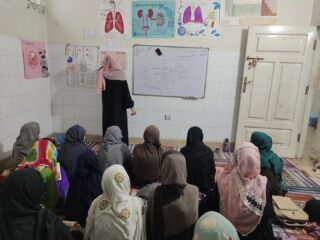
Since 2021, girls in Afghanistan have been banned from attending school. However, many local organizations support their desire to learn. One of them, LEARN Afghan, creates secret schools across the country and teaches Afghan girls subjects such as robotics and journalism.
Since 2021, girls in Afghanistan have been forbidden to attend school. However, their desire to learn is supported by many local organizations. One of them, LEARN Afghan, creates secret schools across the country and teaches Afghan girls, for example, robotics and journalism.
Hafiza has dreamed since childhood of becoming a journalist. She constantly read newspapers and watched news on television. She imagined that one day she would also inform the world about what is happening. When she was in eighth grade, one day the Taliban closed the school she attended. “My class was only for girls, and we all loved learning very much. After the announcement (of the school closure), there was deep upset, some of us cried, while others sat silently in complete shock,” writes Hafiza (she only provides her first name for her safety) on the LEARN Afghan blog. This organization provides education to girls in Afghanistan even after the Taliban came to power in 2021 and banned girls over twelve from attending school. The school attendance ban was just one of many steps and measures against the rights of girls and women in the country.
Hafiza initially felt lost and angry. Over time, however, she decided to pursue her dream anyway. She began studying online – through courses on YouTube or with the help of books. She learned English and how to work with computers. She learned about LEARN Afghan from a friend and joined their online program. “Gradually, I moved forward and hope returned to me,” writes Hafiza, who later became a member of the online journalism club under LEARN Afghan and now teaches English three times a week for the organization without pay.

In the hospital basement
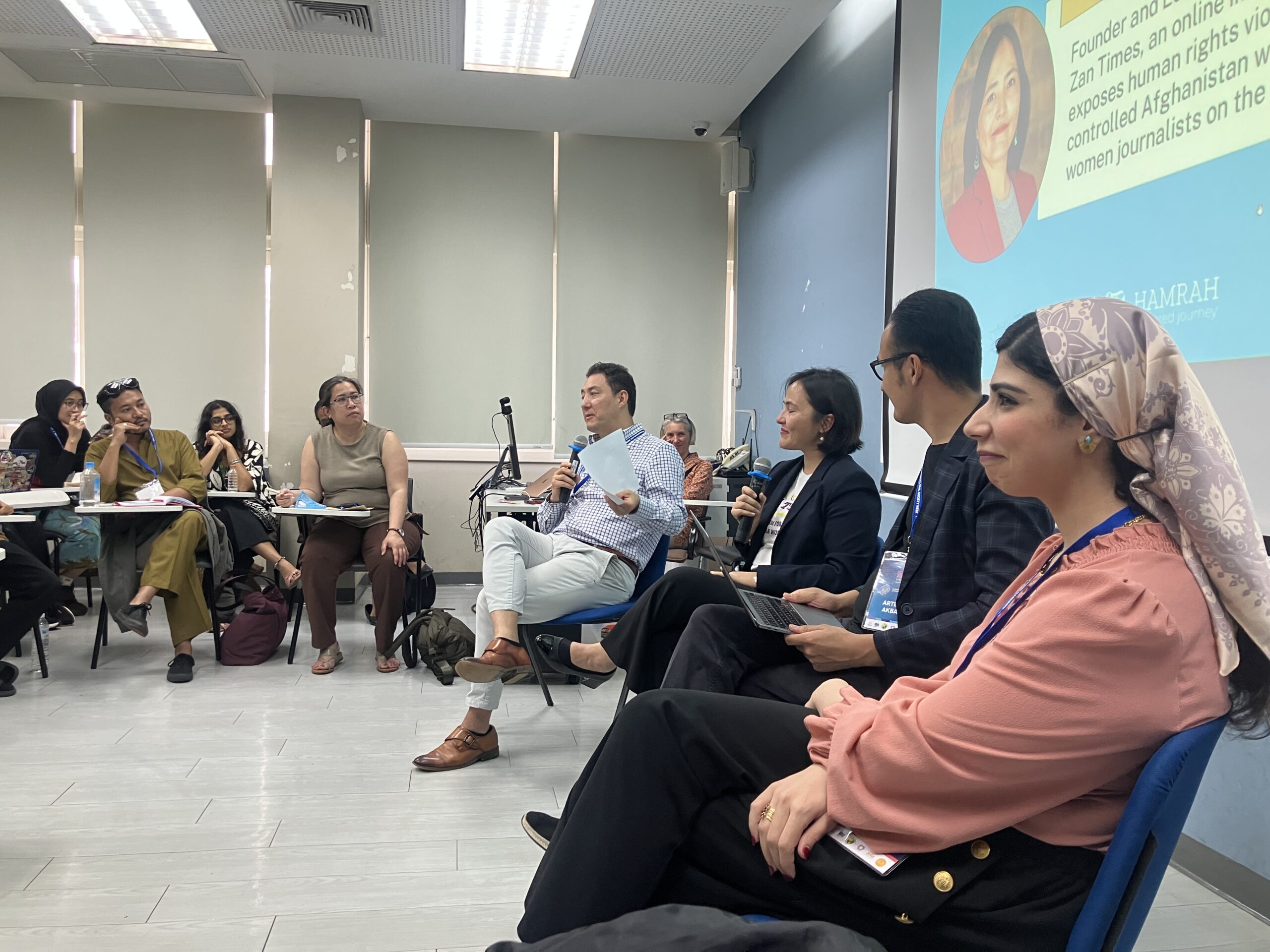
There are hundreds, even thousands, of similar stories across the country about how Afghan girls did not give up. Many of them were supported by LEARN Afghan. I met its founder, Pashtana Durrani, at a conference in Bangkok, Thailand. She spoke on a panel with another Afghan girl and an Afghan man, who, like her, live in exile and support Afghan communities restricted by the Taliban government from abroad.
When the Taliban returned to power in August 2021, they began systematically restricting the rights of girls and women. Besides banning education, they also prohibited free movement in public, gatherings, or work in certain sectors: women, for example, cannot travel by public transport without a male escort. The international organization Human Rights Watch also points out that women cannot express themselves publicly and are required to cover themselves in specific ways and places. New regulations and laws over the past five years have also led to Afghan women having more difficulty accessing healthcare and an increase in gender-based violence. Many women ended up in prison for violating these regulations. Recently, for example, the Taliban adopted a new Code of Judicial Dispute for spouses, which according to human rights experts creates space for even more child marriages and leaves women without tools to leave marriages.
Pashtana Durrani, with a beige floral headscarf and admirable passion, spoke in Bangkok about why she has supported girls’ education in her homeland for years. “We run schools because they are the only safe spaces for girls where they can mobilize instead of being handed over by their families,” she said. Early marriage and forced marital unions are also consequences of the worsening economic situation. According to the United Nations Development Programme, about 85 percent of the Afghan population lives on less than one dollar a day.
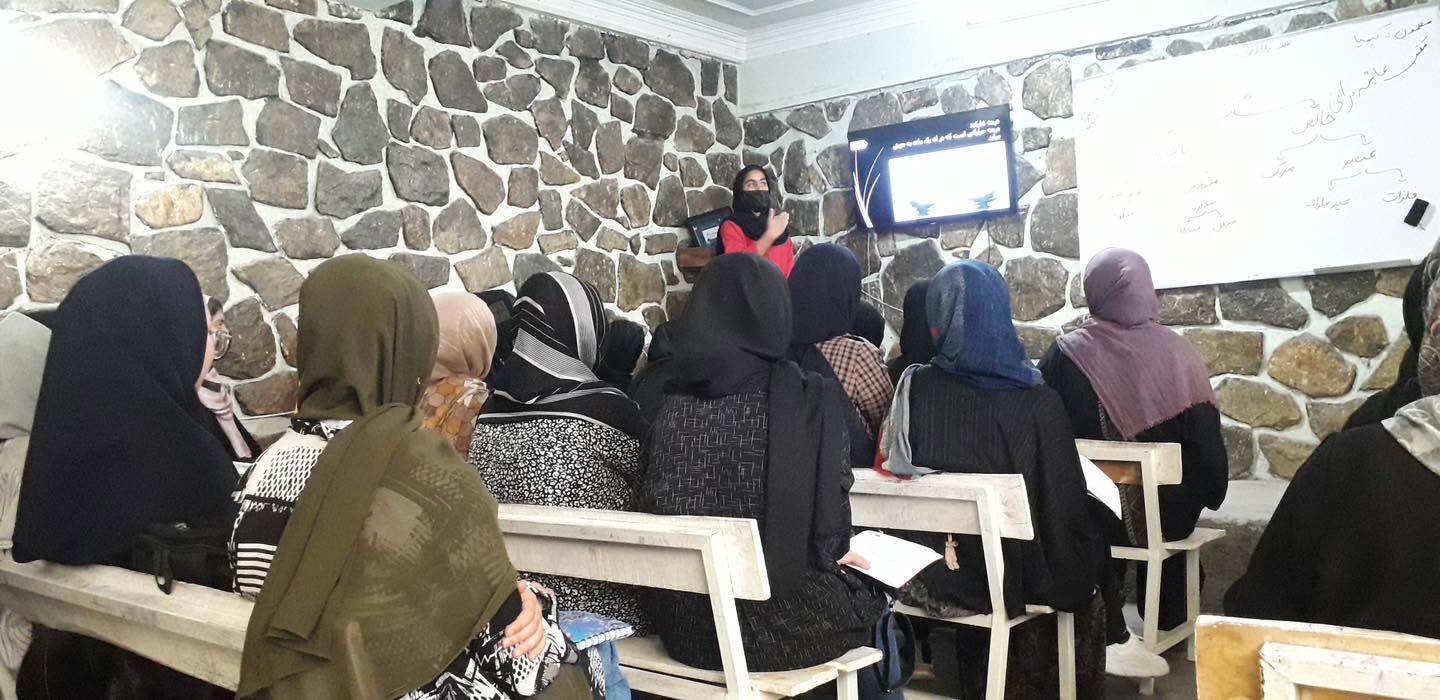
LEARN Afghan started operating in rural areas even before the Taliban came to power, precisely because girls in the countryside also wanted to go to school, but often the school was not accessible to them. After the Taliban took power, the organization expanded; today, it supports more than seventy teachers who teach over two thousand students in nineteen secret schools across eighteen provinces. They study both in person and through digital and radio education, which has reached more than six million people since 2018. Additionally, they created the HELA App educational platform, where students can download learning materials and study even in case of internet outages.
“We have schools that are in guest rooms, even in family bedrooms. We have schools in kitchens or in hospital basements,” says Durrani. “It’s more of a movement than just a school as a space. For us, they are safe places where girls find hope, socialize, and create memories, where they become the people they want to be.” They vary in size; Pashtana Durrani says she would open a school even for just one girl. However, they arise out of community needs – from teachers whose schools were closed or from families. At the same time, communities themselves know best how schools need to operate so that the Taliban does not find out about them.
Trust in the local community
The secret school in the hospital basement actually makes perfect sense – girls also have to go to hospitals, so it’s not a place where their presence, even in larger numbers, would be suspicious. Nevertheless, safety measures had to be taken: “In the hospital, they used walkie-talkies to organize the girls’ departure in pairs and not all at once,” recalls Durrani. “However, I leave the situation assessment entirely to teachers and families,” she adds.
“Gaining the trust of parents and the community was not easy at first,” says assistant teacher Haya (we use a pseudonym for her safety), who co-founded a school in Baghlan province. “I built trust through continuous communication, regular conversations with parents, and demonstrating progress of their daughters. I organized meetings with parents to ensure transparency and reassure them that their daughters are learning in a safe and supportive environment,” she explains her strategy.
Regarding the teaching staff, Durrani says she could not do this work without them. In our interview, she recalls a situation when the internet in Afghanistan went down, and girls using online education could not connect. “We lost hundreds of students then. Teachers called the families one by one to get them back to school.” The teaching staff then looked for strategies to motivate children to return to school in a situation where many feared their phones could be monitored.
“One of the biggest challenges we face is limited resources, including access to technology and stable internet,” says Haya.
AI and mental health
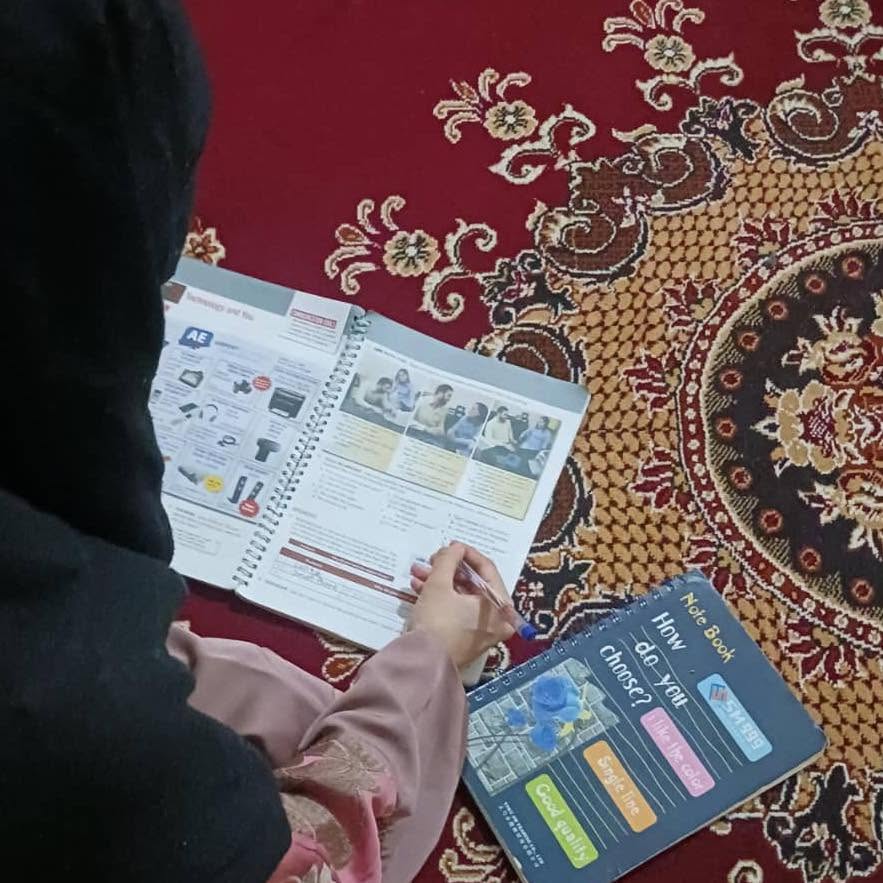
Although the internet is unreliable, LEARN Afghan does not want Afghan girls to fall behind the world. Besides traditional subjects from curricula, the organization is exploring ways for girls to learn robotics, work with AI, web design, and journalism – professions currently banned for women in the country.
“We have a club that is currently focusing on manufacturing prostheses using artificial intelligence because Afghanistan has a large number of children affected by mines,” says Durrani, who considers technology one of the fields where young women will be able to find opportunities in the future. “There are no young women in AI leadership yet; it’s not a feminist platform. But I hope that our girls will become part of this industry and change it,” she adds.
Besides technology, LEARN Afghan sees value in educating girls in the medical field so they can support their communities. Since the Taliban banned women from studying medicine, LEARN Afghan prepares young women to become, for example, midwives in their communities, thus pursuing professions that, due to religious reasons, must be performed mainly by women. A pregnant woman seeks out a female doctor, not a male. “We would like them to later establish maternity clinics,” Durrani talks about her big plans. “We will help them set up clinics, but we want them to be independent. Our main goal is to address crisis education during conflict periods,” she adds.
LEARN Afghan also focuses on mental health education. “This year, we are starting a two-year program for mental health professionals. It will train counselors and therapists for communities. Afghanistan has a high rate of women’s suicides and depression, and to address this issue, we need local, domestic therapists who understand the situation better,” she explains.
Teachers also have their motivation for working in secret schools. “I want today’s girls to become informed, aware, and motivated mothers in the future who can raise better generations,” says Mehrsa (also a pseudonym), a 25-year-old teacher from a school in Herat province. “Girls go to school even in difficult situations. They learn, they dream,” she says.
“I don’t know more confident girls and women than those in our schools,” says Durrani. “If a girl decides to go to school in a country where it’s forbidden, or a woman decides to learn where it’s banned, she cannot lack confidence. This confidence comes from believing in herself and believing in a better Afghanistan,” she adds. She also believes that Afghanistan will overcome this dark period, and then girls for whom education creates space will shape a new face of the country.

The text was created with the support of the Rosa Luxemburg Foundation, with a representation in the Czech Republic. The publisher is fully responsible for the content; the views expressed in the text do not necessarily represent the foundation’s position.