The European Rust Belt: What future do the Chinese, Januszex companies, and the far right are preparing for us
Krytyka Polityczna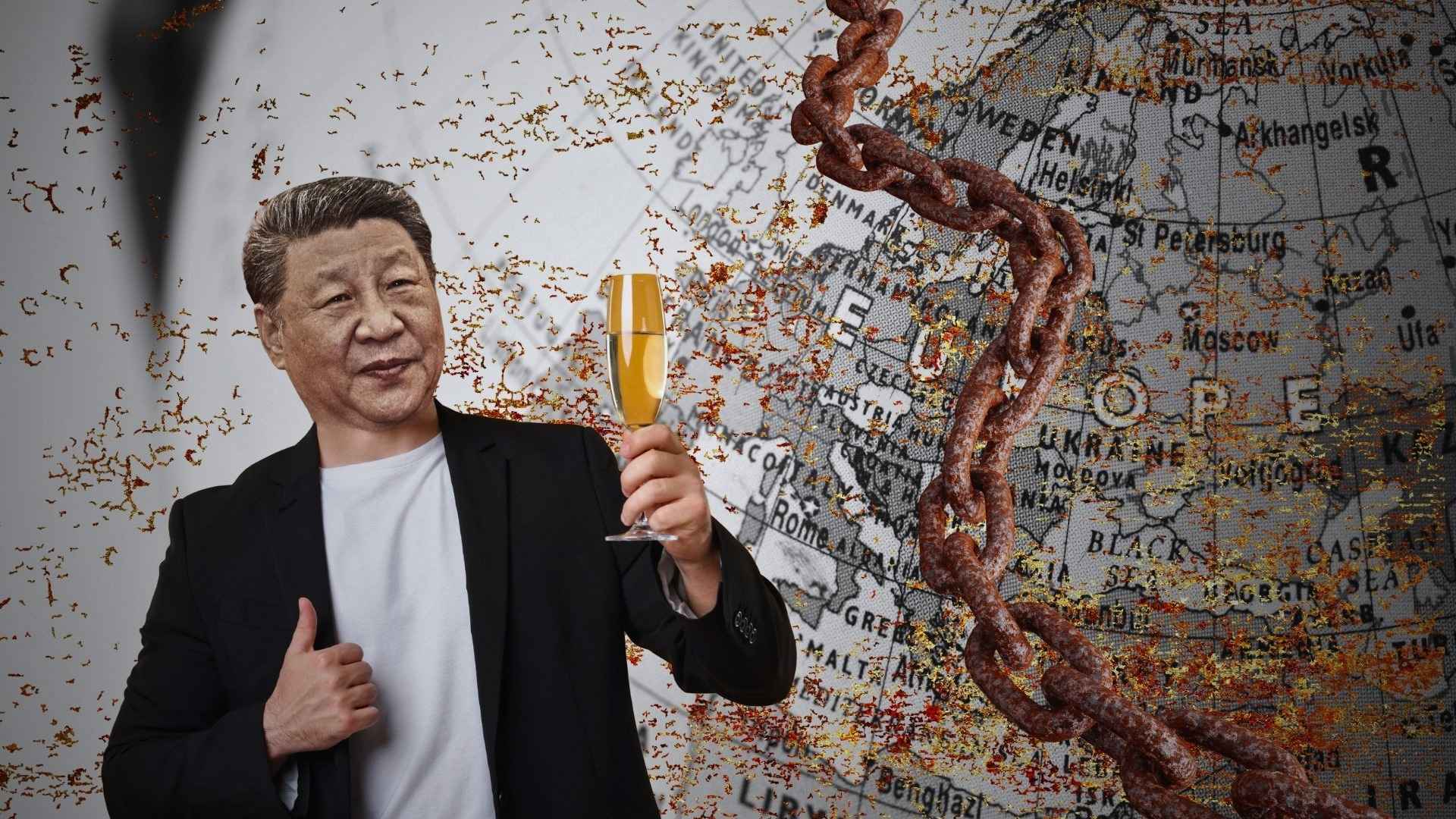
The flooding of Europe with Chinese components and products is already having negative consequences for the European industry, but if the EU does not take effective action, the effects in the form of rising unemployment and support for the extreme right will be most felt in our part of Europe, including Poland. The post European Rust Belt, or what future the Chinese, januszex companies, and the extreme right are preparing for us first appeared on Krytyka Polityczna.
Recently, a joint report by the Center for Eastern Studies and the Confederation of Entrepreneurs and Employers has been published on the Chinese industrial shock affecting European industry, including Polish industry. However, the most interesting aspect is not the publication itself, but how much it contrasts with the dominant narratives in Poland. While the business organization demands firm EU and national intervention, collaborating with a reputable analytical center, Polish liberal and right-wing parties compete in who has a better idea for deregulating more laws and lowering as many taxes as possible. This contrast highlights the seriousness of the situation: if nothing is done, the domestic and European industrial sector faces brutal degradation.
This turn against the prevailing media narratives contains a powerful dose of historical irony. Accustomed to the idea that Polish private capital, raised on Leszek Balcerowicz’s religion and convinced that the role of the state should be limited to being a passive night watchman, we might be surprised that it suddenly begins to loudly demand strict interventionism. The textbook dogmas about the infallibility of the free market crumble into dust when faced with the relentless machinery of Chinese state capitalism. For over three decades, we were told that the market would allocate capital best on its own, and any attempt to protect domestic production was harmful protectionism. Today, the same sector, which not long ago was pleased to threaten socialism in the media at every attempt to raise the minimum wage, is knocking on EU commissioners’ doors, begging for state shields.
China’s Domination
For decades, architects of the global economy fed us a simple story. Asia was to remain forever a reservoir of cheap labor, a factory for simple plastics and a sewing shop for Western consumers. Meanwhile, Europe was to retain the role of an innovative center, reaping profits from high margins, advanced engineering, and elegant design offices. This convenient arrangement has ceased to exist. Beijing no longer intended to be forever content with the role of producer for others and of low-tech goods. They invested hundreds of billions of dollars directly into developing entire technological chains to move beyond this role. Today, Chinese companies no longer compete on price alone. They dominate, for example, in the segments of photovoltaic panels, heat pumps, energy storage, lithium-ion batteries, and electric vehicles.
The situation is drastically worsened by a deep crisis within China itself. Domestic demand in the Chinese market is too low to absorb all the excess industrial production, so Beijing has made a deliberate political decision: the overproduction is entirely directed at exports. Europe, with its openness to trade and attachment to free-market competition, has become a natural target for this wave of goods. EU offices are starting to talk louder about the possibility of imposing retaliatory tariffs, but Brussels’ current legal instruments resemble an attempt to extinguish an oil refinery fire with a watering can. The matter is much more complicated than officials educated in classical trade theory would like to see. EU anti-dumping procedures drag on for months, while Chinese exports can circumvent them at a faster pace than the EU can respond.
Chinese companies do not operate under conditions of classic economic competition. They function within a dense, impenetrable network of state subsidies. This includes free land for factories, local tax reliefs, interest-free loans from state banks, and preferential electricity rates supplied by state-owned enterprises. For a Chinese manufacturer, selling goods at a loss on the European market does not pose an existential threat due to state support.
Adding to this is a massive unknown that the European Union is completely unable to handle. The actual level of industrial subsidies by Beijing remains a closely guarded state secret. China does not provide transparent financial reports, and the complex connections between local authorities, commercial banks, and tech companies prevent calculating the real support. Imposing a traditional retaliatory tariff of ten or fifteen percent only results in Beijing increasing the drip feed for its export champions. Europe tries to play market measures against an entity that has long rejected these rules.
European Reaction
The greatest threat, however, lies in how the European political class responds to this crisis. Instead of accepting the need to create a more ambitious industrial policy, liberal and right-wing politicians resort to long-discredited neoliberal habits. The political class in European capitals attempts to solve 21st-century challenges with 19th-century exploitation. An excellent example of this intellectual stagnation was the February visit of the German CDU leader Friedrich Merz to China. Observing Asian production complexes, Merz drew bizarre conclusions. After returning from the delegation, he publicly announced: “To put it plainly: work-life balance and a four-day workweek will not suffice to maintain our country’s current prosperity in the future, so we must work harder.”
Shortly after this statement, Christian Democrats in Germany raised an outcry about sick leave absences at workplaces. They proposed tightening regulations on sick leave, and CDU politicians commented briefly: “We can no longer afford losses.” Instead of asking why workers are overburdened and ill, the German right-wing decided that the answer to Chinese state subsidies should be forcing workers to work at all costs. The neoliberals’ diagnosis always turns in the same direction: suppress wages, attract cheap labor deprived of basic protections, and dismantle safety standards. In the short term, such moves increase profit margins for owners and improve quarterly stock market figures. But in the long run, they destroy citizens’ purchasing power and provoke deep social anger.
The Perspective of Collapse
A true catastrophe will unfold in the long term. If the EU allows uncontrolled destruction of domestic production, it will not end with closing a few factories near Berlin or Wrocław. We are talking about the takeover of entire industrial sectors by China, and in the long run, even the destruction of the European industry as we know it. The German economic model was not based solely on stock market and corporate giants. The heart of the industry was Mittelstand – thousands of medium-sized companies providing innovative machinery and precise components. Major car manufacturers like Volkswagen or Mercedes will manage easily. Boards will sign agreements with Chinese battery suppliers, Asian investors may someday acquire shareholdings, and recognizable logos will remain on the cars. Directors will keep their multimillion salaries and comfortable offices. However, everything under the surface may already be Chinese in the future.
This brings us to the fate of subcontractors from Central and Eastern Europe. Poland, Slovakia, the Czech Republic, Hungary, and Romania have built their position as an industrial buffer zone for the West. In production hubs in Silesia, Lower Silesia, Greater Poland, and Subcarpathia, wiring harnesses, pistons, seats, brake systems, and plastic housings are produced. When a German client abandons these supplies for cheaper modules from Asia, the Polish factory will not be able to switch overnight to medicine or semiconductor production. It lacks the capital and proprietary patents for that. It will simply go bankrupt, leaving the local community stranded. For the entire industrial core of Europe – stretching from northern Italy, through southern Germany, to Polish and Romanian industrial regions – this means a massive economic shock and the emergence of a European “rust belt.”
The economic collapse of traditional industrial regions, with ruthless logic, will lead to the destruction of social fabric. When stable jobs disappear, the sense of security gives way to fear. And fear is the most fertile ground for the development of political radicalism. People who lose their life stability overnight do not seek complex economic explanations. They look for simple diagnoses and a scapegoat.
The Far-Right Does Not Rest
In Germany, Alternative for Germany (AfD) is hitting polling records, relying on the frustration of residents in eastern states. If there are mass closures and layoffs in the machinery and automotive sectors, AfD could surpass its historical support ceilings. Currently, in eastern German states, forming electoral coalitions in state parliaments is difficult due to the large number of mandates held by AfD. In such a scenario, the party could gradually take power in eastern states and become increasingly stronger in western German states.
In Poland, the effects will be equally devastating. Layoffs may increase support for the extreme right, if not directly, then through the synergy with its narratives. It can expertly exploit disillusionment with the system, offering false remedies. As support for radicals grows, there will be a sharp increase in aggressive language in public discourse. Far-right politicians will not point to the ruthless logic of capital or Chinese interventionism as the source of the problem. Instead, they will present a constant set of scapegoats: migrant workers, EU climate regulations, environmentalists, and workers’ organizations. The right-wing narrative will be harsh: abolish workers’ rights, withdraw from environmental standards, and supposedly let domestic business breathe again.
At the same time, free-market factions will strengthen, using the crisis to demand widespread deregulation and the final squeezing of social protections. Mainstream media will further amplify the narrative that Poles must work more and accept flexible contracts.
Poland is currently in a somewhat better position than our neighbors. We have the most diversified export not only in the region but also globally. A blow to the automotive industry will hurt us less than Slovakia, the Czech Republic, or Hungary, which are more dependent on German industry and contacts. However, this relative buffer does not mean we are safe.
The End of Januszexes as We Know Them
It is finally necessary to openly state why Polish companies may not survive this confrontation. A significant part of large enterprises in Poland are so-called januszexes, built solely on cheap labor. Instead of investing in innovation and automation, owners forced unpaid overtime and used gig contracts. When the country started lacking workers, businesses did not turn to new technologies. They began importing workers from abroad just to keep wages low and avoid changing old management methods. Owners extracted profits from companies, for example, for private consumption or moved them abroad in the case of foreign firms, instead of investing in R&D. In confrontation with China, this model is doomed to fail. Chinese industry is already automated and modern. Owners of Polish factories, trying to squeeze extra margins from worker exploitation, will not gain much in the long run. Acting this way, they are destined for failure.
Here appears a key fact, completely contradicting the free-market dogma dominant in Polish media: strengthening trade unions can be one of the ways to save Polish industry. When workers have strong representation and can fight for decent wages, the owner loses the option to extract rent from cheap labor. When work becomes costly, businesses must start thinking. They need to invest in automated machinery parks and improve logistics. The more unionized the workforce, the greater the pressure on owners to change their business model, even in non-unionized workplaces. Unionization minimizes the rent-extraction effect by owners, which short-term gives them profit but long-term leads their factories to bankruptcy when faced with more modern competition. Unions should also push for modernization of these plants. As workers fight better for their rights, the entire industry becomes safer, and jobs become more secure.
European Response
It is impossible to save European industry without rebuilding an attitude that can be called economic patriotism. If Polish or German companies will mass-select cheaper Chinese components instead of more expensive European ones, the project of European integration can be written off. Protecting the domestic market from dumping is not a whim but a matter of survival. We must also learn the lesson China has taught us. Chinese central planning and state intervention proved to be dramatically more effective in building industrial power than the chaos of the free market. Beijing can identify key sectors decades ahead and consistently allocate public funds to them. The European Union must gain the ability to apply similar tools. It is time to abandon naive faith that the market will naturally produce strategic technologies.
Upcoming challenges must push the EU toward bold economic interventionism. We need strategic development of entire industrial sectors so that Europe becomes self-sufficient – from active pharmaceutical ingredients to medicines, metallurgy, steel processing, and renewable energy technologies. EU public funds must directly support European plants, tying aid to job retention and banning dividend payments to shareholders.
In the worst-case scenario, the left must be ready. We must further strengthen workers’ rights and continuously promote pro-labor messages in opposition to free-market nonsense. If we do not break this dominant narrative and defend Europe’s industrial heart, the rising far right will simply destroy the European Union from within.
**
Adam Pochmara – an autistic student of computer science and econometrics at the University of Warsaw (formerly sociology and international economics) and vice-president of the University of Warsaw’s Heterodox Economics Student Circle.
The post European Rust Belt, or what future do the Chinese, januszexes, and the far right are preparing for us first appeared on Krytyka Polityczna.