Construction disasters in Nairobi are a plague. Polish instructors are helping Kenyans.
Krytyka Polityczna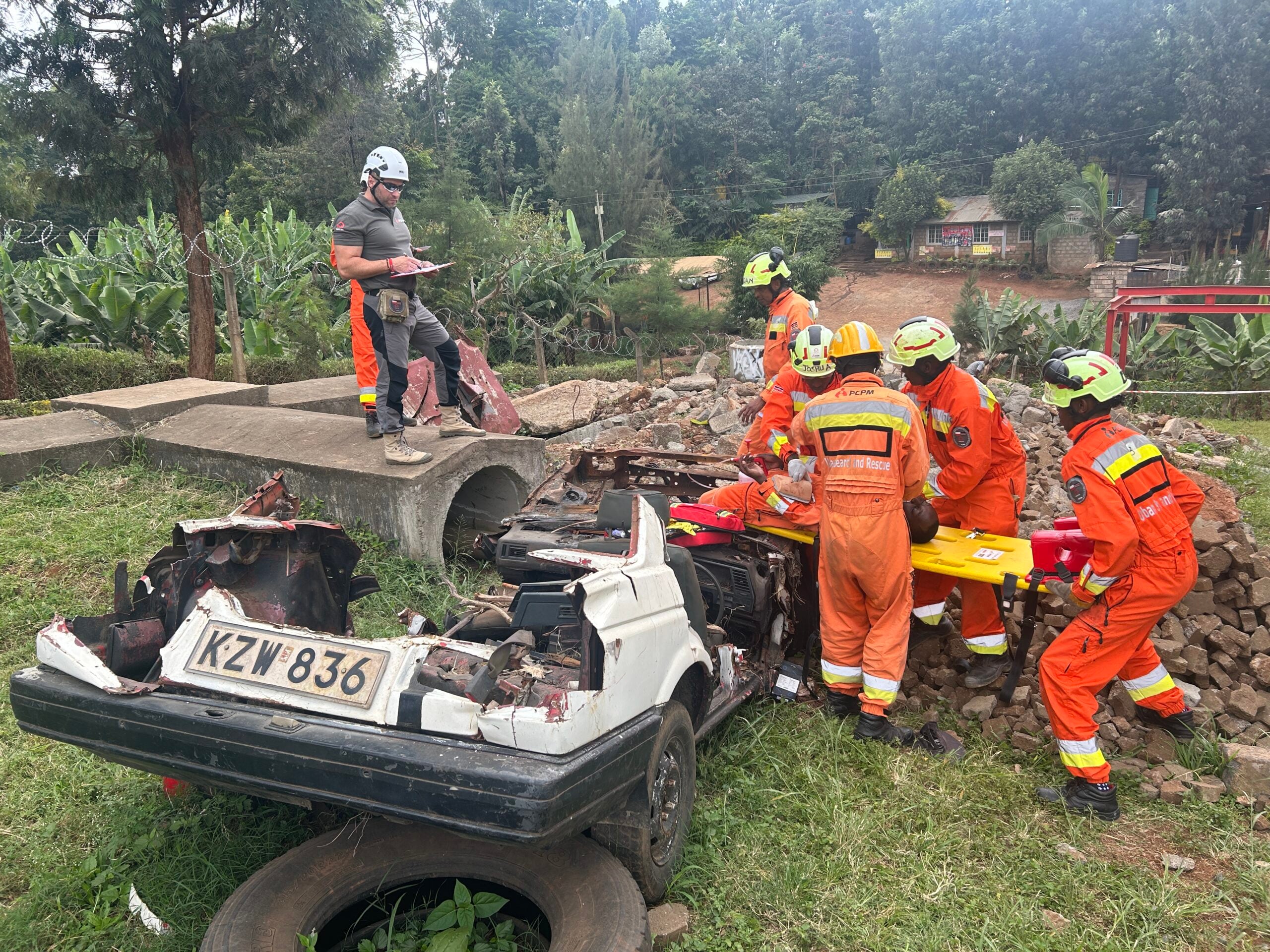
According to UN-Habitat data, up to 75 percent of Nairobi residents live in informal settlements that occupy only 5 percent of the city's area, where construction occurs without supervision and with low-quality materials.
In Ngong near Nairobi, an eight-story building collapsed, and bodies of workers were recovered from the rubble over four days. It can be said that this is yet another construction disaster in Kenya. But the word "another" too easily normalizes it. Because in Nairobi and its satellite towns, collapses are not just accidents at work in a rapidly growing city – they are one of the costs of its growth. Cities that develop faster than the state can control them, and faster than their residents can afford a safe roof over their heads.
Before rescuers entered the debris, they had to assess whether what still stood might collapse on them at any moment. Next to the collapsed building in Ngong, there were others – equally tall, tightly packed together, equally suspicious. An excavator could have helped, but it could also trigger another disaster. Therefore, the concrete was dismantled by hand, piece by piece, with the assistance of numerous onlookers.
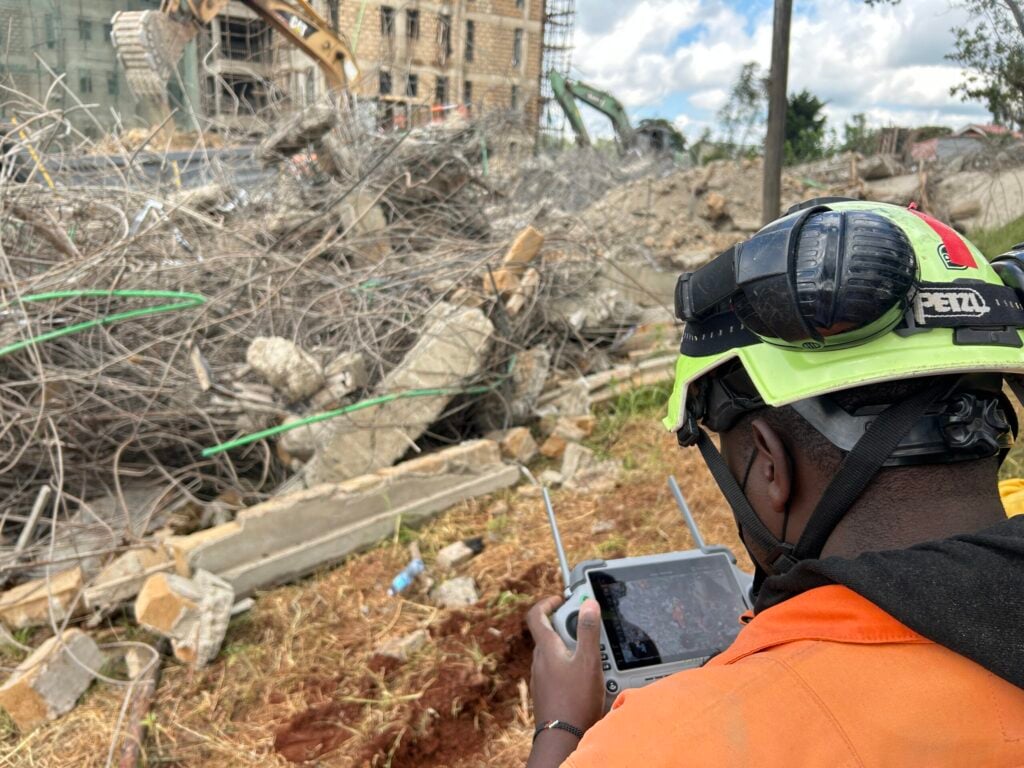
— It was a real rescue operation, not a drill – says Albert Kościński, a Polish instructor from the Polish Center for International Aid (PCPM), who was on site supporting the rescue efforts. But the disaster also reminded us that today's Nairobi is growing at a cost that the poorest are the first to pay.
Victims under the rubble
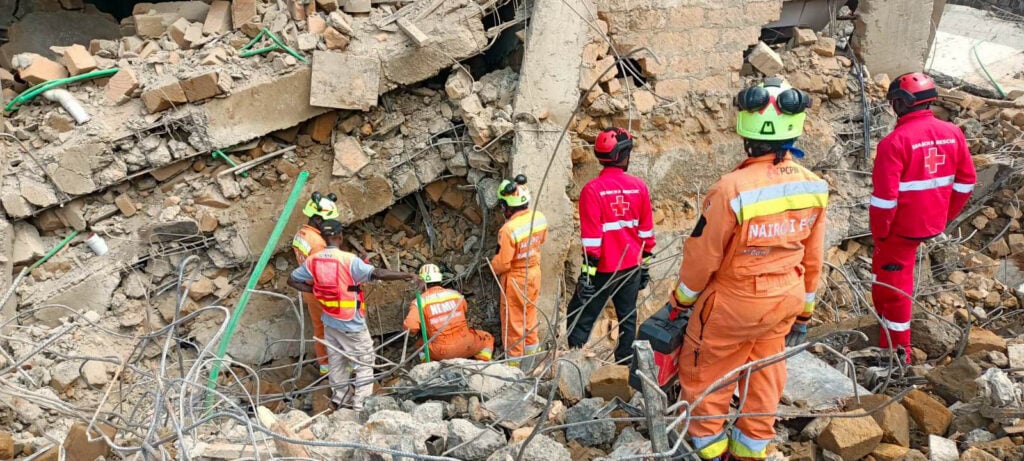
People were still trapped under the rubble of the eight-story building. The USAR team (Urban Search and Rescue) – a specialized urban rescue group trained by the Polish Center for International Aid (PCPM) in cooperation with the Ministry of Foreign Affairs of Poland and composed of firefighters from Nairobi and Kiambu – knew that every minute counted. They worked day and night, in conditions that were extremely dangerous even for experienced firefighters.
– We had real victims, real threats, and immense social pressure – recalls Kościński. Around the disaster, residents, families of the victims, and local officials gathered.
Firefighters decided to build additional supports from wood to stabilize the strained structure, allowing them to continue working safely. Gideon Owiti, the leader of the USAR team from Nairobi, recalls that they didn’t even have building plans.
— We had to rely on information from residents. Every detail could help determine where the workers were – says Owiti.
The price of rapid urbanization
Kenyan media and NGOs have been warning for years about recurring building disasters, yet no one collects detailed data on the scale of the phenomenon, and reports always focus on a single specific disaster and its victims. However, it is certainly about dozens of people annually, and this number is well above normal.
— In Poland, and in the EU as well, when a building disaster occurs, the number of victims is usually single cases. Of course, we know of mass incidents, like the Gdańsk disaster in 1995 (22 fatalities) or Chorzów in 2006 (65 fatalities). But when it comes to more frequent, or even regular, incidents, the number of victims is very small, mainly caused by gas explosions. In Kenya, most of these buildings collapse due to technical reasons, which rarely happens in Poland – says Rafał Własinowicz, one of the creators of the Kenyan USAR team.
The causes vary: illegal extensions, weak foundations, corruption in issuing permits, and sometimes just haste or residents trying to make ends meet. Just as in June, when a partially burned building in Gikomba in eastern Nairobi collapsed, burying two boys aged 14 and 17. They probably wanted to recover rebar to sell later.
Only in recent years, dozens of similar accidents have occurred in the Nairobi region. Just a few months earlier, other buildings in South C and along Ngong Road collapsed, injuring and killing several people.
The disaster in South C is a symbolic example. Employees from the Architectural Association of Kenya pointed out serious neglect in approvals, supervision, and enforcement of regulations, calling the collapse "a tragedy that could have been avoided." Another institution, the National Construction Authority, in an audit conducted in 2015, indicated that 58% of buildings in Nairobi were uninhabitable.
Nothing suggests this will change, as Nairobi is growing at a pace that outstrips planning. According to UN-Habitat data, even 75% of the city's residents live in informal settlements where construction occurs without oversight and often with low-quality materials. Interestingly, the same report emphasizes that these settlements account for only 5% of the entire city's surface area.
Since the beginning of 2026 alone, rescue teams trained by Poles have already saved over twenty people from collapsed buildings or wells. The training covers not only equipment use but also logistics management, communication, and safety at disaster sites. These are elements that still require systemic support in Kenya.
The first such team in East Africa
It was in such realities that the USAR team was established in Kenya. Polish instructors prepared the team for operations in rubble, applying international standards aligned with UN methods. Just a few days earlier, in Kiambu, where the fire brigade's training center is located, the creation of the first team was officially inaugurated.
— This project demonstrates how Polish development cooperation translates into concrete, life-saving solutions. Thanks to the long-term involvement of Polish instructors, we could transfer practical experience, operational standards, and training systems that are now implemented in Kenyan rescue services. Importantly, this is the first such specialized USAR unit in Kenya and one of the first in the East African region, setting a standard that could be adopted by other countries – said Wojtek Wilk, president of the PCPM Foundation, just a few days earlier, during the unit's inauguration.
A glimmer of hope?
— This is a huge success for the entire operation – emphasizes Oliver Tambo after the rescue operation in Ngong. Often, when the USAR team arrived at a disaster site, the building was completely collapsed – in this case, only partially. Nevertheless, the team secured the building properly and rescued the victims, leaving the site unscathed themselves, despite the high risk involved.
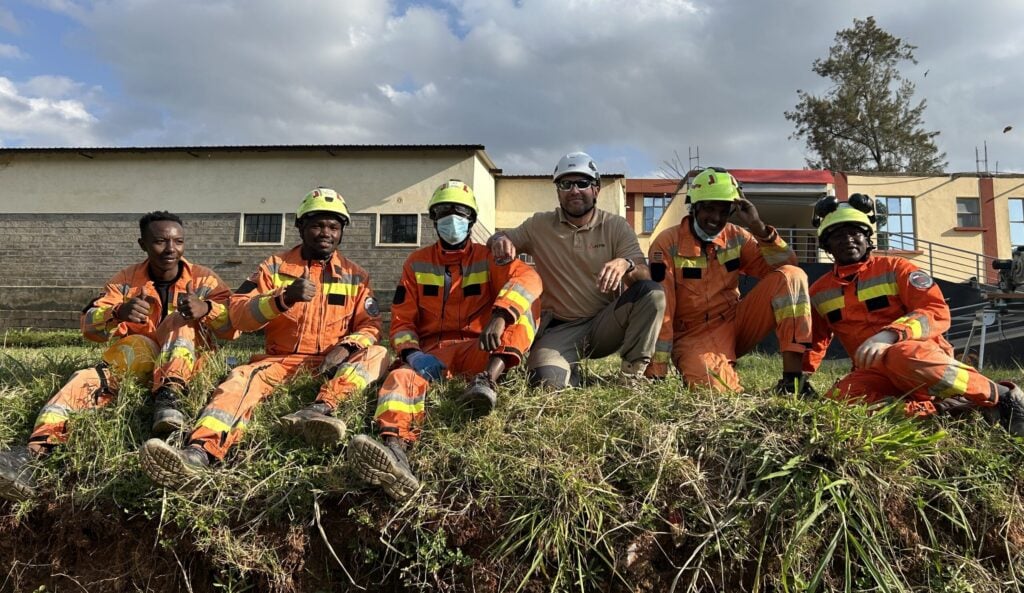
And for Pamphilia Naswa, one of the few women directly involved in technical activities, it is also a lesson in equality: women also want to work in rubble, operate equipment, and gain experience. You cannot speak of one team if some people are not given the chance to show their skills.
However, USAR is a response to the effects, not the cause, that plagues Nairobi. Kenyan authorities are not entirely passive: after subsequent disasters, they conduct audits, initiate inspections, suspend work on some construction sites, and announce enforcement of standards. The problem is that these actions come in waves after each collapse, while investigators' and supervisors' findings still reveal the same neglect – lack of approved plans, weak oversight, and ineffective law enforcement.
The city is sprawling because more people are seeking jobs, which are increasingly hard to find in the provinces or smaller towns. Climate catastrophe also influences internal migration, as poorer countries find it harder to adapt to new conditions. We see this daily in Europe, where billions are spent on adaptation: from building reservoirs to installing photovoltaics. In Kenya, these billions do not exist.
Therefore, building disasters will not cease, and I dare say they will increase. A small consolation is that now, those affected by collapses can count on rescue workers, who unfortunately gain experience very quickly.
**
Jan Wysocki – enthusiast of the Middle East and Lower Silesia. He deals with foreign policy with particular emphasis on the Mashreq and social issues. Associated with journalism since 2019, he works professionally in the humanitarian sector. Writes reports. Graduated in history from the University of Wrocław. In his free time, with an ecological inclination, he actively opposes the spreading of the paradigm of sacred throughput and writes books that he never publishes.
The post Construction disasters in Nairobi are a plague. Polish instructors help Kenyans first appeared on Krytyka Polityczna.