When the head of state threatens a general strike
Kapitál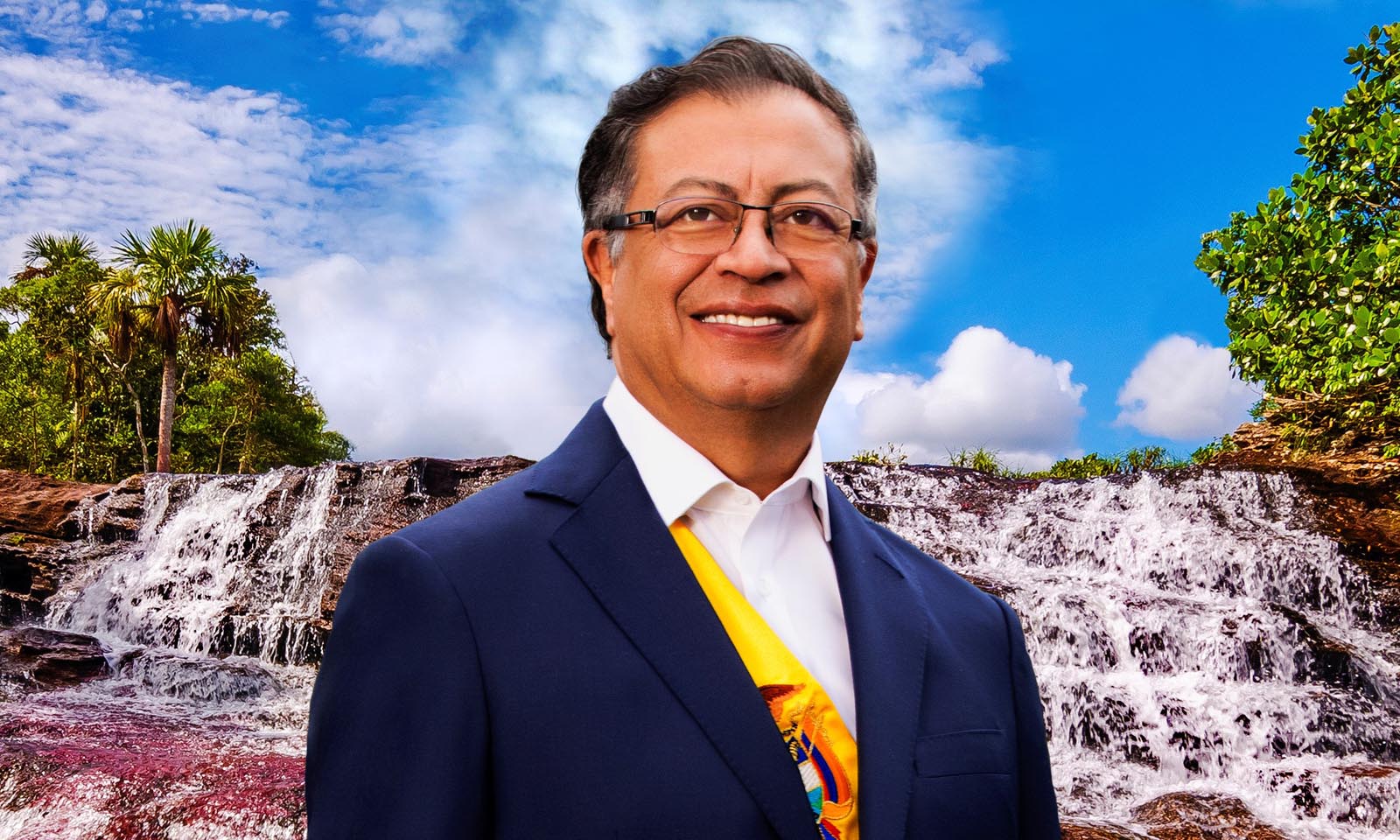
In Latin American countries, several leaders have started to turn to the right. The leftist president of Colombia, Gustavo Petro, has managed to implement social reforms during four turbulent years, but he has not succeeded in reaching peace with revolutionary guerrillas. Will this balance be enough for candidate Iván Cepeda to keep the country in the hands of the progressive camp? *
In Latin American countries, several leaders have begun shifting to the right. Leftist Colombian President Gustavo Petro, despite pushing through social reforms during four turbulent years, has failed to achieve peace with revolutionary guerrillas. Will this record be enough for candidate Iván Cepeda to keep the country in the hands of the progressive camp?1
Gustavo Petro, the first leftist president in Colombia's history, took the oath on August 7, 2022, with a clear gesture: "Bring me Bolívar's sword!" he directly called out at the ceremony. When a few minutes later they truly brought him the precious relic of the hero of Latin American independence struggles, the new president turned to his supporters with the words: "This is the sword of the people, and that’s why we wanted it here, at this moment, in this place."
The presidential inauguration was accompanied by tumultuous reactions. After decades of internal armed conflict (450,000 dead); after years of "uribismo" rule, i.e., the far right led by President Álvaro Uribe (2002 – 2010), and later Iván Duque's government (2018 – 2022); after the explosion of social unrest in 2021, the unjust political-economic system finally fell2. However, Petro, an experienced politician previously serving as a congressman, senator, and mayor of Bogotá, immediately tempered the initial enthusiasm, which he considered exaggerated: "We will build capitalism. Not because we like the system, but because we must break free from feudalism and enter the modern age."
Moreover, Petro faced the problem of how and with whom to govern. The new president won only with 50.4% of the votes, and his coalition, the Historical Pact, gained only 17.35% of the votes in the parliamentary elections. Although the representation of 24 deputies (out of 182) in the House of Representatives and 26 (out of 108) in the Senate was an unprecedented success for the left, it was still a weak mandate to push through its political plans. Fortunately, Colombia has a deeply rooted tradition that defeated parties eventually sit down with the winner at the same table, albeit usually with a good dose of cynicism. Thanks to the rapid shift of part of the right (Liberal Party, Social Party of National Unity also known as the U-Party, and the Conservative Party), as well as centrists from the Green Alliance, Petro ultimately gained support from a comfortable majority. At the same time, he was aware of the logic followed by his new "friends," about whom he said that "they will go into this government (...), to weaken its reforms and slow down its course." He also reminded that "it was precisely these young men and women who decided to demand bigger and deeper reforms." He therefore assumed that in the end, "the government will find itself caught between these two forces, and everything may end in a compromise."3
The result of the "great national consensus" was that ministerial positions were entrusted to personalities from the moderate right, such as Alejandro Gaviria (education) or José Antonio Ocampo (finance). At the end of 2022, the Congress, composed of the Chamber of Deputies and the Senate, approved an ambitious tax reform, albeit with reluctance, which included taxing wealth and high incomes. Immediately afterward, three more bills were introduced concerning labor law, pensions, and healthcare, which, in the previously dominant political faction, awakened a fighting spirit. Some remembered that they were in the president's camp only to hinder his reforms and to slow down his initiatives as much as possible.
When the head of state calls for a strike
The cause of the dispute was the healthcare system. The government intended to limit the position of public health insurers (EPS), which are private intermediaries between the state, hospitals, and patients. Groups Keralty (owner of the health insurer Sanitas) and Bolívar (owner of Salud Bolívar EPS) participated in financing the right-wing parties' campaign before the 2022 parliamentary elections. In February 2023, the first demonstration broke out with the slogan "Enough of Petro." In response to this protest, supporters of the president, whom he himself called out to, also took to the streets. When in December of that year the lower house of parliament approved the reform, several ministers resigned, led by Gaviria. A lot of confusing information began circulating in the media, the coalition was falling apart, and in April 2024, the bill was rejected by Congress after the Senate vetoed it. The same fate befell the proposed amendment to the labor law.
This first defeat was a turning point. The president hardened his rhetoric, but this did not scare his critics from the right, centrist groups, professional organizations, or independent citizens. Petro warned that if his reforms continued to be blocked, he would convene a Constituent Assembly. Constitutional lawyer Rodrigo Uprimny expressed concern about this step in the Spanish daily El País (May 28, 2024): " The call to convene a Constituent Assembly is inappropriate because it deepens destructive polarization. Part of the right perceives it as Petro's attack on democracy, while part of the left sees it as the beginning of a revolution."
Colombia became the scene of an indecisive battle, where victories and defeats were never final. When Minister Gloría Inés Ramírez managed to push through a highly welcomed pension reform in July 2024, it was "temporarily" suspended in April 2026 by the State Council, and Petro threatened to hold a referendum by decree. Congress ultimately relented and approved the labor law reform on June 20, 2025. However, to achieve this success, he had to threaten a general strike... by the president himself!
Another curiosity was when Petro on May 15 announced that he would file a complaint with the United Nations (UN) against the Colombian state, which he claims is guilty of not complying with the peace agreements between the Revolutionary Armed Forces of Colombia (FARC) and the government of Juan Manuel Santos signed in 2016. As he himself stated, this agreement was literally "torn to pieces" by Uribist traitor Duque, which further complicated Petro's key project of achieving "full peace" in the country. Negotiations with armed groups operating in the country began—whether guerrilla groups like the National Liberation Army (ELN), Central General Staff (EMC), Segundo Marquetalia (splinters from FARC), or drug paramilitary groups such as the Clan del Golfo (known as the Gaitanist Self-Defense Forces of Colombia). During the period between the start of the ceasefire and its breach, none of these groups disbanded. Due to the extreme fragmentation of these actors and their ideological disorientation, President Petro was paradoxically most uncompromising towards the historic ELN, which retained the most political character among all factions.
As is usual with presidents, Petro evoked both sympathy and antipathy, stirring strong emotions. His ego, which many consider "unruly," manifested sometimes in the best, sometimes in the worst, or very ambiguous ways. He is a brilliant person advocating for environmental protection or condemning the genocide in Gaza organized by B. Netanyahu. He inspired enthusiasm but also mockery when he delivered a narcissistic-style speech at the UN General Assembly about his intention to "spread the virus of life throughout the universe." He flooded social media, including X, with his messages. He surrounded himself with people far from the left, some with a notoriously dubious reputation—such as Interior Minister Armando Benedetti (a former member of Uribe's and Santos's governments). It is also hard to tell whether it was provocation or self-destructive tendencies when, during a live government session, he scolded his own ministers and let them argue publicly. While sharply criticizing "extractivist" Venezuela, he announced that (honorable) Colombia would buy gas from its neighbor—this destroyer of the planet and climate. Not to mention that Colombia is one of the world's main coal exporters. While criticizing imperialist maneuvers, he called his Venezuelan counterpart Nicolás Maduro a dictator, aligning with Washington's stance.
Despite the tension that the president provoked on both the right and the left, Gustavo Petro's term represents a fundamental break with the past. The minimum wage was significantly increased, the legal framework for labor relations was strengthened, the Land Fund acquired over 600,000 hectares of land and distributed 258,251 hectares among 73,000 peasant families and communities4, investments in the social state increased, poverty was reduced from 36.6% in 2022 to 31.8% in 20245. In the March 2026 parliamentary elections, the Historical Pact gained ground, and Petro maintained a very respectable level of popularity. This was enough to alarm the conservative camp on the eve of the presidential elections (scheduled for May 31, 2026). Iván Cepeda, the presidential party candidate and front-runner in the first-round polls, faced off against the official Uribista candidate, Paloma Valencia (Democratic Center), and former Uribista Abelardo de la Espriella (Defenders of the Homeland), who identified as anti-system in the style of Javier Milei (Cepeda ultimately narrowly lost to Espriella in the second round – ed. note).
In an effort to reverse this trend, attacks came from all sides. In June 2023, members of the Historical Pact coalition were forced to request the Inter-American Commission on Human Rights (IACHR) to issue a habeas corpus (protection against unlawful detention). For political persecution, the Attorney General’s Office—an entirely administrative body led by Margarita Cabello—launched investigations into several coalition members, six of whom faced potential temporary or even permanent removal from office (such as the investigation of Senate Vice President María José Pizarro in 2024). According to the affected deputies, Cabello, a former Minister of Justice under Duque’s government, acted "more as a member of the opposition than as the head of the Attorney General’s office" (La Radio del Sur, June 1, 2023). Following a campaign led by conservative media, the National Electoral Council (CNE) launched an investigation into "illegal" funding of Petro’s 2022 campaign, which again was an organ without the authority for such actions. The investigation concerned contributions made by a teachers' union, which were not used for the campaign but to cover the honoraria of observers from the Historical Pact overseeing voting processes. Petro called this a "light" attempt at a state coup by prosecutor Francisco Barbosa, a supporter of Uribe’s movement.
Several steps by the Colombian government caused concern in Washington—heightened interest in the BRICS6 (Colombia became a member of its New Development Bank), joining China’s New Silk Road, severing ties with Israel, condemning the killing of alleged drug traffickers in the Caribbean by the U.S. military in 2025, and criticism of how immigrants are treated. Retaliatory measures began to roll out one after another. Threats to impose 25%, later 50%, tariffs on all Colombian goods imported into the U.S. sparked outrage among the opposition and economic actors—directed at the main "culprit," Gustavo Petro. After Washington "decertified" Colombia in September 2025 and accused it of ineffectiveness in fighting drug trafficking, the U.S. revoked the president’s visa, which Trump called a "drug lord," and he was subsequently included in the "Clinton List" maintained by the Treasury7.
As is customary among White House residents, periods of intense conflict are followed by periods of lull. Several phone calls and Petro’s subsequent visit to the White House on February 3, 2026, seemingly contributed to easing tensions. However, Petro himself accused the United States of attacking Venezuela "without legal basis," and Trump advised him to "watch his ass" (original: "watch his ass"—ed. note). If the truth is what the New York Times article from March 20 claims, the DEA labeled Petro a "priority target," and U.S. federal prosecutors began two separate criminal cases against him. On the eve of the crucial elections, the Colombian right and its media will be rubbing their hands in anticipation.
Major "boss" allies also joined the offensive. Ecuadorian President Daniel Noboa, a right-wing imitator of Donald Trump, declared a trade war against Colombia. Tariffs on Colombian products, introduced in January at 30%, were increased to 50%, and from April 9, even to 100%. According to Noboa, the entire financial burden of controlling the border between the two countries was borne by Ecuador, as Bogotá was ineffective in the joint fight against smugglers. Petro himself condemned previous meetings between the Ecuadorian president and the controversial former Colombian president Uribe, and responded to the trade war with the same increase in tariffs and a suspension of electricity sales to his neighbor. This conflict is causing an economic crisis mainly affecting southern Colombia, which is crucial for Petro’s and Cepeda’s electoral support.
In this region, about thirty attacks occurred, the deadliest being a bomb attack on April 23 (the author probably meant the attack that happened on April 25—ed. note). Defense Minister accused EMC, the largest splinter faction of the Revolutionary Armed Forces of Colombia (FARC). "It is legitimate to ask whether these events, which caused harm and anxiety among the population, are not aimed precisely at creating an atmosphere of fear that benefits far-right groups determined to destabilize the country and disrupt democratic electoral processes," Cepeda said on X. Uribista Paloma Valencia, in response to her earlier statement that "security will only be restored by ending Iván Cepeda’s 'full peace' project," declared that if she becomes president, she will appoint... Uribe as Minister of Defense.