New versus old. Ukraine protests after the dismissal of the Minister of Defense
Krytyka Polityczna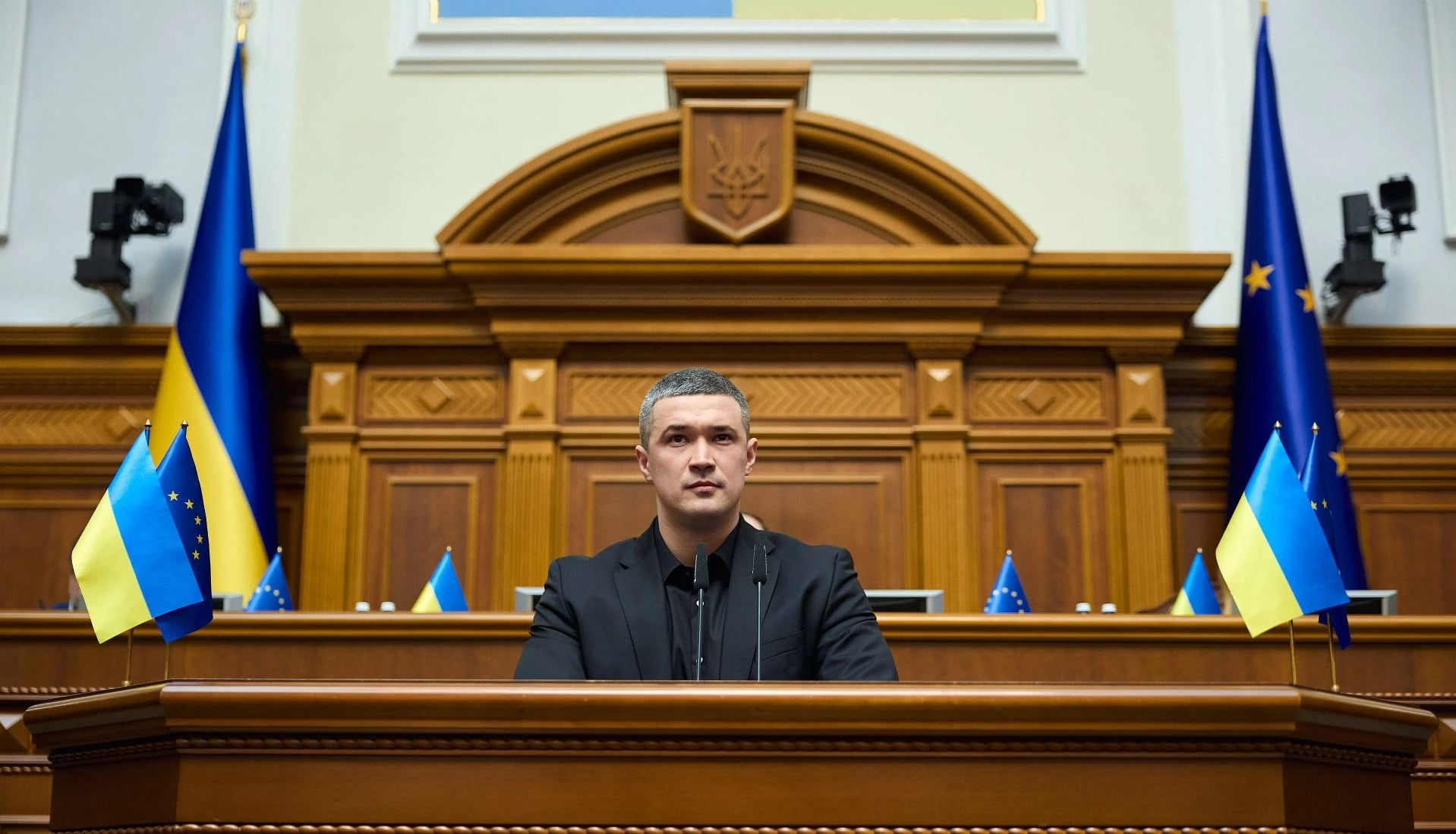
Olexandr Syrski and Mykhailo Fedorov embody the contradictions between the post-Soviet legacy and the progressive vision of Ukraine's future. Zelensky responded to Fedorov's growing popularity, but removing the minister from his position only strengthened him. The post New versus old. Ukraine protests after the dismissal of the defense minister first appeared on Krytyka Polityczna.
The decision of President Volodymyr Zelensky to dismiss Mykhailo Fedorov from the position of Minister of Defense has sparked the most serious social protests in Ukraine in months. This is actually the second time during the full-scale war with Russia that Ukrainians have massed in the streets of their cities to oppose the actions of the president and his entourage. Previously, protests erupted after laws restricting anti-corruption agencies.
Between Post-Soviet Heritage and Progressive Future
Participants in the protest demand the reinstatement of Fedorov. This 35-year-old, originating from Vasylivka in Zaporizhzhia Oblast, which is currently under Russian occupation, became one of the most popular Ukrainian politicians even as Minister of Digital Transformation. In this ministry, he built his image as a technological visionary. Fedorov was Minister of Defense for only half a year, but during that time, significant successes of the Ukrainian army were achieved.
These include drone attack campaigns on Russian territory, which led to a serious fuel crisis, as well as the so-called middle-strike, which involves hitting the enemy's rear behind the front lines, undermining the Russian offensive. The widespread use of drones on the battlefield has also reduced the human costs of the Russian assault.
Apparently, the top commander Oleksandr Syrskyi could not handle these successes — and Zelensky explained that he made his decision based on this. The conflict between the minister and the commander-in-chief was, in his opinion, ultimately paralyzing for the Ukrainian army, and a choice had to be made. But Ukrainian civil society is backing a different side in this conflict than the president and is demanding the dismissal of Syrskyi. Especially since Zelensky’s decision to dismiss Fedorov has a second, corrupt bottom.
The young minister, who shortly after his dismissal held a press conference, now openly speaks about the shocking scale of corruption within the ministry, especially in the conduct of tenders for military contracts and other agreements for the army. This is no surprise to anyone in Ukraine, because corruption is a daily reality for Ukrainian society, and the war of corruption only fuels it. If anything was surprising, it was that the person who joined the government from Zelensky’s team had the desire to fight this corruption.
The Dark Horse of the Presidential Elections?
This political clash thus symbolizes more than it might seem at first glance. It is not just a personal conflict, but an embodiment in the persons of Fedorov and Syrskyi of the contradiction between post-Soviet heritage and a progressive vision for the country's future. It is a conflict between a war strategy based on human resources and military hierarchy and a war based on introducing increasingly newer technologies into the battlefield, which favor networking, decentralization, and innovative risk.
Considering the growing reluctance towards conscription demonstrated by Ukrainian society, as I wrote a week ago, the vision of a war where drones replace infantry soldiers is closer to Ukrainians.
At the background of this conflict is yet another fundamental issue of current Ukrainian politics, namely the indefinite freeze. The martial law postpones the prospect of elections, both presidential and parliamentary, but even under these conditions, there is a political struggle over who and how will govern Ukraine after the war. Zelensky perhaps wanted to remove Fedorov also because he saw the increasing popularity of the minister. But his move only increased it, creating a serious political rival.
Russian Entrepreneurs Are Sad
The political crisis in Ukraine raises fears about the continued effectiveness of Ukrainian strategy towards Russia. For now, however, Ukrainian drones still strike important targets. On the night of July 17 to 18, 2026, they hit two of the largest logistics centers of Wildberries, the largest Russian e-commerce platform, called the “Russian Amazon.” The targeted sites are in Elektrostal in Moscow Oblast and in Kotovsk in Tambov Oblast. Eight warehouse staff members were killed, and media reports indicate that workers had difficulty leaving the buildings despite the fire because security refused to let them leave their workplaces.
Following Russian media and social networks, it is hard not to get the impression that the real drama is experienced by entrepreneurs who traded through the platform and stored their goods in its warehouses. Everything went up in smoke, and it so happened that just 10 days earlier, on July 7, Wildberries, which operates in Russia as an almost monopolistic online retailer, sent an update to its contractors’ agreements, stating that the company would not pay compensation for losses caused by drone or missile strikes.
This position was confirmed by the company’s CEO after the attack, although she added that the company is working on support for affected businesses. However, Russian media report that Wildberries itself did not insure its warehouses, and the damages from the fire are estimated at 20-40 billion rubles (roughly 1-2 billion złoty). If the value of the goods of individual contractors is included, the total could reach even 100 billion rubles.
It is interesting to observe the reactions of Russian entrepreneurs, who, upon hearing about the fire, went to the site and watched the column of smoke from afar, which was consuming their goods. “I don’t understand why a Russian businessman always has to struggle. Truly, I don’t understand what we are being punished for,” says one of them in a video circulating online.
Indeed.
The post New vs. Old. Ukraine protests after the dismissal of the Minister of Defense first appeared on Krytyka Polityczna.