Apocalyptic Odyssey. Despite its shortcomings, Nolan's film truly moves you.
Krytyka Polityczna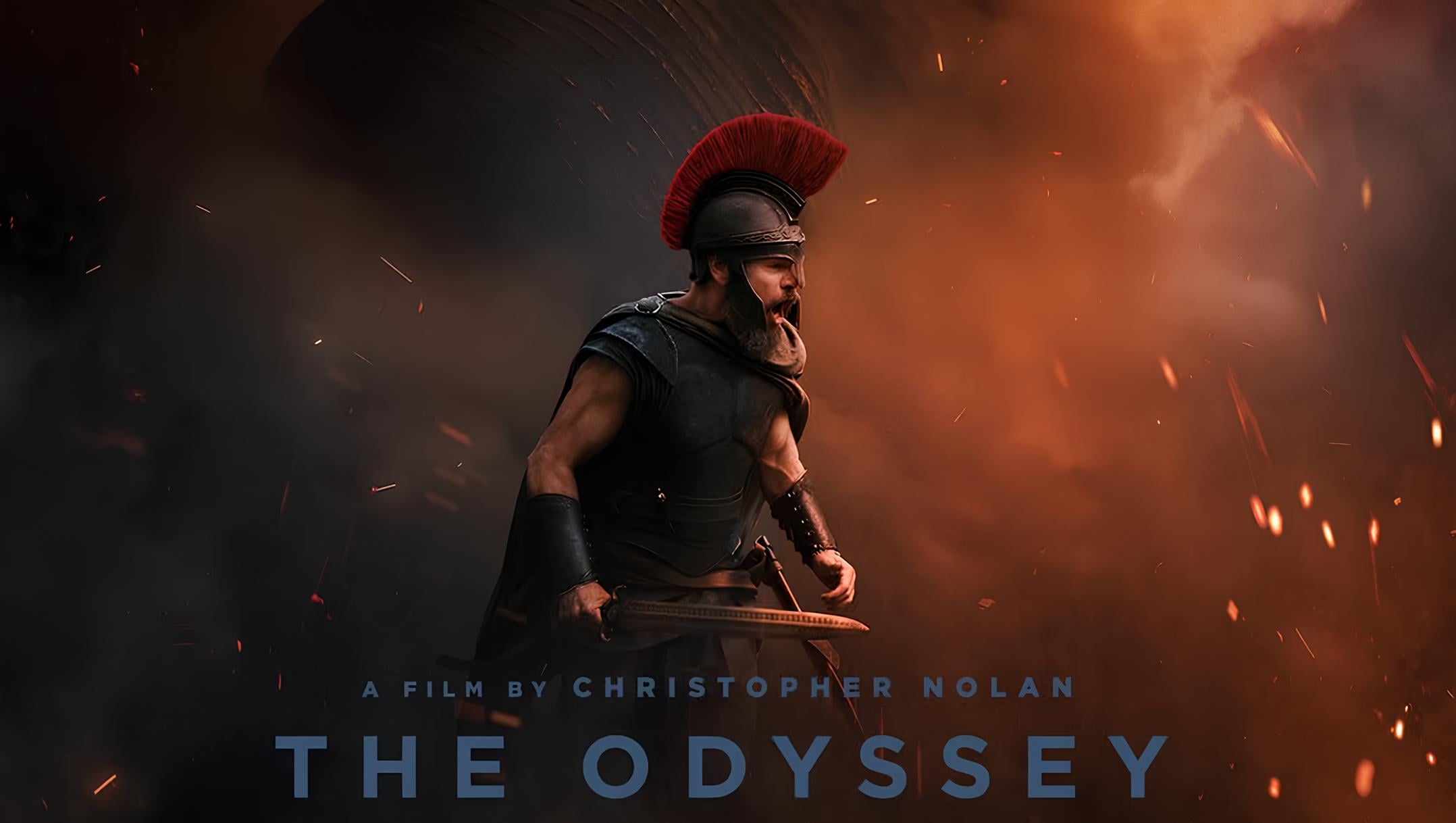
Homer on the times of polycrisis, perfectly corresponding with our contemporary fears of a climate catastrophe, the collapse of the international order based on law, and the crisis of liberal democracy. The post Apocalyptic Odyssey. Despite its shortcomings, Nolan's film truly moves you appeared on Krytyka Polityczna.
Watching Odyssey by Christopher Nolan, we ponder for a long time about what exactly the director's idea of Odysseus's character is, what hidden spring drives his hero. Odysseus desires to return home, but it is not the desire to return that seems to be the main emotion defining him. We see his cleverness, but it is not cunning that characterizes him; it would be hard to describe the character played by Matt Damon as a trickster. Odysseus, in his portrayal, can be proud; there are scenes where he challenges gods and other superhuman powers, but the story begins at the moment when all the pride that once might have characterized Odysseus has long been broken.
Oppenheimer of the Bronze Age
Everything becomes clear when we realize that the key to Nolan's Odysseus is J. Robert Oppenheimer, the hero of the director's previous film. Odyssey and Oppenheimer, stories separated by three millennia, echo each other in Nolan's two films. The director depicts the fall of Troy as a catastrophe on the scale of Hiroshima and Nagasaki, an event that not only brings destruction to a specific place but also undermines the very sense of reality, plunging the world into a new, unknown, terrifying order where the rules once considered obvious no longer apply.
Nolan's Odysseus, like Oppenheimer, through his intellectual talents finds a way to enable victory in a prolonged war. However, the success of both these characters comes at a terrible price, not only for the shattered Troy, Hiroshima, and Nagasaki, but also for themselves, burdened with an unbearable guilt. Odyssey is a film about guilt, and it is this sense of guilt that most strongly defines its hero.
Nolan's Odysseus bears his guilt much worse than Oppenheimer from the director's previous film. In Matt Damon's portrayal, he resembles a veteran struggling with war-induced post-traumatic stress disorder. When he first appears on screen in a scene that is not a flashback, he is on the island of the nymph Calypso, where, intoxicated by the lotus, he can hardly remember who he truly is – like an American veteran of one of many wars fought by Washington, unable to return to normal life and fleeing into narcotic solace.
In lotus delirium
All the fantastic elements of Odyssey – the confrontation with the Cyclops Polyphemus, the siren song, the journey to the land of the dead, the island of the sorceress Circe, Scylla and Charybdis – appear as a flashback, a narration of a perpetually confused Odysseus, drugged with opiates, trying to uncover the truth about who he really is, describing the story of his journey from Troy to Calypso. And one might wonder whether all the monsters and monstrosities are merely the product of a drug-distorted mind or delirium of consciousness, which creates cyclops and other monsters to distance himself from what is truly terrifying: the night massacre of Troy, which he enabled, the loss of war comrades, his own mistakes costing the lives of his fellow soldiers.
Such an interpretation is especially suggested by the sequence in the land of the Laestrygonians, giants who sank most of Odysseus's ships. From a realistic motivation perspective, it makes no sense; instead, it offers the intensity of a terrifying, yet beautifully surreal nightmare.
Although Nolan's film is not lacking in monsters, it practically does not feature gods, who are very important in both Trojan epics. In a few scenes, Athena appears, but one can wonder to what extent she is a real divine presence or an embodiment of Odysseus's internal moral sense, or perhaps his guilt. In one scene, the goddess appears among the slaughtered people of Troy, and it is impossible to say whether Odysseus sees the goddess in the murdered Trojan woman or whether Athena, as she appears to him, is a ghost of the girl murdered in the city he helped to conquer.
Song on the ruins
Odysseus finally emerges from his narcotic stupor and returns to Ithaca. Nolan's film, however, is not a story about the return of a king, husband, and father, nor about restoring the disturbed order. Odysseus realizes that not only is there no longer the Ithaca he left twenty years ago, but also the entire world he knew when he set out for war.
In the film, the destruction of Troy shattered the entire legal-moral order of the Bronze Age world, unleashing forces threatening its survival. In Ithaca, the elders press Penelope to find a new husband because the island needs a king to defend itself against the threat from the "men of the sea." The fear of their attacks paralyzes the entire Greek world two decades after the fall of Troy. As the film suggests, the source of this threat lies in what happened twenty years earlier.
At the end of Oppenheimer, the titular hero tells Einstein that when he was working on the equations necessary to build the atomic bomb, he feared it might trigger a chain reaction that would end the world, and he admits with sadness that perhaps it has. Odysseus could repeat these words. The film begins with a song about Odysseus at Troy, sung in the palace in Ithaca, populated by suitors vying for Penelope's hand – Odysseus and the war he helped win gradually transform into myth. In the final scene, Odysseus, talking to Penelope, wonders what will be remembered from Ithaca, what song will survive the coming catastrophe, what future generations will sing on the ruins of Sparta and Troy. Because returning home, driving out the suitors, and restoring the basic order in Ithaca cannot prevent the impending disaster.
Homer for the times of polycrisis
Odyssey is ultimately a film about the guilt of a man convinced that by trying to end a bloody, destructive, years-long war, he caused an apocalypse, set in motion an irreversible process of the world's fall, which he tried to save, and about living in a world after the end of the world.
Not everything in Nolan's vision works; many places reveal the weaknesses characteristic of this director's cinema. Scenes where Nolan puts dialogues directly explaining how he interprets the Homeric epic, especially when Odysseus tells Penelope that "our bronze age is ending," are irritating.
Mycenaean antiquity is quite generic; Nolan lacks the imaginative ingenuity that characterized, for example, Pasolini's Oedipus Rex. The scenes with Circe and Polyphemus are especially disappointing.
There are also accusations that the very concept of internalized guilt, as Nolan presents it on screen, is fundamentally alien to the Homeric epic and the world from which it emerges. Only the process of film adaptation involves reinterpreting old texts so that they can say something meaningful to contemporary audiences. And despite all the shortcomings of Nolan's Odyssey, this is perfectly achieved: it is Homer for the times of polycrisis, resonating strongly with our modern fears of climate catastrophe, the collapse of the international legal order, the crisis of liberal democracy, and above all, other threats.
A clear, strong, consistent interpretation of Odyssey ensures that, despite all the flaws, Nolan's vision holds up and truly moves. The casting choices of the director also stand firm. Before anyone saw the film, they caused a stir in alt-right circles, accusing the director of erasing one of the fundamental texts of Western culture in the name of woke ideology. As can be easily guessed, it was about non-white actors.
Indeed, the film features a Black Helen, an actor of South Asian descent among Odysseus's crew, and a Black bard singing the song of Odysseus in the opening scene. All these choices, however, function as an organic part of the depicted world, in no way breaking its coherence or hindering the viewer's immersion. Arguments from the alt-right echo chamber are completely detached from this film, and looking at how it is received by audiences and critics alike, one can only conclude that the surge of algorithmically amplified outrage from the far-right echo chamber is really not worth taking more seriously than it deserves.

The post Apocalyptic Odyssey. Despite its shortcomings, Nolan's film truly moves first appeared on Krytyka Polityczna.