Homeless, free-living, and released cats. Conflicts between feline tribes, in which cats suffer.
Krytyka Polityczna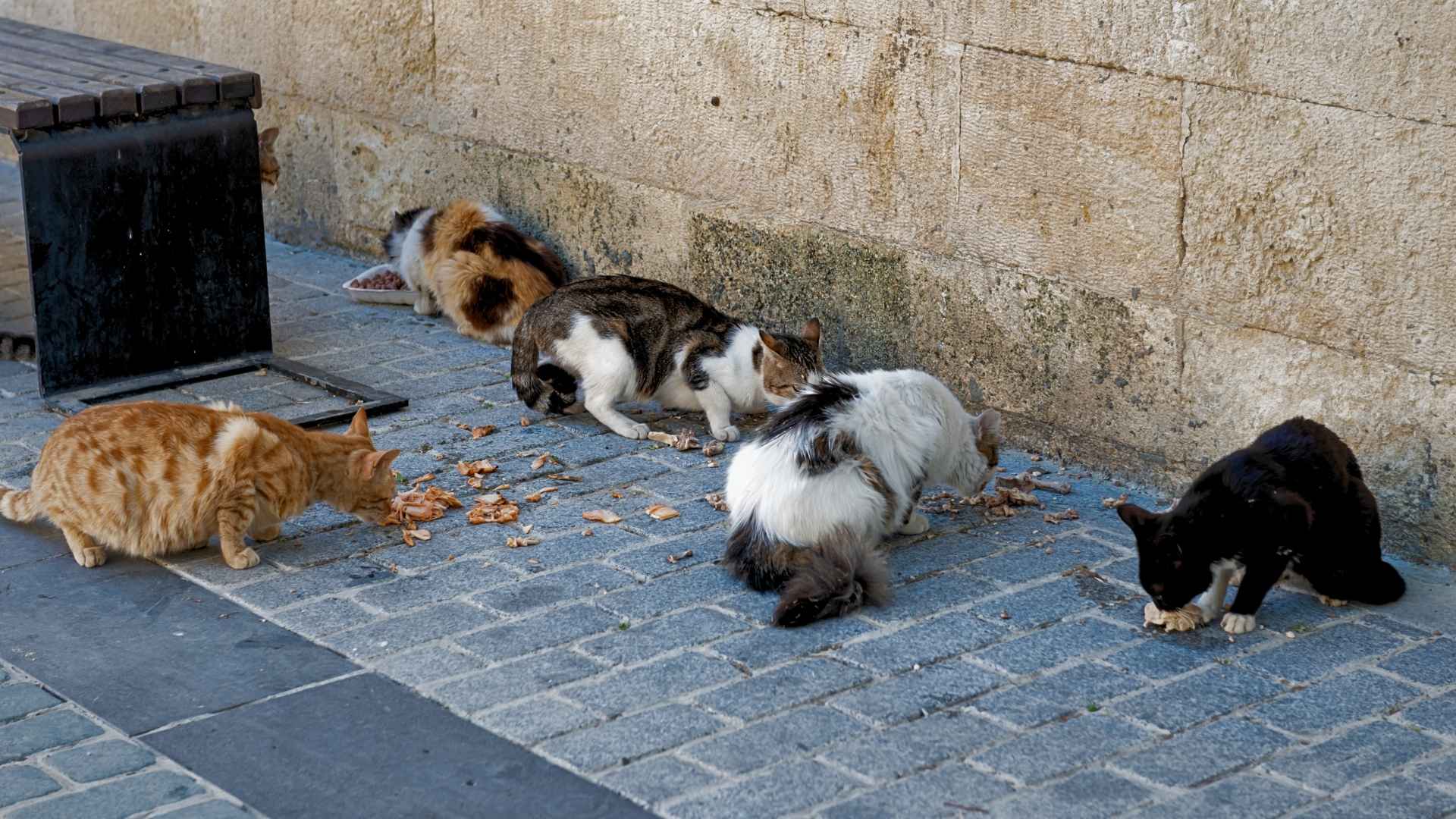
Some want to call stray cats free-living, others – free-living homeless, yet others – free-living outdoor cats. There are also those who call outdoor cats happy. The situation of cats is complicated, and rich Polish hunting traditions only make it worse. The post Homeless, free-living, and released. Conflicts of feline tribes, in which cats suffer, first appeared on Krytyka Polityczna.
According to data from the Polish Society for the Protection of Birds (OTOP) each year, 631 million mammals and 144 million birds fall victim to cats. Even these terrifying, abstract numbers in no way justify violence against cats, which is falsely legitimized by the mistaken belief in the presence of Felis catus on the list of EU Invasive Alien Species, and sometimes even systemic extermination of cats carried out worldwide.
Invasive species? Yes, but protected by law
The issue of IGO in our country is regulated by a special law from 2021 on alien species and regulations of the Council of Ministers reflecting the EU interpretation of regulations in this matter. Brutal measures limiting the impact of animals and plants listed as IGO may be undertaken. In the elimination of species, local authorities – mayors, city presidents, and municipal leaders – are to take the lead. Methods of control, adapted to the specific species, are determined by the General Directorate for Environmental Protection. The list of species posing a threat to Poland includes 31 entries. Among them are bison, Canadian beaver, or Chinese mitten crab, but not the domestic cat.
As activist Rafał Maciaszek, who requested an expert opinion for the European Commission points out, the domestic cat has the status of an invasive alien species because, as a domesticated animal, it does not have a natural habitat in the EU. However, I emphasize that neither the general EU list nor the Polish list includes cats. This means that procedures for trapping or eliminating them are not applied.
The cat indeed appears on the list of invasive species, but it is the list compiled by the Institute of Nature Conservation of the Polish Academy of Sciences. This confirms its destructive impact on the ecosystem but has no legal consequences.
Meanwhile, in Poland, many people are just waiting to grab a air rifle, hunting rifle, or black powder gun. Their hearts echo with the glorious period in Polish hunting history, which lasted from 2002 to 2011. During that time, in hunting districts, it was legal to shoot cats and dogs if they were at least 200 meters from buildings. Mr. Aleksander from Facebook nostalgically recalls those times. Mr. Piotr reminds that in the Czech Republic, “a cat 150 m from buildings is used as a shooting target, they ruthlessly kill them,” and Mr. Ireneusz assures that he has already shot cats. Mr. Wiesiek suggests clandestine activity: “You have to quietly get rid of roof cats.” I found all these comments on the website of the Opole Center for the Treatment and Rehabilitation of Wild Animals “Avi”.
Bloody dreams
Some dream of an ultimate solution. Mr. Rafał hopes that “they will quickly introduce what they have in Australia and New Zealand, then the release of cats into the wild by irresponsible owners will end”. In Australia, shooting cats is currently done for sport, competitions are organized for children in this discipline (and even charity hunts!), and killers of the largest individuals are rewarded. Cats are killed not only by bullets. There are also sausages with poison and elaborate devices like Felixer, which recognize an approaching cat and spray it with a lethal substance. An animal that begins to groom itself dies within a few hours due to respiratory failure.
By 2020, Australians planned to kill 2 million cats. Ambitious plans of New Zealanders include exterminating all feral cats by 2050. Moral questions arise – how many animals can we kill to protect others? Is it acceptable to eliminate large existing populations to protect small populations and those that need reintroduction?
Homeless or feral
In the light of EU law, a cat enjoys full rights to exist. This is primarily governed by the law from August 21, 1997, on animal protection. Cruelty and killing of an animal can result in three to five years of imprisonment. Moreover, developers or housing cooperatives do not have the right to chase away cats or hinder their access to habitats.
According to the law, feral animals, including cats, “constitute a national good and should be provided with conditions for development and free existence.” Feral is defined as “an undomesticated animal living in conditions independent of humans” (this raises serious doubts, as cats were domesticated thousands of years ago). But what is a homeless animal? It is one that “has strayed, escaped, or been abandoned by a human, and it is impossible to determine the owner or guardian.”
In practice, the status of a cat often raises doubts, and different parties use various interpretations of regulations to shift responsibility onto others. A municipality that considers certain cats to be feral rather than homeless does not have to trap them for shelters. According to the law, they should be sterilized or castrated (or at least should be) and treated, but after sterilization, they are released back onto the street. Sometimes, food is also organized and handed over to volunteer caregivers.
On the other hand, a municipality may consider feral cats to be owned cats. A few years ago, the Tuliszków municipality refused help to a herd of 10 cats that started living in a garden and basement of a chronically ill woman on welfare, because officials insisted they were owned, domesticated cats. Ultimately, a foundation helped. Also, access to subsidized sterilization outside large cities can be problematic. In smaller towns, a veterinarian may only accept animals in a neighboring village, which creates issues related to transport exclusion. The budget for helping feral animals is approved each year by the end of March, and the municipality only sterilizes until funds are exhausted.
The very term “feral cat” causes a feverish reaction among hundreds of Facebook users, as if it were a descriptive term rather than a valorizing one, meaning “cats emerging from the wild and proudly cultivating their freedom” or “cats equal to wildcats.” A homeless cat is simply a cat that lost its home. A feral cat is one that was never domesticated, is a descendant of a homeless cat or another feral. It is wild – yes, wild – although skeptics also want to reserve this term solely for the wild relatives of street cats.
A reasonable argument seems to be that an adult feral cat will not cope in a shelter, maybe not even in a temporary or permanent home. But what about kittens? Such an animal can be both a feral and a domestic cat if it is adopted quickly enough. Unfortunately, under the law, feral kittens cannot be taken from their “natural” environment. They are meant to live out their days on the street, exposed to internal and external parasites, cat flu, leukemia, FIV, premature loss of teeth, sense of smell, taste, and hearing due to past infections.
City for feral cats
Warsaw, Gdańsk, Poznań, and many other cities run informational campaigns caring for the PR of street cats. Sometimes they even encourage residents to join volunteer feeders and monitor the populations of street cats.
Both of us belong to the Feral Cat Care in Poznań (KOT). As part of our activities, for several years we fed an old cat living on the street, sealed her shelter, etc. When a new cat appeared – showing signs of being a homeless animal – we took it into our home. It has stayed ever since. Some will say that by feeding the cat, we contributed to a tragedy for birds. I will reply that we also cared for birds.
Unfortunately, there were times when, when trapping feral cats for treatment and sterilization, we faced grassroots opposition. Distrust towards institutions – often justified – translates into issues related to municipal programs for cat care. Sometimes residents of nearby blocks hindered the rescue of a cat needing help because we were from the city, not a foundation. Just mentioning that the cat would go to a shelter for treatment was enough to give a full picture of oppressive authority that must be opposed. But why should the city cover the costs of treatment if it can be done by foundations? Also, there is often no time to seek volunteer help; sometimes quick action is necessary, following established schemes.
Feline factions in conflict
Can cat enthusiasts live in harmony? On one side are those who want feral cats to disappear from both legal order and Polish streets. This includes nature conservationists. But if all free-living cats were considered homeless, should they be taken to shelters? How many would be euthanized? The collective imagination is captured by the idea of an altruistic foundation effort. A beautiful vision where street cats go to loving people and instantly become domestic. What about 9-year-old cats living on trash dumps, in what kind of homes would they find themselves? And would sudden confinement be a form of violence?
On the other side are defenders of urban feral cats, often benefiting from municipal help in sterilization and feeding. These are people for whom cats are an integral part of the urban ecosystem. We can distinguish a faction seeking support from local governments and an anarchist faction.
Some advocates of feral cats idealize feline freedom and, like 19th-century humans who avoided hospitals at all costs, they curse city veterinarians. Sometimes they prefer animals to die in nature, even from hunger and pain, rather than be taken to city doctors or animal concentration camps. Either the street or the foundation – they see it in black and white, refusing to consider that in life-threatening situations, treatment should come first, and only then comfortable living conditions. They dismiss the idea that euthanasia might be the best solution in certain cases.
Finally, there are – fortunately in the minority – “patokociarze,” opponents of sterilization as interference with nature, which should aim for self-regulation. Meanwhile, in Lubin, in the basement of a certain block, a toothless old cat was giving birth to more litters. Kittens fell from her shelf, and since she could not carry them because of her toothless mouth, they died on the concrete floor. Volunteers from a foundation found the feline queen-mother and several generations of cats in various stages of decay. People had been using the basement for years, and no one thought of sterilizing the cat.
How to help city cats?
Sterilization and castration are not only tools for controlling feral cat populations but also a real chance to improve their quality and length of life. It is the only humane way to limit the population of urban (and rural) cats. With support from volunteers and local governments, they could live out their days in relative health and comfort, without leaving offspring. Besides volunteers, we also need “civilians” – people who, upon seeing a sick cat, are able to help on their own, without waiting for external support – get dirty, injure themselves in bushes, scrape their knees, and allow themselves to be scratched, rather than telling everyone to “secure the cat” on Facebook groups. Although such pressure is also not insignificant.
Street cats should be protected from hatred, which falls upon them because owners knowingly release their cats. The only solutions seem to be microchipping and high fines, as well as education. Sorry, fellow nature lovers – if we want to reduce the number of owner-released cats, a campaign showing gruesome images from the streets will be more effective than statistics of killed birds, squirrels, and bats. The fear of losing an animal is a stronger motivator than concern for biodiversity.
In an ideal world, we would also see necessary legislative changes. First, the issue of illegal domestication of cats born from feral mothers should be addressed. Then, the possibility of attempting to domesticate those showing tendencies to stay close to humans should be allowed – this would require significant behavioral work. Finally, we need to clarify concepts from the law that cause ambiguities and lead some to contest regulations – for example, the condition of non-domestication as a prerequisite for considering an animal feral.
For now, conflicts between opponents and supporters of cats – as well as tensions within supporter camps – do not diminish. However, a cat should not be the cause of ideological polarization. It is simply an animal whose situation in cities requires concrete solutions: ethical, based on current scientific and behavioral knowledge, and legal and enforceable by all.
A street cat, at best, will live half as long as a sofa cat, and in drastically worse conditions. Let not fear, shot, or poison shorten that time further.
**
Aleksandra Żołędź – cultural studies scholar, petsitter, author of countless texts she cannot sign with her own name.
Jacek Adamiec – cultural journalist, copywriter. Graduated in Polish philology from UAM. Writes about books for Kultury Liberalnej and Booklips.pl, and about culture in Poznań for the portal kultura.poznan.pl. He also tries to help urban pigeons.
The post Homeless, feral, and released. Conflicts among cat enthusiasts causing suffering to cats first appeared on Krytyka Polityczna.