“Transformed into memories” – How Estonia’s Setos are navigating a modernizing world, and geopolitics
New Eastern Europe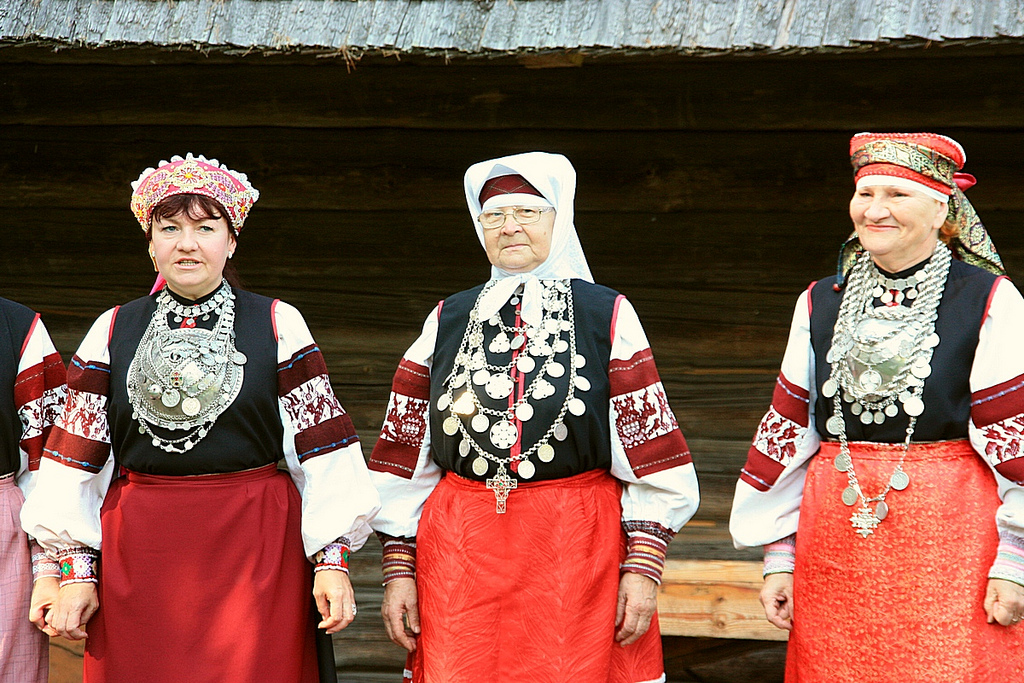
For centuries, the Seto have inhabited the region of south-east Estonia and north-west Russia. However, forces outside of their control have divided their ancestral lands between these two hostile states, causing disruption to their ceremonies and traditions. Despite this division, and the threats posed to their culture by the modern world, this small ethnic group continues to preserve its heritage.
When one thinks of minority groups in Estonia, Russian speakers are often the first, and only, group that comes to mind. Thanks to Estonia’s history, government policies, and geopolitics, this subset of the population often generates international headlines and garners the most attention from the outside world. What is less known is that, while Russian speakers constitute the largest minority of Estonia, there are a number of other ethnic and linguistic minorities within the country, all with varying degrees of recognition from the government. This includes the Seto, a small group recognized as a linguistic minority in Estonia but not considered a separate people.
The majority of this ethnic group, around 10,000 to 13,000 people, live in Estonia while around 300 reside in Russia. Since the early 1990s, the border between these two states has divided the Setomaa, the traditional Seto homeland. The upshot is that, as hostilities between the two countries have grown, numerous locations with cultural importance and meaning to the Seto have become less accessible over the years. In addition to this border, the group is also facing obstacles from the Estonian government and challenges posed by the modern world.
A people apart
While the Estonian population has historic roots in Protestant Christianity, the Seto largely follow the Orthodox tradition. There are two primary explanations for this divergence. The first, as noted by Anti Lillak, a teacher at the Estonian National Museum and a second-generation Seto living outside the Setomaa in response to questions posed by New Eastern Europe, is that the Setomaa was largely located in Kievan Rus’ which eventually came under Orthodox influence. Secondly, the Orthodox Christian church, historically, was more tolerant of pagan and native practices when compared to some other Christian sects. Therefore, the Seto were allowed to preserve many of their pre-Christian traditions.
Another division between Estonians and Setos is language. Like Estonian and Finnish, the Seto language belongs to the Finno-Ugric family and is closely related to the southern Estonian dialects, such as Võru. According to the 2021 national census, there are around 20,000 people in Estonia who speak Seto. While both languages fall under the same family, they are not always mutually intelligible, and Estonians often need translations to understand Seto.
Unfortunately, like most minority languages, Seto is facing threats of extinction. Relative to the estimated size of the Seto population, 20,000 speakers would at first appear to be a welcome statistic. However, the truth is more complicated. Of the 20,000 speakers, it is estimated that only around 1,000 speak the language freely. Lillak notes that due to lingering Soviet myths about the dangers of teaching minority languages, many parents and grandparents are still hesitant to speak the language with their children. The upshot is that younger generations are increasingly learning only standard Estonian.
Another issue lies with the Estonian government. While there is no active legislation against the Seto, and the state provides protection for the culture and supports its preservation and development, the government refuses to grant the language the status of a regional language. This is despite a recommendation for such action by linguists from Tartu University. Meanwhile, neighbouring Russia grants the Setos the status of one of the “Small-Numbered Indigenous Peoples of Russia”, granting them additional benefits and state support.
A post-independence renaissance
Since Estonia re-gained independence in 1991, the Seto have worked to maintain their unique culture and way of life. In 1991, the first Seto congress was inaugurated, and the creation of the ceremonial position of a Seto King and Queen regent was created in 1994. The goal of these moves was to not only help address issues faced by the Seto, but to also promote their culture to the wider world. In 2002, this culminated in the congress declaring that the Seto were a distinct people, separate from ethnic Estonians. As Lillak states, many Setos see themselves as having a dual identity – that of Estonian and Seto.
The Seto possess a number of unique cultural attributes. Perhaps the most famous internationally is the singing style known as Leelo. A form of polyphonic singing, the art has become synonymous with Seto people to the point that it was recognized as part of UNESCO Intangible Cultural Heritage. The choirs (torrõ) that often perform this style of singing will also include a “Solo Voice” (Killõ), with exceptionally talented and knowledgeable singers given titles such as “Song Mother” (Lauluema), and “Lead Singer” (Sõnolinõ). While women are the face of this practice currently, Lillak noted that men historically also participated and are again becoming more involved in the practice.
In addition to the internationally recognized Leelo, the Seto also maintain other distinctive cultural practices. The architecture that predominates the region is noted for its compact and patterned designs and chapels (tsässons). These can be found throughout the Seto villages. The outfits that adorn the Seto also play an important role. This is especially true for women who often wear layers of silver jewellery. Women who are deemed to have reached a fertile age and are ready for marriage are granted a unique accessory in the form of a giant brooch that covers their torso area. As a result, it is often said that you can hear a Seto woman coming before you can even see her.
The four seasons of the year all contain their own unique events and practices. For instance, autumn contains a week of Seto cultural activities and the “Lindora Fair”, while spring features the important St. George’s holiday after Easter and the ritual of rolling painted eggs down small, sandy hills in a tradition known as munaloomka.
A divided homeland
For most of its history, the Setomaa was largely unified. While post-1945 the border between the Russian and the Estonian SSRs did run through the Setomaa and affected the Seto, they were still able to move through their homeland. Only until 1991, when Estonia officially broke from the USSR, did the border harden. Initially, efforts were made by Russia and Estonia to ameliorate the challenge of the Seto travelling across the border. In 2007, they were granted the ability to travel between the two countries without a visa, allowing them to visit graves and other culturally important sites with less restriction. The lifting of these restrictions was crucial to one of the most sacred events for the Seto – the procession for the feast of the “Dormition of the Mother” to the Pskovo-Pecharsky Monastery.
Founded in the 15th century, the monastery was constructed in the middle of the traditional Seto homeland. It was the area’s economic heart and played an important role in feasts and folklore. In 1991, it was situated on the Russian side of the border. This would prove problematic for the Seto people, as the annual procession to the monastery, part of the wider Dormition of the Mother ceremony and feast, was soon interrupted by these developments.
While Orthodox Christians from all over Russia participate in marching to the monastery and partaking in prayers and rituals, the event plays a significant role for the Setos as it allows them to maintain contact between the two sides of the border. As noted by the academics Andreas Kalkun, Helena Kupari, and Elina Vuola, an interesting phenomenon has occurred in modern times. The event has taken on a more communal meaning as opposed to the individualistic meaning it originally possessed. What used to be an event for individuals to pray away sickness or address personal issues turned into a national practice to maintain an important yearly tradition.
However, restrictions from Covid-19 and Russia’s war on Ukraine have greatly complicated this ceremony and other forms of cross-border exchange. As Lillak notes, “in February 2022, the interaction between the two parts of Setomaa was almost entirely restricted. It is strongly not recommended for the Estonian citizens to visit Russia whatsoever.” However, even before these restrictions, Setos reported issues with the ceremony. Notably there was a perception that they were barely visible during this event.
Grassroots efforts
While the Seto are faced with these issues, there are positive signs. For one, despite the scepticism of the government in Tallinn, efforts are being made to give Seto, and other south Estonians, more protections and visibility. In 2025, the government announced that individuals can select various “Estonian dialects”, including Seto, as part of the population registry. This policy was spearheaded by Interior Minister Igor Taro, himself from Estonia’s diverse southern region.
Setos themselves are also working to promote their culture and lifestyle to both Estonians and the outside world. Most notably, this takes the form of the Seto village belt (Külavüü). This was created as the main tourist route for people to explore the region and its culture. As Visit Setomaa writes on its website, “This is like the backbone or axis of Setomaa, to which are fastened villages, churches, cafes, museums, and the like.”
Arguably, the face of this cultural revival are Seto women. They play a prominent role in the Seto village belt and in cultural displays. Often, when the belt hosts official events, women are the ones manning kiosks and restaurants. Additionally, as previously stated, Leelo choirs are almost always composed of women. Lillak notes that this phenomenon is potentially due to the region’s combination of matriarchal and patriarchal society.
In the 20th century, it was men who left the area in search of employment while women stayed in the Setomaa and held onto, in the words of Lillak, “conservative traits that they had inherited from their parents and grandparents”. The result, according to him, is that “we mostly associate Seto culture with the women’s richly decorated folk costumes… and the leelo singing… Preserving these and other vital elements of cultural consciousness have helped give the Seto women authority and respect in the matters of community and culture.”
Still, the direct actions of states and the indirect effects of an increasingly globalized world are still impacting the Seto. Most do not live in the Setomaa and have moved to the larger cities in the country, notably Tartu. Additionally, efforts made to preserve their culture will not cause Estonia and Russia to cease hostilities. Lillak noted this phenomenon when he remarked, “Many places that I myself considered the most familiar and relevant are now unreachable and have rather transformed into memories.”
Daniel Jarosak is a freelance writer who focuses on Central and Eastern Europe. He is the Ukraine regional editor for Lossi 36 and a contributing editor for New Eastern Europe.