Pegor PAPAZIAN: "TUMO Kutaisi represents an interesting public-private partnership model"
Caucasian Journal
The image appears to be a URL link to a picture, but there is no accompanying news item or text to translate. Please provide the news content you'd like me to translate.
 25.08.2026 (Caucasian Journal) We are glad to reconnect today with Pegor PAPAZIAN, Co-Founder and Chief Development Officer of the TUMO Center for Creative Technologies in Armenia. We meet on the occasion of the launch of the new TUMO Center in Kutaisi, Georgia, to discuss TUMO's evolving footprint across the region.
A key architect of TUMO's global expansion, self-learning ecosystem, and educational vision, Pegor previously spoke with Caucasian Journal in 2022 about TUMO's "super-goal" of democratizing cutting-edge digital education for every teenager (read our previous interview with Pegor Papazian here).
Alexander KAFFKA, editor-in-chief of Caucasian Journal: Caucasian Journal has been following TUMO’s journey in Georgia from the beginning. For a while, though, establishing a permanent footprint here seemed to move at a different tempo compared to TUMO’s rapid expansion elsewhere internationally, despite geographical proximity. What finally broke the dam? Was there a specific moment, a political signal, or a shift in intergovernmental dynamics that turned a long-standing dialogue into the Kutaisi reality?
Pegor PAPAZIAN: I would not point to a single moment or signal. What finally made the difference was the convergence of several factors that had been developing over time.
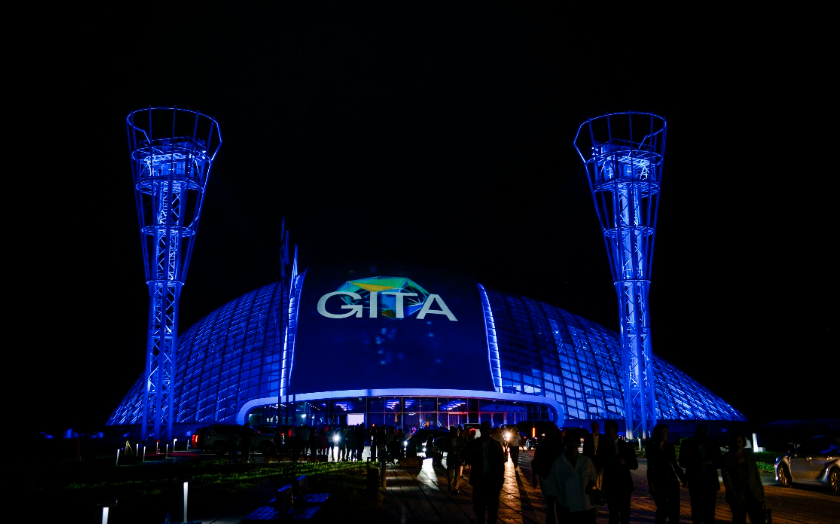
 The final breakthrough came when TUMO’s long-standing interest in reaching young people both regionally and globally converged with Georgia’s own ambition to build a major technology and innovation ecosystem in Kutaisi. Georgia’s Innovation and Technology Agency (GITA) was in the process of developing a large technology hub that would bring together education, science, startups, laboratories, artificial intelligence infrastructure, and technology entrepreneurship, and TUMO became a natural part of that ecosystem.
 So, I would describe it less as a door suddenly opening and more as the right conditions finally coming together. The Kutaisi project gave us an opportunity to move from a smaller-format presence to a full-scale TUMO center, while giving Georgia a proven international education model that could become part of its broader investment in technological talent.
AK: Kutaisi has a distinct identity as a historical city working to reinvent itself into a modern academic and technological node. Why did you choose Kutaisi for a full-scale center over Tbilisi, and how does the experience of stepping into a full center here contrast with the smaller TUMO Box model you’ve tested across Georgia?
PP: I believe we will soon have TUMO centers in Tbilisi and other locations in Georgia. The choice of Kutaisi is based on sequencing, driven by the timing of how the tech ecosystem is developing there, rather than an either-or logic. But there are also compelling factors that make the idea of TUMO Kutaisi attractive.
Kutaisi already has a strong educational identity, and today, it is being developed into a much more expansive technology and innovation hub. The new ecosystem brings together a technology park, laboratories, an interactive science and technology museum, startup infrastructure, AI facilities, and international educational programs. TUMO fits naturally into that environment.
There is also an important regional dimension. TUMO has always believed that access to quality education should not depend on living in a capital city. A full center in Kutaisi allows us to reach young people not only in the city itself, but also across the surrounding communities, while contributing to the development of the region's own talent base.
I hope that we will also deploy the TUMO Box model to smaller towns and villages in the region of Imererti and beyond.
AK: Building something as ambitious as TUMO requires a sustainable economic engine. In Armenia, tech founders and private industry stepped up; in Europe, municipal budgets often drive the model. What does the financial and operational framework look like for Kutaisi? Who is underwriting this vision? Is it local corporate partners like Bank of Georgia, state support, or international tech backers?
 PP: Kutaisi represents an interesting public-private partnership model. The project was initiated within the framework of GITA, and TUMO is part of the new Kutaisi Technology Hub. At the same time, Bank of Georgia is the center’s main private-sector partner and has provided important support for bringing the TUMO model to the region.
 What is important here is that the different partners bring different things to the table. The public side is building the overarching infrastructure and ecosystem in which the center operates; the private sector helps make this educational opportunity accessible and sustainable; and TUMO brings the education model, technology, curriculum, and international experience.
This is very much in line with the way TUMO has developed internationally. There is no single financing formula that works everywhere. What remains constant is the principle that the education itself is free for teenagers, while the local model is built around partnerships that can sustain it over the long term.
I think that flexibility is one of TUMO’s strengths. We have learned that the question is not simply who pays for a center, but how different institutions can take ownership of different parts of the ecosystem and make the opportunity sustainable.
AK: Bringing an alternative, self-directed learning model into a traditional educational environment isn't always seamless. How has your working relationship evolved with local Georgian authorities and school systems as you’ve moved from concept to physical reality?
PP: Something we have learned through TUMO’s international expansion is that we work best with local institutions when TUMO is seen not as a replacement for formal education, but as a complement to it.
We are an after-school program, so our goal is not to compete with schools or reproduce what students already learn in the classroom. We create a different kind of learning environment, one where teenagers have much more ownership over what they learn, how they learn it, and what they ultimately create. That makes cooperation with local authorities and schools extremely important, particularly when it comes to reaching students and communities. At the same time, the education model itself remains consistent: self-learning, workshops, and project-based learning.
In Kutaisi, this approach is especially promising because TUMO is not operating in isolation. It is part of a much larger technology hub that brings together education, research, entrepreneurship, laboratories, and innovation. That creates opportunities for young people to see a connection between what they learn at TUMO and the wider technological ecosystem around them.
AK: When we spoke with you in 2022, TUMO’s core mission was democratizing access to modern digital skills. But the technological landscape has transformed dramatically since then. How is TUMO adjusting its self-directed curriculum so that a teenager walking into the Kutaisi center tomorrow isn't just learning yesterday's tech skills, but adapting to an AI-driven future?
We don't want teenagers to simply become proficient in using the latest AI tool... We want them to become superlearners.
PP: This is probably the biggest challenge facing education today: how do you prepare young people for a future that is changing faster than the curriculum can be rewritten?
Our answer is not to abandon the skills TUMO has always taught. Programming, animation, game development, design, filmmaking, music, and robotics remain highly relevant. What has changed is the technological layer through which students approach these disciplines.
AI is therefore becoming both a subject students learn and a tool they use while learning other subjects.
TUMO has introduced GenAI as a new focus area and is integrating AI components across programming, animation, game development, graphic design, writing, and other areas. We have also developed an AI co-learner model. With our model, AI does not simply act as a teacher giving students answers, but it behaves more like a peer learning alongside them. Students can teach the AI, observe it attempting a task, receive feedback, and use that interaction to reinforce their own understanding.
 That distinction is important. We don't want teenagers to simply become proficient in using the latest AI tool, because the latest tool will inevitably be replaced. We want them to become superlearners: people who can understand new technologies quickly, question their limitations, use them creatively, and continue learning as the technology changes.
The fact that TUMO's AI program won the WISE Prize for Education in 2025 is meaningful to us precisely because it recognized this holistic approach to AI education.
AK: Looking at the map, does Kutaisi represent a prototype for further expansion across the South Caucasus, or is it a unique case study tailored specifically to Georgia’s current environment?
PP: I would say it is both a case study and a potential prototype, but not a blueprint that we would simply copy from one country to another.
One of TUMO’s core lessons over the past 15 years is that the model has to remain consistent in its educational principles while adapting to the context in which it operates. The same self-learning philosophy can work in Yerevan, Paris, Berlin, Mumbai, or Kutaisi, but the partnerships, physical environment, community needs, and economic model can be very different.
Kutaisi gives us another valuable example of how TUMO can become part of a region’s own strategy for developing human capital.
Kutaisi is particularly interesting because it demonstrates what can happen when a TUMO center is embedded in a broader regional technology ecosystem, rather than functioning as a standalone educational institution. The new hub connects education with science, startups, laboratories, AI, and entrepreneurship.
So I would not say, “Kutaisi is the model for the South Caucasus.” Rather, I would say that Kutaisi gives us another valuable example of how TUMO can become part of a region’s own strategy for developing human capital.
And that is potentially much more important for the South Caucasus than simply opening more buildings.
AK: TUMO has always been a vital bridge between Armenia and its global diaspora. Today, opinion across the diaspora regarding Yerevan’s foreign policy choices and political direction is far from monolithic — it is vibrant, divided, and intensely debated. From where you sit, how are these contrasting diaspora perspectives impacting long-term investment, trust, and civic engagement with the homeland?
PP: For TUMO, the interesting question is how we create spaces where people from different geographical locations and cultural realities can contribute to bringing about a better future, in particular by investing in young people. Education is especially powerful in this sense because it is an area where we tend to see significant alignment.
We have seen this very concretely through TUMO’s own history. Diaspora philanthropists, foundations, and organizations have supported the expansion of TUMO because they see investment in young people as a long-term investment in national development. The TUMO Armenia campaign, for example, brought together support from diaspora individuals and organizations around the idea of expanding access to high-quality education across the country.
At the same time, trust matters enormously. The alignment of international and local engagement cannot be based only on emotional attachment or appeals to identity. People want to see effective institutions, transparency, measurable impact, and a clear sense that their contribution is producing something sustainable. The fact that TUMO is now an international network with centers from Europe and the US to South Asia and the Caucasus contributes to that dynamic of trust vetted in a global proving ground.
And I think that kind of practical engagement is ultimately the most durable. These strongest connections across borders are built by people working together on projects that matter for the future.
 AK: Thank you very much! We wish the best of success to TUMO. Follow the Caucasian Journal: