Pub as the "heritage of the working class": what differentiates Polish and British alcohol policies?
Krytyka Polityczna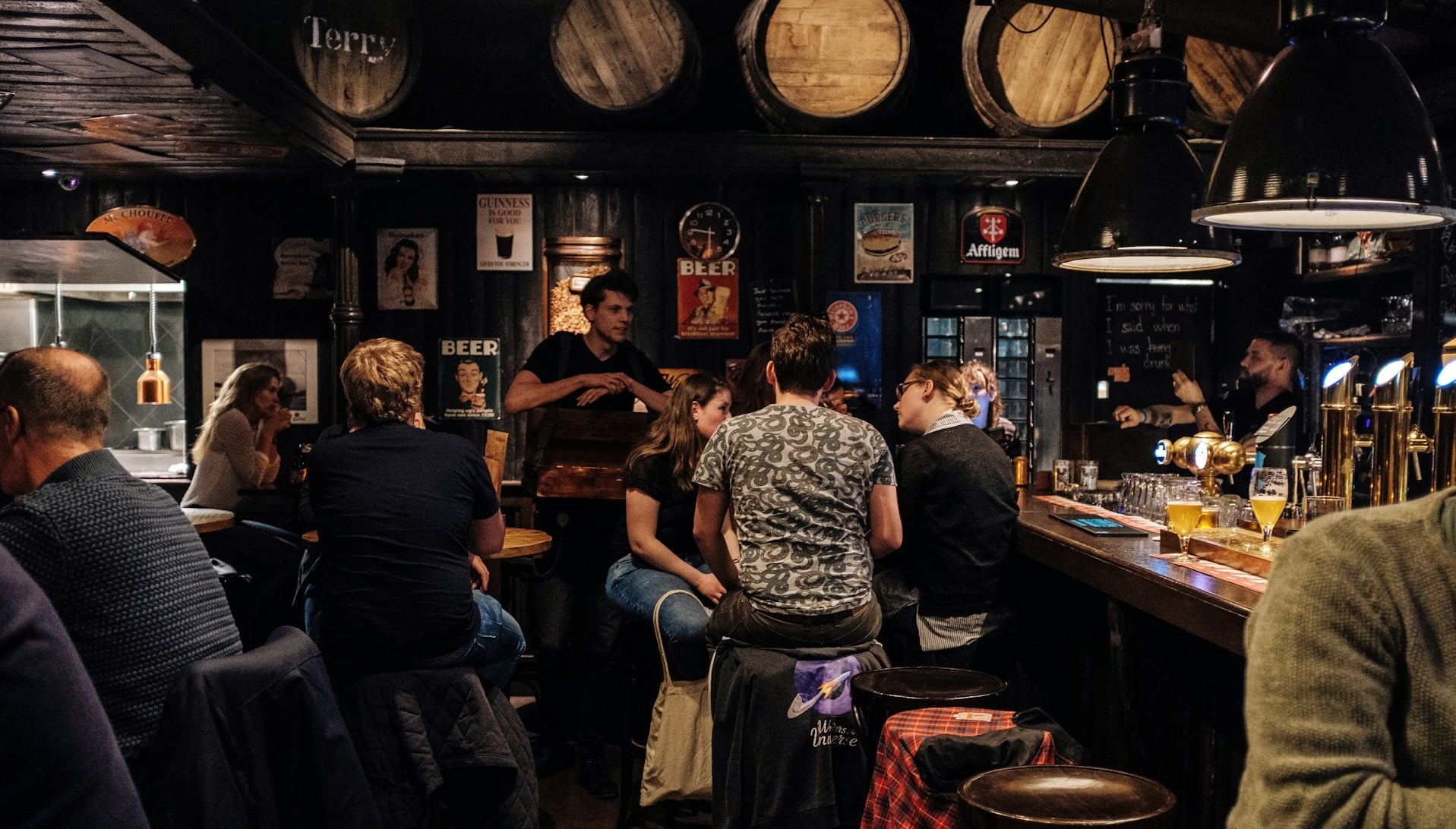
Some workers' circles in the United Kingdom view the sobriety language with suspicion, seeing it as an attempt by the middle class to discipline the working class. The post Pub as "working class heritage": what differentiates Polish and British alcohol policies? first appeared on Krytyka Polityczna.
Among the first decisions of the new British Prime Minister Andy Burnham was also to reduce the so-called business rates – property taxes that do not serve as a residence – for pubs, clubs, and venues with music. Pub, Burnham explained his decision, is often the “backbone of the local community”, “it is part of our heritage and working-class culture”.
In Poland, a left-wing politician speaking in this way about a place where people mainly go to consume alcohol might sound strange. In recent years, the left has rather spoken about the health, social, and other costs of alcohol consumption and is associated with public policies aimed at limiting access to it. Supporting pubs does not necessarily have to conflict with wise, restrictive alcohol policies. And the debate about pubs as part of working-class leisure culture has been ongoing on the British left for a very long time.
Several centuries of pub debate
As historian Stephen G. Jones writes, since Victorian times, there has been a dispute in it over two approaches to alcohol. The first sees it as a source of social evil: poverty, family breakdown, diseases, workplace accidents. Some labor activists joined the temperance movement, aiming to restrict or even ban alcohol altogether, believing that only a sober worker can effectively fight for social change aligned with their class interests.
Alongside this, there are also working-class environments that perceive the pub as a second home for workers, a place where brotherly bonds are formed, where working people can catch a moment of breath. They look with suspicion at the temperance language, seeing it as an attempt to discipline the working class by the middle class. Indeed, the movement is often led by middle-class representatives, supported by industrialists who want healthy workers, not missing their shifts due to excessive alcohol consumption. This part of the working class also rejects arguments that alcohol is a source of poverty, pointing out that it is often the employers who refuse fair wages, thus pushing workers into poverty.
The dispute over alcohol intertwined with religious, political, and social divisions within the British working class of the 19th century. The temperance movement was strongly associated with Methodism. It was more embraced by the more educated, bourgeois-leaning segment of the working class, politically closer to the Liberal Party. In places like London—with its culture of casual work and a diverse, migration-influenced working class—religious, temperance agitation often provoked ridicule or outright hostility.
As David Swift wrote, this hostility of the working class towards intervention in their pub-centered lifestyle was politically exploited by conservatives to build support among the working class. By the late 19th century, a populist conservative movement emerged, seeking to reconcile with the working class through leisure culture, such as pubs or football clubs, often appealing to nationalism and called ironically “Beer and Britannia,” which can be translated as “beer and patriotism.”
When the Labour Party was founded in the early 20th century, this alcohol debate moved into its ranks. As Martin Pugh writes in his history of the party Speak for Britain!, it attempted to unite the formerly conservative-leaning working class under the banner of Beer and Britannia with the culture of Methodist chapels. The dispute over approaches to alcohol persisted within the party until the early 1930s.

As Stephen G. Jones writes, there are three positions within the party. The first demands complete prohibition, similar to the American model. This approach is especially popular in Scotland, with influential politicians like Philip Snowden, the first Chancellor of the Exchequer in the history of the Labour Party, supporting prohibition. Besides the prohibition option, there is also a “libertarian” stance, opposed to state or local authority intervention in working-class culture and viewing the pub as its central institution.
The third option advocated the nationalization of alcohol production and distribution—so that it would be managed by public authorities, considering other options besides profit. Behind these three positions is a debate about what leisure time should serve for the working person. Whether for self-improvement, education, development through sport, etc., or simply for communal celebration of pleasure.
Support for pubs as harm re-education?
The American retreat from prohibition in 1933 and the widespread opinion that this experiment ended in failure also contributed to the demise of the prohibition option in the UK, and alcohol gradually ceased to be a key dividing line within the party. At the same time, this dispute still resurfaces, also in the context of the Labour Party’s transformations and its distancing from its working-class base and culture. Environments associated with the Blue Labour movement—aiming for the party to, by limiting the progressive language of the middle class, reconnect with the naturally conservative culture of the working class—postulated that the left should abandon puritanical health recommendations and become a force capable of celebrating communal leisure experiences.
Burnham’s decision and how it was communicated fit into this recommendation. At the same time, one could argue that it is not at odds with a sensible health policy. As Jem Roberts and Peter Rice wrote in February on the Institute for Alcohol Studies website, in the UK since 2000, more and more alcohol is consumed at home rather than in pubs or bars—mainly due to cheap alcohol from supermarkets, often sold in various promotions. Meanwhile, home consumption is more conducive to risky drinking than in places like pubs. As the authors state: “Shifting alcohol consumption to a regulated social environment […] could have significant health benefits.” Because the social context is linked to social control—someone might tell us we’ve had enough and should go home, consumption is spread over a longer period, and it is connected with a range of social activities.
A 2012 report by the think tank Institute for Public Policy Research also highlights the social benefits pubs bring to their communities. As it states: Pubs are places where local social bonds are formed, where activities enriching local social life are concentrated, and which local communities see as key to their well-being.
Taking all this into account, Burnham’s decision makes sense—though the question remains how much it will actually help pubs, which have long struggled with a range of problems related to changing consumption patterns and leisure habits.
What lessons for Poland?
Does this debate from the UK translate into the Polish context? Should the Polish left speak not only about, say, a night prohibition—which is a very reasonable postulate—but also about the social good that leisure culture, including moderate alcohol consumption, can create?
While the second postulate is theoretically sound, in practice it’s also worth remembering that the devil is in the details. Discussions about pubs in Britain indicate that not every place serving alcohol publicly is a pub, and some venues promote dangerous drinking patterns.
It is difficult to find in Polish tradition an equivalent of the traditional British pub as a center of local community and working-class culture. Our policies must relate to Polish cultural realities and deeply rooted patterns of harmful drinking. The direction that policy should create incentives for less harmful drinking, rooted in good community practices, is something that Polish left should also consider.
The post Pub as “working-class heritage”: what differentiates Polish and British alcohol policies? first appeared on Krytyka Polityczna.