Marti, are you there?
Kapitál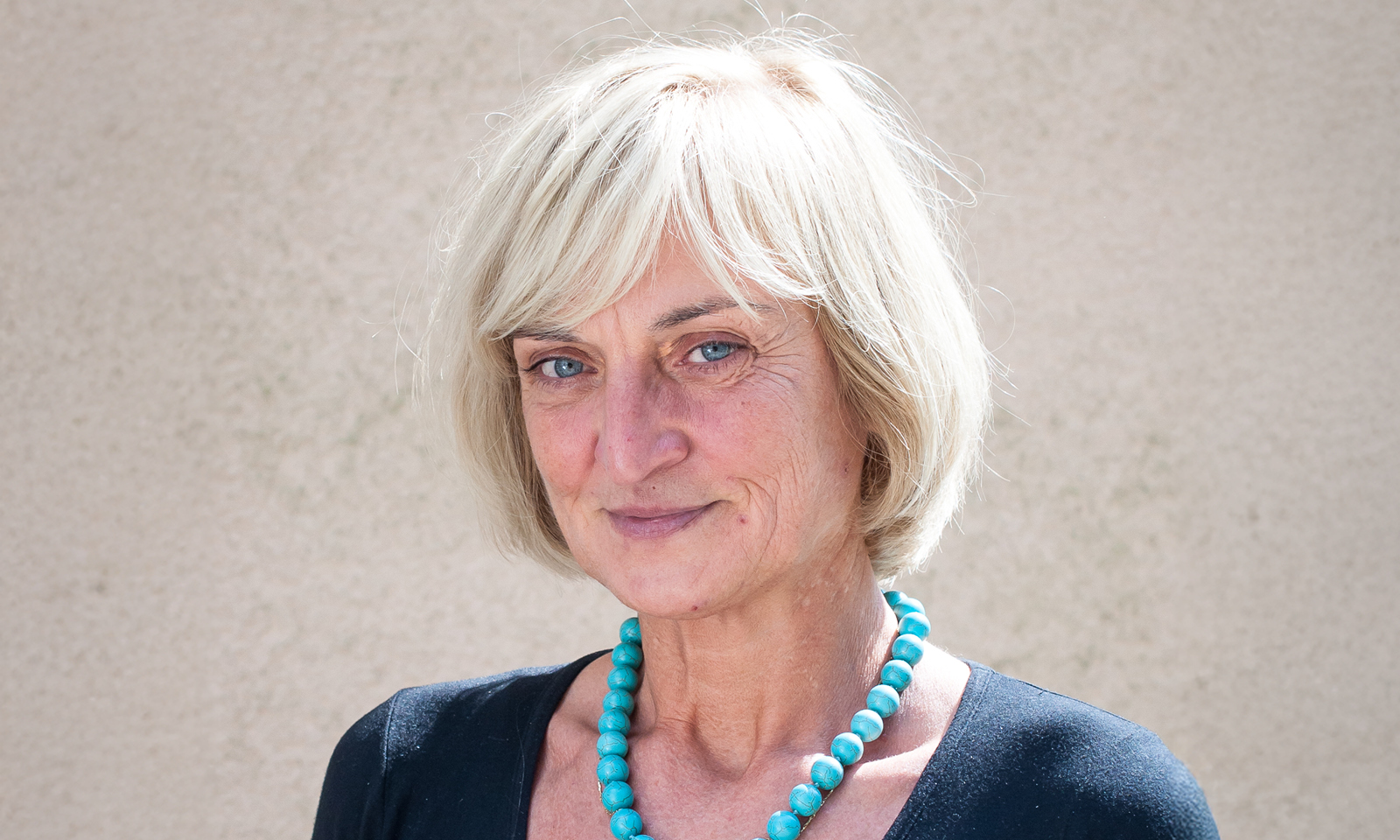
A prominent figure in Slovak literature who shaped generations of authors and critics has died. What does her passing mean for the local culture, and what message did she leave behind? The answers to these questions remain open, but her influence is undeniable.
When I last called you to agree on selecting participants for Medziriadky, something interrupted us in the middle of the conversation. I spoke into the void for a good while before I realized that you are no longer on the other side.
Today I speak into the void precisely because you are no longer on the other side.
I read that sentence to myself and hope that Marta will suggest deleting it as nonsense when I send her my text to the editorial office. And when I get it back from her, I will delete the whole thing. I would rather not give up anything I have ever written.
If, following the example of initiation experience, there is also an initiatory personality, in literature she was for several generations exactly Marta. As a university lecturer, tutor, juror, and editor, she tirelessly paid attention to hundreds of young people and thousands of their texts, which she read, commented on, and introduced into “great” literature for many years. I speak from personal experience – my first review for Fraktál went through her keyboard. Marta was one of the reasons I decided to continue my studies in Prešov after my bachelor’s exams.
It was precisely in her seminars and lectures that I, along with many other students, understood that there are two ways of reading: before Martin's subject Slovak Literature after 1989 and after it. At the end of our first shared semester, I mentally thanked her: with everything I had read so far, I could start anew. When I returned to the fiction I borrowed during high school, it seemed to me that someone had added new pages into those novels.
Martin’s departure is not only a painful loss for her close ones but also for the entire domestic literary culture. The first reactions to the news, which I find hard to accept myself, testify that this is not just a phrase. Marta was an irreplaceable literary critic, but moreover, she became an institution in contemporary Slovak literature in the best sense of the word. Versatility is somewhat a necessity in the arts, but Marta seemed to push the boundaries of what is possible. Besides writing her own fiction, she did almost everything that can be done in literature – and with a dedication that we, even a generation or more younger, could not match.
Listing all her activities would double the scope of this text. I know of no one else who shaped Slovak literature across generations: from Nicol Hochholczerová through Maroš Krajňak to Karol Horák. Her contribution to Slovak literature cannot be overestimated. I would not exaggerate even if I wrote that without her work, Slovak prose of the last decade would be different from what we read after Martin’s countless manuscript edits, feedback at literary competitions, and creative writing workshops for emerging authors.
Four out of ten books in this year's Anasoft Litera shortlist bear Marta’s name in their circulation. But more importantly – her artistic language demands can be recognized in each of these texts. If “her” texts continue to succeed this way, sooner or later her profession would come into the sights of the antitrust authority. (Sometimes I tried this with a joke during her exams.)
As a doctoral student, I sat two or three offices away from her office. Given how often we met at the university and outside it, we both felt that there are never enough opportunities for a “proper” conversation. When we talked on the phone, it rarely lasted less than thirty or forty minutes, but still, it somehow wasn’t enough. Talking to Marta about her personal life was often even more absorbing than discussing literature.
Last week I received an email from her. She wrote about her recent vacation, about the manuscripts she is working on, and about the plans she has ahead. At the end of August, we were supposed to go to a summer school of literature together. And she concluded quite finally: “Looking forward to meeting, I believe we will finally have a proper talk.”
I also hope so, although it will probably be later than we both expected. Until then, we have texts – not only those she left behind but also those that will come into existence thanks to You.
Marti, you will be irreplaceably missed.
Until the very last dot.