"Probably, it won't get any better." How young people in the Czech Republic and Slovakia perceive the war
Kapitál
At the beginning of summer it hit Prague with the first wave of heatwaves. After three days, I finally opened the windows in my apartment. The singing of tired birds was suddenly interrupted by the deafening sound of aircraft. "Did it break out?!" I was seized by an instinctive fear, similar to the one triggered in me by a regular siren test or news about Russian ballistic missiles capable of hitting targets hundreds of kilometers from the front. Later, I learn that it was a flyover of fighter jets on the occasion of the Czech Republic Armed Forces Day. I am safe, in a country where there is peace. So why is war the first thing I think about?
At the beginning of summer it struck Prague with the first wave of heatwaves. After three days, I finally opened the windows in my apartment. The singing of tired birds was suddenly interrupted by the deafening sound of aircraft. “Did it break out?!” I was seized by an instinctive fear, similar to the one triggered in me by a regular siren test or reports of Russian ballistic missiles capable of hitting targets hundreds of kilometers from the front. Later, I learn that it was a flyover of fighter jets on the occasion of the Czech Republic Armed Forces Day. I am safe, in a country where there is peace. So why is war the first thing I think about?
According to surveys, seven out of ten residents of the European Union are concerned about ongoing conflicts. While in Slovakia this fear manifests more as political populism, in Lithuania, where war causes the greatest worries especially among young people, preparations for a potential threat are much more active. Some have packed evacuation backpacks and strategic plans for their families, others are learning to shoot with weapons and dedicating free time to volunteer activities. Others consciously suppress the threat and refuse to succumb to fear, believing they live in a small country that cannot defend itself.
The sense of threat is lower in Slovakia and the Czech Republic. This may be related to geographical distance from Russia, trust in NATO's collective defense, or the fact that part of society relativizes the threat through pro-Russian narratives that question the scope and nature of the war in Ukraine. Since the question of preparedness for armed conflict does not resonate with the same urgency as in the Baltic states, I asked respondents from Slovakia and the Czech Republic—coming from security, cultural, or activist backgrounds—how a potential threat shapes their relationship to the country, community, and citizenship.
An attempt to depoliticize pain
I often think about how to talk about war when I live in a peaceful country. I can't live in a way that it doesn't concern me, but at the same time, I can ignore it for four days and return to it on the fifth. A strange privilege that leaves me with a sense of guilt. The proximity of armed conflict motivates people to various forms of engagement: from the willingness to defend the country to solidarity or artistic activities. Some use the period of peace to prepare for a potential threat, others invest energy into solidarity activities, activism, or art, and try to help people affected by the war beyond our borders.
Samo has joined the reserve forces and perceives defending the country as part of civic responsibility. Rachel, despite administrative obstacles, is striving for military training because she does not take the sense of security we live in for granted. Esther originally considered a career as a war correspondent but now critically reflects on the influence of media and military structures. Teodor admits a certain feeling of helplessness, which he copes with through artistic creation. Jan participates in collective efforts for systemic change, seeing the causes of armed conflicts also in political and economic mechanisms. Kris and Marek choose the path of direct activism, refusing to divide wars into near and distant. Their seemingly different attitudes are united by a sense of responsibility.
In the first part of a two-part series, I examine respondents' relationship to their country, patriotism, and defense. In the second part, I offer a broader view of the global context of wars and their long-term consequences.
Pacifist with a weapon in hand
“Readiness is the best mobilization energy,” explains Samo (25), a biology student. Although he considers himself a pacifist, Russian aggression in Ukraine made him reconsider his stance on militarization and defense spending. Today, he perceives them as a key prerequisite for peace and the most effective form of deterrence. “If something is about to happen, we must convince the hearts of those who want to attack that it makes no sense,” he says with a sensitive but deliberate voice.
We are walking through a quiet neighborhood near Bratislava's main station. Samo describes his experiences with the National Defense Forces (NOS), which allows civilians aged 18 to 55 to acquire basic military skills without joining the army. The fourteen-day program at Turecký vrch, one of the military training grounds in western Slovakia, covers basics of tactics, first aid, weapon handling, and terrain movement.
Samo completed the training last autumn after an initial, media-covered tour with the participation of President Peter Pellegrini and Defense Minister Robert Kaliňák. The blue-eyed enthusiast of the plant world tells me that he ranked among the best in shooting with a long gun. He considers the simulation of crossing a territory, during which all patrol members had a clear task and had to know what to do even if they couldn't hear each other during shooting, as the highlight of the training.
Although more than 13,000 people have signed up for the NOS program since its launch, capacity limits mean that about two thousand have completed it so far. They have joined defense reserves and received a motivational bonus along with a soldier's salary for the period served, roughly 2,000 euros. If they want to continue and become part of the reserve forces, they must participate in additional training modules. In the first year, they will attend three two-day trainings in the modules of guard, assistant, and paramedic. Subsequently, they may be called* to assist in emergencies.

“I know what I signed up for,” says Samo. Among his duties is annual participation in military training to maintain acquired skills, stay in good condition, and specialize in specific modules—such as close combat, drone operation, or disaster medicine. He considers training to become a professional driver. Additionally, he is obliged to be ready for deployment ten days a year. “When you realize you're willing to lay down your life for your country, it's a very strong feeling. I don't want Slovakia to be left to people with bad intentions. I want to protect the people who live here and the places I love,” he explains his motivation.
He also learned a greater sense of collectivity during the training. “I'm a fairly individualistic person. It was a challenge for me to learn trust, to function in a group, to fulfill shared tasks, and not to oppose rules and authorities,” he admits. He has stayed in contact with fellow trainees through a shared group, and to this day, they go shooting together at the shooting range to keep their skills sharp.
His relatives supported his decision to join the reserves. “Samo, you're changing,” acknowledged his mother, who previously couldn't imagine her sensitive son with a weapon in hand. Moreover, she herself sought her own path to patriotism. For many years, she was distant from the Slovak anthem because she associated it more with nationalist rhetoric. Paradoxically, she learned to sing it without shame only during anti-government protests.
Searching for a new patriotism
I meet with security studies student Rachel (26) in a quiet café in the center of Prague. “In the Czech Republic, we are actually doing very well. When we realize that, it will be much easier to accept the idea that this country is worth defending,” she explains with enthusiasm in her voice.
When she decided last year to undergo training in active reserves, her determination collided with the bureaucratic machinery of the Czech army. She submitted her application in January, underwent a medical examination in February, but the regional military command didn't manage to process her file in time for her to start summer training. Her nineteen-year-old brother had the same experience. “When someone is determined and passionate, the army should be able to recognize that,” Rachel believes, not hiding the demotivating feeling it caused in her and her brother.
Unlike the Slovak and Czech Civil Defense Forces, which prepare civilians for supporting the army in crisis situations, members of the Active Reserves of the Czech Republic are directly part of military units and must undergo a full six-week military training. Recruitment requires a comprehensive medical examination, which usually takes three to five months, and can be complicated by past health records, such as an old fracture or allergy requiring further specialist examinations. These delays are the reason why interested individuals like Rachel often cannot attend the summer training, which is often the only feasible option for students.
There are two alternatives in the Czech Republic. The first is voluntary enlistment, i.e., registering civilians willing to undergo training and defend the country in case of crisis. It involves filling out an online form and passing a medical exam. The second is voluntary military training, after which the participant returns to civilian life without further obligations but can be called upon in extraordinary situations.
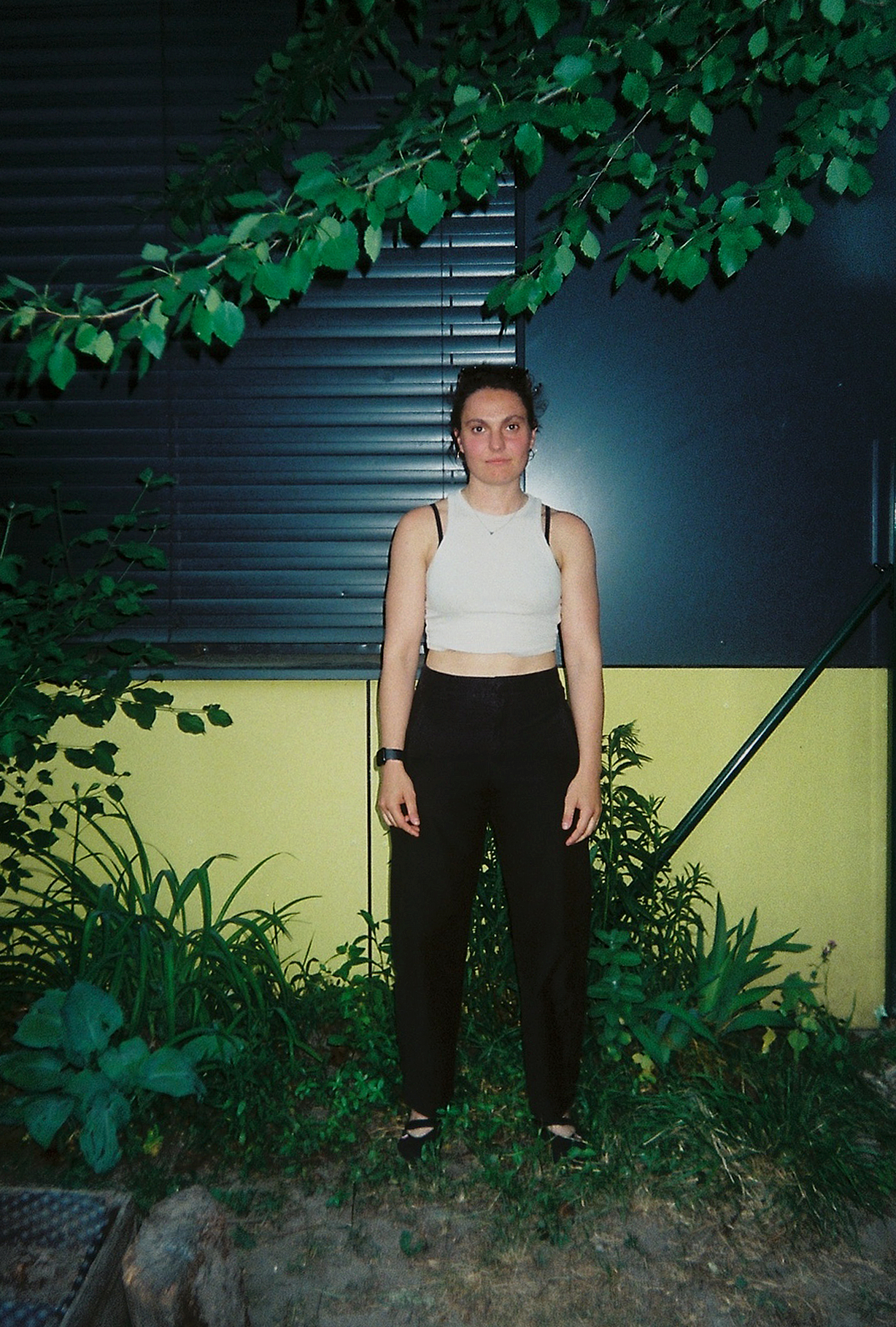
“In the Czech Republic, we consider security a given. However, the values on which Europe stands are not immutable, and they must be actively protected,” emphasizes Rachel. She adds that Russia will not automatically cease to pose a security threat once the war in Ukraine ends. That is why she considers long-term preparedness part of responsible politics. “I believe that if we find ourselves at war, we will somehow be able to improvise. But why not prepare now, when we have the time?”
Rachel prepares for a potential crisis, for example, by maintaining physical fitness. She perceives her own body as one of the tools of readiness. “It's not about imagining running away from soldiers during a run, but about making an effort to stay in good shape, which has become part of my routine,” she explains her strategy.
She sees involvement in the country's defense system as a sign of positive patriotism. “I'm upset that our national symbols are stolen by far-right parties. When I think of the Czech tricolor, I see Tomaš Okamura,” she admits, reflecting the reality where radical movements have monopolized love for homeland.
Wearing national symbols often evokes more agreement with the far right, rejection of otherness, or exclusionary rhetoric than a sense of belonging to the homeland. “My friend has a hoodie with the Czech lion. When he comes to a bar, people make fun of him, saying he's a neo-Nazi,” Rachel describes the reality that also prevents her from authentic expressions of national pride. According to her, patriotism is often confused with approval of the current government. She often hears the opinion: “How can I love the Czech Republic when such politicians are in charge?” However, she distinguishes between these: for her, the country is not the state apparatus but the people, culture, and places she does not want to lose.
A patriotic stance does not necessarily mean willingness to defend the country. Samo also expected to meet more supporters of nationalist-conservative parties during training, but was surprised to find that pro-European and democratic-minded people predominated. The Ipsos survey confirms that the highest willingness to participate in defending the country is declared by voters of Progressive Slovakia and Democrats, while the lowest is among voters of SNS and Smer. In a European comparison, our willingness to defend Slovakia is the lowest—less than half of respondents expressed readiness.

What are dead people for the state?
“I often hear people say that if something happens, they would simply leave. But then what? Will you watch from afar as they destroy everything you love and kill your loved ones?” Rachel ponders. She reminds us that people often idealize the idea of a safe refuge beyond their own country's borders but forget that the reality of war refugees brings personal traumas.
Student of screenwriting Esther (26) has a different opinion. She realizes that leaving the country is not easy, but in her view, heroism does not have to consist only in staying. “What are dead people for the state?” she asks. Thanks to dual citizenship and a partner abroad, she admits the possibility of leaving the Czech Republic. She can think about her movement much more freely because she has no family there.
She and her partner have agreed on a specific place in central Germany where they will meet in case of a crisis. It is located halfway between them and away from strategic sites such as energy facilities or military objects. Esther has supplies of durable food, a military first aid kit, a radio, and six liters of bottled water at home. She also plans to add a traditional paper map to her evacuation kit. “I realize my dependence on online navigation,” she adds, noting that internet and GPS outages are among the basic destabilization strategies in any modern conflict.
War has become a central theme in her professional and personal life. Esther initially considered a career as a war correspondent but now critically reflects on the influence of media, militarization, and hyper-masculine military structures. At the time of our interview, she was undergoing selection for an internship at the Gender Advisor Office at NATO, which helps incorporate gender perspectives into security issues. On a practical level, this is reflected in the representation of women in command roles or in planning military operations that consider the needs of those serving or protected by the army. “Security is not just about weapons and military technology. It’s also about who the system considers normal and who it overlooks,” she explains.
NATO gradually expands the discussion about the functioning of armed forces to include the perspective of LGBTQI+ people in the military. For example, in Ukraine, estimates suggest that up to ten percent of the country's defenders are LGBTQ+. Many of them express their identity through a mythical unicorn patch—known as the Unicorn Battalion. Despite heroism on the front lines, they still do not have equal rights. The Ukrainian parliament is therefore discussing the introduction of registered partnerships, which would grant their survivors legal protection, access to information, social benefits, and other support.
Let's try scaring with peace instead
“Since the outbreak of the war in Ukraine, nothing has basically changed in my life,” Esther responds to the question of how the proximity of conflict influences her daily life. “Due to some post-socialist complex, we tell ourselves that we are doing badly, even though we are part of Europe and, in a global context, belong among prosperous countries. We live in a privileged bubble,” she emphasizes.
Esther feels that Czech society lives in a state of collective denial. “We pretend that the war doesn't concern us, but that's not true. Even if there is no fighting on our territory, we are part of the European Union and NATO, participating in joint decisions on sanctions and military aid. Moreover, the Czech arms industry is among the major suppliers of defense technology.” That is why she believes that living in peace does not mean being outside of conflict.
On issues of militarization, Generation Z often disagrees. Some, like Samo, have reconsidered their pacifism and see armament as a form of deterrence. “It’s an unproductive sphere, based on destruction, but I don’t see it as a waste,” he argues. Similarly, Rachel refuses to “scare with war.” She believes politicians often avoid the topic of defense out of fear of being accused of spreading panic. “Readiness, however, does not mean we expect or desire war. Let’s instead scare with peace,” she urges, advocating for security to become part of the political agenda.
Esther, on the other hand, warns against fetishizing and aestheticizing war, which she often encounters on social media. She cites the phenomenon of military e-girls, who use lifestyle tools to legitimize state violence. For her, security is a matter of values. She often reflects on how to build peace so that society does not revert to old patriarchal and repressive patterns after a conflict.
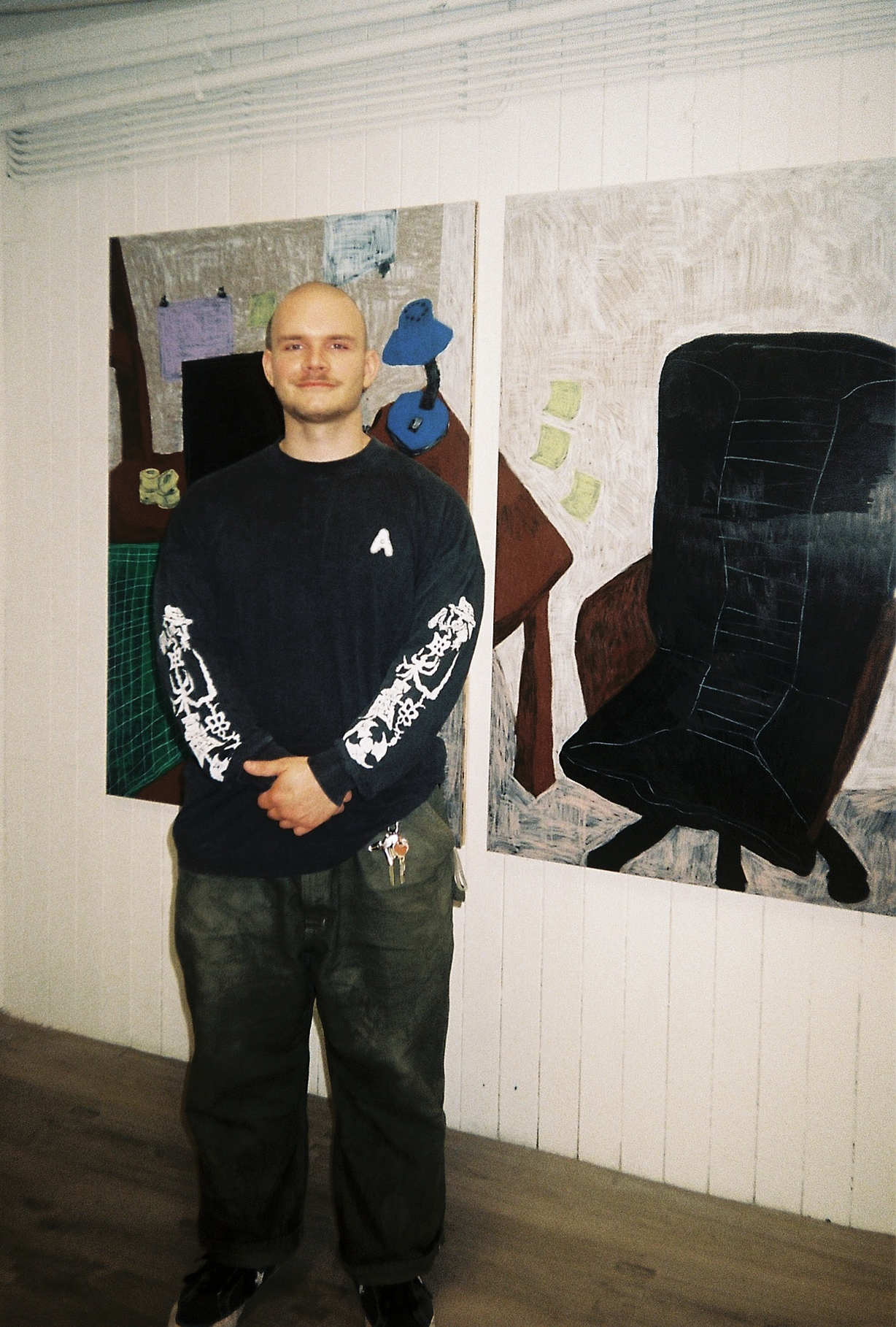
Better probably won't be
The situation on the front lines shows that the Russia-Ukraine war remains a war of attrition. Russian units continue a slow advance without significant territorial gains, while Ukraine increasingly targets Russian refineries, fuel depots, logistic centers, and supply routes to Crimea. Although it was previously assumed that the conflict would be long-term frozen, recent US intelligence suggests that Russia might attempt a limited attack against a NATO member country as early as this year. Its goal would not necessarily be occupation but rather testing whether the states could respond collectively.
I will never forget how my former partner asked me a few days after the start of the Russian invasion if we would go shooting at the range. “I think it's good to learn that, don’t you think?” he tried to explain his motives. So we went. From time to time, I wonder what other skills it would be good to learn. So far, I have completed an advanced first aid course and a self-defense course. I have a backpack packed with essentials: a first aid kit, a thermal blanket, hygiene supplies, a whistle. My passport is stored in a waterproof case along with a list of five phone numbers I would try to call in case of crisis. While writing this list, I realized that being prepared does not only mean taking care of oneself. Equally important is the network of relationships built gradually—through friendships, alliances, communities, and collectives—that can support us in times of crisis.
In the second part, we will look at the perspective of young people who reject militarism and seek a path through solidarity activism and building community networks from below.


The text is part of the PERSPECTIVES project—a new brand for independent, constructive, and multiperspective journalism. The project is funded by the European Union. The expressed opinions and positions are those of the author(s) and do not necessarily reflect the views of the European Union or the European Education and Culture Executive Agency (EACEA). The European Union or EACEA do not assume any responsibility for them.