Lithuania wants to normalize ties with China. Does that mean divorcing Taiwan?
New Eastern Europe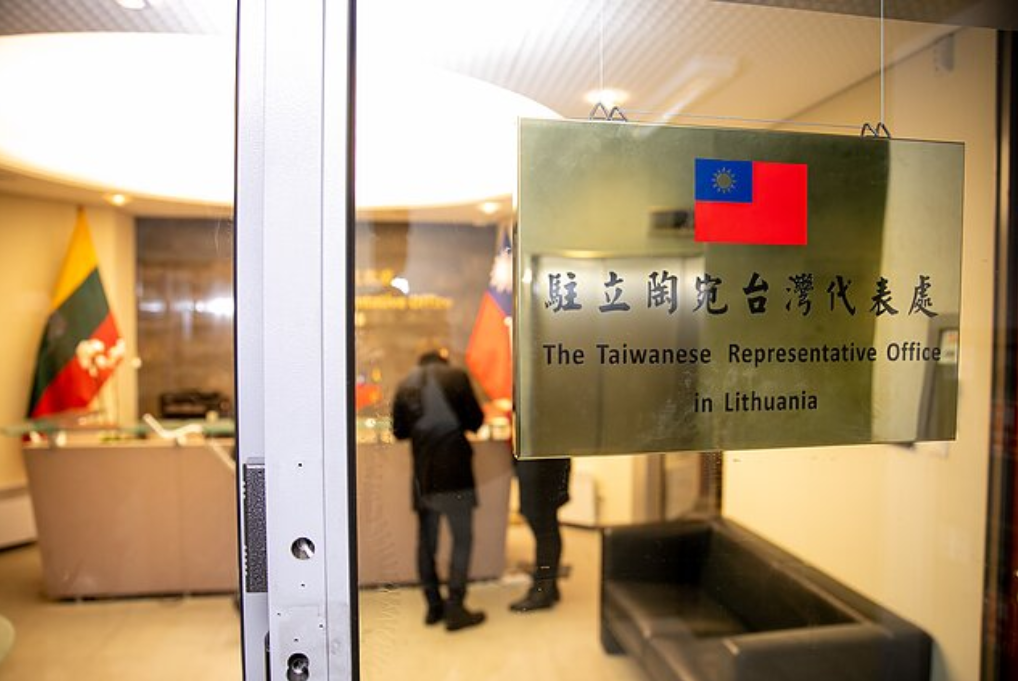
Lithuania's new government wants to restore diplomatic relations with China as quickly as possible. But what would that mean for the country's relationship with Taiwan, if the Taiwanese Representative Office that has operated in Vilnius for the past five years is renamed the Taipei Representative Office?
Taiwan typically maintains relations abroad through offices bearing the name 'Taipei' rather than 'Taiwan' – a diplomatic convention designed to avoid antagonizing Beijing.
Lithuania broke with that convention in 2021, when it allowed a "Taiwanese Representative Office" to open in Vilnius. Beijing regarded the name as an implicit recognition of the island's independence and responded with severe economic and political sanctions against Lithuania. Still, the move also drew considerable attention and goodwill from Taiwan itself.
For more than seven decades, Taiwan – officially the Republic of China – has functioned as a de facto sovereign state, though Beijing regards it as part of the People's Republic of China and considers the government in Beijing the only legitimate authority over it.
Like most of the world, including Lithuania, the European Union operates under the One-China Policy, leaving Taiwan to navigate international relations without seeking formal recognition of independence.
Taiwan, a major producer of semiconductors seen as critical to the global economy, had promised substantial investment in Lithuania, including support for developing a domestic microchip industry.
However, its biggest investment pledges have largely failed to materialize, and Beijing continues to press Lithuania to return to the One-China Principle.
On June 18, President Gitanas Nausėda said he expected Foreign Minister Kęstutis Budrys not only to normalie relations with China but also to honour existing agreements with Taiwan. The question now is what that means for the two countries' close relationship.
Trade ties have grown, but investment promises fell short
Lithuanian exports to Taiwan reached 60 million euros last year and continue to rise. Academic cooperation and exchange programmes between the two countries have also expanded, and Lithuanian firm Teltonika was granted semiconductor technology licences, all cited by Taipei as evidence that opening the Vilnius office benefited Lithuania too.
But expectations among Lithuanian politicians and the public took a serious hit in 2024, when a planned Teltonika chip factory project collapsed.
Experts interviewed by LRT.lt are now sceptical that Lithuania will see any further strategically significant Taiwanese investment.
Taipei has not directly rebutted criticism from former Prime Minister Inga Ruginienė over unfulfilled promises, instead reiterating that Lithuania and Taiwan remain important partners united by shared democratic values.
Analysts broadly agree that normalizing diplomatic ties with China would not necessarily mean the end of Lithuania's relationship with Taiwan.
'Nowhere else in the world has an office with that name'
"It's important to stress that China doesn't object to the presence of Taipei-style representative offices – nearly every country in the world maintains contact with the island through them," says Valentinas Beržiūnas, a lecturer at Vilnius University's Institute of International Relations and Political Science (VU TSPMI).
He argues the decision to call the Vilnius office "Taiwanese" always looked more like a provocative outlier that pulled Lithuania away from the broader European consensus.
"Neither Latvia nor Estonia, nor even much larger Poland, pursues such an assertive China policy," he says.
When China imposed economic and political pressure on Lithuania after the office opened in 2021, the EU expressed solidarity, but no other European state followed Lithuania's example by naming its own Taipei-style office 'Taiwanese'.
Arvydas Kumpis, head of the Asian Studies Centre at Vytautas Magnus University, says the original choice of name already went beyond what might have been expected, so reverting to the naming convention used by the rest of the world shouldn't be seen as a major setback.
"There's no other office in the world with 'Taiwanese' in its name, ours is the only one," he notes.
What angered Beijing most, Kumpis adds, was not the English or Lithuanian name but the Chinese-language version, which read as "Taiwan's representative office" rather than something more neutral.
Lithuania's foreign ministry said in 2021 that this Chinese rendering, which explicitly implied recognition of the island's independence, had not been agreed with Lithuania beforehand; the office's official names are in Lithuanian and English only.
Pragmatism on both sides
Kumpis argues Taiwan's ability to remain de facto independent from Beijing for decades shows its government is far from naive. He points out that Taiwan chose Germany, not Lithuania, as the base for its semiconductor industry's European expansion.
"That shows the Taiwanese are pragmatic people who look beyond symbolism in a name. This is a country that turned itself into one of Asia's economic tigers, and I think that same realism helps them understand that changes to the office could happen sooner or later," he says.
Beržiūnas also sees pragmatism driving the debate in Lithuania. He notes the Taiwanese office was never purely a Lithuanian initiative – Taiwanese lobbying played a significant role – and argues that normalizing relations with China would have been a far bigger dilemma, with greater costs for Lithuania, had Taiwan's promised investments actually been delivered. Instead, with little tangible economic benefit to show, disillusionment with the policy has grown.
Europe's own pursuit of diversified international relationships, Beržiūnas says, partly reflects a widening values gap with the United States compared with the Cold War era.
"For both Europe and Lithuania, diversifying relationships and maintaining ties with major global powers such as China is sensible – a lack of diplomatic diversification can prove damaging in a crisis," he says.
Declining international support for Taiwan
Taiwan itself has pursued similar economic diversification, deepening ties with major world economies. Direct Taiwanese investment in Lithuania has grown from 530 thousand euros in 2021 to 16.8 million euros this year – but that remains a marginal sum in the context of Taiwan's global investment activity. By comparison, Taiwanese chip giant TSMC alone invested 4.4 billion euros each in Japan and the United States in 2024.
Lithuania is far from alone in gradually retreating toward the boundaries set by Beijing on Taiwan policy. The island faces an unfavourable trend globally, with the number of countries formally recognizing its independence shrinking year on year. Nauru, a Pacific island nation that once recognized Taiwanese sovereignty, switched allegiance to Beijing in 2024.
Both Kumpis and Beržiūnas agree on one point: if relations with China are genuinely normalized, Lithuania is unlikely to return to the values-based foreign policy championed by the country's conservatives – even if a future parliamentary majority shifts again.
This article was republished through the partnership between New Eastern Europe and LRT English.
Tomas Valiūnas is a published Lithuanian author of historic, detective novels; student of international relations and political science.