AI on buildings and in menus. The city slopization is progressing.
Krytyka Polityczna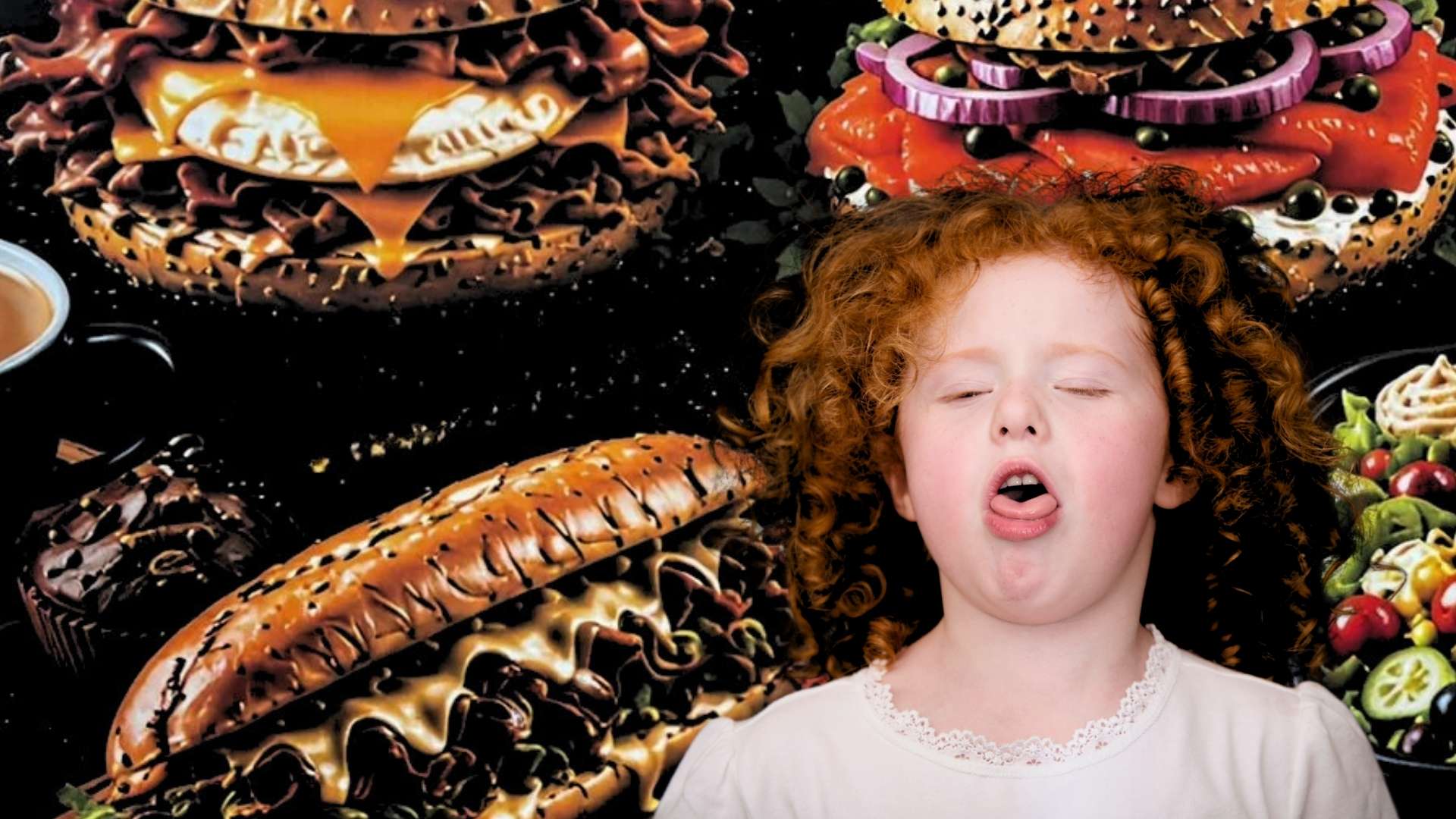
AI graffiti is appearing on the streets from the internet. Is this democratization of advertising, or an attack on urban aesthetics at the expense of creators – or perhaps both? The post AI on buildings and in menus. The slopization of cities is progressing first appeared on Krytyka Polityczna.
Deformed faces, a dog with a tail on its neck, a furry snowman with an eye on its cheek. Next to it a multifunctional stick – one side an oar, the other a dog's paw. A man with a woman's face, blending into his shoulder. A hybrid of a dog and a red panda protrudes from the woman's head. An apocalyptic-surrealist experiment by a bold artist or a drawing by a teenager who discovered the prose of H.P. Lovecraft?
Neither one nor the other. This is a 30-meter Christmas mural over the Thames, which was honored by London passersby with the typical AI lack of attention to detail. It was quickly removed – after half the internet ridiculed it.
This is an example from England, but in Poland we have our own evidence that AI slop is becoming a large-format part of the city. Projects created by artificial intelligence contribute not only to the destruction of the natural meme flora of the internet. When the feed contains more and more videos with artificial cats, it’s a sign that something is happening: artificial intelligence is ready to go out onto the streets.
Glasgow, Elbląg, Zakopane, San Francisco, Cebu, Gapan, Gurgaon, Calcutta – all these cities, despite social and geographical differences, have something in common. It’s the rapidly prompted AI slop on buildings, billboards, and in restaurants.
Drama about murals
On the Facebook page “City of Elbląg” a contest for a mural was announced on the occasion of the 780th anniversary of obtaining city rights. Two projects were presented, and residents were to choose the winner via likes. Both looked like they had been processed by AI – besides the incorrect city coats of arms, they featured knights who looked more like fantasy game characters than Teutonic knights. The city responded and changed the contest format – residents now have to send their proposals by email. They had only nine days to create an independent project. I would like to believe in the power of good intentions and local enthusiasm, but considering the lack of a prize and rules, Elbląg will probably return to the starting point – more projects generated by AI.
– On social media, there is a lot of content promoting solutions that are supposed to “save time” for designers. These tools distort reality, invent, do not respond to needs, and create illogical caricatures – comments Magdalena Milert, author of the book For whom is the city? How to create a space that cares for us. – Sure, we can write a prompt instructing to place various elements in specific locations, but we don’t know if AI will create everything at least in the right scale. It’s also an ideal illustration of capitalist reality, where speed, efficiency, and the number of projects matter more than quality.
There is still a fresh drama about a mural in Gniezno, suspected of AI’s invisible hand influence, and discussions around the mural in Elbląg reveal something more – different expectations regarding urban aesthetics. Some residents may like the generated murals, while others see them as shame, deception, and disrespect for artists and the city.
Criticism of AI slop and classism
AI-generated graphic projects, considered ugly by some as Jesus in the form of a shrimp, can be the only available form of advertising for others. For small businesses, the decision tree is simple: either an AI slop project or none at all.

There are tools online that perfectly meet this need. One of them is Tacoter – a platform designed for Mexican restaurants that allows generating new images daily and addresses the problem directly: “A professional food photo costs over $100 per dish. Generate a photo without additional costs” (no need for a photographer). The service also allows creating dish descriptions (no need for a copywriter), social media posts, and measuring their effectiveness (no need for a social media manager). As stated on Tacoter’s website: “We are an AI company that loves taquerías” and offer “a whole team of AI working behind the scenes.”
Is it fair to require small entrepreneurs to give up AI slop for aesthetic reasons? Larger companies with recognizable brands and enough money to hire a creative team should be even more surprised that they still choose to use AI. As El Michelín notes:
“Why would a renowned pub in the Ranelagh district – or an experienced Latin-style event organizer – promote an event with graphics almost identical to those used by everyone else? At first glance, the answer seems obvious: because it’s faster and more efficient. In the short term, posters and promotional materials generated by AI allow companies to advertise their offers instantly, just as hungry customers increasingly look for the quickest way to satisfy their appetite.”
AI backlash
There are also: posters for the Mogilno Days 2026 where celebrities look like caricatures of themselves, a poster for Kashubian Cucumber Day, and Krupówki – graphic identification of a park for children to take photos against.
Many people openly oppose the artificial, smooth, and generated graphics. Someone spray-painted “seriously?” on a restaurant building with an AI menu in San Francisco, and under posts about AI murals in Elbląg, there are numerous comments full of outrage. Many threads are created in groups and forums mocking AI-generated graphics and heralding the end of an era. Internet creators invite to use anti-AI stickers upon seeing “hideous graphics in the city”. “Do you want to vomit at the sight of AI in menus? Write to me, and I’ll send you a file of stickers for free!” – encourages Tomasz Spell, comic book author.
Critics among vendors and classism
Some vendors, wanting to distinguish themselves from those using AI, refuse to participate in prompt marathons and issue handwritten statements:
“We will not use AI posters for promotional purposes. Instead, we will use paper and a marker” – wrote an employee of an American pizzeria on a note, then posted a photo on Instagram. The post garnered nearly 50,000 likes.
In a paper dedicated to “degenerative artificial intelligence” (AI trash, brainrot, and “tricks” of generative culture) Idil Galip and Ludmila Lupinacci write:
“Work, value, and time reveal the internal contradictions of generative artificial intelligence and provide a useful starting point for understanding the mixture of fascination and dissatisfaction that accompanies daily contact with these products. As aesthetic forms of »gimmick« (Eng. gimmick) phenomena such as »slop« and »brainrot« are characterized by ambiguity: they rely on highly advanced computational systems, yet lead to skill loss, externalization of cognitive processes, and the disappearance of craft, resulting in effects perceived as poor. They are ‘sad wonders’ that ‘always simultaneously delight and repel, never being just one or the other’.”
As the researchers note, AI may develop quickly and at no cost to the creator, but recipients still find the effects “highly irritating” – “they attract the attention of people and algorithms, while degrading cognitive and aesthetic experience”. Galip and Lupinacci argue that it’s a matter of the “suspicious by nature” character of graphics created by AI – they evoke distrust in observers, show inhuman missteps (or many macabre mistakes, as in the London mural at the beginning of the text).
There is an impossible contradiction in AI – on one hand, it accelerates processes; on the other, it means less money for artists; third, it enables the creation of murals for communities that otherwise wouldn’t have a chance; fourth, it standardizes space; fifth, it allows small entering companies to visually establish themselves. The use of AI is all of these things simultaneously, and there is no turning back to the times before. As long as the possibility and temptation exist, it’s a bit like the myth of King Midas, who rapidly turned everything he touched into gold – but for some, this gold may be real treasure, and for others, “shit”, depending on who, how long, and where they look.
The post AI on buildings and in menus. Slopization of cities continues first appeared on Krytyka Polityczna.