We have all the crises in the phone.
Kapitál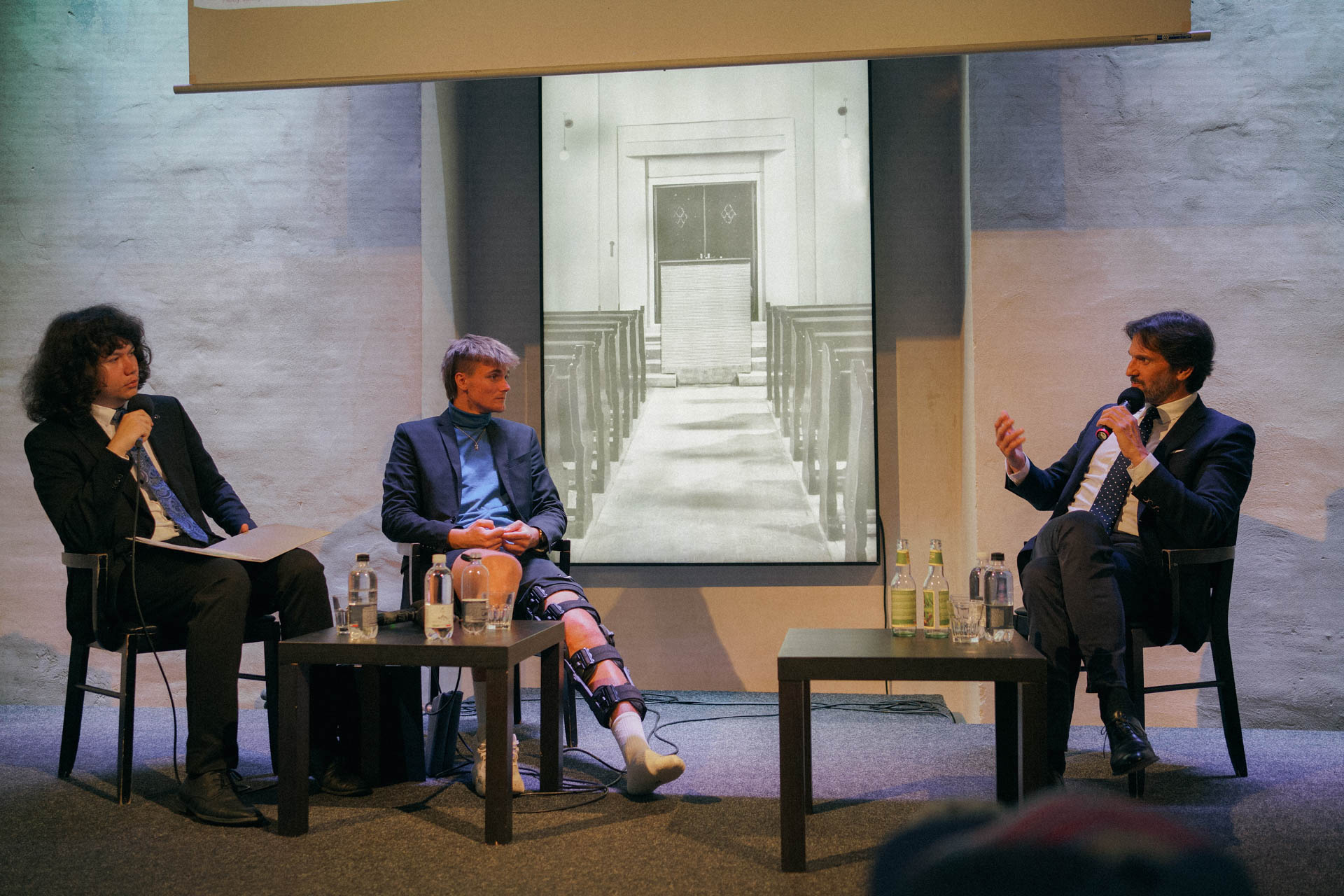
Since last autumn, a new wave of student engagement has been rising in Slovakia and Lithuania. They protest, discuss, and create communities. The outflow of young people, the climate crisis, corruption. In this report, I present two months of interviews with five initiatives about what motivated them to act, how they differ, and what keeps them going. A report on student activism.
Since autumn of last year, a new wave of student engagement has been rising in Slovakia and Lithuania. They protest, discuss, create communities. The exodus of youth, climate crisis, corruption. In this report, I present two months of interviews with five initiatives about what motivated them to act, how they differ, and what keeps them going.
Ieva sits in a café in Vilnius, from where she is about to connect with me via video call when she receives a message on her phone. Yellow alert. There is a drone in Lithuanian airspace, be cautious. If the signal turns red, you must go to shelters.
A few minutes after the yellow, a red signal appears. For the first time since Russia's full-scale war in Ukraine, this was not a simulation or test. Ieva opens a map of shelters; the nearest is in a school across the street. “We stayed there downstairs for about 30 minutes. Then our national broadcast announced that everything was fine.” This is how our conversation begins. Ieva Vengrovskaja is the president of the Lithuanian Student Union (LSS), and also one of the organizers of student protests in the country. Besides local specifics, the situation there cannot be separated from the global context and has many similarities with Slovakia.
I'll go back a few days earlier. With Ella Patrášová and Vanda Výbošteková, who study in high school, we sit in the Záhrada Cultural Center in Banská Bystrica. Outside, it drizzles lightly. Inside, it is still quite empty. Soon, young people will start gathering here for the first meeting of the Antifašistická Bystrica initiative, which Ella and Vanda founded together with another member, Lea.
According to Ella, Slovakia does not address real problems at all. “There is a climate crisis, wars, outrageous conflicts, and genocide, and we can't even agree on whether we're okay with the fact that there are people around us who are not exactly like us.”
Beginnings
Almost every initiative in Slovakia returns to the same date: the abolition of November 17 as a day of public holiday. “It's a holiday of studenthood, so it directly concerns us, and this obviously ignited even more student activism,” says Vanda. A year ago, the situation was quite different – there were far fewer students protesting. Classmates who didn't come often responded that they didn't really know what the protest was about. However, November 17, associated with the Velvet Revolution, is something symbolic and clear to everyone.
In Žilina, high school students Jakub Filek and Michal Labaj responded to this government move. They wrote an open letter to the prime minister and MPs. “That was our first impulse to get involved,” describes Jakub. They strongly expressed disagreement with Fico's discussions with students “where he acts both as moderator and guest.” In December 2025, they founded the Student Clubroom, which aims not only to highlight issues in the country but also to push for solutions.
After a message written by Poprad high school student Muro on the asphalt – on the day Fico came to discuss at their school – the initiative spontaneously expanded and a Chalk Revolution was born. Young people wrote on sidewalks to express disagreement with Slovakia's political direction under the fourth Fico government, which continued its “discussions” with high school students. The Poprad students left early, ringing their keys – a symbol of freedom and democracy in November. At that moment, the prime minister sent them to fight in Ukraine.
In response to this situation, student Ondrej performed a protest song I Believe There Is Another Way. At a performance in Pezinok, he met high school students Oleg and Matilda from Modra, who had already spoken at protests and together founded the movement Student Protest. Inspired to spread these ideas to schools in other cities, he connected with Linda from the platform Študentstvo za Otvorenú Kultúru! (Students for Open Culture), who provided valuable know-how.
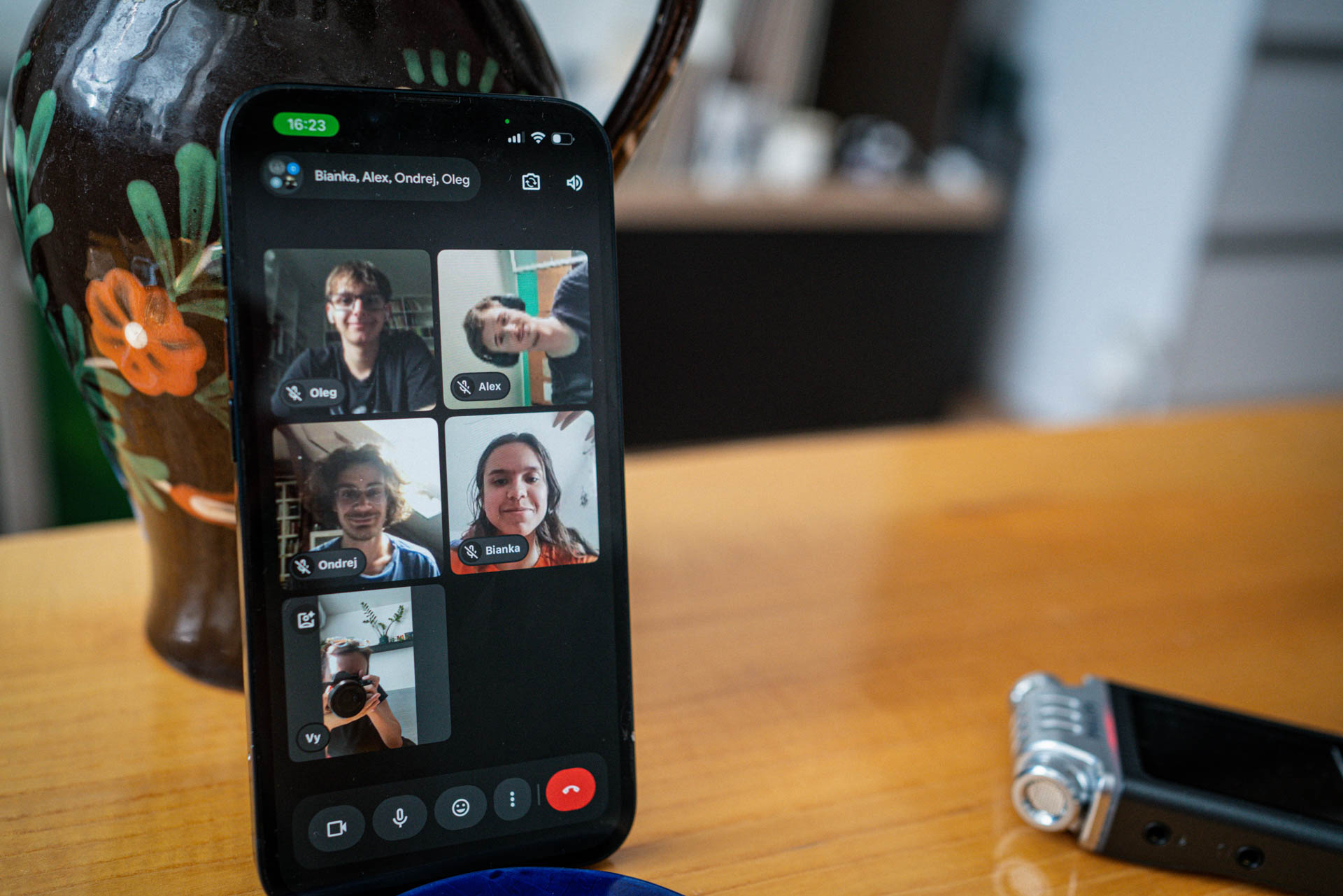
Student activism is, of course, a very diverse group in terms of opinions. But most feel a growing alienation from political decision-making. According to Youth Reports, up to 84% of respondents agree with the statement “Politicians don't care about me.”
In Lithuania, protests involved two waves of triggers. In September 2025, the Ministry of Culture was taken over by the populist party Nemuno Aušra (Dawn of Nemunas) with anti-Semitic, nationalist rhetoric undermining minority rights and democratic values. Ignotas Adomavičius, a person without any qualifications, became the minister. Under public pressure, he resigned after a week, but that was not the end. Protesters emphasized that it was not just about the minister as an individual or the party – which they see as a threat to culture and the state – but mainly about its unfitness to be part of the ruling coalition. In October, they organized a warning strike, the largest protest in independent Lithuania's history, with over 300 events in 81 cities. The protests were coordinated by Kultūros asamblėja (Cultural Assembly), and students joined a broader civic movement.
The main reason for not remaining silent was, for Ieva, that the country has many problems in education, and people without knowledge of the field are coming into leadership positions. Then came a power move in the form of a new law on public broadcasting. “You know how you change society? Through television, newspapers, social media. And we realized this is just the beginning.”
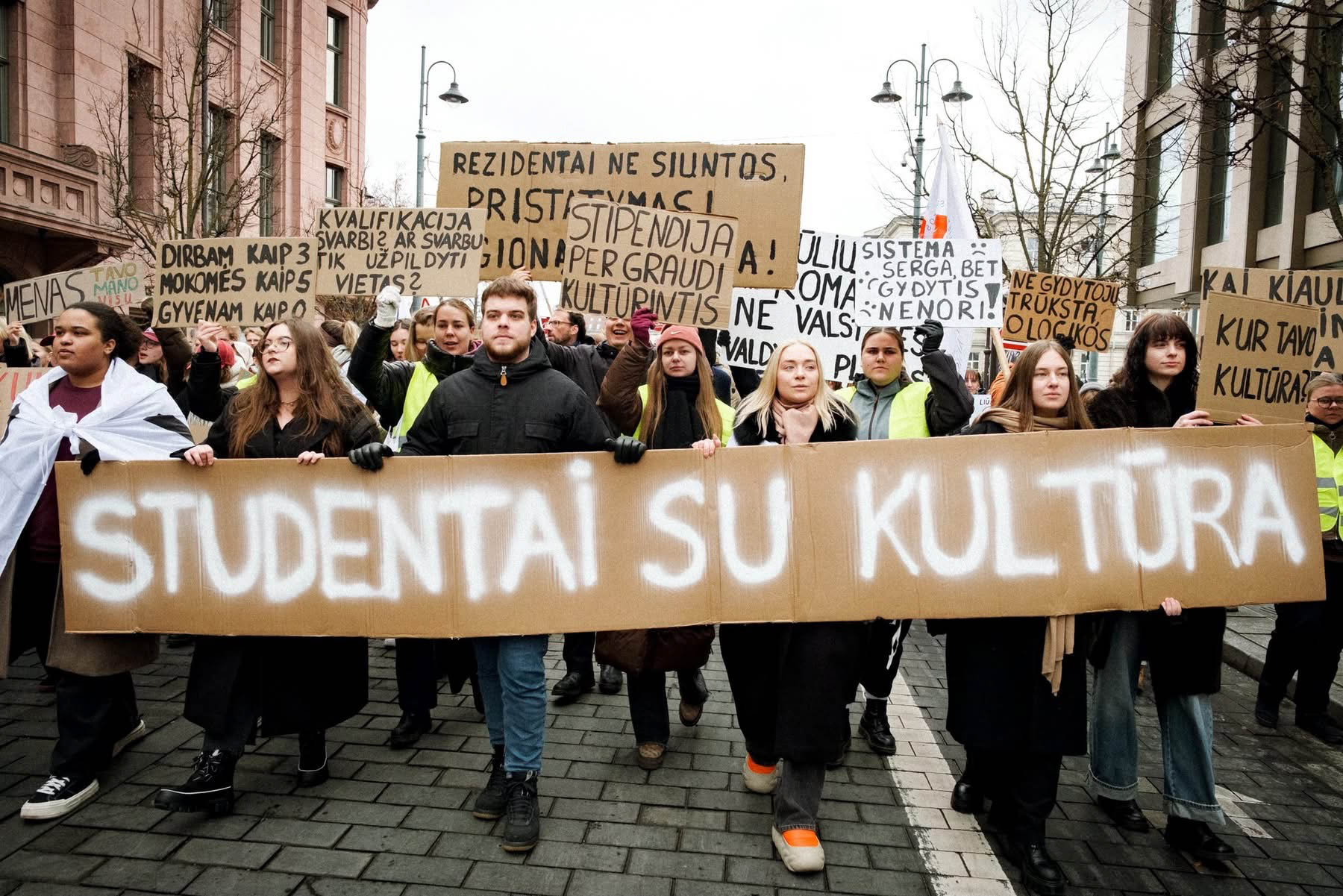
Against the law, the largest online petition in the country's history was created, with over 140,000 signatures. About 40,000 people of various ages participated in the protest, and students played a significant role. The country last saw such youth participation in 1990, during the fight for independence, which ended successfully. The question of whether to join was not even posed this time. “There was no doubt; we felt we simply had to do it,” says Ieva.
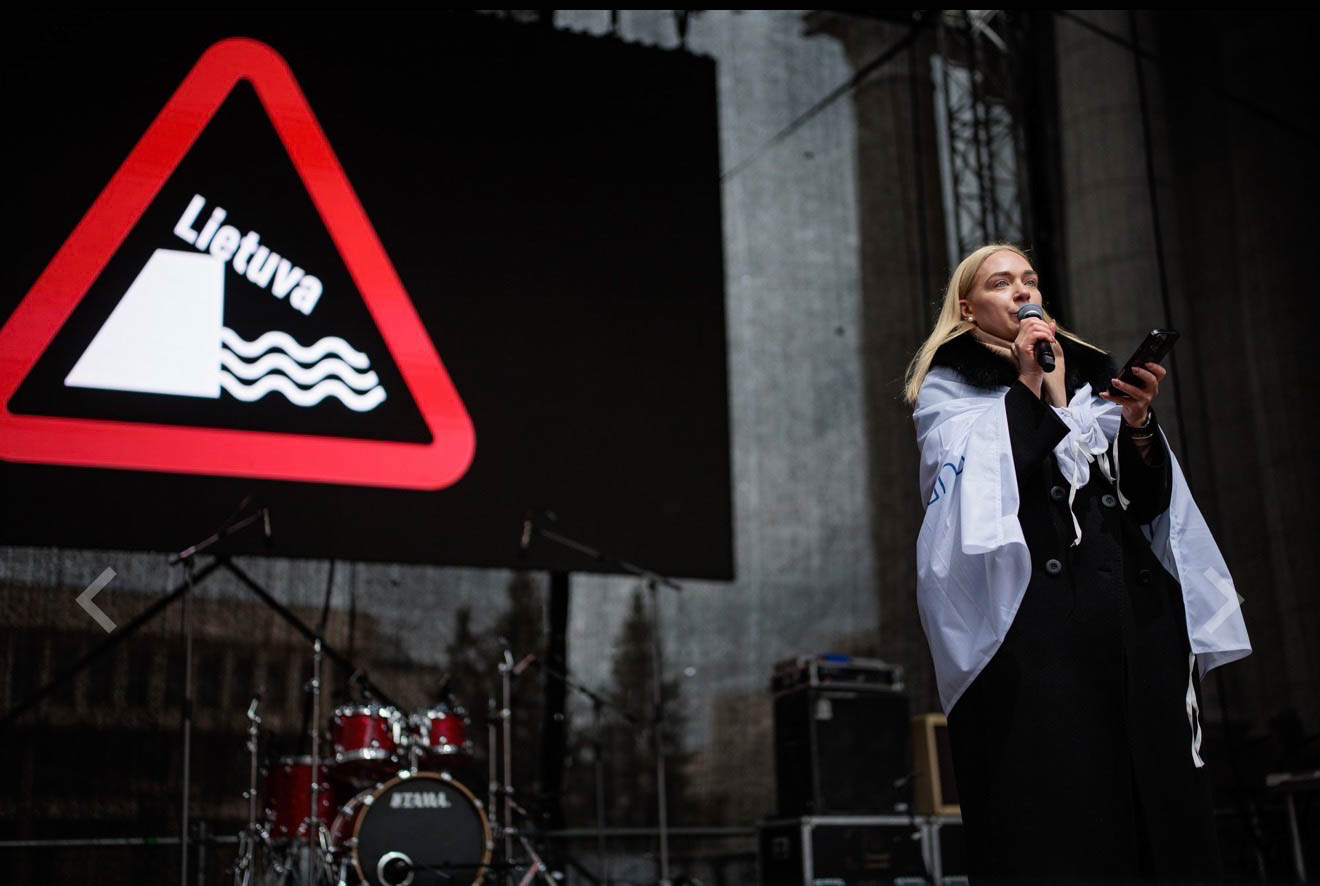
The defense of radio and television in Lithuania also has a historical parallel. In January 1991, 14 people died and many were injured when they defended the Vilnius TV tower and broadcasting buildings against Soviet tanks.
Agreeing on a moral foundation
Naty from the Student Clubroom sits under the ceilings of the New Synagogue, where a discussion will start soon. She considers herself a strong supporter and optimist, but many issues bother her. The exodus of youth abroad, polarized society – she even wrote a high school thesis on this. And her passion, culture. “We emerged from cultural centers that are now under threat – the New Synagogue, Stanica Žilina-Záriečie. The current government does not listen to our opinions.” And Michal adds that even the price of a bus ticket is politics. And it needs to be addressed.
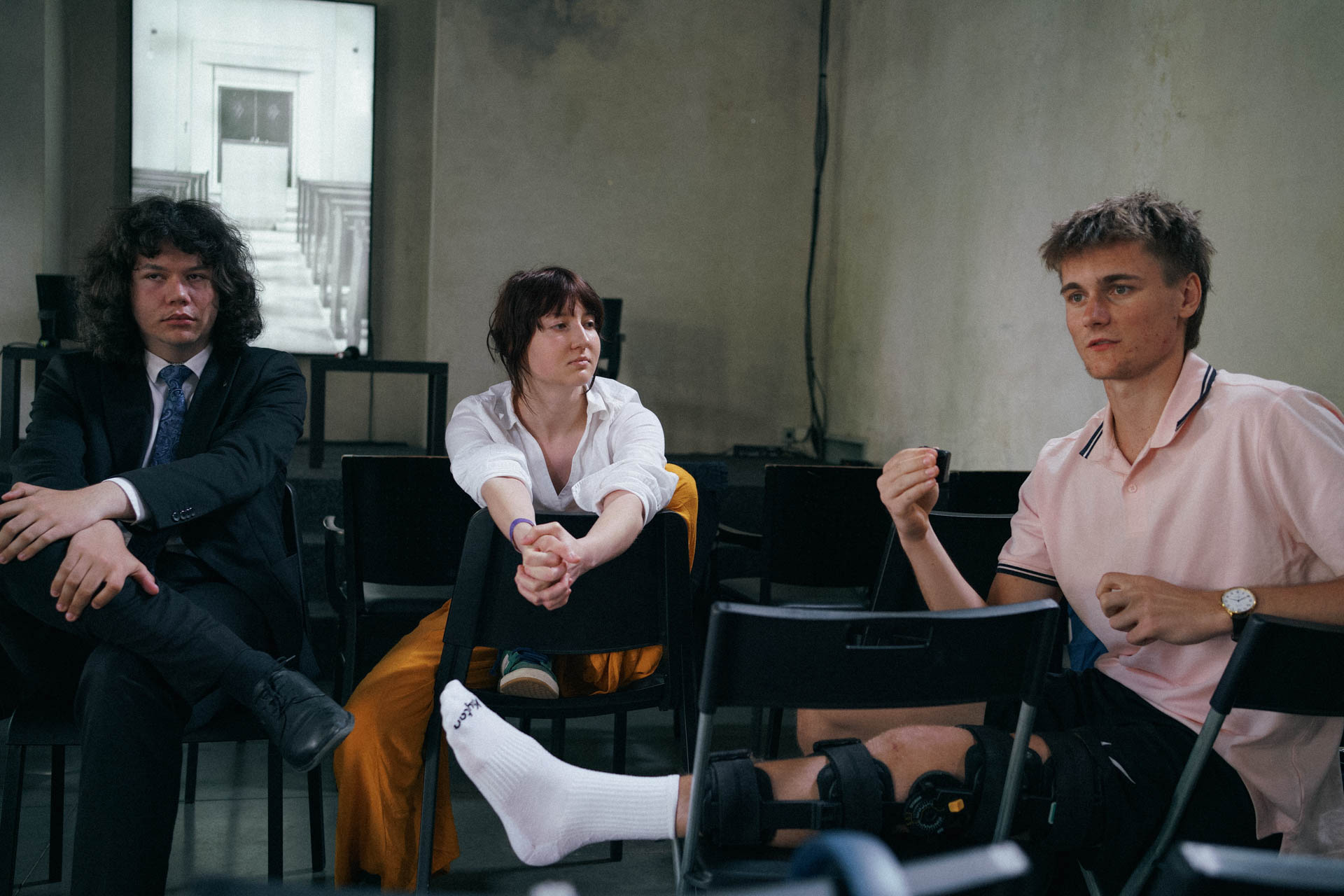
For Ella from Antifašistická Bystrica, it is extremely important that a person has around them people with whom they can agree on questions of moral foundation, which is no longer a given. For this initiative, anti-fascism is something that connects many topics they care about. “Standing, for example, with Ukraine or with Palestine is anti-fascist for us. Being feminist, expressing oneself as an eco-activist – is anti-fascist.” The name is eye-catching, but for them, it is something to be proud of and to say openly.
Regarding Palestine, members of the Student Protest also wanted to be vocal, as Ondrej explains: “From one initiative's protest, a person was expelled for the Palestinian flag. I heard around me that young people who see the situation in Gaza as crucial don't want to come to those protests because of that.”
That a more radical stance means having fewer supporters is not only visible in the squares. Ella experiences it also at school. A teacher used to like posts from the civic platform Nie v našom meste (Not in Our Town), but she can't imagine liking posts from AB. “It's like it's crystallized into a specific opinion,” Ella thinks. “Many of these people operate within a circle of centrism, and when we express an opinion on Palestine, that's exactly the point where we lose those people because they find it controversial, and for us, it really isn't.” When mentioning Banská Bystrica and anti-fascism, Vanda sees “the Slovak National Uprising and Palestinians,” who also fight against occupation. And as an initiative, they do not want to blindly support opposition or anyone just because they are “our enemy's enemy,” and they have objections to every political party. Ella will vote for the first time next year with a “lesser evil” mindset. Because she doesn't feel it truly represents the political spectrum she would place herself on: “Leftism doesn't exist for us.”
The platform Študentstvo za Otvorenú Kultúru! (Students for Open Culture) was established in August 2024 from initiatives of students from the Academy of Fine Arts in Bratislava (VŠVU), the Academy of Performing Arts in Bratislava (VŠMU), and the Academy of Arts in Banská Bystrica (AU BB). According to Linda Várošová, who coordinates it, dialogue and mutual understanding as a society can achieve a lot. Understanding what crises and challenges different groups face. “I face some crisis, but, for example, a lady from eastern Slovakia deals with completely different issues, and she might consider my problems trivial. And vice versa.”
The Manifesto of ŠOK! has been signed by around 400 people – and Linda was surprised by who. Signatories include people from economics, law, chemistry, and even a veterinarian: “That was a ‘wow’ moment for me, realizing that in the fight for better conditions in culture, we're not completely alone with our ten friends. And there are also people from the Czech Republic. And one girl from China.”
Strategies Against Power
The Student Clubroom favors dialogue. Its members invite politicians from across the spectrum, even those they oppose, to confront them with questions from the public. Invitations to discussions are sent to both coalition and opposition members. Antifašistická Bystrica refuses dialogue with politicians on principle. They see the purpose elsewhere: in education, in community, in discussions with experts.
The Student Protest movement is divided on this issue and debates it. “If someone feels like it, it can be interesting. But they have to realize that they are dealing with professional politicians with a wide range of manipulative tactics. I don't think it will have a real effect; it won't reach those who should see it,” says Oleg. Ondrej also doesn't expect their prime minister to listen. “You can just ask such a person a tough question – and suddenly the king is naked.”
Kalina in Žilina
On May 4th, high school student Jakub from the Student Clubroom is expecting a guest. The Ministry of Defense, Robert Kaliňák, is scheduled to visit the New Synagogue cultural center. Jakub has already predicted how it will go: Kaliňák has two modes – a pleasant one, where “he charms with his charisma and plays the biggest friend of students,” and an aggressive one, which he switches to at the first confrontational question, using manipulative tactics.
When getting to know Kaliňák, members of the Student Clubroom engage in small talk outside the entrance. They ask about how many cigarette packs he smokes and emphasize that he also used to be in a student association. “We were waiting for him to say he was a dissident,” they say later.
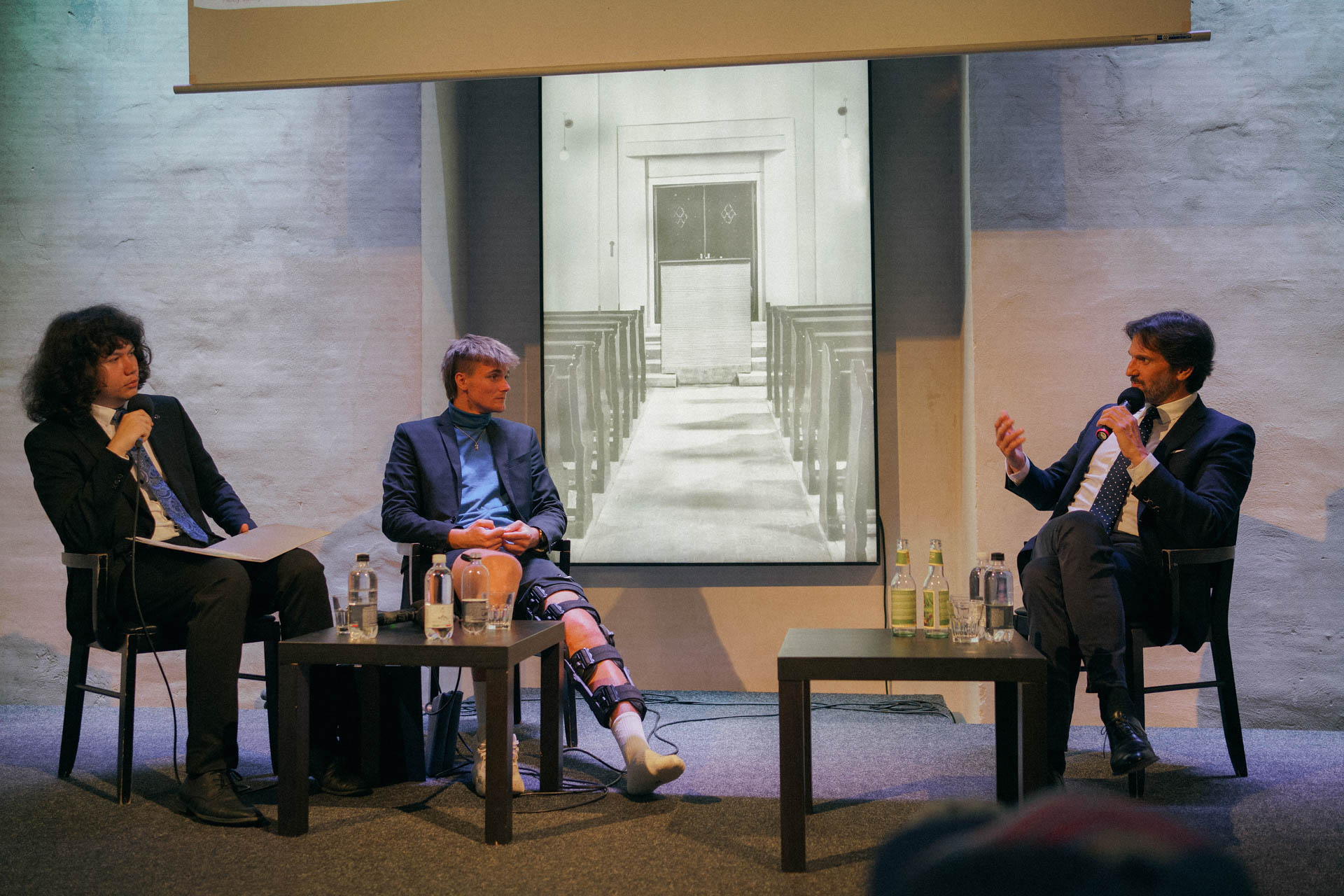
I'm not used to reporting from the political environment, so it was strangely striking to observe Kaliňák's manipulative techniques and evasive answers live. Jakub and Michal were prepared, confronting him with data. A surprising moment was when Kaliňák responded directly and without digressions when Muro asked why Slovakia trades with Israel. In the 1940s, we bought defense systems from Nazi Germany; now we buy them again from a state committing genocide. “If I have to choose between something costing 560 million and 3 billion, and the technology is similarly good, I choose the first,” Kaliňák says. No emotions, just cost-performance ratio. “And politicians speak long sentences, and I do that too now, and sometimes they don't answer the question, I don't know if I answered – obviously not,” Kaliňák laughs when responding to another question.
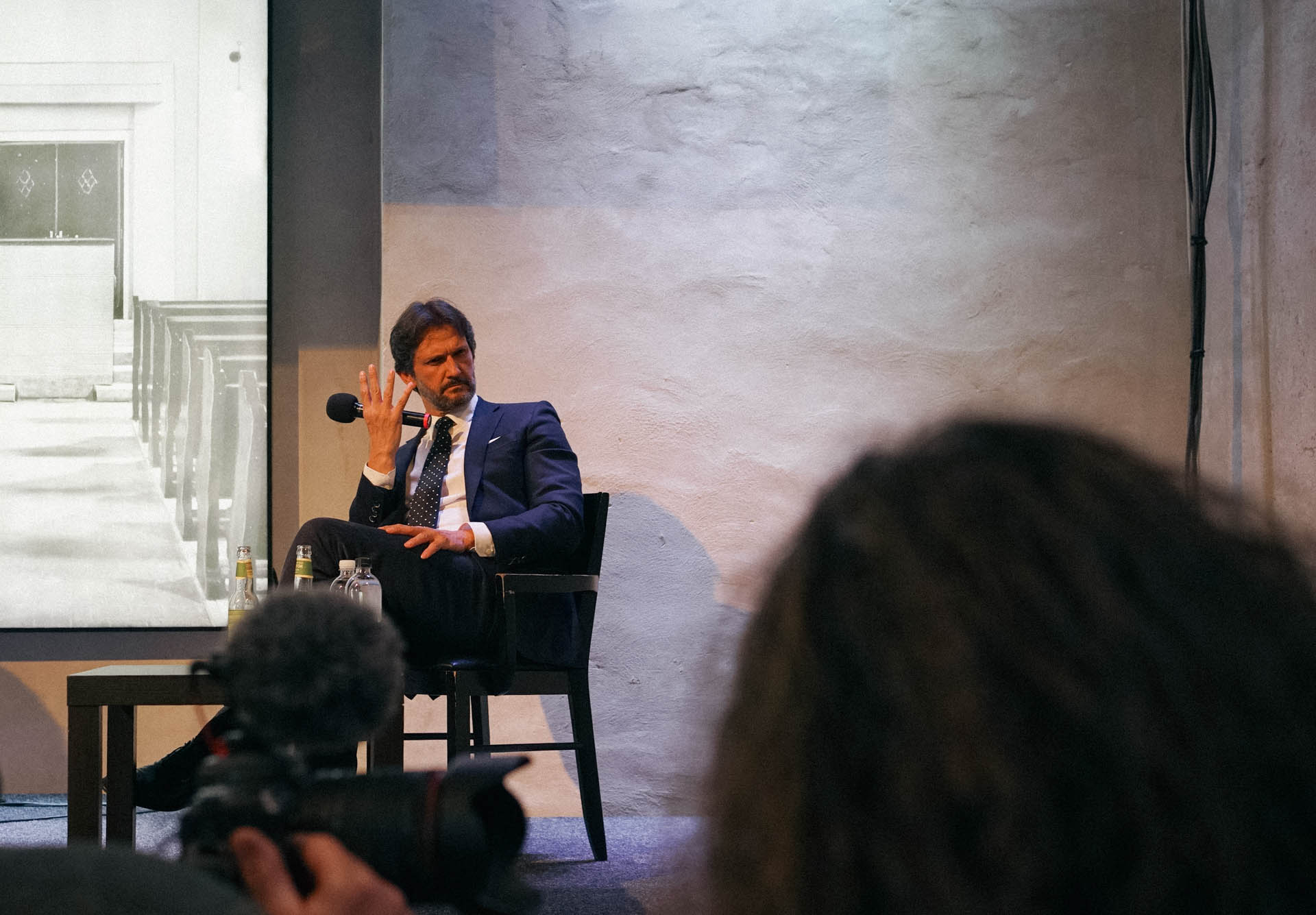
Outside after the discussion, I perceive a certain performativity of the situation, the presence of phones, PR. A businessman in a suit from the Republic “delivers” a monologue to Muro, while a young assistant records him. A member of Kaliňák's team commits a faux pas when he sighs and sits down on a chair. Watching the minister casually debating with people, he realizes it will be a long day.
Creativity in the streets
For Alex from the Student Protest, it makes more sense to beat them in another discipline than in debates – in protests or visuals. Linda also mentions creativity as something that always surprises her – the search for new forms of action. She highlights Betka Lukáčová, a speaker on a tractor during the Great Cultural Mobilization (“That was totally ‘wow’ for me, and people loved it.”), as well as Michaela Hučko Pašteková and Juraj Korec with their 24-hour performance “Watch Out, Culture Falls!” in front of the Ministry of Culture of Slovakia. “Fiki Sulík, Bombic, and the police came there, they took their mats, which they fell on, but it didn't discourage them. They stayed even in the rain,” describes Linda.
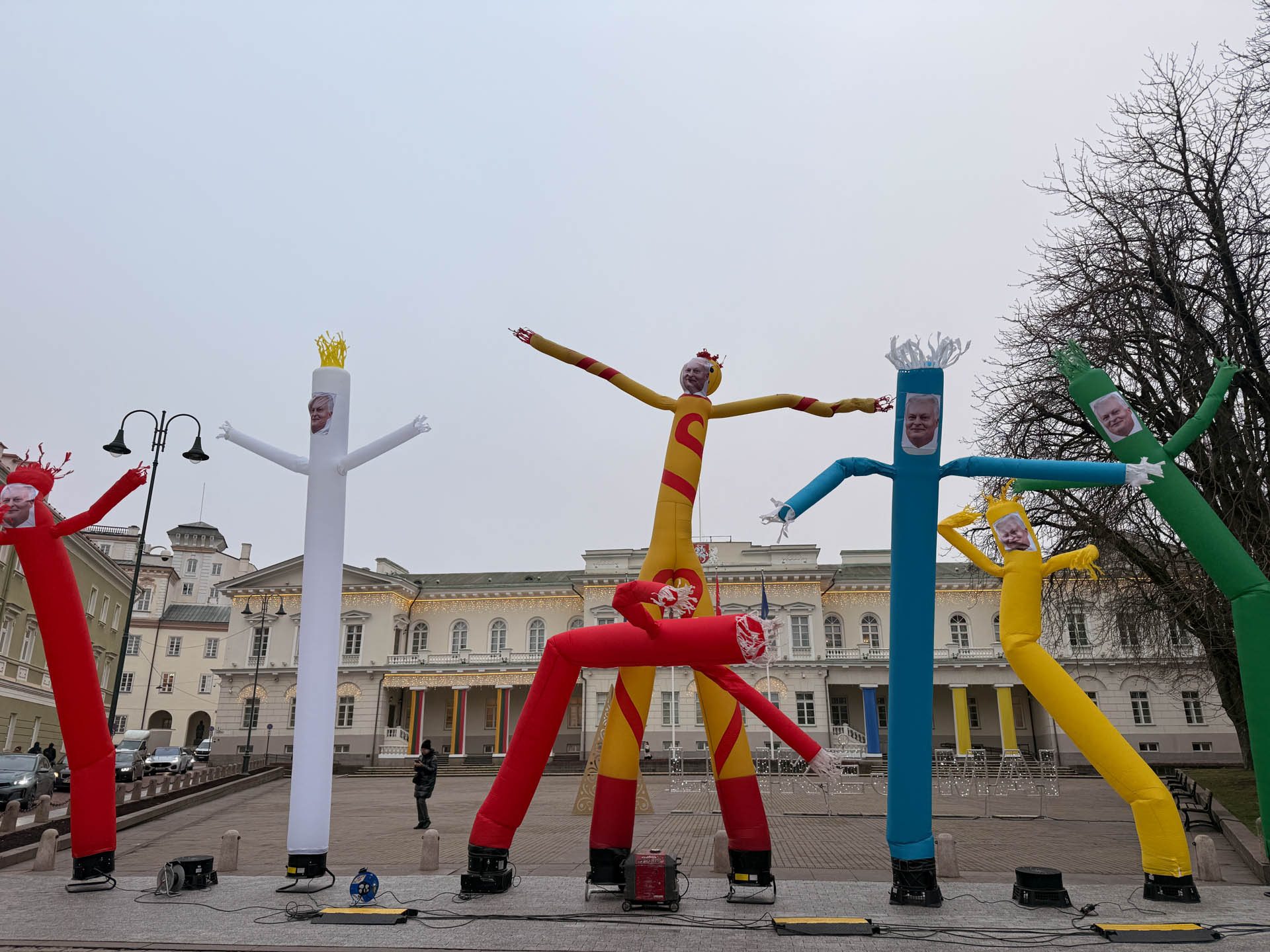
In Lithuania, students built a four-meter inflatable dancing figure with the face of the president in front of the presidential palace. The figure has no backbone. “You don't need a big budget, you don't need many people, and you show what is happening. And I know the president inside the building was very upset about it,” says Ieva.
In December, when the Lithuanian parliament tried to push through amendments to the law on public broadcasting hastily, youth and student organizations gathered in front of the Seimas building, the parliament, with a wooden coffin and wreaths. “The state is not buried yet, but they are already laying it in a coffin,” Ieva told journalists at the time. She called on the ruling majority to give the country a gift and stop all this.
The symbol of the protest became a hymn without words. It started as an ironic joke. The new Minister of Culture, Adomavičius (who resigned after massive protests within a week, as I mentioned earlier), claimed his qualification for the ministerial post was that he learned to play the trombone at a music school. The school he attended bears the name of the prominent Lithuanian composer Mikalojus Konstantinas Čiurlionis. Kultūros Asamblėja responded precisely with his music – the symphonic poem Jūra (Sea), which gradually became an inseparable part of the protests. The student movement joined this tradition and maintains it. “We just stood outside and listened. Someone played it from a balcony. It’s classical music, very deep, without words – so everyone understands it, regardless of the language they speak,” recalls Ieva.
Online, offline, and three seconds of attention
Youth are increasingly engaging online. According to Vanda from Antifašistická Bystrica, it cannot work without physical offline activity: “That’s why we want to have a real community and really get to know these people.”
Linda believes that online engagement is correct because young people balance the algorithm that tends to push more radical content.
In the Student Protest, they agree that social media are now key for outreach, with Reels working best. Last week, they filmed a video from a dormitory where the situation is bad and faced a dilemma. On average, a person decides within three seconds whether to scroll further. “Whether to come up with a joke at the start or some nonsense. It was disgusting. We want to address serious issues, but we have to put on a show to get someone’s attention,” says Ondrej. He believes real change happens elsewhere: “When you do it in a material, personal way, that experience affects you much more deeply than through a computer.”
Alex adds that petitions and sharing actions online work well, but many people are already dependent on social networks. “The most important thing for us is to get people off social media through social media – to protests and our circle.” Real direct action ultimately does more.
Hate
“We look like girls, we’re young, maybe that’s why they don’t take us seriously, and maybe that’s why it was so easy to throw so much hate at us,” reflects Vanda from Antifašistická Bystrica. Their profile lasted three weeks and had a hundred followers when a wave of hate descended – probably after it was shared by far-right influencers. Vanda says she was used to attacks on her appearance even before founding the movement. What was new: “It shifted from attacks on looks to threats, or rather wishes… death wishes.” They also discussed safety for meetings, to know who would come and to fully respect everyone’s privacy. They addressed this with a short questionnaire.
“The most criticism here probably comes for Kubo’s unruly hair,” says Naty from the Student Clubroom. Jakub finds it pathetic when someone comments on his appearance and doesn’t listen to what he says. “Maybe it’s also a result of the government’s aggressive rhetoric. Statements about progressive youth and hooligans.”
Sasha from the Student Clubroom laughs when recalling a man on Facebook who made a mocking video from screenshots of her face. “My friends and I had a lot of fun with it in the morning. Those people really have nothing – from that spectrum – except to mock appearance.”
“I’m very glad that what bothers someone about me is that I have greasy hair, painted nails, and glasses – and not what I say. It kind of shows that maybe I’m right,” says Muro again.
Bianka from the Student Protest movement noticed hypocrisy after her own viral invitation to a lecture (2,000 comments in two days): “Really, 98% of those comments were written by men who had a Russian flag in their Facebook profile picture, with photos of a happy family. Damn, if their daughter’s friends wrote those things, would they be okay with it?”
Ondrej experienced it after a protest before Christmas. His protest song had about 700,000 views in two days. A lot of hate followed. After about three hours, he stopped reading comments. Milan Mazurek also posted a reaction video about him. Ondrej was lucky that his mother is a psychologist and he had someone to talk to. And he found a helpful question: “Who is telling me this? And do I want to listen to this person? Do I think their opinion is relevant?”
For Linda, it is also very difficult and hurtful to find a pillar of hateful comments and to understand why it’s an unequal fight: “The current government has millions of euros to pay troll farms and people who write this stuff.” She feels that the bulk of negative aggressive tension is artificially created by the current government, and Robert Fico shows no respect for younger people. “In Poprad, he basically sent an entire class to war; those young people are someone’s children and grandchildren.”
When the Lithuanian Union of Students posts about protests, Ieva says that often all comments under the post are from bots: “They are not real people. And there are thousands of comments.”
Fatigue and moments that kept them going
The fatigue many of them sometimes feel also has an organizational reason. “I don’t think that if we all stop now, someone else will take over,” says Linda. For a long time, there were no student organizations or platforms capable of fully addressing the real needs of students.
The Student Protest movement faced something similar when it tried to network regions via a public form and create functional cells. Dozens of responses came, but they were scattered across many places – most had fewer than five people able to handle organization. “We had one response from Dolný Kubín,” adds Oleg.
Linda also perceives a significant support inequality across universities. Her school, VŠVU – the management and senate – stand behind her unconditionally. She knows that at some universities, a student is alone without support from leadership, but not only that. She often hears stories of students being intimidated by authority figures within their schools. Another source of exhaustion is the ongoing reactive mode amid long-term planning: “This government gives us so many things to react to, what should I choose?”
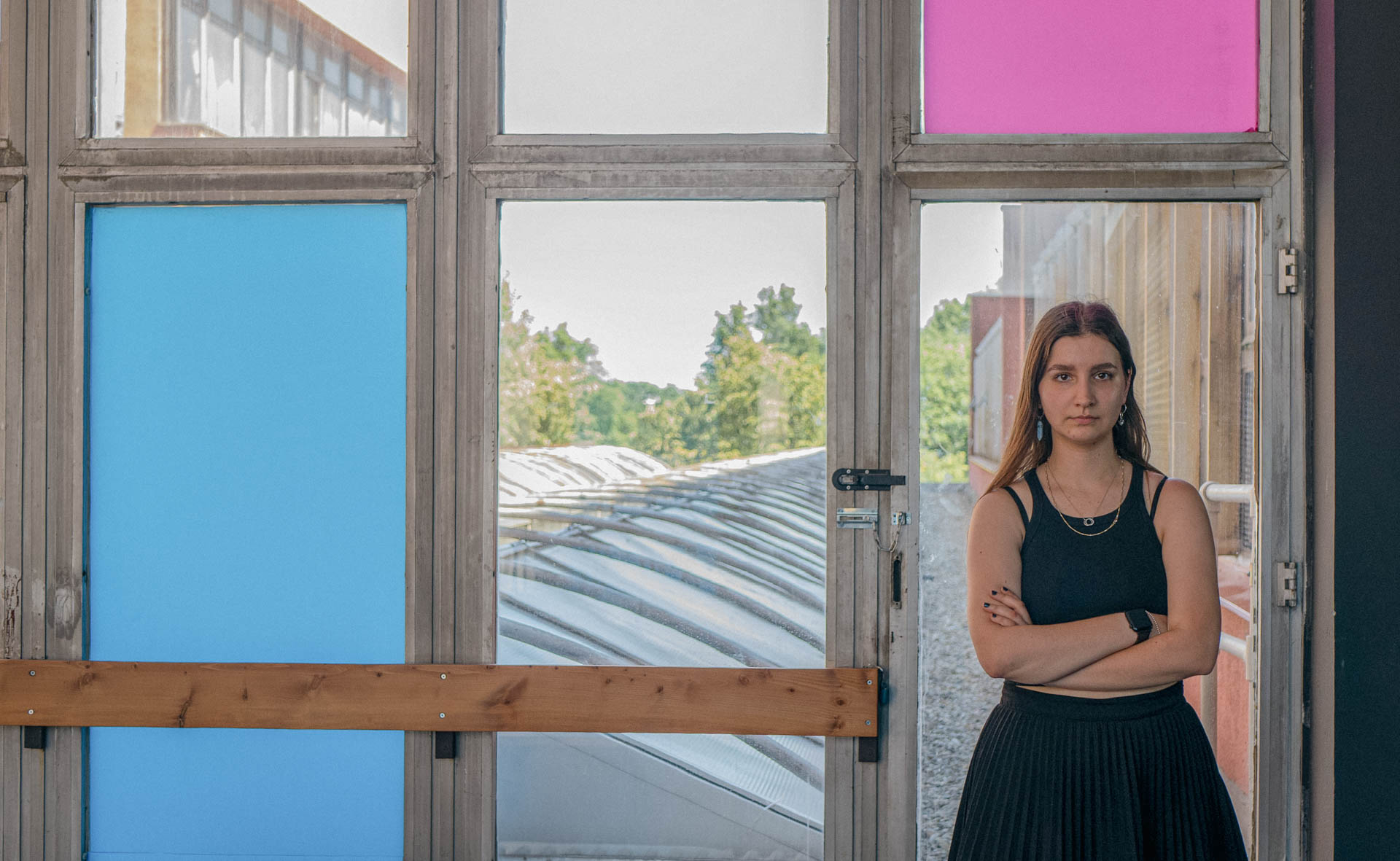
In Banská Bystrica, they also encounter some apathy from peers: “They often tell me it’s great that I’m involved. But they won't come to protests themselves because they don’t want to engage further,” says Ella. When asked why, the members of the Student Protest give different answers. Ondrej also heard complaints that they are too radical. Standing in squares supposedly has less effect than in 2018 – they should block streets. Powerlessness, stress, mental health, and the resources left for activism also play a role. “I don’t think so, but some people think we’re doing okay. Water flows, you don’t need to watch TV, just Netflix, Instagram is free,” says Ondrej.
Linda was moved – and gained drive – by a moment from the “Great Cultural Mobilization” march. After two years in ŠOK!, she suddenly saw a huge gathering of young people from all over Slovakia and abroad. “It was a moment of resilience. We know we stand together at school, but when that solidarity suddenly materializes, it’s a completely different feeling. We all had FOMO (Fear of Missing Out) because the march was so long, something was happening at every part.” Some people who are not active members also came, but they perceive the problems. “Culture has become a daily topic; it’s no longer just a bookmark somewhere at the bottom of the web.”
In Lithuania, protesters achieved a temporary victory when the accelerated approval of amendments to the law on public broadcasting was halted in December. But the struggle continued, and in spring, the revised amendments returned to parliament. “We feel frustration. We feel great fatigue… when this series of events started, we said to ourselves: Oh my God, again? Everything we did suddenly seems pointless.” And Ieva adds with youthful maximalism: “We believe we can change the world.”
Generation of polycrises. What scares us about the future?
“All crises are in our phones. Whatever happens anywhere in the world, we see it live, even if we don’t want to,” emphasizes Vanda, and she further reflects, “I wouldn’t want to generalize, but maybe it’s precisely this heightened sensitivity that has built such a strong solidarity in our generation.”
“For me, it might be different in some ways because – now this might sound stupid – I come from a family, from an environment where I am quite well-off. I have a safety net, and I could theoretically afford to not care about anything. It’s probably strange why I care. Maybe it’s partly because we have access to social media,” reflects Ella.
The social dimension is also part of the puzzle, which the Student Protest movement wants to focus on before elections – the state of dormitories. In winter, sleeping in a hat, one shower for the whole floor, cases of spying on female students. The Academy of Fine Arts has no dormitories at all, and students from Svidník, for example, pay for expensive materials for school projects. “They have to go to school, do part-time jobs, and at the same time try to live and survive in a tough situation,” says Oleg.
Each member of the Student Protest has their own theme. Alex is concerned about environmental degradation, global warming, mental health crises, and loneliness. But most of all, extremism. He had a personal experience with someone openly claiming to be a neo-Nazi. “The way things are developing in Slovakia and Europe is terrifying.”
Oleg describes two “aha moments” that shaped his worldview. The first was the climate crisis through the Fridays for Future movement. “It inspired me and, in a way, radicalized me. I realized that one part of the world profits from this situation, while the global South bears the consequences of our unsustainable way of life.” The second was the beginning of the genocide in Gaza in 2023. “Just because I am European doesn’t mean I always stand on the right side of history.” For Bianka, capitalism and the exploitation of animals resonate most. The fact that we live in a system disconnected from the suffering of others. Ondrej, meanwhile, encounters people whose climate anxiety leads to panic attacks.
In Lithuania, this anxiety cannot be separated from geography. The country defines its border with Russia as an existential threat in its defense strategy and plans to allocate five to six percent of GDP for its defense until 2030. “All countries closer to Russia and Ukraine believe militarization in higher education is necessary. Others haven't understood this,” says Ieva. She refers to military preparedness – mandatory defense courses introduced in primary schools and now to be extended to universities.
Ieva comes from a pro-Russian family. When the war in Ukraine started and she organized aid collections, her family didn’t understand her. “I received a message that I maybe shouldn’t go home or should first finish my affairs.” Her family started talking behind her back about her activism as careerism – the only explanation that made sense to them. “We understand what you’re doing; maybe you want a political career, and you need to speak this way, so go ahead and speak.” Ieva: “After all these years, I feel we can’t talk about politics and history, but I still love them, I still meet with them.” So they usually avoid topics that Ieva truly cares about.
Matcha, mountains, soups. (What helps)
Linda enjoys working with materials in the VVV Studio (visual-verbal-public) at the Department of Intermedia at VŠVU, but also activism and cultural policies. “Matcha with friends on a terrace is like honey for my soul, quality time with people I love. And I try to sleep a lot. And take care of myself – which we activists and people in culture don’t do very well,” she says. And she adds: “I can’t solve every pain of this country.”
“I have the good fortune of having many interests. I often just escape somewhere, like to the mountains. To be alone for a while and have peace from everything,” says Muro. When not in the mountains, he helps organize concerts and events at the community center in Poprad: “Go and support your local community center. It’s the foundation of civic activism. Buy a silly T-shirt from your local hardcore antifascist band and wear it proudly as a badge that you belong somewhere and help create something other than nonsense on Facebook.” According to the Youth Report, only 14% of young people have access to youth clubs, leisure centers, or sports facilities nearby.
Vanda finds support in communities. Her favorites are marches or meetings of the Teplé Polievky (Warm Soups) initiative, and she wants to build safe, welcoming spaces with Antifašistická Bystrica herself. She often transforms her worries into creative projects. From a housing crisis, she created a theatrical play about women without homes. Similar perceptions are shared in the Student Protest. “I feel that thanks to this movement, we found a good group. We can talk not only about serious issues we primarily address, but also have friendships, which is pretty nice,” says Bianka.
In Lithuania, the same sense of community is also emerging outside formal structures – through invitations: “I remember receiving a message just before Christmas: ‘Hey, do you still have time before all the Christmas events? Want to meet?’ And I replied: ‘Sure, I’ll have time during the protest tomorrow. Let’s meet there.’”
“When we all stood there and saw those people, we had a spark of hope that it’s still possible to change things,” says Bianka about the moment when everyone sang together at the protest. Alex finds it helpful to be among people who see things similarly, and it’s best captured by a famous quote: “I plant trees under whose shade I will not sit.”
With young people who fear the future or occupation, Ieva discusses various ideas: “Okay, no rush. Let’s talk about what we can do now.”


The text is part of the PERSPECTIVES project – a new brand for independent, constructive, and multiperspective journalism. The project is funded by the European Union. The opinions and statements expressed are those of the author(s) and do not necessarily reflect the views of the European Union or the European Education and Culture Executive Agency (EACEA). The European Union or EACEA do not accept any responsibility for them.