“The war could last for decades”
New Eastern Europe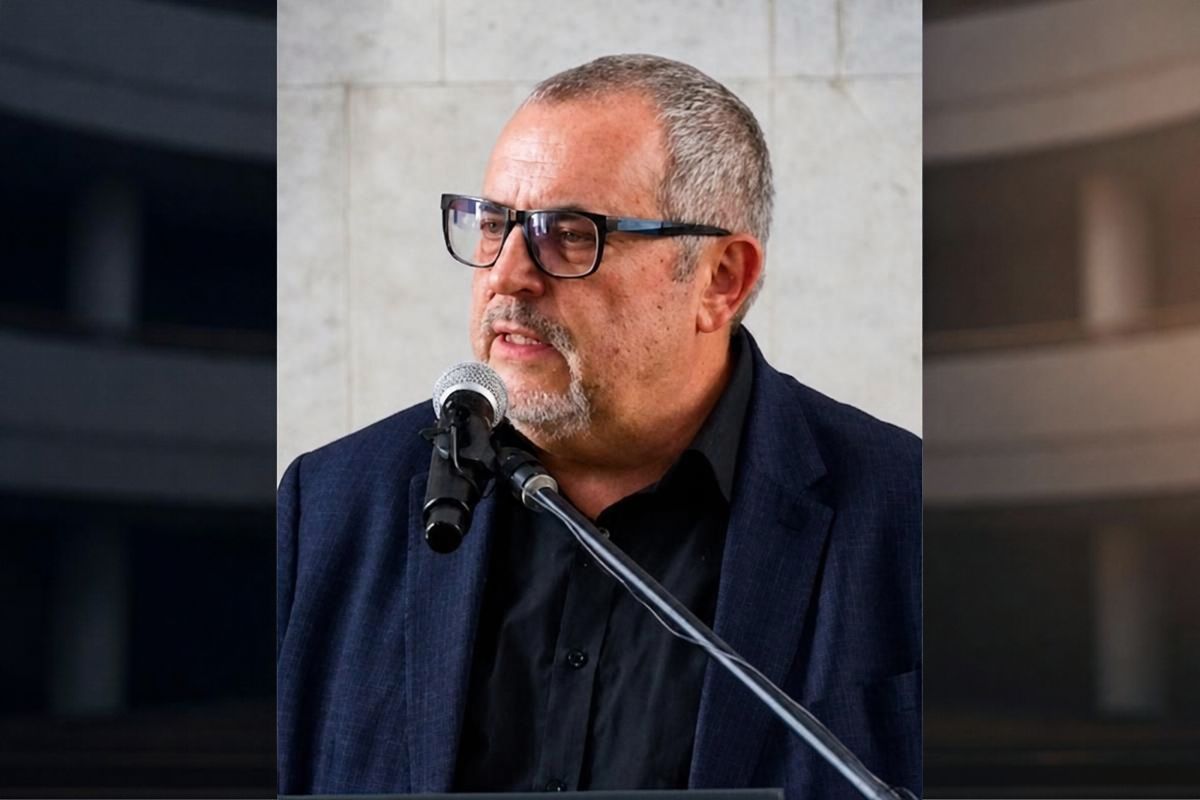
An interview with Boris Nadezhdin, Russian opposition politician. Interviewer: Vazha Tavberidze, Radio Free Europe/Radio Liberty.
In 2024, Boris Nadezhdin was Russia’s only anti-war presidential candidate, but he was barred from the election on the grounds that some of the signatures he had submitted were invalid.
In June 2026, he said he intended to stand in the State Duma elections scheduled for September. On July 10th, Russia’s Ministry of Justice declared him a “foreign agent”, and on July 17th, a court fined him for “displaying extremist symbols”. The ruling barred him from standing in elections for at least one year, ruling out his participation in the September vote. At the hearing, Nadezhdin cited his poor health and asked the judge not to order his arrest. We spoke to the Russian politician in late July. At the time, he said he had been prohibited from leaving the country. On August 3rd, however, Nadezhdin published a video on his Telegram channel with the Eiffel Tower behind him. We contacted him with additional questions, assuming that, having “broken free”, he might speak more freely and at greater length. However, because he had left his family and elderly parents in Russia, the politician declined to further elaborate.
This interview was conducted before his escape from Russia. It was first published on Radio Free Europe/Radio Liberty’s Georgian service here: https://www.radiotavisupleba.ge/a/33839094.html
VAZHA TAVBERIDZE: Do you expect to be imprisoned?
BORIS NADEZHDIN: Yes, that is entirely possible. We live in such a country and at such a time that it is entirely possible. I have criticized Vladimir Putin and the war for so long that nobody will forgive me for it. Moreover, the first steps have already been taken. I was prohibited from leaving Russia. I would probably already be in prison, but that prospect caused a major outcry in the West, so they merely postponed it and imposed only a symbolic fine on me. Being held in a Russian prison is hell, a catastrophe. I would not wish it on anyone. My large family is therefore suffering greatly. I have a wife and four children, two of whom are minors, aged 14 and 12, as well as elderly parents.
Have you considered leaving the country?
Yes, but I was prohibited from leaving Russia and from taking part in elections. That is their modus operandi. This is how they try to destroy people first morally and then physically. The main question I was asked was whether I intended to leave the country. I answered: “Of course I do not want to leave, but my family is suffering terribly and is effectively forcing me to go in order to survive.” After I said that, I was prohibited from leaving the country. Our state services made that decision at two o’clock in the morning. In Russia, things like this no longer surprise anyone.
Where do you think Russia is heading?
What Putin is doing, particularly in recent years, is pushing Russia towards chaos. There are already signs of chaos in the country, and unless something changes, we may face catastrophe. What happened in the 1990s must not be repeated. Nobody wants a revolution or a civil war. I genuinely do not want my people once again to face problems with water, electricity, gas and security.
In this situation, do you think the Russian opposition can be relied upon?
I have their support, but I am not the only person under attack. Many people are being targeted now. In other words, Putin’s regime is trying to teach a lesson to everyone who opposes it, while portraying matters as though we are acting against the country rather than against Putin’s destructive policies. On the one hand, authoritarian regimes can remain in power for a very long time, and Russia has an authoritarian, even totalitarian, regime. You probably know what happened after Stalin and after power changed hands. On the other hand, however, such regimes can collapse within days, as happened in 1991. I remember it well because I was a deputy in the Soviet Union. Everything appeared very stable, and 90 per cent of the population voted for the Communist Party. Then everything collapsed because people’s patience ran out. They stopped believing in the government and began attending demonstrations. I do not want the same scenario to be repeated now. I hope that the government, or at least part of it, recognizes the risks, releases political prisoners, somehow turns away from the path of war and lifts these foolish restrictions that Putin is now imposing. After all, these are his decisions.
Do you believe Russia will ever change for the better?
Russia will certainly change. How and when is difficult to predict. My supporters are young people. At meetings, I tell them: “Those of you who were born when Putin was already president, raise your hands.” Nearly one in three raises a hand. That means many of them are 25 or younger, and because they attend my meetings, they clearly no longer want this regime. That is why I say Putin’s government has no future. Of course, this does not mean that it will collapse and be replaced very soon or quietly. We will have to wage a long-term struggle. Strategically, however, this regime genuinely has no future. The younger generation wants to live in a peaceful, free and developed country.
Do you consider Putin a legitimate ruler?
To begin with, things initially went well for Putin, and many people were satisfied with his presidency. Within the political alliance that included Boris Nemtsov and Sergei Kiriyenko, we represented the opposition team. But when we met Putin, he presented himself as someone who wanted Russia to become a European country. The crisis of the 1990s had supposedly ended, and the economic situation had improved... In recent years, however, he has made such fatal mistakes, including launching the war against Ukraine, that he is doing nothing less than steering the country in an authoritarian direction. As for his legitimacy, that is an interesting question. Yes, formally he is legitimate because a majority of Russians voted for him. How that happened is another matter. There were no honest and objective elections. In recent years, everything in our country has been formal and illusory, just like Putin’s legitimacy and democracy in Russia.
Several days ago, the Public Opinion Foundation published a poll on trust in Putin which, incidentally, indicates an unprecedented fall in his rating since the war began. Even so, the reported figure of 66 per cent is higher than it really is. What I mean is that no leader in any European country enjoys such a level of trust. But, as I have already said, he is the authoritarian ruler of an authoritarian country, and his rating must always be high. Just a few months before the collapse of the Soviet Union, the communists also had a rating of 99 per cent. After all, at least formally, we no longer live under Soviet rule or its legacy. In Putin’s Russia, there is formally a democracy and elections are formally held. His rating has been falling since February, but formally it remains high. And all this is happening while Moscow, the capital of such a vast country, is attacked by Ukrainian drones day and night and major oil facilities have to be guarded. In short, the situation is deteriorating. It is also obvious that this will not stop. That is why I say this regime has no future.
In these circumstances, what would you say to the Russian people?
What I have been saying for a long time. There must be peace in the country. We must live as a free and peaceful nation. It sounds absurd even to have to say this, but we should have access to the internet, live as we choose, vote for whomever we choose in elections and not have Ukrainian drones flying over our heads when we go outside. Our people have a right to that.
Do you want Ukraine to win this war?
Of course not. Why would I want that? The horror is that neither Ukraine nor Russia can win. More precisely, the Ukrainian and Russian armies cannot defeat one another. The Ukrainian leadership hopes that the Russian government will collapse. Russia, conversely, hopes that Volodymyr Zelenskyy’s government has only days left. This situation could continue for years, causing people on both sides to die. People are dying every day in both Ukraine and Russia. Missiles and drones in both countries are destroying oil refineries and power stations, striking residential buildings and killing people. The war could therefore continue for decades, as wars did in the Middle Ages. It is true that there is no democracy in Russia today, but the hereditary transfer of power is still impossible.
It is difficult to agree with you here. Power may not be passed down through the family line, but Russia has experience of transferring it in other ways.
I understand what you mean. That is precisely why I am trying, even at the cost of my life, to bring about a change of power in Russia. When people ask me what will happen after Putin, I answer that Putin may follow the path of the Russian emperor Nicholas I, Russia’s authoritarian ruler in the 19th century. The Crimean War began at his initiative, and he lost it. The forces of the coalition opposing him, Britain, France and the Ottoman Empire, did not enter St Petersburg. Nevertheless, Nicholas found himself in a very difficult position and died soon afterwards. His successor, Alexander II, was forced to accept the terms of the Treaty of Paris. He also introduced reforms that would certainly be described today as liberal-democratic. He changed the judicial system and the Civil Code.
Putin is now in the position of Nicholas I. He too began well, and then everything developed as we can now see. Whoever becomes his political successor, certainly not his biological successor, events will unfold as they did under Alexander II. A senselessly initiated war has never brought a good outcome to any country.
Copyright (c) 2025 RFE/RL, Inc. Used with the permission of Radio Free Europe/Radio Liberty.
Boris Nadezhdin is a Russian opposition politician. He served in the State Duma from 1999 to 2003.
Vazha Tavberidze is a journalist with Radio Free Europe/Radio Liberty Georgian service.