Why is the German left winning without turning to the right
Krytyka Polityczna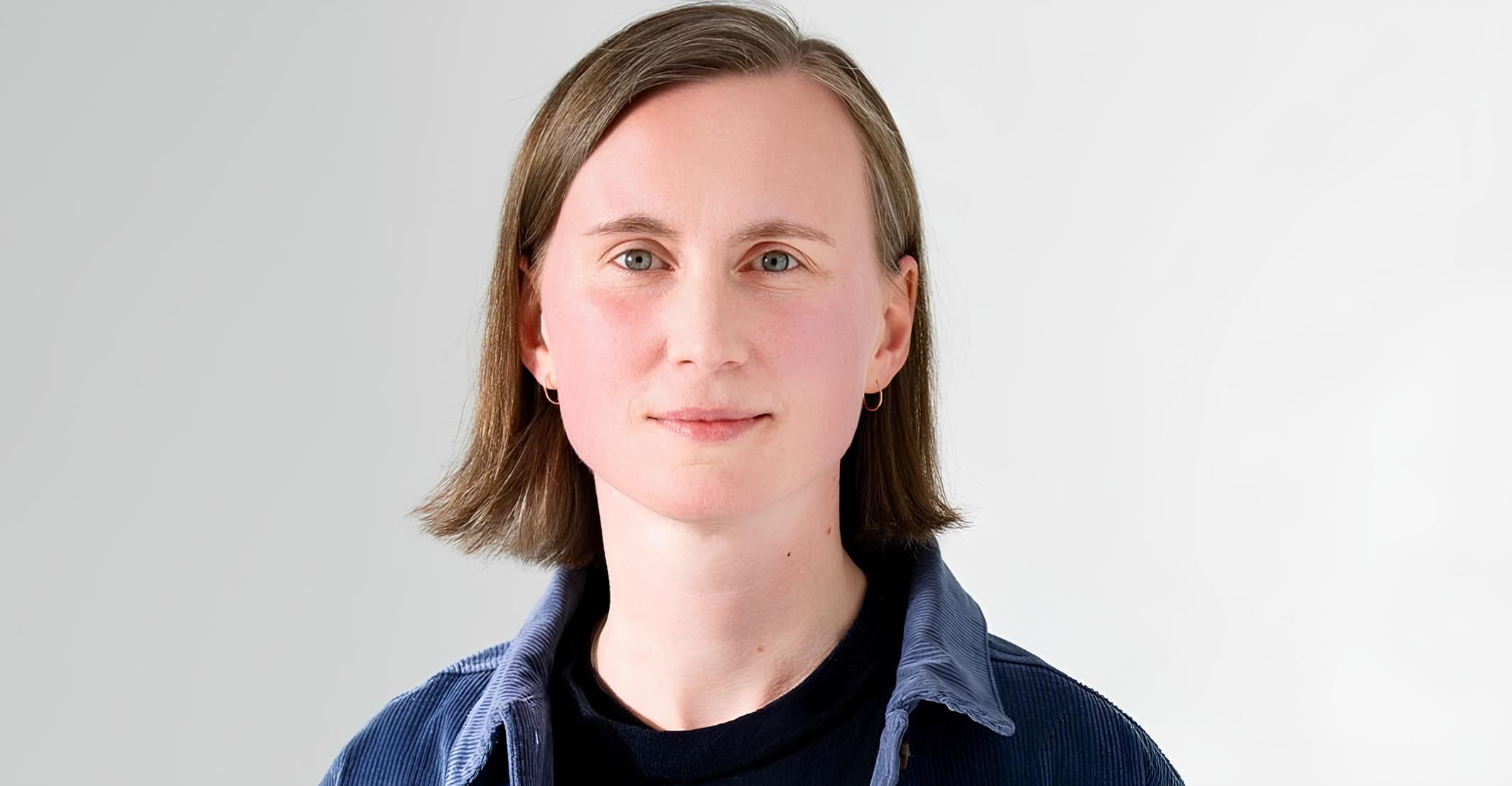
While the Polish left has been fighting for years to regain influence on society, Die Linke is experiencing an extraordinary renaissance, although it was almost dead not long ago. Now it may win the elections in Berlin. The post Why the German left is winning without turning to the right first appeared on Krytyka Polityczna.
Just a few years ago, the German Die Linke was fighting for political survival. On Sunday, it has a chance to become the strongest party in Berlin. In the latest representative polls, it is gaining 21–23% support, slightly surpassing the Christian Democratic CDU. For comparison: in the last elections in Berlin in 2023, it received only 12.2%.
One of the people observing this comeback from a local political perspective is Maria Bigos, who comes from Poland. A 41-year-old social and cultural anthropologist, since 2021 she has been serving on the Pankow district council as a representative of Die Linke, where she currently leads her party's faction. On Sunday, she is running for the Berlin House of Deputies in the Pankow 6 district, while also holding third place on the district list of Die Linke. Her chances of winning a seat are high.
Bigos was born in 1985 in Ustrzyki Dolne in the Bieszczady Mountains and as a small child moved to Germany. She grew up first in Bremerhaven, then in Bavaria, and has been living in Berlin for over twenty years. Besides her activity in local government, she now works as a referent for the Die Linke faction in the Bundestag. While in Poland the left has been fighting for years to regain influence in society, in Germany its more radical part is experiencing an extraordinary renaissance.
Just before the Berlin elections, we talk with Maria Bigos about how Die Linke managed to do this, why door-to-door conversations play such an important role in this strategy, and how fear for social security does not have to automatically strengthen the far right – and what the Polish left could learn from German experiences.
Tomasz Kurianowicz: On Sunday, Berlin elects a new parliament, and your party could become the strongest group in the city. Polls show Die Linke has over 20% support. Your candidate for mayor, Elif Eralp, a Berliner of Kurdish-Turkish descent, has a real chance to lead the government of Germany’s capital. In Poland, the left can only dream of such results today. How did this happen, and what has changed, given that you previously held only fourth place in the Berlin House of Deputies?
Maria Bigos: Interestingly, our demands have remained very similar. What has changed primarily is that people have started paying attention to us again, and a turning point was the Bundestag elections in 2025. At that time, Die Linke was practically written off, yet we managed to mobilize many people, especially young ones.
One of the key figures was Heidi Reichinnek, the then leader of our election campaign. Thanks to very expressive speeches and social media, she reached people we previously had little access to. At the same time, in Germany, a very intense debate was ongoing about how conservative CDU treats the far-right AfD.
Are you referring to the big migration debate just before the Bundestag elections? In January 2025, Friedrich Merz pushed through a bill in the Bundestag proposing significant tightening of migration policies – for the first time consciously accepting that the majority would be achieved solely through votes from the far-right AfD.
Yes. That alarmed many people. Among other reasons, it made people start wondering: what exactly is Die Linke doing? What does it stand for? Previously, many had a certain, often negative, image of us. This is also related to the history of our party. Especially many young people in 2025 looked at us more closely and discovered that the party they see today does not match that image.
But I think something even more important is this: we go out to the people. Many in Germany are exhausted by everyday life or are in a situation where the very foundations of their existence are threatened. They lack the energy to follow politics and gather information on their own. That’s why we go door-to-door. We don’t stand on the threshold to chat with people and bombard them with our message. We ask: how are you? What is your biggest problem? What’s happening in your neighborhood? We don’t start by explaining our answers to people. First, we ask about their problems.
Whom do you meet during these conversations?
The most diverse people. Moreover, our program priorities also result from these conversations. If we still hear that rents are catastrophically high and threaten to push people into poverty, policy must respond to that. The same applies to public transportation. If one ride in Berlin costs four euros, and a round trip eight, it might not be a big problem for someone earning good money. But for a teenager getting 15 euros in pocket money weekly, it looks very different. Ultimately, it’s about the possibility of leading a good and safe life. People don’t want to constantly fear losing their apartment or their livelihood.
At first glance, it sounds paradoxical: precisely where people struggle with poverty, poor infrastructure, and lack of social security, the left party should be especially strong. Yet in Saxony-Anhalt, AfD just won with 43.8%, while Die Linke only got 8.6%. Why does the far right often benefit from this, not the left?
Because lack of social security doesn’t automatically make people turn to the left. I wouldn’t simply reduce it to the East and West or city and countryside divide. What matters most is the conditions in which people live and whether politics still reach them. In regions where infrastructure is disappearing, schools are overloaded, and people are constantly busy just making ends meet, eventually they run out of time and energy to engage in politics. Those who feel their basic existence is threatened are more susceptible to simple explanations.
Which AfD offers them.
AfD operates very strategically there: it uses emotional messaging and offers simple answers to complex problems. We see this also in Berlin. Prenzlauer Berg and Buch are two parts of the city belonging to Pankow, one of Berlin’s twelve districts. Both are located in the former East Berlin, but socially they are two completely different worlds.
In the closer-to-center Prenzlauer Berg, AfD is not yet so strong. In the peripheral Buch, where there are still significant needs for infrastructure development, it’s different. So, you can’t simply say: here’s a cosmopolitan metropolis, and there’s the abandoned East. During door-to-door conversations, I also meet AfD voters. Some of them don’t even know exactly what their party’s program positions are. When I explain the individual demands, they say: “Actually, I don’t want that at all.” But at the same time, they repeat: something has to change. There’s a lot of protest and anger in that.
In the 2025 Bundestag elections, AfD was the strongest party in Marzahn-Hellersdorf, another district in the former East Berlin, with 31% of the votes.
Exactly. That’s why we need to be careful with the statement that Berlin is different from Saxony-Anhalt. There are also areas here where AfD is very strong. And that worries me – even though I am also pleased with the strength of Die Linke. The stronger AfD becomes, the more it tries to present itself as a normal democratic party. And I don’t see it that way.
In Poland, there is also an ongoing debate about how to treat voters of the nationalist right. Would your answer therefore be: do not exclude, but talk to them?
With those we can still reach – yes. If in a conversation with an AfD voter I immediately start attacking the party, he quickly feels attacked himself. Then I won’t reach him, and I’ll even achieve the opposite effect. That’s exactly what AfD exploits: “We against those above who despise you.”
That doesn’t mean we should trivialize AfD. We need to clearly state that its politics are far-right. But not every voter is aware of this, even if it’s obvious to those interested in politics. Some people are really bothered by completely different problems, so they don’t pay close attention to the party’s program or strategy. However, it’s also wrong to turn towards AfD and adopt its positions on various issues, as CDU does. Why would people choose a copy when they can vote for the original?
You were born in Poland and moved to Germany as a small child. What role does Poland play in your life today?
A big one. Polish is my native language, but my relationship with it is complicated. My mother was very keen for us to adapt to life in Germany. As soon as a German-speaking person appeared in the room, we switched to German. I had to learn to read and write in Polish mostly on my own. That’s why my active vocabulary has somewhat faded. But I have no problem understanding: I watch Polish news, listen to Polish radio and podcasts. Now I am deliberately looking for a language group with other Polish-origin people who have similar problems. Poland is a very important part of my identity, especially the region I come from – former Galicia.
The Polish emigration to Germany is often presented in Poland as a success story. However, you also describe its other side: the pressure to assimilate.
Yes. At school, I almost didn’t speak Polish, even though there were other Polish-speaking students. I felt that speaking Polish was somehow wrong. The image of Poland in Germany was very negative at that time. We were called names, and all those stereotypes about Poles were prevalent. I also experienced discrimination and harassment. In the case of German, it worked the other way around: I always felt I had to speak it especially well – everything as correct and precise as possible. As Emilia Smechowski describes in her book We, super-immigrants, education was very important in my family.
Did religion play any role in your life and development?
Maybe it will surprise you: I am left-wing and queer, yet also religious and raised in the Catholic tradition. Among leftists in Berlin, this is not a particularly common combination. I was baptized in the Catholic Church, and liturgy is deeply rooted in me. For me, solidarity is essentially a political extension of loving one’s neighbor. I had a period when I distanced myself from the Church and faith, but for several years now I have been approaching them again. Faith is something personal for me. I am not institutionally connected to the Church and I do not pay church tax. That is a conscious decision. I evaluate many things in the Churches very critically and advocate for a strict separation of Church and state. However, this does not mean I have abandoned my faith or Catholic upbringing.
The German left has undergone a serious split in recent years. Sahra Wagenknecht left Die Linke and founded BSW – a left-wing group on economic and social issues, but clearly more conservative on migration and social issues, opposing arms supplies to Ukraine and advocating for an agreement with Russia. The same debate about whether the left should regain conservative voters is ongoing in Poland – although, regarding the attitude towards Russia, the differences are significant. You observed the split related to Wagenknecht very closely.
I work for the Die Linke faction in the Bundestag and started there in 2022. When, as a result of the split, the then parliamentary faction disbanded, I found myself among the staff who lost their jobs. So I observed this conflict from the inside as well.
For me, anti-fascism is one of the fundamental values of left-wing politics. On the level of programmatic declarations, one cannot equate BSW with AfD. However, I see a clear shift to the right in BSW – mainly in approaches to migration and in adopting enemy images and themes that previously mainly came from the right. Saxony-Anhalt, in my opinion, also shows where such a strategy can lead: BSW has failed to weaken AfD and, on the contrary, seems to intentionally strengthen it. If it tries to regain right-wing voters by mimicking their political logic or even helping AfD to gain positions of power, it ultimately strengthens the original. It’s like pouring gasoline on the fire.
Could what happened after the split serve as a lesson for the Polish left?
I don’t know Polish party politics well enough to advise the Polish left. But based on our experiences, I would say: it’s crucial to seriously address the concrete needs of people.
In Berlin-Pankow, for example, we publish our own newspaper explaining what is happening in our district’s politics. We started with a circulation of 2,500 copies, now we print 10,000. We distribute it ourselves in neighborhoods. We also hold office hours for residents, offer free social and rental law advice, neighborhood meetings, and door-to-door conversations. It’s also important to show that people’s engagement produces tangible results. If you keep asking about their problems, but nothing changes, it only leads to greater frustration.
At the same time, Die Linke achieves great success on TikTok and other social media. Is the secret therefore in combining modern digital communication with very traditional party work – going door-to-door?
I think both play an important role. Right-wing parties are very active on social media. Of course, democratic forces must also be visible there and serve as a counterbalance. But social media cannot replace real relationships between people. When someone stands at your door, listens to you, and then you meet that person again in your neighborhood, it’s a completely different thing. Especially people who feel politics ignores them need to see that their needs are genuinely becoming part of someone’s political plans.
In some parts of eastern Germany, AfD is already so strong that there’s an argument that it should be allowed to govern at least once so it can “discredit” itself and lose its appeal. What do you think about that?
I don’t believe that at all. AfD has people who think strategically. If the party takes responsibility for governing, it won’t start implementing everything in its programs the next morning and turn everything into ruins. It knows very well that everyone is waiting for it to “discredit” itself. Changes would happen gradually. And that’s the danger: it would be a creeping process.
For many observers, especially, it is alarming that the right and far right are also reaching young people. At the same time, Die Linke has managed to rebuild a young electorate in Germany. Are these two very different political offers competing for the same generation today?
In any case, I am very concerned about the development among youth with far-right views. For someone who is 16 today, AfD has been part of their life practically since childhood. These young people grew up knowing it was part of the party system. It’s not at all obvious to them why others see AfD as a party outside the normal democratic spectrum.
Among youth with far-right views, we often see difficult material conditions, personal experiences of violence, limited access to education, or a very strong need for community. Right-wing groups offer them a sense of camaraderie and belonging. That’s why social issues mean much more to me than just how much money someone has in their account. It’s about neighborhoods, places where people can meet, a sense of belonging somewhere. If people only live next to each other but have nothing connecting them, society fragments. That’s why good neighborhoods are also a guarantee of peaceful coexistence.
If you could pass on one thought to Poland based on your experiences: can the left really still reverse Europe’s shift to the right?
Yes. I am an absolute optimist. Not all my life experiences have given me reasons for such optimism. But I don’t want to give up hope. I am always interested in: why does a person behave in a certain way? What needs are behind that? And what can we change? If people have a stable life and know there is a safety net to support them in difficult times, it also changes society. That’s why we must act early and build structures that give people security, community, and participation. I deeply believe this is possible.
The post Why the German left wins without turning to the right first appeared on Krytyka Polityczna.