How does the success of AfD relate to the interests of workers?
Kapitál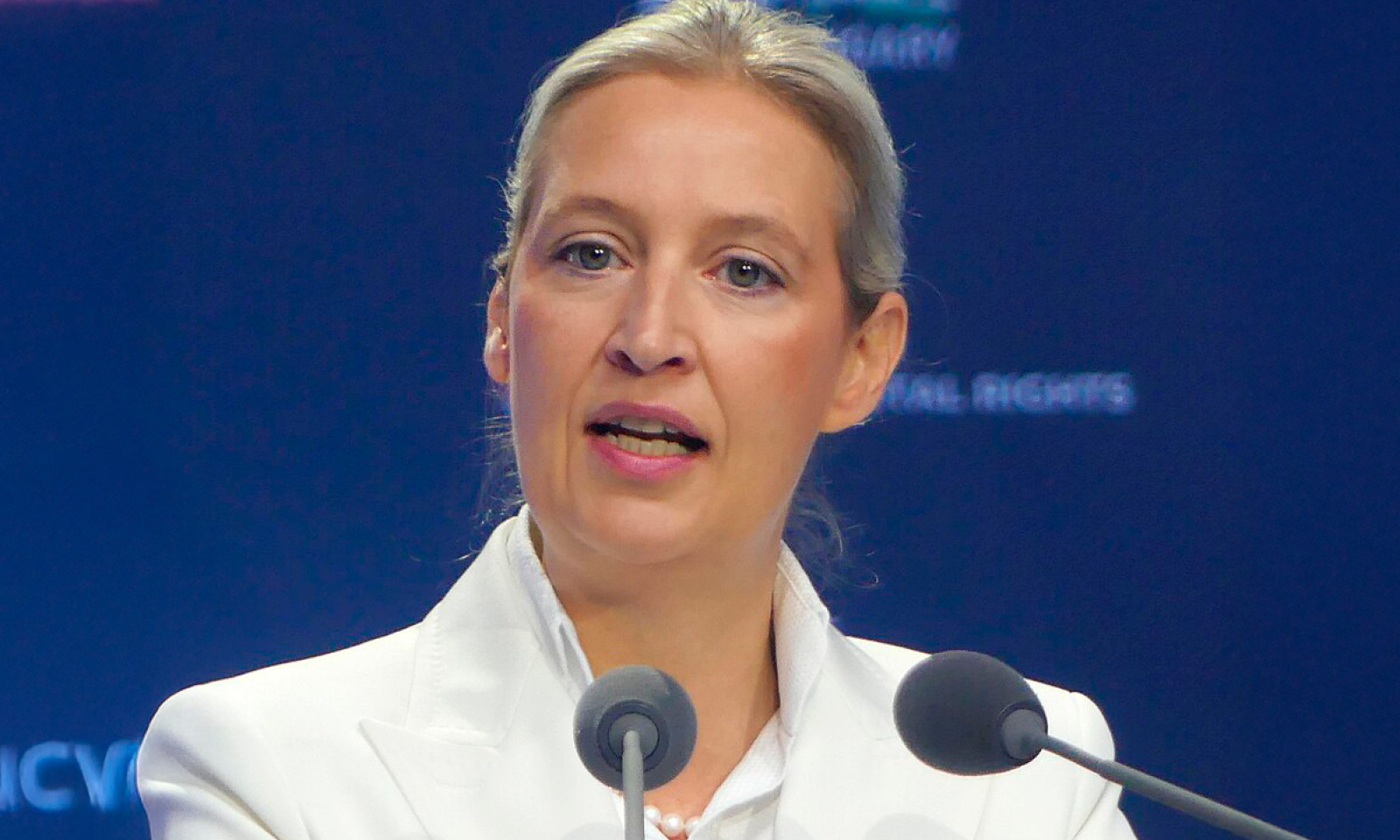
Fifty-nine percent for the far-right Alternative for Germany (Alternative für Deutschland, AfD), six for the Social Democratic Party, and seven for the left-wing Die Linke. This was the support among the working-class electorate in the September state elections in Saxony-Anhalt. Meanwhile, AfD is publicly supported by the world's richest person, Elon Musk. Its co-chair Alice Weidel worked for Goldman Sachs and Allianz Global Investors before entering politics, and until 2021, she was a member of the Friedrich A. von Hayek Society, an organization of advocates of radical free-market liberalism. How is it that, on one hand, the hopes of workers meet the interests of big capital? And what does this alliance reveal about the weakening of the left and the ability of the far right to garner support across social classes?
Fifty-nine percent for the far-right Alternative for Germany (Alternative für Deutschland, AfD), six for social democracy, and seven for the left-wing party Die Linke. This was the support among the working-class electorate in the September regional elections in Saxony-Anhalt. Moreover, AfD is publicly supported by the wealthiest person on the planet, Elon Musk. Its co-chair Alice Weidel worked for Goldman Sachs and Allianz Global Investors before entering politics, and until 2021, she was a member of Friedrich A. von Hayek-Gesellschaft, an association of advocates of radical free-market liberalism. How do hopes of workers meet the interests of big capital on one side? And what does this connection reveal about the weakening of the left and the ability of the far right to gain support across social classes?
The success of AfD among workers can be considered within a broader discussion about the phenomenon of so-called working-class dealignment – that is, the weakening of the traditional link between the working class and left-wing and social democratic parties. Of course, it’s not just about a shift from the left to the far right. New AfD voters come from various political spectrums, including the political center, and also from among non-voters. Thus, AfD benefits from a broader loosening of political ties.
Whom is the left actually losing?
The bond of workers to the left was once strengthened by trade unions, party organizations, associations, and the experience of collective advocacy. Decades of neoliberal policies, however, have atomized society. As these bonds weaken in society, social discontent and overall frustration can be politically reframed into language of migration, security, identity, and resistance to elites. It is precisely in these areas that AfD successfully occupies space.
New AfD voters more often than the party’s stable core hold left-leaning economic positions, such as supporting reducing inequalities or higher minimum wages, but migration remains the main issue. This situation can be explained by a sense of relative deprivation, that is, the impression that one is overlooked by society while others receive more than they deserve. Fears of declining living standards and job loss due to digitalization and decarbonization of the economy also contribute to support for AfD.
However, even at regional levels, it is not true that the more migrants, the higher the support for AfD. It appears that in areas with a higher proportion of foreigners, support for AfD is actually lower. Although migration is an effective mobilizing issue for AfD, it is not sufficient to explain its gains. To understand why the party has such support in the former East Germany, one must look at longer-term structural causes. Interestingly, there is also strong support for AfD among young people, while support among the oldest voters is significantly weaker. Bulgarian political scientist Ivan Krastev aptly notes that the slogan “never again” has limited longevity, and with fading living memory, the lessons learned from it weaken as well. The threat of fascism ceases to be a deterrent.
Legacy of Unequal Reunification
The assumption held by many, including former West German Chancellor Willy Brandt, that a united Germany belongs to itself and will grow together, has not fully materialized. The integration of former East Germans into the common state, which began in 1990 and aimed to rid them of the residues of the foreign state-socialist system, did not happen as a simple merging of two equal societies.
The transformation brought about fundamental and immediate changes, but in the long run, it is evident that almost every conceivable area of society still shows barriers between the West and East. The most pronounced differences are in the economy. In the regions of the former East Germany, privatization and deindustrialization led to a sharp reduction in the industrial base, high unemployment, and weakened social security. Many regions also experienced a significant outflow of residents, especially young and skilled people.
Accumulated frustrations and dissatisfaction with the political system, in which traditional parties supposedly do not act in the interests of the people, led in the 2021 general elections to the following voting pattern in East Germany: more than a quarter of voters did not vote at all, nearly 16 percent voted for AfD, and seven percent for Die Linke. Almost half of East Germans thus rejected mainstream political parties. The other election results are merely the culmination of this ongoing trend.
Some try to explain this with so-called Ostalgia, nostalgia for the former regime. Although positive memories of some social security and everyday aspects of the GDR exist, the results of free elections show that East Germans initially voted mainly for established parties, so Ostalgia alone does not explain the later rise of AfD. The party simply manages to exploit discontent by framing it as conflict with “the system,” elites, and even migrants. But where do its top figures come from, and what links to traditional right-wing or capital are present behind AfD?
Who Speaks for AfD?
The personnel background of AfD is not entirely separate from the established right or economic circles. Alice Weidel, co-chair and one of the main faces of AfD, worked for Goldman Sachs and Allianz Global Investors. Ulrich Siegmund, leader of AfD in Saxony-Anhalt, joined the CDU at 18 and worked in marketing before entering politics. Max Otte, economist, investment manager, and then-chair of the conservative Wertunion association within CDU/CSU, accepted AfD’s nomination for federal president while still a CDU member. Alexander Gauland, a former co-chair of AfD, and co-founder Albrecht Glaser also came from CDU.
The most striking example of this dimension is Elon Musk. AfD repeatedly supported him on the platform X, and Weidel publicly congratulated him after her electoral success. His support is not only based on personal opinion but also on the ability to use his own communication platform to increase the party’s visibility. Besides Musk, several wealthy German entrepreneurs support AfD, such as Winfried Stöcker, who donated one and a half million euros to the party. More important than the list of wealthy supporters, however, is the policy AfD offers. The party rhetorically aligns with free enterprise, competition, entrepreneurs, and medium-sized companies. Its program advocates lowering corporate taxes, abolishing property and inheritance taxes, deregulation, and limiting state intervention in the market. Thus, AfD is clearly not a left-wing party but combines social rhetoric, nationalism, and pronounced market-liberal elements.
These links reveal the permeability of the boundary between the far right, the traditional right, and parts of the economic elites, raising the question of whether AfD offers some interests a new political channel that, for example, the exhausted CDU can no longer effectively provide.
Before seizing power, Nazis addressed small entrepreneurs and middle classes with promises of protection from big businesses, financial capital, and the left. However, in the context of the Weimar crisis and increasing chaos, a political turning point occurred when parts of large industry and conservative elites began supporting them as a viable alternative to the exhausted political system and organized left. This was not the only explanation for their success, but this support helped legitimize their rise to power. Paradoxically, after that, the protection of small businesses was subordinated to rearmament and militarization of the economy: large firms gained advantages, while the autonomy of small entrepreneurs and artisans shrank. The analogy with AfD lies in the question of whether, in the crisis of traditional parties, it can also become a more suitable political tool for some capital interests to promote their aims.
From Electoral Votes to Workplaces
The question of why AfD gains votes from workers does not end with elections. German trade unions have long pointed out that AfD rejects pro-worker measures. Behind the declared defense of “ordinary people,” they argue, lies a policy that weakens tools workers can use to promote their interests. Union membership alone does not automatically separate someone from the far right; among union members, there are also AfD voters. After its electoral success, unions in Saxony-Anhalt mobilized for a strong social state and democracy. They also warned that the result reflects economic insecurity, fears of job loss, and a lack of future prospects.
However, the far right does not only seek to gain votes but also to penetrate workplaces. For example, the association Zentrum presents itself as an authentic voice of employees against established unions and leverages links to AfD. Through emotional communication and staged closeness to workers, it competes over the interpretation of problems in workplaces and the automotive industry. Even established unions are not entirely open to labor migration. They fear that employing foreign workers could lead to wage dumping.
The union response to AfD is not entirely unified. Analyses show that mere union membership does not significantly change the likelihood of voting for AfD. At the same time, however, this membership is associated with a lower inclination toward far-right values, while experiences of helplessness and insecurity at work correlate with higher support for AfD. In this context, unions combine two approaches: clearly rejecting racism, discrimination, and the far right, and at the same time not ignoring social discontent and workers’ problems that the far right exploits. The goal is to involve dissatisfied people in joint advocacy and offer them an alternative interpretation of insecurity—based on solidarity and collective power, not exclusion.

The author is a historian
Text created with the support of the Rosa Luxemburg Foundation, with representation in the Czech Republic. The publisher is fully responsible for the content; the views expressed in the text do not necessarily reflect the foundation’s position.