Middle powers in a ruptured order: Why Poland and Ukraine matter for EU strategic autonomy
New Eastern Europe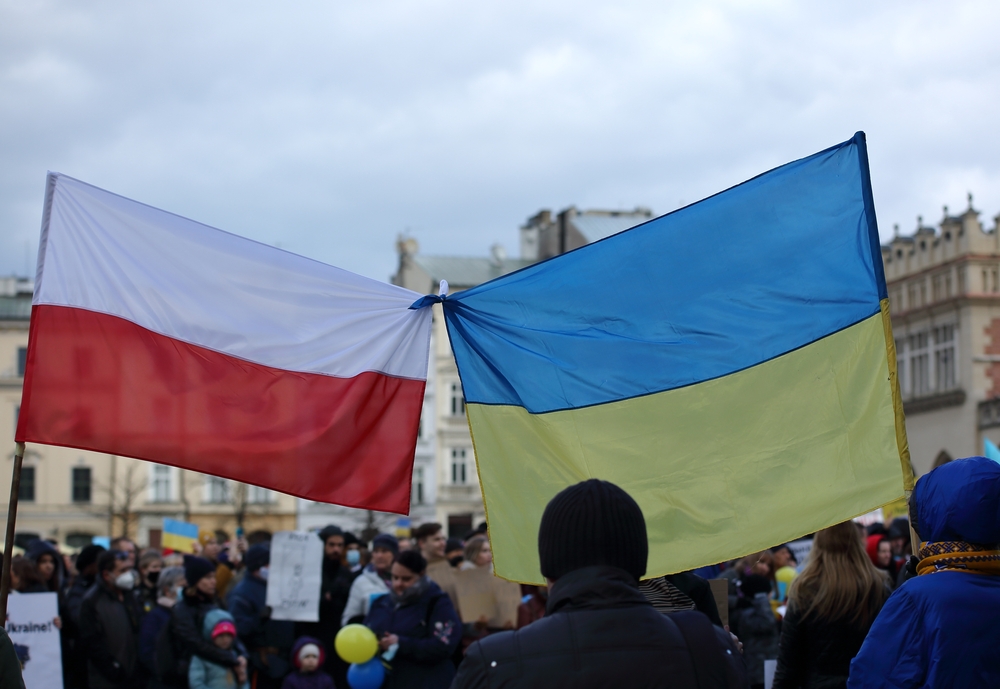
Russia’s war against Ukraine, the volatility of Trump-era American foreign policy, the rise of China, and the emergence of assertive authoritarian middle powers have made European strategic autonomy a necessity rather than just an ambitious aspiration. Ukraine and Poland, two Central and Eastern European states whose regional influence has often been underestimated, illustrate how middle powers can shape outcomes once reserved for great powers.
In January 2026, the Canadian Prime Minister Mark Carney used the podium of the World Economic Forum in Davos to warn that the world was living through “a rupture, not a transition” in the international order, in which great powers increasingly treat economic interdependence, tariffs and supply chains as instruments of coercion. His central claim – that middle powers are not powerless but must act together or risk being “on the menu” rather than at the table – has become a reference point for a broader debate about the future of democracies in the changing world order.
Scholars and analysts from Central and Eastern Europe have converged on a similar diagnosis. In a special 2026 edition of New Eastern Europe dedicated to this new disorder, Andreas Umland argues that the world as we know it is nearing its end and is increasingly being displaced by a system that presents itself openly as non-liberal, if not outrightly anti-liberal, reflecting the shifting preferences of powerful leaders. Wojciech Michnik links this trend to the fate of European security, arguing that the sense of Europe adrift in the emerging order stems from both external shocks and internal shortcomings: on the one side, the United States is signalling that Europe is no longer the central theatre of American strategy; on the other, Europeans themselves remain divided over how far they are willing to go in assuming strategic autonomy. Paul Bell frames the resulting predicament starkly, describing Europe as sandwiched between autocrats who, for their own distinct purposes, are each working to weaken it, undermine European policy and democratic values.
The case for European strategic autonomy rests on a structural observation: no single EU member state, and arguably not the Union as a whole in its current institutional configuration, possesses the sovereign capability to guarantee its security, prosperity or technological relevance if the assumptions underlying transatlantic and global economic integration continue to erode. Discussing EU strategic autonomy as independence (disengagement from external dependence), as responsibility (binding more closely with like-minded partners to jointly resist coercion), and as hedging (preserving room for manoeuvre between rival powers), Daniel Fiott argues that the EU’s ability to resist being wedged apart by Washington or Beijing depends less on a top-down Brussels-led strategy than on internal binding efforts among member states. When considering the role of middle powers in this context, the Central and Eastern European states play key roles: Ukraine’s resistance to the Russian invasion has served as the external shock that pushed EU member states towards a more responsibility-oriented posture, while Poland has played an important role in anchoring the Union’s defence posture around this model of autonomy, particularly at the initial stage of providing assistance to Ukraine and, in parallel, unprecedented investments in its own defence.
Ukraine, Poland, and the EU: middle powers in practice
The concept of the middle power has a long lineage in international relations theory, dating to debates at the founding of the United Nations, when Canadian and Australian diplomats sought recognition for states that, while lacking great-power capability, made disproportionate contributions to the war effort and collective security architecture. A middle power is generally understood as a state occupying an intermediate position in the international hierarchy: it lacks the capacity of a great power to determine systemic outcomes unilaterally, but possesses sufficient economic, military, diplomatic or normative resources to shape outcomes within a region or issue-area, typically through coalition-building and multilateralism rather than coercion.
Eduard Jordaan’s influential distinction between “traditional” middle powers – wealthy and stable democratic states, which tend to legitimize the existing order – and “emerging” middle powers, which are often semi-peripheral, more assertive regionally, and less committed to defending a status quo that historically marginalized them, remains analytically useful today. This distinction helps to comprehend the phenomenon of the rise of authoritarian and illiberal middle powers, in particular in the Middle East and Asia, which combine regional assertiveness with a transactional, sovereigntist posture toward international institutions. Thus, the challenge facing the EU is not simply that great powers behave without constraint, but that the “middle tier” of the international system, once assumed to be a natural constituency for a rules-based order, is itself becoming ideologically heterogeneous and, in some cases, corrosive of that order. Against this backdrop, it is in the EU’s vital interest to support the development and cooperation of democratically-oriented middle powers. Ukraine and Poland are critical cases in this regard.
Over the last four-plus years, Ukraine has offered a vivid illustration that a middle power can confront a far greater one and avoid defeat. Despite Russia’s overwhelming advantages in population, military-industrial capacity and nuclear status, Ukraine has not only resisted conquest since February 2022 but has imposed disproportionate costs on the aggressor, including long-range strikes deep inside Russian territory that have unsettled Moscow's calculations and prompted the previously sceptical Donald Trump to change his stance on Kyiv's chances. While Ukraine’s resilience has depended on external support, its agency in whole-of-society mobilization, drone-warfare innovation, and asymmetric strategy has been decisive.
In the first weeks after the invasion, Poland became the main logistical corridor for western arms transfers, delivering some of Ukraine’s earliest heavy equipment. At the same time, Poland absorbed the largest share of Ukrainian refugees, funding reception and integration at a scale unmatched elsewhere. This response was driven not only by threat perception and humanitarian imperative, but it also demonstrated Poland’s ambition to assert regional leadership. The country positioned itself as a key player in shaping the West’s response, providing lethal aid even before the invasion, and pressed larger western allies towards firmer positions. That early solidarity has since been reinforced by a genuine structural transformation: Poland’s defence budget has roughly tripled over the past decade, reaching the highest ratio in NATO – nearing five per cent of its GDP this year. The Polish armed forces have more than doubled since 2014, with plans to reach 300,000 personnel by 2035, making Poland the EU’s largest land force.
The EU’s collective response serves as a good example of what middle powers can achieve by acting together. When the US sharply curtailed assistance to Ukraine in early 2025, European aid did not collapse. Funding channelled through EU institutions rose from roughly half of total European assistance in 2022 to nearly 90 per cent by 2025, substituting for the American shortfall. The fact that a coalition of middle and small powers sustained Ukraine’s war effort without its largest former patron demonstrates that acting together, middle powers can substitute for the protection a single great power once provided.
Great powers are also starting to recognize the growing influence of middle powers. Through much of 2025, President Trump’s statements towards Ukraine were often dismissive, yet by mid-2026, following Ukrainian successes and the EU’s demonstrated capacity to sustain support independently, his rhetoric shifted. During this year’s G7 and NATO summits, Trump had begun praising Ukraine’s resilience, aligning more closely with European positions. This shift should not be assumed irreversible, but it is consistent with a basic realist logic: demonstrated resolve and capability, not appeals for sympathy, alter a great power’s calculus of respect.
A shared, secure future, not a contentious past
The clearest emerging illustration of complementary middle-power roles is in missile and drone defence, where Ukrainian experience and Polish industrial capacity are becoming genuinely interlocking assets. Following Trump’s announcement at the July 2026 NATO summit in Ankara that Washington would allow Ukraine to license-produce Patriot interceptor missiles, Poland proposed a trilateral framework with the US and Ukraine, under which production and maintenance would take place on Polish soil, drawing on an existing agreement Warsaw had signed with the US, Germany, the Netherlands and Sweden to host a European Patriot PAC-3 service centre. Polish officials have framed this explicitly as a way of combining Ukrainian operational knowledge with a secure, allied manufacturing base close to, but outside, the range of the heaviest Russian strikes, addressing both Kyiv’s need for scale and Washington’s concerns about producing sensitive systems inside an active war zone.
A parallel dynamic is underway in counter-drone defence. Ukraine’s forces have developed some of the world’s most combat-tested methods for intercepting mass drone and missile salvoes, downing over a thousand Shahed-type drones with a reported roughly 95 per cent success rate using low-cost interceptor systems. This expertise is highly valuable for Poland’s “Eastern Shield” programme and the broader European “drone wall” initiative launched with France, Germany, Italy and the UK after Russian drones repeatedly violated Polish and other allied airspace in 2025. Ukraine’s president, Volodymyr Zelenskyy, has explicitly offered to help Poland and other partners build “a joint, truly reliable shield against Russian aerial threats”, based on Ukraine's battlefield experience, while Polish and Ukrainian manufacturers already cooperate on joint training and production projects.
This critical cooperation, however, is being tested by an historical dispute which Europe can least afford at this moment. In mid-2026, a diplomatic crisis erupted after Zelenskyy renamed a military unit in honour of the Ukrainian Insurgent Army (UPA) – commemorated in Ukraine as a symbol of resistance to Soviet domination, but remembered in Poland chiefly as the perpetrator of the 1943–44 mass killings of Polish civilians in Volhynia (Wołyń) region. This moved was followed by the decision of the Polish president, Karol Nawrocki, to strip Zelenskyy of Poland’s highest state honour (which the previous president Andrzej Duda had awarded in 2023). This episode provides fertile ground for Russian influence campaigns to exploit growing anti-Ukrainian sentiment in Poland – sentiment already layered over the longer-running dispute over Ukrainian agricultural exports and EU accession terms. Ahead of Poland’s 2027 elections, these tensions risk complicating Ukraine's membership process through bilateral “memory politics”.
This dispute is one that Europe cannot afford, given that no other European state could replace Poland’s role as NATO’s principal logistics hub for Ukraine in the foreseeable future. Ukraine’s continued resistance is equally crucial for Polish security on NATO’s eastern flank. Thankfully, both governments appear to have shown that they can step back from the brink: Zelenskyy's decision to open historical archives on the Volhynian tragedy and authorize broader exhumations, and quiet diplomacy between the two presidents at the Ankara NATO summit, suggest that the relationship’s structural logic still outweighs its emotional politics. But this cannot be left to improvised de-escalation after each flare-up. Given how much depends on both countries’ security, Poles and Ukrainians have a direct interest in quarrelling less over an unresolved and painful past and cooperating more deliberately around a common European future, treating historical reconciliation as a standing diplomatic project rather than a recurring source of crisis.
Middle powers guarding Europe’s eastern flank
Against the backdrop of Russia’s war against Ukraine, the volatility of American policy under Trump, and the strengthening of authoritarian and illiberal tendencies globally, the European Union has been compelled to demonstrate that an alliance of medium and small powers can be an equally strong actor. This does not require uniform contributions from every state, but rather a smart division of responsibilities and specializations, within which countries apply their comparative advantages to promote shared European values, security, and prosperity.
Ukraine and Poland have adjacent, mutually reinforcing niches within this division of responsibilities. Ukraine has become the EU’s frontline of defence with advanced experience in modern warfare, drone technology and societal resilience under existential pressure. Poland has established itself as the logistical and political hinge connecting that frontline to the rest of the EU, while rapidly building its own military-industrial base needed to convert battlefield lessons into deployable European capability.
Their further strengthening and success as middle powers are crucial for Europe to achieve genuine strategic autonomy. What both governments and societies now owe each other, and the EU as a whole, is the discipline to keep that cooperation from being derailed by unresolved historical, political and even economic disputes, at precisely the moment when their own security and that of the whole of Europe’s eastern flank depends on getting it right.
Maksym Khylko is the chairman at the East European Security Research Initiative, and Associate Professor at the Institute of European Studies and International Relations, Faculty of Social and Economic Sciences, Comenius University.
Adam Reichardt is the editor in chief of New Eastern Europe and the co-host of the Talk Eastern Europe podcast and YouTube channel.