What is the mandate of Open Culture!? On cultural activism in times of moral nihilism
Kapitál
Open Culture Platform! (OK!) strives to defend values that contrast with the moral nihilism and cynicism of contemporary society. How to balance cultural battles, regime criticism, and the preservation of institutions in a polarized society?
Open Culture Platform! (OK!) was established at the beginning of 2024. Initially, it was founded as a result of a petition calling for the resignation of Minister of Culture Martina Šimkovičová, but from the start, OK! positioned itself as a platform with broader ambitions. It aimed to address long-term issues in Slovak culture, such as underfunding, working conditions of employees, and similar topics. One of its ambitions – without which it would not have been possible to effectively fight against Šimkovičová and colleagues – was from the beginning also the critique of the abuse of art and culture by various malicious regimes.
In point 2 of the principles of the OK! platform, approved on March 1, 2024, it states: “Engaging in cultural and artistic cooperation with authoritarian regimes, as well as with regimes that violate international law and conventions, is unacceptable.”
One of the regimes that today violates international law is undoubtedly the Russian regime committing a criminal aggressive war against Ukraine. The application of this principle in practice was visible, for example, on April 30, 2025, when OK! organized a protest against Anna Netrebko’s concert at the Slovak National Theatre. In the justification, the dimension of improving the image of the Russian regime during ongoing aggression was explicitly emphasized:
“Instead of our government taking the side of victims, it remains silent – or worse, shows sympathy to the aggressor.
While sirens sound in Kyiv, a concert by Anna Netrebko, who in the past supported Putin and pro-Russian separatism, is being prepared at the SND Opera in Bratislava. We perceive this as a bad signal and cynicism, that during a time of war, when children die and families lose their homes, a Slovak opera singer, who is on Ukraine’s sanctions list, performs with public officials present.
We also see as problematic the renewal of cooperation and guest appearances of Netrebko worldwide. (...)
Her performance at the SND venue can be exploited to create a positive image of Russia in Slovak society.”
Another regime that today violates international law is undoubtedly the Israeli regime, accused of committing genocide in Gaza, practicing apartheid on the West Bank, illegally occupying Palestine and parts of Syria, leading an aggressive war against Iran. We could see a further application of this principle in practice when OK! criticized the discussion about Douglas Murray’s book at the Arena Theatre.
Anyone who has followed Gaza in the last three years could not have missed Murray. What struck me most was his de facto trivialization of the SS and relativization of the Holocaust. To explain that Hamas is literally worse than Nazis, he wrote:
“The average member of the SS and other Hitler’s killing units was rarely proud of his daily work. Few of them felt that their lives should lead to shooting Jews in the back of the head and kicking their bodies into ditches.
Many spent their evenings drunkenly trying to forget. Nazi commanders feared a decline in ‘morale’. When the war ended, Nazis tried to pretend that Treblinka and other extermination camps never existed.”
This is, of course, a needlessly kind view of the SS, but it certainly captures Murray’s vulgar, ruthless tribalism. Neither the worst genocide in human history nor the industrial extermination of six million Jews can cast doubt on the ontological superiority of the white Western tribe.
Murray’s tribalist approach remains constant. The Israeli army cannot commit any crimes, the Israeli regime cannot do anything wrong. As one reviewer summed up his book, which was supposed to be discussed, “finding a mention of Israeli crime, or even a mistake, in it is like looking for whisky in Kuwait.” Three discussants of Murray’s book would probably not look for these mentions. For example, Grigorij Mesežnikov still in May 2025 categorically claimed that “Israel does not commit war crimes in Gaza.”
OK! in its critique mentioned, among other things, the lack of balance, the absence of an opponent. But this is not a principled problem. Non-confrontational, exploratory debates are often more fruitful than debates where participants try to defeat each other. It’s more about the subject of exploration. The question of genocide in Gaza is a legitimate subject of discussion in reports of the world’s leading human rights organizations and in Israel, in professional journals, among genocide experts, before international courts, etc. A categorical statement that the Israeli army has committed no war crimes in Gaza is now, on the contrary, completely marginal and extreme.
OK!’s approach here was the same. In both cases, it expressed opinions on events within the institutions being established – the SND or the Arena Theatre – which effectively enhanced the image of regimes violating international law. Neither Netrebko nor Murray have institutional ties to these regimes. OK!’s approach was based on the same principles and values. Values that are constantly in sharp contrast with the cynicism and moral nihilism of the Slovak government.
Cultural boycotts and their limits
In neither case did OK! call for a boycott; it only expressed a critical stance, but these nuances are often lost in debates. Perhaps they are also unnecessary: criticism can be read as a stance that such concerts and discussions should not take place in reputable institutions.
However, such actions are always delicate. One thing is that determining what is so marginal that it becomes unacceptable is always a thin ice, and it’s better to err on the side of not disturbing. The price of diverse exploratory debates is also that some of those more extreme are tolerated. The second is that any such public action appeals to a more indefinite audience – it should not only mobilize the base but also persuade people and win them over. Cultural boycotts in this regard mainly carry the risk of appearing too strict.
With Netrebko, this was not perceived so strongly, as supporters of OK! in the cultural and broader community had almost a homogeneous opinion on the matter. But if you step even slightly outside the bubble, you quickly realize that the event did not win many new hearts and minds. Nuanced arguments about Netrebko’s political positions are immediately reduced to “opera singer is forbidden to sing just because she is Russian.” It seems like unjust persecution. OK! also needs to persuade broader masses. Protests are a good way to boost morale in the face of increasingly devastating government steps, but from the perspective of reaching a wider population, they are a step backward.
With Murray, the dividing lines stretched across the cultural community. Reactions on social networks often resembled internet shaming of the March Great Cultural Mobilization, only this time coming from within. Accusations ranged from “forbidding discussions” to absurd claims that OK! supports Hamas ideology, and there were also standard accusations of antisemitism. Similarly, it was about furious bacchanalia, paradoxically directly from the people OK! fights for. Everything OK! has done over the years for Slovak culture has been forgotten by some, and some members of the cultural community have adopted a scorched-earth tactic against OK!
It is clear that such an approach is irrational and destructive for Slovak society. However, this phenomenon is not enough to just record; it must also be analyzed. The disadvantage of cultural boycotts is that they are always personal – or, more precisely, personified. The “undecided,” whom they should partly influence, are placed in an acute dilemma: accepting a certain political position, a certain analysis – no matter how objectively supported and argued – is directly linked to the “rejection” of a particular person. They are forced to resolve a dilemma they desperately try to avoid. After all, who helps Ukraine, and at the same time approves war crimes in Gaza? How to approach them? If no one forces you to resolve the dilemma, you can simply choose to ignore their stance on Gaza and see only the good.
When the dilemma cannot be avoided, the more common reaction is to side with a particular person. Personification may seem excessive, it may seem harsh, and behind it, there may be a fear that one might someday become a target of a boycott oneself.
Polarization
Most people suspect that what the Israeli regime commits in Gaza and on the West Bank has now crossed so many red lines that it is indefensible. And so, they do not even defend it directly. But a deeply rooted affinity for Israel (still carried by a possibly justified Slovak guilt for the Holocaust) remains. The proposed solution to this contradiction is silence, “so as not to polarize.”
Whoever breaks the silence first, and first criticizes the Israeli regime, often faces sharp attacks, which include vulgarity and open lies. The fact that these remain without consequences has a intimidating function. It is an experience that can be paralyzing and should be paralyzing. It aims to restore the pact of silence.
If someone still decides to continue, they almost always delve into study to defend themselves against accusations. The more you read about Palestine and Israel, the more the apartheid seems indefensible, the more you realize the systematic crimes against humanity committed by Israeli regimes. The more urgent it becomes to speak out and try to prevent these crimes. People active in culture and arts are often naturally curious, principled, and choose to study. Therefore, in the liberal cultural community, many individuals, in the name of respecting international law and human rights, openly criticize Israel.
Demanding silence is thus not a non-polarizing alternative; it is equally polarizing and fragmenting the community. At the same time, the personified approach that OK! has adopted can also be understood. It is difficult in a “liberal bubble” to follow the denial of war crimes in Gaza, which, unlike denial of war crimes in Ukraine, has no consequences. Racism against Palestinians, which, unlike racism against Roma, also goes unpunished. And so on. Denial of war crimes in Ukraine or racism against Roma are, of course, widespread in Slovakia, but they are outside the liberal bubble; within it, they would immediately lead to exclusion. But then, the same mechanisms are seen “at home,” and gradually, this becomes morally intolerable. It cannot be ignored forever, it cannot be silenced forever, and eventually, the dividing lines would surface, tensions would emerge, even without such personified criticisms.
Unfortunately, a certain “civil war” among liberals is inevitable. Just as the cohesion of “anti-fascist” coalitions of liberals and conservatives proved illusory after, for example, the end of the moratorium on addressing LGBT rights, it will also prove illusory for the liberal camp, where some perceive human rights and international law as universal, and others approach the world more tribally.
But something can be done about it; it doesn’t have to go to extremes. Even in this civil war, some jus in bello can function. For example, it is certainly possible to avoid accusing OK! of “supporting Hamas” and similar nonsense. It is always possible to speak factually and objectively, even without losing moral urgency. One should try to understand arguments, motivations, and positions – even if they are sometimes fundamentally incompatible. On a side note: similarly, of course, one should also approach those whom the liberal bubble readily ostracizes as “lumps” or “deplorables.” Even there, one does not have to go to extremes; this experience of internal division could and should also dull the collective sense of superiority.
At the same time, one should not undermine each other at all costs. One should “protect institutions,” as Timothy Snyder says. Today, OK! is a key platform in Slovak culture; trying to burn it to ashes is senseless. It should continue to be supported. Personally, I have so far provided dozens – if not more – hours of pro bono legal services to OK!, and as long as I can, I will continue to do so.
If someone objects that I say all this easily because I share the values of OK!, I will give another example. Saying that I disagree with everything in Denník N is more of a euphemism. Not only does it publish articles I strongly disagree with, but it also published a very unorthodox sharp attack against me personally. However, when everything is considered, the media like N remains an important institution that society needs, and I continue to support it through subscriptions (you should too, but only if you can afford it after supporting Kapital). The same applies to supporting OK!.
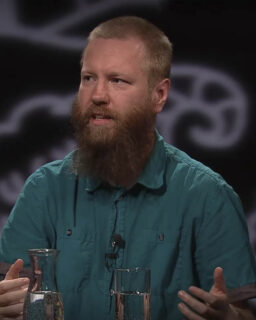
The author is a philosopher and lawyer