Overfed AI with slop prefer the Worst Animation in the World. About the phenomenon of "Niu Lai"
Krytyka Polityczna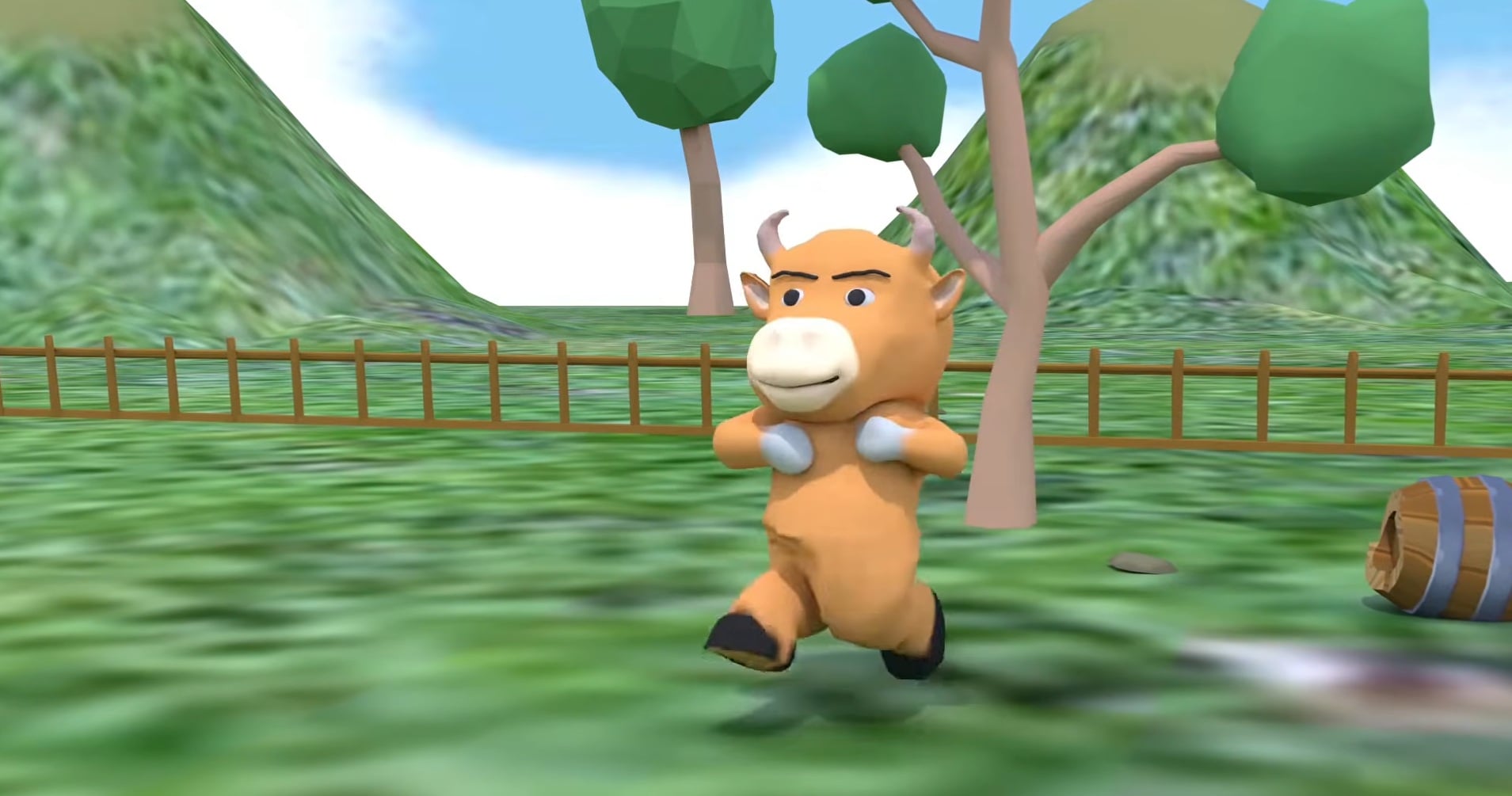
Some people call the Chinese film created by a mother and son, which is taking over the internet, a "human version of slop," but that's unfair. Slop refers to a mushy, mass-produced, and thoughtless content, and "The Cow Is Coming" is a work not devoid of craftsmanship and reflection. The post Overindulged AI with slop prefer the Worst Animation in the World. About the phenomenon of "Niu Lai" first appeared on Krytyka Polityczna.
This 86-minute Chinese animation seemed doomed to failure. According to the description on Filmweb, Niu Lai is a story about “a lark observing the growing up of a shy young calf.” Translated into Polish, the title would be: The Cow Approaches.
Animation like an unfinished drawing, dialogues as if from another dimension, a plot with the logic of your ex who explains where he was when he wasn’t where he promised to be and why all this connects to a new part of GTA, and by the way, apologizes for forgetting your birthday (more or less).
Niu Lai appeared in Chinese cinemas on August 5. It jumped onto screens through the force of good intentions because the production was barely holding on – without a campaign or promotion, they managed only a few hundred screenings and earned about 7,700 yuan. It looked like Niu Lai would end its life as an unsuccessful animation for connoisseurs of calf adventures.
But magic happened.
So bad, it’s good
Fragments of the film appeared on social media platforms. People commented more and more vividly, with growing disbelief: did this really hit cinemas? Did something like this even exist?
The aesthetics of Niu Lai are like unfinished Teletubbies that met a herd of blocky cows from Minecraft. A few of the most popular scenes from the film are circulating worldwide via Instagram and TikTok. Many of them are just a few seconds of a screen recording in the cinema, during which you can hear that people in the audience are dying of laughter. And it’s hard to react otherwise – everything looks as if a six-year-old’s coloring book was brought to life and given a plot of a poem written in high school. Clumsy cow models, stiff movements, bizarre proportions, absurd dialogues – these are just some of the many incredible assets of Niu Lai.
That was enough. The rest was taken over by the logic of social media platforms called: the worse, the better. By mid-month, the film was becoming increasingly popular, and by the end of August, the situation looked like this: the film earned about 50 million yuan and over two million viewers. In the daily Chinese box office rankings, it started competing with Odyssey, and the distribution was extended until October 4. The film’s creators, of course, were not ready for this, so cinema employees themselves, by hand, drew posters promoting the film. This fits the entire aesthetic of Niu Lai and only emphasizes it.
The reaction was an absolute craze not only on social media platforms. Besides obvious signs of popularity, such as memes, cosplay, and toys inspired by the animation, the stock prices of companies whose names contained a character associated with the title Niu Lai also increased. These stocks, with no business connection to the production, were linked only by one thing – a Chinese character, phonetically “niu,” appearing in the title and associated in Chinese with “bull,” thus with a bull market. For this reason, the Chinese newspaper overseen by the People’s Bank of China issued a warning: going to the cinema is harmless, but placing hope in the word “bull” is wishful thinking.
Watching content for mockery has always been excellent – whether it’s 2006 and a screening of The Great Mix on YouTube, or watching in 2026 as a little girl talks about her rules for sleepovers at her house. Add to that the fatigue from the forced aesthetic of AI, losing fingers, and it turns out that Niu Lai found a very good ground – a tired viewer.
Although perhaps most of the work was done by “the X factor” – a magical ingredient that entered directly into viewers’ hearts. Niu Lai was created by two people: a son and a mother.
Human slop better than AI slop?
34-year-old Xin Yumeng is responsible for animation and editing, his mother, Sun Lifang, wrote the screenplay and created the ending song. Their creative process lasted about five years. When viewers found out about this, they loved the work with all its imperfections. More and more comments appeared appreciating the craftsmanship of the production – it’s shit, but beautiful shit, a bit of sewage, a stream of consciousness, or maybe even great art? It doesn’t matter.
Niu Lai, charmingly naive and strangely clumsy, is different from profitable films. It drifts somewhere between clouds and cows that jump over a river with such ease as if they could fly. And all this is still better than AI.
Some call it the human version of slop, but I think that’s unfair. Slop means mush, mass-produced and thoughtless content, and you can’t deny Niu Lai craftsmanship and reflection.
We’ve grown tired of AI slop. The more zealous react allergically to the very suspicion of AI interference in graphics, as in the case of the Bolesław Chrobry mural in Gniezno. Recently, the mural was unveiled, and the discussion about AI-style started again. The fury at AI does not fade in the case of restaurants stumbling over prompts and forcefully generating graphic identities with ChatGPT (on the facade of the Grind & Unwind restaurant in San Francisco, which served an AI version of the menu, someone spray-painted “seriously?”).
It was precisely at such a moment that the Worst Animation in the World appeared without warning.
Niu Lai is a longing for doodles, an old video game, and a rebellion against impersonal slop. Against them, one can be soulless, because using AI, people give less than 30 percent – a prompt is pasted, and you can start CS. It’s much harder to pass indifferently by five years of work by a mother and son.
Let’s be honest: if you try, AI could generate something similarly absurd. It has already created – someone generated an AI version of Niu Lai, but it’s worse than the original and this time in a bad way. Ultimately, the original Niu Lai wins because someone actually wanted to do it and finished the project. In the animation concept, you can feel a living human more than in autofictions, and when comparing Niu Lai with the ugly things flooding the internet from AI, one can conclude: something ugly but human is better.
It’s uncertain whether the animation will grace cinemas in Poland; I hope the cycle “Best of the Worst” will attempt it. For now, one can only enjoy fragments shot in the cinema by hand, but I feel that watching the whole thing in one sitting would be so delightfully bad that one could forget what a real cow looks like.
The post Overfed by AI slop, we prefer the Worst Animation in the World. About the phenomenon of “Niu Lai” first appeared on Krytyka Polityczna.