Restructuring of the Ukrainian military? What might change under the new army chief Drapatyi
New Eastern Europe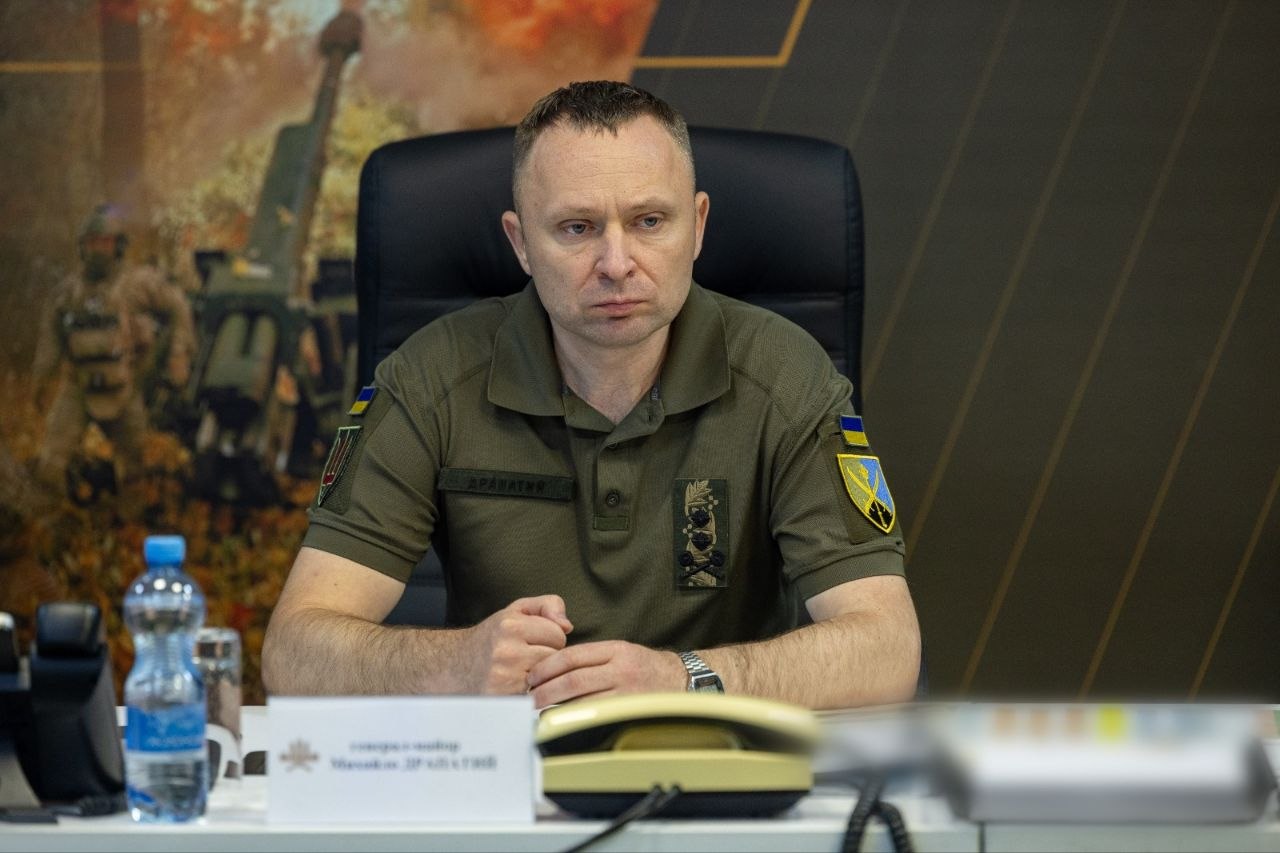
Ukraine’s new head of the armed forces, Mykhailo Drapatyi, faces a number of challenges in his efforts to pursue reform. While the internal structures of the armed forces require increased autonomy, the military still faces a collective need to lead the country’s response to ongoing Russian aggression.
In May 2014, a Ukrainian infantry fighting vehicle sped toward a barricade in Mariupol. “Step on it!” battalion commander Mykhailo Drapatyi ordered the driver, and the vehicle ploughed through the barricade. This episode is often cited to illustrate the resolve of the new commander of the Ukrainian Armed Forces. Twelve years later, Drapatyi cannot tackle the army’s institutional problems as if they were just another barricade.
His primary task is to improve the culture of leadership, task delegation, and accountability within the armed forces. Reforms regarding the mobilization of recruits, procurement processes, and combat capability generation must be implemented in collaboration with the defence ministry and President Volodymyr Zelenskyy. Mykhailo Drapatyi can reform the military’s mindset but not the fundamental social structures that constrain it. The appointment may satisfy critics in those areas where he has authority, but it leaves untouched the political economy of national defence, where most of the problems lie.
The war Drapatyi inherits
In Ukraine and among its partners, there is a temptation to view the appointment of Mykhailo Drapatyi as a break with the era of the now-former Commander-in-Chief of the Ukrainian Armed Forces, Oleksandr Syrskyi, which was characterized by stifled initiative and loyalty-based advancement. But an army chief cannot shape the war he inherits according to his own vision. Drapatyi will face the same personnel shortages, the same dependence on western supplies, and the same Russian superiority in terms of troop strength and firepower. Every Ukrainian commander must, first and foremost, hold the front lines while simultaneously attacking Russian targets beyond the line of contact.
The first few months are therefore likely to be marked by continuity rather than change. Under former Defence Minister Mykhailo Fedorov, medium-range drone strikes evolved into something resembling battlefield air interdiction: attacks on roads, depots, command posts, air defence positions, and reserves, aimed at isolating Russian forces deep within their operational depth. Without air superiority and unable to achieve a major breakthrough on the ground under constant surveillance by Russian satellites, Ukraine has shifted to deploying large numbers of relatively low-cost drones. These are now performing combat tasks that western forces would normally carry out using aircraft and precision-guided missiles.
Kyiv’s approach exploits a weakness in the architecture of Russia’s air defence. Russia’s anti-aircraft systems, which are powerful in their own right, were primarily designed to counter a limited number of expensive planes and missiles, not to stop a sustained stream of dispersed and inexpensive drones hunting down all moving targets near the front lines. For Drapatyi, as for his predecessor, this is the key strategy for defending Ukraine and achieving significant operational successes without the need for a breakthrough on the ground.
Can the Ukrainian General Staff learn?
To the extent that this operational strategy remains dominant, the most significant changes under Drapatyi are likely to involve how decisions are made. Brigade commanders who previously served under Drapatyi told Rob Lee of the Foreign Policy Research Institute that the new commander of the Ukrainian Armed Forces asked them what support they needed and listened to their assessment of the situation in their sectors. That sounds like competent leadership.
However, this management style requires, among other things, that subordinates be allowed – and able – to tell the whole truth. If headquarters punishes bad news, armies operate on the basis of distorted information. Drapatyi must reward truthful reporting and thus create an environment in which commanders can safely report the problems facing their units.
Drapatyi is also expected to reduce the General Staff’s micromanagement and grant corps and brigade commanders greater autonomy. He could also rethink the promotion system and reward officers who keep their units in good condition and solve problems, rather than promoting those who avoid contradicting their superiors. None of this in itself guarantees better decision-making, but it improves the army’s chances of identifying mistakes and challenges before they turn into operational failures.
Technology is the second area in which development warrants close attention. Drapatyi publicly supported Fedorov’s reforms and highlighted “Drone Line” – a programme that concentrates specialized drone units and resources on priority sectors of the front – as an example of how a government decision can rapidly change the situation on the front lines. He also acknowledged that many valuable initiatives succeed “in spite of the system” and not because the old system knew how to integrate them.
Fedorov accelerated innovation on the battlefield by replacing closed procurement networks with competitive bidding. This model yielded results but also created powerful opponents within the military-industrial establishment. Drapatyi’s public support signals that he will defend this approach against institutional resistance – not only the technological innovations themselves, but also the procurement reform that made them possible in the first place.
As chief of the army, he will be better positioned to link the innovations developed in individual units with operational planning across the entire front. Ground robots and heavy drones can transport supplies through areas where deploying a vehicle or a group of soldiers has become unreasonably dangerous.
The overarching goal is clear: to sacrifice drones and robots instead of soldiers. This redefines the concept of “attrition”. Ukraine cannot win a contest with Russia over the sheer number of troops, but it can absorb losses when using cost-effective, distributed systems.
Reforms under the president’s watchful eye
However, the reforms will not take place in a political vacuum. Politically speaking, Drapatyi might find the task more difficult in some respects than Syrskyi did. He rose to the position of army chief via recent protest demonstrators’ "cardboard signs". This could lead parts of the military and political establishment to view him as a figure imposed by the streets. In reality, he is a career officer who has served for over twenty years, not an outsider.
His popularity, however, is a vulnerability. Valeriy Zalushny’s experience has shown how quickly an admired commander can become a political liability if his public standing exceeds a level comfortable for the president. The less popular Syrskyi enjoyed stronger protection from the president but was hampered by public scepticism. Drapatyi, on the other hand, is starting out with high public expectations, but this popularity could become a problem if it continues to grow.
The circumstances of his appointment exacerbate this vulnerability. Drapatyi was not selected through the regular process to succeed Syrsky, but rather to defuse the backlash following Fedorov’s dismissal. As Chatham House argues, his appointment was widely interpreted as a means of maintaining the “tech-first” orientation associated with the former minister. This gives Drapatyi an unusual starting mandate, but it also limits his margin for error. Any delay in integrating drones, overhauling procurement procedures, or reorganizing troop protection could be seen as evidence that the old system persists.
The first evidence of Drapatyi’s success will likely not be visible on a map. It will be evident in whether corps staffs are granted real authority; whether commanders can report that a mission is unfeasible without jeopardizing their careers; and whether promotions and dismissals reflect high performance rather than proximity to the army leadership. Another indicator will be combat readiness and the inner workings of the armed forces: more predictable rotations, better preparation of successors, and fewer soldiers being deployed for tasks that drones or ground robots could handle.
Progress in these areas also depends on the success of the ongoing mobilization reform. If these indicators develop positively, Drapatyi’s appointment could mark a genuine shift in the way Ukraine fights. If not, he could inherit not only Syrskyi’s army but ultimately also the blame caused by that same system.
What is next?
Drapatyi’s operational improvements could reduce casualties through better coordination. Information could be reported more honestly up the chain of command, while young officers may be more rigorously promoted based on their performance. This also puts pressure on Zelenskyy to address the high turnover rate at the Ministry of Defense.
Even if Drapatyi improves operations, he could hit a wall if mobilization and procurement procedures do not sufficiently change. He could be criticized for “not reforming enough”, while Zelenskyy consolidates the defence ministry’s powers under presidential control. If that happens, the reshuffle will have transferred responsibility without transferring authority. Ukraine will have changed its commander, but not the system he was appointed to reform.
Dr. Lesia Bidochko is a Policy Fellow at the European Policy Institute in Kyiv (EPIK), which was recently established in Ukraine by the Swedish Institute of International Affairs (UI) through its Stockholm Center for Eastern European Studies (SCEEUS). EPIK is jointly funded by the European Union and the Swedish International Development Cooperation Agency (Sida). This article is based on a recent EPIK Commentary.