Power without unity: The trade union movement in interwar Czechoslovakia
Kapitál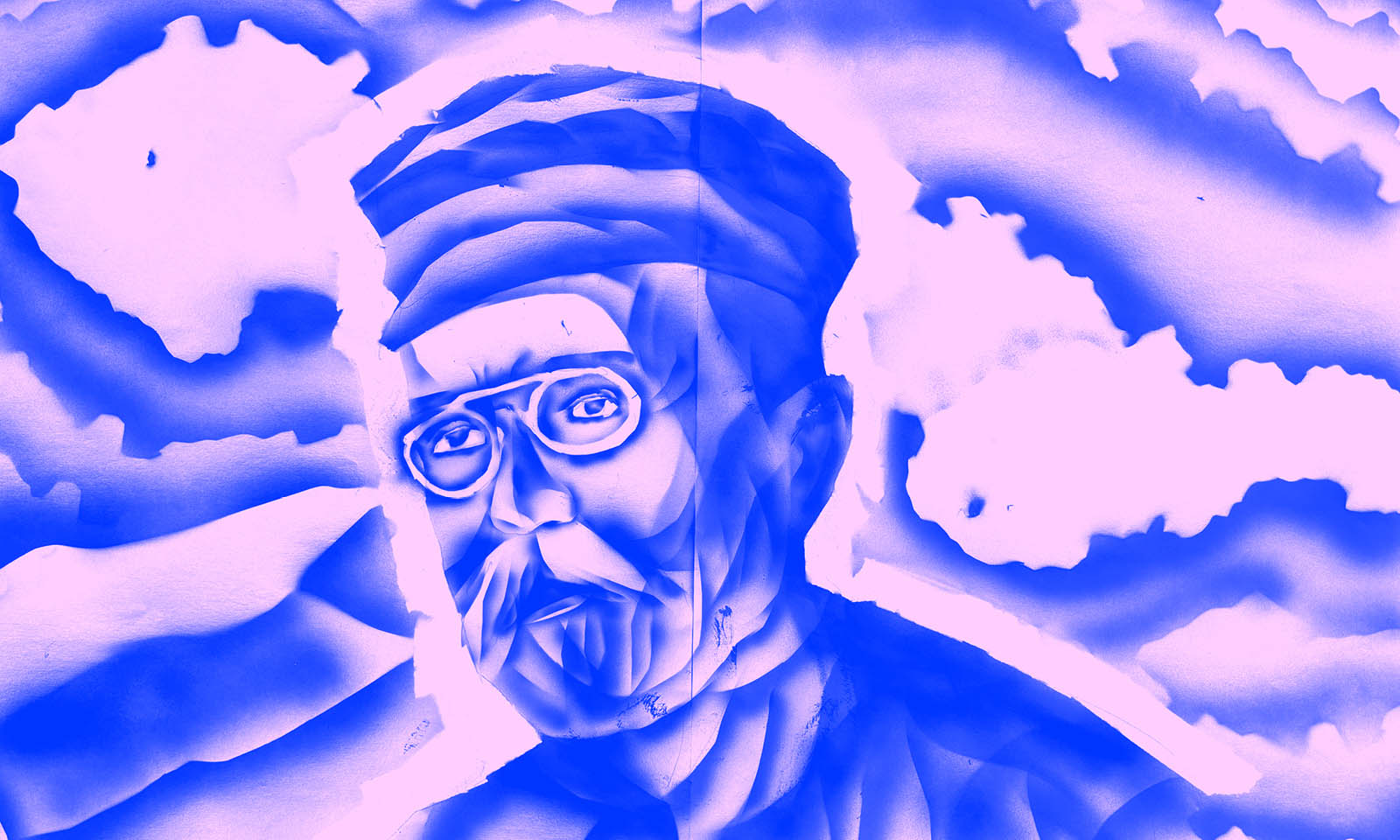
In the previous part, we followed how the First World War fractured internationalism and ultimately the Austro-Hungarian monarchy itself. The year 1918 and the founding of Czechoslovakia brought conditions for trade unions to operate within a democratic regime. Workers quickly managed to implement various labor achievements and social reforms. However, the new republic also had a second face. Shootings at strikers occurred, and the significant social pluralism that also affected trade unions brought new challenges. In this part, we devote more space to Christian trade unions, which corresponds to the influence of the People's Party in Slovak politics and the position they gradually built.
In the previous part, we followed how the First World War shattered internationalism and ultimately the Austro-Hungarian monarchy itself. The year 1918 and the establishment of Czechoslovakia brought conditions for the trade unions to operate within a democratic regime. Workers quickly managed to push through various labor achievements and social reforms. However, the new republic also had a second side. Incidents of gunfire into strikers and a significant social pluralism that affected the unions brought new challenges. In this section, we devote more space to Christian trade unions, which corresponds to the weight of the People's Party in Slovak politics and the position they gradually built.
From revolutionary hopes to the new republic
The last year of the war brought escalation of an already dire situation. The authority of the monarchy was crumbling under pressure, and a wave of strikes demanding peace and better supplies spread across its territory. Dissatisfaction soon manifested in the army as well. In early June 1918, a substitute battalion of the Trenčín 71st Infantry Regiment, reinforced with several thousand Slovak soldiers who had recently returned from Russian captivity, rebelled in Kragujevac, Serbia. Such uprisings effectively ended the war, with a pan-European character. For example, the sailors in Kiel in November 1918 helped ignite revolutionary movements from which several republics emerged.
The wave of discontent also hit Slovakia, especially its industrial centers, mines, and ironworks. Strikes broke out, for example, in Podbrezová and Košice. Workers demanded higher wages, better supplies, and the right to union activity. In January 1918, a general strike demanding an end to the war erupted across the monarchy. The disintegration of the monarchy deepened and ultimately led to the creation of new states, including Czechoslovakia. The turbulent development also affected Slovak territory. In Prešov, on June 16, 1919, the Slovak Republic of the Rad was proclaimed, which, in close connection with the advance of the Hungarian Red Army, was short-lived and dissolved already on July 7.
The creation of Czechoslovakia opened new opportunities for the unions. The new republic, claiming to be democratic, implemented several social reforms that formed an important part of the legitimacy of the new regime, distinguishing itself from the social and political inequalities of the Habsburg monarchy. These included an eight-hour workday, gradual expansion of paid vacation rights, support for collective bargaining, unemployment benefits, aid for widows, orphans, and invalids, as well as the development of sickness and pension insurance. Collective bargaining also expanded significantly, and in the early post-war years, thousands of collective agreements were concluded.
The new social rights resulted from pressure from the workers' movement, post-war unrest, and partly from fears of political elites of further radicalization of society. However, there was also a darker side to the republic. For example, in 1921, police intervened against demonstrators in Krompachy, resulting in the deaths of several workers. This was not an isolated case. Likewise, these positive changes did not solve all problems. Poverty and unemployment remained part of everyday life even after 1918.
For unions on Slovak territory, the disintegration of the monarchy primarily meant severing old ties. Contacts with Budapest-based centers were cut off, and Slovak unions began establishing connections with Czech ones. However, they entered the state with a significantly different focus. The strongest position was held by unions in the Czech lands, where the largest part of industry was concentrated, along with a sizable working class, older organizational traditions, and a denser network of union structures. Slovakia was less industrialized, with a larger rural population and weaker union traditions.
A strong movement, fragmented unions
The interwar Czechoslovakia was a country of a strong but highly fragmented trade union movement. Unions were organized not only by industry or profession but also according to political and national affiliations. The most significant central was the Social Democratic Czechoslovak Trade Union Association. Other active organizations included the Czech Workers' Association, linked to the national-socialist political current, German social democratic unions, Christian-social organizations, the Communist Red Unions, and gradually also agrarian unions and smaller centers. Political parties had a strong influence on the trade union movement, often determining not only its ideological direction but also practical strategy. The first president of the republic, Tomáš Garrigue Masaryk, was also connected to the workers' movement, especially through his involvement in founding the Workers' Academy, which he supported. It was an influential, social-democratically oriented educational institution established in 1896 and operating until the demise of the First Czechoslovak Republic in 1938. It also served as an important intellectual platform for the social democratic workers' movement.
Plurality was both a source of strength and weakness. On one hand, it allowed organizing workers of various political and value-based affiliations. On the other hand, it weakened unified action among workers. Soon after the republic's founding, efforts to unify the central unions appeared but faced obstacles such as party interests, personal ambitions of union leaders, and differing views on the role of unions. For some, unions were meant to be tools for social peace and gradual improvement of living standards. For others, they were a means of class struggle and preparation for more radical social change.
Despite fragmentation, the membership base grew. In 1918, approximately 371,000 workers were unionized in Czechoslovakia; by 1921, nearly two million. The economic crisis temporarily slowed this development, but in the 1930s, the base grew again: in 1936, unions had over 2.18 million members, and by the end of 1937, approximately 2.3 million. The movement thus became one of the most significant social forces of the First Republic. It had its own press, extensive organizational structures, and the capacity to engage in economic and political conflicts.
In Slovakia, the situation was different. Union organization was weaker than in the Czech lands, slightly exceeding one-third of the workforce. The dominant force after 1918 was the social democratic trade union movement, which built on older traditions of workers' organization and, after the republic's founding, united with Czech social democracy. Social democracy was the main political environment articulating the demands of Slovak workers in the early post-war years.
A significant turning point was the emergence of the Communist Party and the split it caused within the social democratic movement. In 1922, the Red Unions were founded, advocating a class approach and aligning with the international communist movement. The relationship between them and the social democratic unions was marked by lasting distrust. Communists accused social democrats of moderation and adaptation to the bourgeois republic, while social democrats viewed communist tactics as sectarian and divisive. At the enterprise level, especially regarding wages and working conditions, they could cooperate. There are even some symbiotic examples of joint actions between communist and Ludák unions to some extent.
Between class, nation, and cross
A special line of Slovak union development was the Christian trade union movement, closely linked to Catholic social teaching and the political environment of the Slovak People's Party. As I have already written, its roots date back to the late 19th century, when the church, through the encyclical Rerum Novarum, recognized the seriousness of the workers' question but rejected socialist solutions, class conflict, and attacks on private property. Instead, it emphasized social peace, cooperation between labor and capital, and the moral obligations of employers and workers. In the Hungarian context, Christian union organization lagged behind social democracy for a long time. However, it drew inspiration from its successes and aimed to imitate proven mechanisms of workers' organization.
After the establishment of Czechoslovakia, this environment began to reorganize. The Regional Christian-Socialist Union, active mainly in the ethnically mixed southwestern regions of Slovakia, entrusted priest Peter Haverla, who had led the Christian-social workers' association in Bratislava since 1917, with revitalizing union organizations. In January 1920, the statutes of the Regional Center of Christian-Social Unions were approved, based in Bratislava. Simultaneously, the Slovak People's Party, which had previously paid little attention to the workers' question, began building its own unions. In 1920, the All-Union Association of Christian Workers of Czechoslovakia was founded in Slovakia, closely linked to the Ludák political environment and Czech People's Party.
The Ludák Christian unions from the beginning distinguished themselves from Marxism, liberalism, Czechoslovakism, and Hungarian Christian socialists. Their language combined social critique with religious and national frameworks. They criticized capitalism as a moral and social problem, not as a system of exploitation based on class conflict. They accused socialist and communist unions of atheism, spreading class hatred, and Bolshevism. Their press also featured anti-Semitic motifs, especially the idea of so-called Jewish Bolshevism, which later became a key element of the radicalized Ludák politics.
In the early years of the republic, however, Christian unions in Slovakia did not play a significant role. They had no strong representation in factory councils and committees, and their leadership doubted whether the movement could sustain itself. Workers, facing difficult post-war conditions, often sought more radical solutions, and social democracy had a greater influence among them. The movement was also weakened by internal conflicts. Some union officials rejected the extreme nationalism and anti-Czech stance of the Slovak People's Party, but this opposition did not gain broader support.
The turning point came in the first half of the 1920s when Rudolf Čavojský took leadership. As a young and active union worker, he began practically rebuilding the disorganized organization. Christian unions gradually stabilized, although their growth was slow. They continued to present themselves as a bulwark against the "red threat," and the church environment supported them through pastoral letters advising Christians to withdraw from socialist and communist organizations.
At the same time, however, they had to adapt to the realities of workplaces, where internal tensions within Christian unionism became apparent. Its ideology rejected class struggle, and strikes were seen as a last resort, to be used only after exhausting all milder options. In practice, Christian unionists participated in strike actions. In the 1920s, they took part in strikes in textile factories in Rajec, Žilina, and Trenčín. As I have already indicated, unexpected alliances also appeared. In 1927, Ludák, communist, and social democratic unions agreed on a joint approach regarding the price contribution in cement plants in Ladce and Lietavská Lúčka and achieved success. Such cases did not mean overall unity but showed that pressure from workers could sometimes transcend ideological boundaries.
Crisis and search for a third way
The 1930s brought an economic crisis, rising unemployment, and the emergence of authoritarian and fascist movements in Europe. At that time, Christian unions struggled with financial problems and a temporary decline in membership, but it was also during this period that they began to strengthen again. The ideological impulse was given by the encyclical Quadragesimo anno from 1931, which built on Rerum Novarum and emphasized corporative, estate-based ideas of social organization. In the Catholic environment, it was an attempt to find a "third way" between liberalism and socialism.
These ideas had a strong influence on Ludák unions, although they adopted them in their own way. Čavojský, in the second half of the 1930s, positioned himself as a union representative rejecting Marxism and communism but criticizing fascism and Nazism. He saw fascism as particularly dangerous for the working classes and warned that its goals and methods were incompatible with Christian principles. However, some of the younger generation of Ludák politicians at that time openly drew inspiration from authoritarian and fascist regimes.
The position of Christian unions thus became more complicated. They remained loyal to Ludák and shared much of their ideological worldview, including anti-communism, nationalism, and anti-Semitic motifs, but their social agenda, ties to the working environment, and Čavojský's critique of fascist tendencies created tensions with the radical wing of the party. By 1937, they had over 23,000 members and were the second strongest trade union movement in Slovakia.
At the national level, the increasingly urgent question of union unity was emerging. The rise of Nazism in Germany, the destruction of unions in authoritarian regimes, and the threat of the republic's disintegration created pressure for cooperation, but this was hindered by mutual distrust among the central organizations. We will discuss how this struggle ended and what the year 1938 and the emergence of the so-called Second Republic meant for the unions in the continuation.

The author is a historian

The text was created with the support of Friedrich Ebert Stiftung, representation in the Slovak Republic