Is Europe divided again?
New Eastern Europe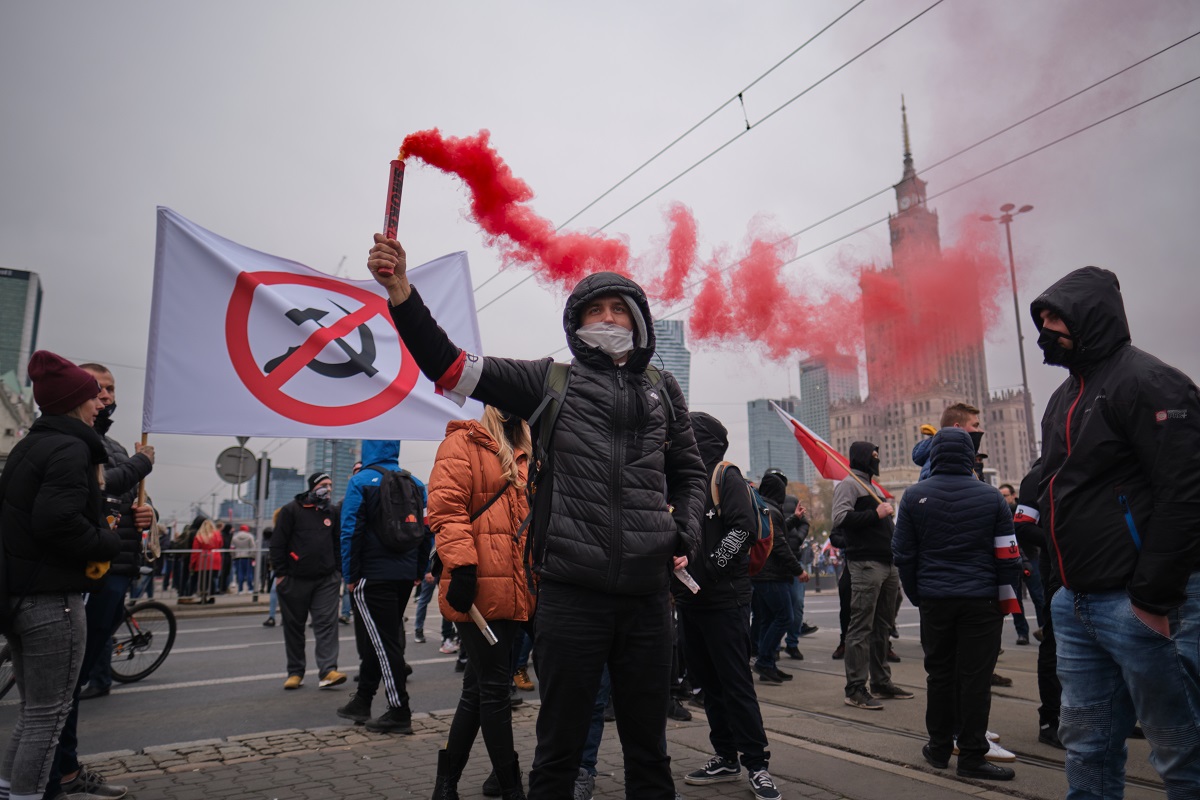
The East–West divide should not be overstated. Estonia, Romania and Lithuania have generally remained strongly pro-European despite placing considerable emphasis on national independence. Conversely, sovereigntist politicians in Western Europe have achieved considerable political success. Nevertheless, it is primarily in parts of Central and Eastern Europe that states increasingly resemble isolated islands, jealously guarding their borders and defending “go-it-alone” policies in an ever more interconnected and interdependent European environment.
With the fall of the Berlin Wall and the enlargement of the European Union, the East-West divide in Europe appeared to lose much of its significance. Although the Eastern Bloc was highly diverse in terms of size, culture and historical experience, the Soviet grip over its satellite states constituted a powerful unifying factor. The disintegration of the Soviet Union enabled the countries of Central and Eastern Europe to reunite with the western part of the continent, a process that culminated in their accession to the European Union two decades ago.
Admittedly, one can argue that the enlargement process merely created a new division in Europe, leaving parts of the Balkans and Eastern Europe outside the Union. Yet this new dividing line did not appear to be permanent. The European Union repeatedly expressed its intention to enlarge further eastwards and southwards while simultaneously extending its influence beyond its borders through the export of European capital, goods, laws and, more recently, military assistance. As Bill Clinton confidently declared at the Brandenburg Gate:
"Now, together, we can walk through that gateway to our destiny, to a Europe united, united in peace, united in freedom, united in progress for the first time in history. Nothing will stop us. All things are possible. Berlin is free."
The title of this journal, New Eastern Europe, founded 15 years ago, could therefore be seen as symbolizing Eastern Europe's return to its western home: a new Eastern Europe emerging after decades of violence, authoritarianism, and isolation that had characterized much of the region throughout the 20th century.
Today, however, this vision appears increasingly outdated, if not altogether naïve. War has returned to Eastern Europe, democratic institutions are under growing strain, and new walls are being erected. As in the past, Russia bears primary responsibility for these developments. Yet much of the damage to the idea of “a Europe whole and free” is also inflicted by domestic political actors campaigning under the slogan of “our nation and state first!” Across much of the continent, and particularly in Central and Eastern Europe, war, nationalism and sovereigntist outlooks are once again driving Europe apart.
The politics of fear
It is often argued that Russia's full-scale invasion of Ukraine in 2022 united and mobilized the EU and its member states. The invasion was met with a swift and decisive response from the EU, which imposed sanctions on Russia, coordinated various forms of assistance to besieged Ukraine, and strengthened its own defence efforts both within and beyond NATO. Yet perceptions of security threats differ markedly between states bordering Ukraine or Russia and those located further south and west. A Pew survey conducted in 2025 showed that around three-quarters of Poles regard Russia as the principal threat, while only about one-third of Italians and Spaniards share this view. In Greece, Turkey rather than Russia is perceived as the principal threat. Among Spaniards, the United States is regarded as posing as serious a threat as Russia.
The nature of these concerns also differs, as demonstrated by an ECFR poll conducted in 2022. Poles are primarily concerned about the possibility of Russian military action and refugee flows. Respondents in Finland, France and Romania expressed particular concern about disruptions to energy supplies and the economic consequences of the war, while cyber-attacks ranked among the dominant concerns in Sweden and France. The ECFR poll also found that respondents in Poland, Romania and Sweden were considerably more willing to make economic sacrifices than those in France and Germany.
Threat perceptions are also reflected in levels of military spending. According to NATO estimates for 2025, Poland currently spends no less than 4.5 per cent of its GDP on defence. The three Baltic states bordering Russia – Latvia, Estonia and Lithuania – each spend more than three per cent of GDP. By contrast, the lowest spenders remain Ireland (0.22 per cent), Malta (0.45 per cent), Luxembourg (0.85 per cent), and Austria (1.10 per cent).
Statistics aside, the most striking difference between the states of Central and Eastern Europe bordering Russia and those located further south and west concerns the prevailing pattern of politics. An outside observer cannot fail to notice that politicians in Poland and the three Baltic states increasingly speak and act as if their countries were already in a state of war with Russia. First, one observes a pervasive sense of wartime anxiety, even though no full-scale war is taking place on their territory and the prospect of one remains hypothetical. Second, external threats are increasingly invoked to legitimize extraordinary measures, including some that appear difficult to reconcile with the principles of liberal democracy. Third, growing hostility is directed by self-proclaimed patriots against alleged “traitors”. Fourth, security considerations increasingly shape socio-economic policy. Fifth, there is a growing conviction that only a strong leader can guide the nation to victory.
Needless to say, these developments have adverse consequences for the quality of democracy, the protection of human rights, media independence, and sound economic governance. Paradoxically, the political responses adopted by those states that fear Russia most may gradually bring certain features of their political and economic systems closer to those of Russia – not by design, but as an unintended consequence of prolonged insecurity. This does not mean that a new Eastern Bloc is emerging. The countries of the region continue to display diverse threat perceptions and political responses. Sweden, for example, shares many of Poland's security concerns, while Hungary has often portrayed Ukraine as posing a greater threat than Russia. There is little doubt, however, that since Russia's invasion of Ukraine geography and history have once again become important factors shaping new patterns of convergence and divergence within the EU.
The resurgence of nationalism
In the first half of the 20th century, nationalism was a “deadly virus” that fuelled ethnic conflicts and interstate wars. As Mark Mazower describes in Dark Continent, nationalism prevailed over competing ideologies such as communism and liberalism because it enabled states to mobilize broad segments of their populations, consolidate fragile governmental structures, stimulate economic development, and legitimize war efforts. Since most states at the time were multinational, nationalism also served as a means of asserting the dominance of ethnic majorities over ethnic minorities. In some countries, nationalism also served to sustain territorial claims rooted in resentment over the Treaty of Versailles, Hungary being a notable example. The consequences of this nationalist inclination for individual freedom, democracy and peace were devastating.
After the Second World War, both Eastern and Western Europe sought to lay the ghosts of nationalism to rest, although, as we now know, with only limited success. In Eastern Europe, communist regimes condemned nationalism as a decadent bourgeois ideology that prevented workers of different countries from uniting. In Western Europe, liberals regarded nationalism as a threat to individual liberty, equal citizenship, pluralism and social harmony.
Nationalism nevertheless persisted throughout the second half of the 20th century, albeit in a much milder form than before. In recent years, however, it has experienced a remarkable resurgence, particularly in the eastern part of the reunited Europe. The striking electoral successes of parties arguing that loyalty and devotion to the nation should take precedence over allegiance to local, European, or other supranational communities bear witness to the revival of nationalist fervour across the region. I have particularly in mind the success of parties such as Hungary's Fidesz, Poland's Law and Justice, Slovakia's SMER, Romania's AUR, and Bulgaria's Revival. It should also be noted that nationalist rhetoric has increasingly been adopted by liberal-conservative and even social-democratic parties. Public opinion data help explain why. For example, the European Values Study (EVS) 2017–2022 shows that respondents in Hungary, Poland, Bulgaria, Croatia and Slovakia consistently express greater pride in their birthplace, religion, language and ancestry than respondents in Sweden, the Netherlands, Germany and Denmark.
Three decades ago, campaigners for democracy and human rights enjoyed the greatest public recognition in the countries of Central and Eastern Europe. Today, human rights are no longer in vogue and democracy in its liberal incarnation is being contested. Instead, it is far more common for historical national heroes to be commemorated through new monuments and the naming of squares, streets, theatres, museums and films.
References to national heroes have also become a common feature of political speeches, even when some of these figures remain historically controversial because of their association with antisemitism or violence against ethnic minorities. Government ministries and public programmes are increasingly being rebranded as “national”, European flags are being removed from public offices and replaced exclusively with national ones, and legal penalties have been introduced for desecrating national symbols. A comparable shift is difficult to observe even in traditionally nationalistic societies such as Greece, Ireland or Portugal.
A comparison of the official rhetoric of the Italian and Polish governments is particularly revealing. Italy's current prime minister, Giorgia Meloni, leads a party with strongly nationalist, if not post-fascist, roots, whereas Poland's prime minister, Donald Tusk, comes from a conservative-liberal party widely regarded as pro-European. Yet it is the Polish government, rather than its counterpart in Italy, which frequently invokes narrowly defined national interest and argues that European law should be respected only insofar as it is compatible with Poland's national priorities. Although both prime ministers seek to protect their countries from what they describe as “unwanted” migration, only the Polish government has suspended the right to seek asylum for migrants attempting to cross its eastern border. Moreover, the Polish government has progressively reduced the rights afforded to Ukrainian refugees despite their well-documented contribution to Poland's economic development and cultural enrichment. During the past two years, Poland has also witnessed a noticeable increase in verbal and, on occasion, physical attacks against Ukrainians. Similar developments are not prevalent in Italy.
The rise of sovereigntism
Nationalism has long been recognized as a dangerous ideology, whereas sovereigntism has acquired negative connotations only in recent years with the rise of anti-EU sentiment. Before the creation of the EU, all states enjoyed the legitimate right to protect their sovereign national interests, as recognized by the UN Charter and the statutes of numerous international organizations. Through the EU treaties, however, member states agreed to pool aspects of their sovereignty rather than pursue exclusively their own national interests. This principle of shared sovereignty is now under increasing challenge from political forces calling on governments to reclaim powers from Brussels and return them to their respective national capitals. This is despite the fact that none of the major crises of recent decades – from the financial crisis and the migration crisis to the COVID-19 pandemic and the security crisis triggered by Russia's aggression against Ukraine – could have been effectively addressed by any single state acting alone.
Sovereigntism may be defined as a political doctrine that seeks to maximize the autonomy of the nation-state and resists the transfer of political authority to supranational institutions. Unlike nationalism, which emphasizes the cultural and emotional bonds of the nation, sovereigntism focuses primarily on the location of political authority. Although the two doctrines frequently overlap, they are conceptually distinct: one concerns identity, the other the exercise of political power.
Sovereigntism is particularly pronounced in the newer EU member states of Central and Eastern Europe. Governments and political parties across the region have consistently presented national sovereignty as a fundamental political value. This has been especially evident in debates over the EU's rule of law mechanisms, migration and asylum policy, judicial reform, family and cultural policies, and the primacy of national constitutions over EU law.
Brexit was undoubtedly the most prominent expression of sovereigntism in Western Europe. Yet recent developments also demonstrate its limitations. Polling consistently shows that a majority of Britons now believe that leaving the European Union was the wrong decision. Sovereigntism is also present among governing parties in several older EU member states, but it tends to be less coherent, less comprehensive, and generally less influential than in much of Central and Eastern Europe. Membership of the euro area has tied many Western European states more closely together, while decades of European cooperation have fostered greater confidence in common institutions.
History and insecurity help explain the stronger appeal of sovereigntism in the eastern part of the continent. Most countries in Central and Eastern Europe regained full independence only after 1989. National sovereignty therefore became closely associated with liberation from Soviet domination, while statehood itself remains a relatively recent and emotionally powerful achievement. In these countries, sovereignty is often viewed not merely as a constitutional principle but also as a symbol of democratic self-determination.
Again, the East–West divide should not be overstated. Estonia, Romania and Lithuania have generally remained strongly pro-European despite placing considerable emphasis on national independence. Conversely, sovereigntist politicians such as Matteo Salvini, Geert Wilders and Marine Le Pen have achieved considerable political success in several Western European countries. Nevertheless, it is primarily in parts of Central and Eastern Europe that states increasingly resemble isolated islands, jealously guarding their borders and defending “go-it-alone” policies in an ever more interconnected and interdependent European environment. Their vision of Europe is one composed of proud, independent and self-governing nation-states making only limited concessions to common European projects, except where these are perceived to serve clearly defined national interests. The only external power that many Eastern European sovereigntists appear willing to accommodate is the United States, despite its highly erratic and transactional approach to international politics.
New divisions
In 2019, I argued that it was misguided to continue cultivating the notion of an East–West divide after the fall of the Berlin Wall. It has never been entirely clear whether the citizens, cities and states commonly labelled as “Eastern European” have much in common beyond the shared experience of Soviet domination. It is also not easy to determine where Eastern Europe begins and ends, particularly when millions of Central and Eastern Europeans now live and work in the western part of the continent, making significant contributions to the economic prosperity and cultural diversity of their adopted countries. Populism has become a common feature of virtually all liberal democracies, while the strong economic performance of many of the EU's newer member states makes it difficult to portray Eastern Europe as a region defined by economic backwardness, poor governance, or an unproductive workforce.
Research undertaken for this special issue of New Eastern Europe has nevertheless led me to conclude, with some regret, that new dividing lines between East and West are indeed emerging, albeit in an uneven and nonlinear manner. The countries of Central and Eastern Europe should not be treated as a homogeneous group. Yet certain common trends – driven by war, insecurity, and the renewed political salience of history – are becoming increasingly visible. These developments have potentially damaging consequences not only for the international image of the region but also for the quality of democracy, respect for human rights, and social well-being within these states.
I do not subscribe to historical or cultural determinism. Since the 2023 elections, Poland has witnessed a cautious and only partly successful effort to curb nationalist and sovereigntist zeal. The results of the 2026 elections in Hungary suggest that a similar process may now be underway there. Much therefore remains in the hands of the people of my region of origin. They must find ways to resist the growing influence of the politics of fear, nationalism and sovereigntism. If Central and Eastern Europe fails to contain these forces, it risks drifting once again away from a united Europe and finding itself in the very geopolitical predicament that its societies have historically sought to escape.
Jan Zielonka is emeritus professor of European Politics at the University of Oxford and a visiting professor at the University of Warsaw and a member of New Eastern Europe’s editorial board. He is also a visiting professor at the College of Europe in Bruges. His latest book is The Lost Future and How to Reclaim It (Yale University Press, 2023).