Realshit as a hub where the universe revolves. Report from Generation Z festival.
Kapitál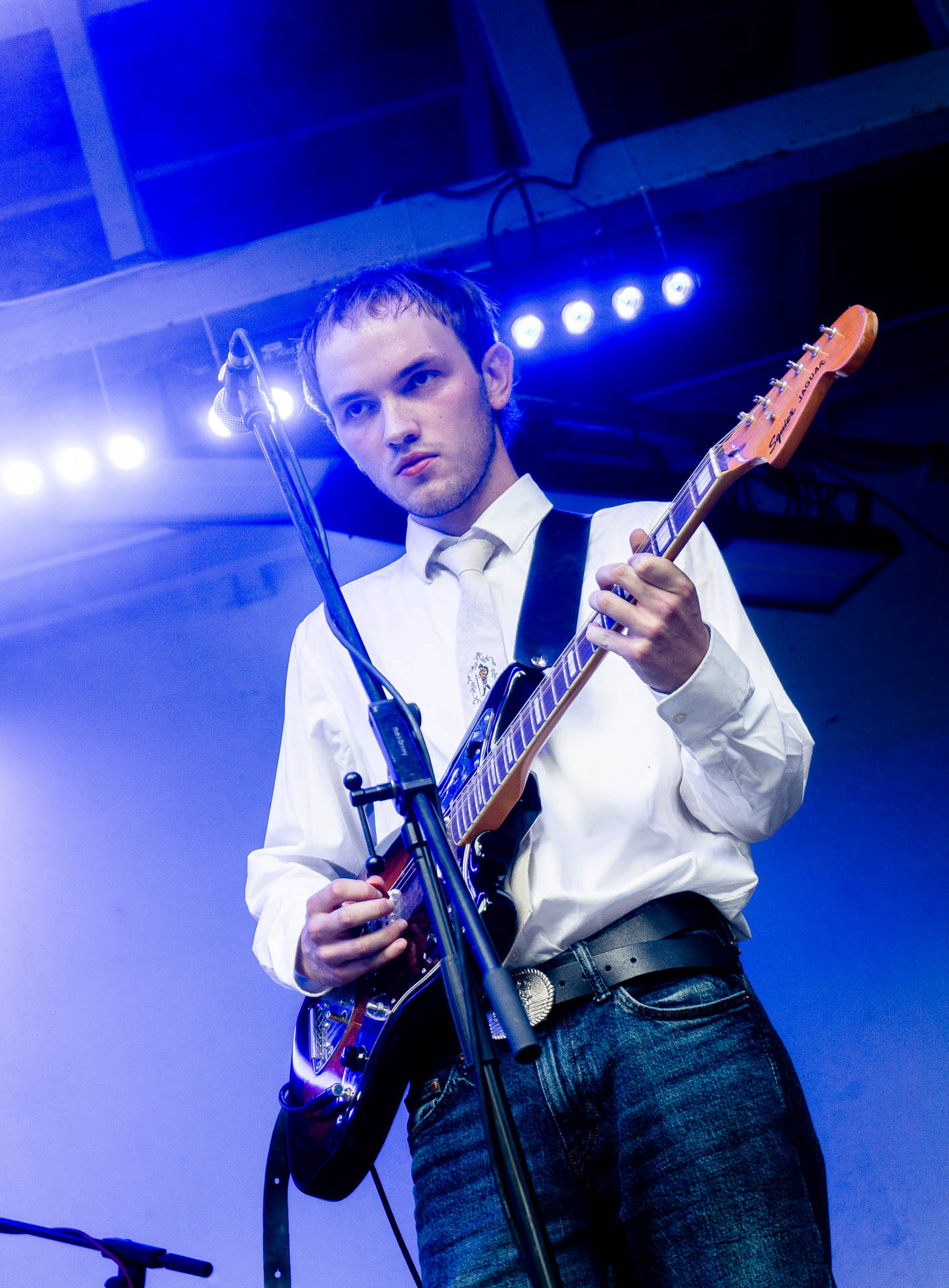
Magical Banská Štiavnica, internet art, a boiler full of sweat at Hájovna, night skinny-dipping in the tunnels, all of this is part of the Realshit festival. The fourth edition of the multi-genre event, which originally started as a birthday celebration, experienced foreign bookings for the first time and a sold-out capacity weeks before it began.
Magical Banská Štiavnica, internet art, a boiler full of sweat at Hájovna, night skinny-dipping in the caves, all are part of the Realshit festival. The fourth edition of the multi-genre event, which originally started as a birthday celebration, experienced for the first time international bookings and a sold-out capacity weeks before the start.
Visitors could see everything from Prague's SoundCloud rap, through Hungarian post-punk, to a local audiovisual DJ set. The music lineup forms a significant part of the program, but we must not overlook film screenings from Kosovo, Bratislava, and Brno, an exhibition at Mikovíniho House, or markets of various small businesses. The accompanying program transports the venue to diverse corners of the city, whether they are local galleries, Antikvariátik, a church, Eleuzína cultural centers, or Art Cafe.
Just like last year, the festival began with an exhibition opening – this time titled After Us: The Imprint of the Digital Age. The concept of an archaeological site of material artifacts from the digital world was embodied in the early medieval ruins of Mikovíniho House. Included were, for example, a throne made of assembly foam by Michaela Prableskova, digitally damaged images (poor image) by Martin Maia, or a performance by Tomáš Brichta, during which he threw a stone over his head. The works commented on the era of AI, patriarchal structures, and the need for constant optimization. Musical highlights of the first day included Ostrava-based musician JamaicaFusball and Prague's experimental project GbClifford. Although the projects are dramatically different, connecting them is one of the main features of the festival.


On Friday, markets and stalls with jewelry and clothing, as well as stickers and patches from the Povstanie pokračuje group, spread across the Art Cafe's garden. The morning program also included a film screening at Kino Akademik and a drone folk concert at St. Catherine's Church. The program at Hájovna was opened by the girls' group Vlasta, which we observed while cooking goulash from the parking lot, and the excellent Košice screamo band itlookssinister. On Saturday, the festival was nearing its end, with most of the program again taking place at Hájovna. The first musical act was the new project Pebble Seven, after which some of us headed to the caves, and so we only managed to see the Slovak-Czech trio Flüst at the very end. However – based on the opinions of my friends – for many, it was the highlight of the entire event. The evening was closed by one of the headliners, the band Evanora: Unlimited, preceded by American rappers Nation.
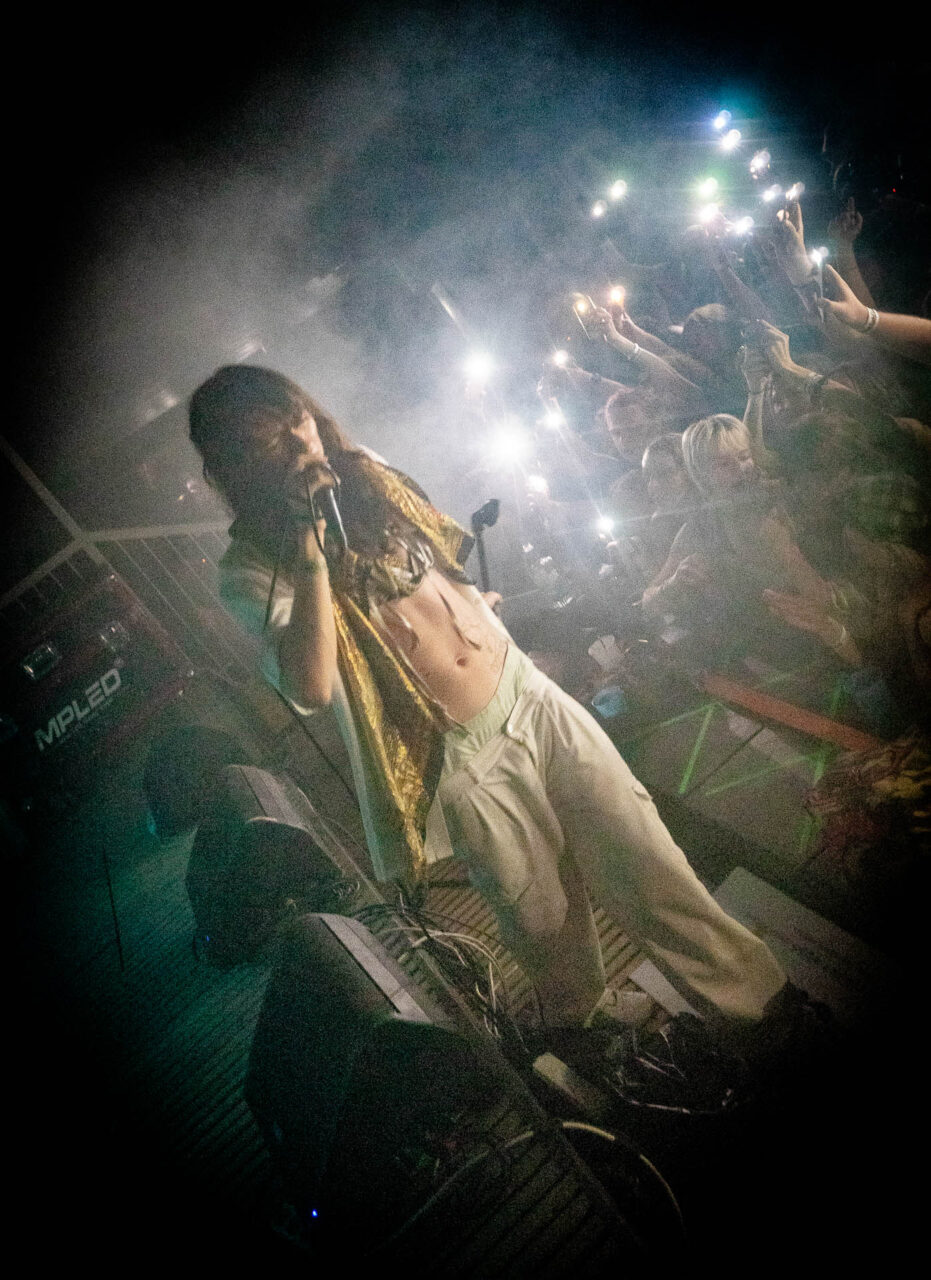

Realshit was created as a generational profile of Gen Z. The unofficial first edition was organized as a birthday party and stemmed from the need to bring youth culture to Banská Štiavnica. The town has no universities; young people often travel to other cities for high school – it is full of cultural centers and events, but representation of young art was needed as salt. The birthday celebration and the first summer festival attracted young bands, visual art, films, and literature to Štiavnica. Žofia Lišaníková from the organizing team says that many people perceive Štiavnica as a tourist backdrop and a place to come and swim. Alongside the theater festival Vlnoplocha or the Four Elements, Realshit showed young people from various parts of Slovakia the cultural side of the town.
Solidarity and Respect
The core of the organization (Alica Lazar, Žofia Lišaníková, Daniel Kubiš, and Martin Kuchta) – as part of Generation Z – again assembled a three-day program for visitors. Its characteristics directly reflected not only in the lineup content but also in the way it was organized. Generation Z, as I perceive it, or my bubble, is characterized by an emphasis on creating safe spaces – we grow up in very specific conditions, in a time of polycrises, living in a world that seems not made for us. Realshit offers an alternative to this world, created exactly as we would like it to be. As Alica Lazar says: “The whole festival is in a fairy-tale town filled with a full-day program and creates a kind of comfort and detachment from reality.”
Film program dramaturg Dorota Suranová also describes solidarity as an important cornerstone of the festival: “The trait that I think can define the festival is solidarity, mutual help. Without it, it wouldn’t work. From the first editions, Realshit has received minimal, if any, support from institutions like the Fund for the Support of Arts, and its functioning depends on volunteers and the kindness of various people from cultural spaces in Štiavnica, such as Hájovňa and Art Cafe. Solidarity operates on layered levels, from people who come to cook and guard the entrance, to artists. The social structure of the festival seems quite stable to me; many have been coming since the first edition, relationships are nice and friendly. Many cite this as the main reason they keep returning. Its intimacy – due to limited capacity – allows strengthening relationships and building solidarity. In my observations, the festival doesn’t function hierarchically; everyone talks to everyone, interactions are very genuine.”
Strong relationships and healthy communication are aspects I also felt intensely myself. They are the foundation of any functional collective, but especially Generation Z is more often confronted with issues of mental health and related needs, which they accept and respect. I don’t even know how to describe it precisely, but whether respect comes from personal experience or is enforced because that’s how it’s done, you can feel it. Realshit truly creates a relaxed atmosphere, communication with the organizers is straightforward and sincere, everything can be adapted to both sides’ needs. I am sure that any form of unacceptable behavior would be immediately condemned. I haven’t experienced booking problematic artists, and this year even the police didn’t cause issues.

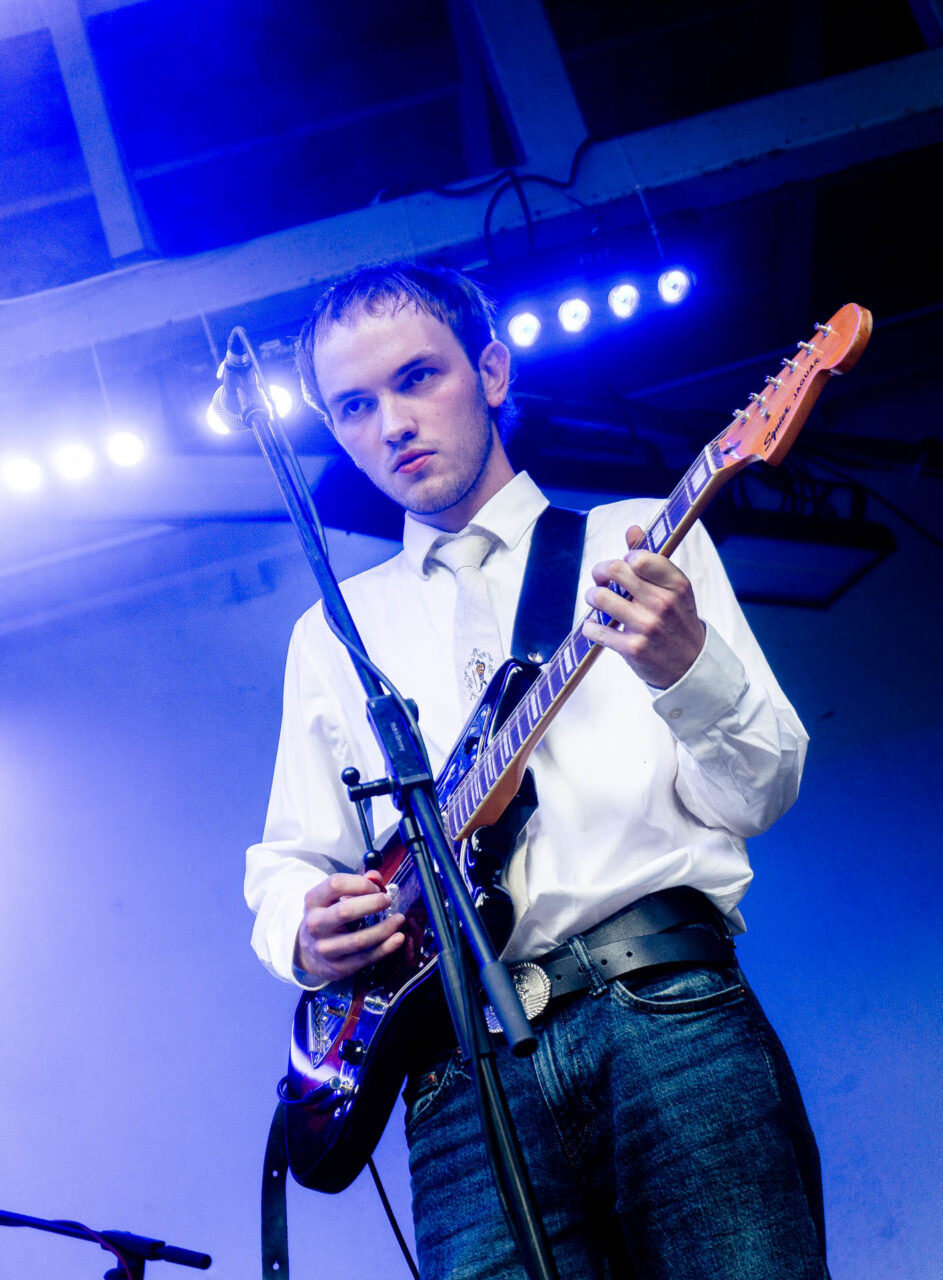
The entire festival has a capacity limited by the small town, which gives visitors a sense of intimacy and closeness to the artists and organizers. Filmmakers know musicians, volunteers know organizers – which is impossible at larger festivals. Curator Olivia Ondreičková describes it as follows: “We (people connected to the festival, author’s note) are linked through a network of friendships across Slovakia. It’s relationships that connect our bubbles and disciplines – musicians, filmmakers, theorists, sociologists, anthropologists. All are in one group, and it’s amazing. It’s a specific thing in Slovakia that, thanks to its size, the generation across the country can connect and get to know each other. These overlaps also reflect in Realshit. The passion of the generation and determination – I love this, I want to find a form for it, and I will do it.”
In the organization of Realshit, I see anarchistic traits that make it (not only) in Slovakia exceptional. It is an independent event in the true sense of the word, more or less functioning only from purchased tickets, without grants. Without mutual help, it wouldn’t work – those with cars pick up artists from the station, those with equipment bring and lend it. Collaborations with independent spaces within the town are not only based on financial support but also on the willingness to provide space for young art. No shiny sponsorships anywhere. The flyer doesn’t need to proclaim respect and safety; the festival simply lives by them. As Alice Lazar says: “Realshit has always been about the people who attend, even if it sounds like a cliché. It wouldn’t work without the people who help, even when they have no reason. For example, I would mention Mišo Tresu, who last year came as a participant but lit up the entire exhibition and helped light the stage in the evening. And he’s just one of many who gradually join and collectively create Realshit.” The festival is purely DIY in the sense of separation from institutions; young people still lack connections to the cultural community, so they have to manage on their own, and it grew mainly through word of mouth, with friends bringing friends.
DIY as Identity
Žofia Lišaníková says that there are places that support young art – but they are often overseen by established dramaturges of cultural centers, older curators and curators. Few festivals give the organization into the hands of young people to create space for new art. After all, who else should know new projects if not those who are present at their first steps – releases, posters, failed pieces that stay in the drawer. “Until now, we’ve been DIY every year, not dependent on grants or funds. We sustain ourselves from tickets. We managed to operate even when many festivals canceled. The DIY way of organizing is existentially important for our generation and shapes our identity.”

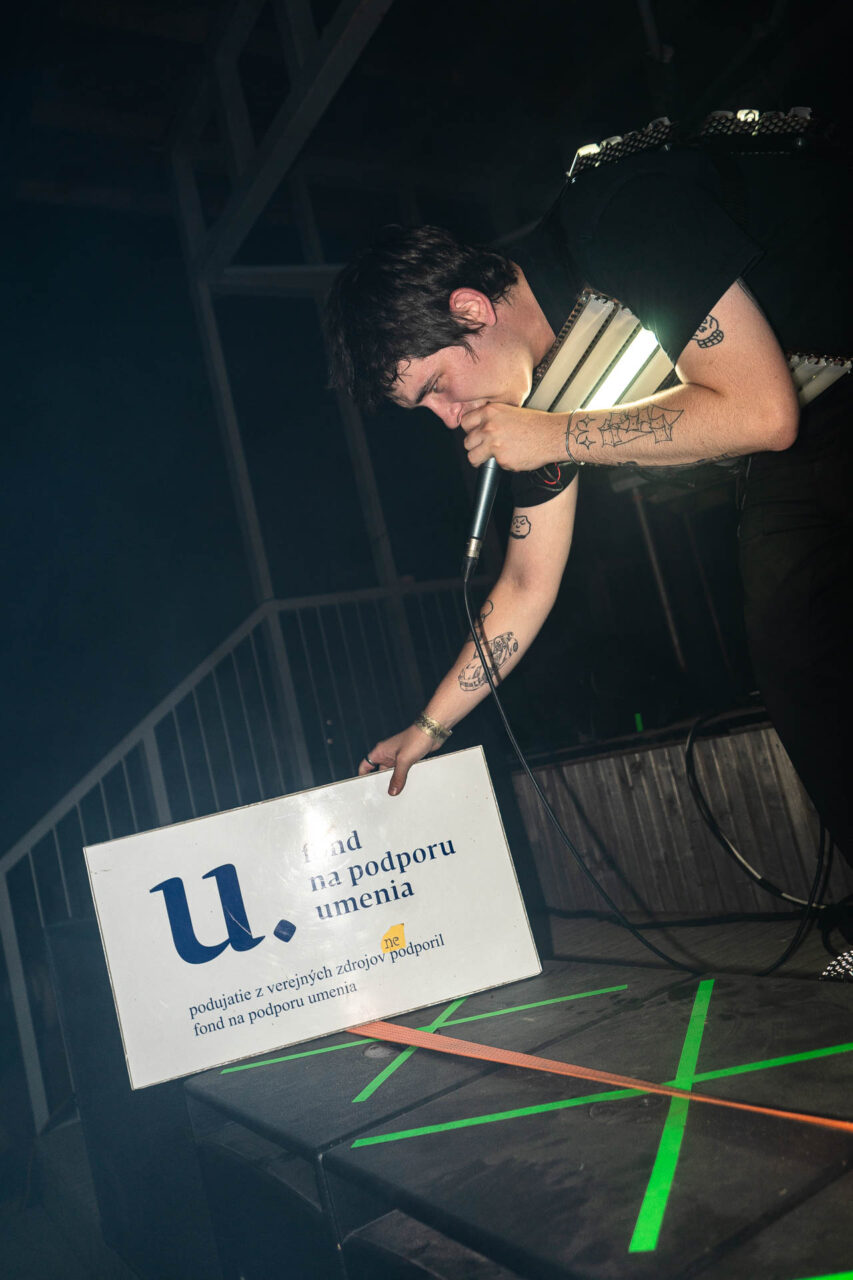
Curator Olívia Ondreičková explains: “The festival was created on its own and operates mainly based on networking in Štiavnica and the trust people place in us. They themselves, voluntarily, put energy into making the event possible. I see the way Realshit is produced as a strong form of resistance to institutional repression.”
The organization of the festival is very naturally connected to the town’s context. Part of the organizing team grew up there, has contacts with locals, and getting them on the same boat is much easier. A similar Czech festival, Creepy Teepee, has struggled with this aspect for years; in Kutná Hora, they couldn’t establish roots properly, and this year they even had to relocate to Prague’s Štvanice Island.
An essential part of psychological safety is also tolerance of diversity, which is reflected in the variety of the program. Each of us reacts differently to the social context, finds solace in different art, or escapes from harsh reality in another direction. Different forms of self-expression as reactions to shared hardships find refuge at the festival in one place. Visitors have the opportunity not only to discover different genres but are also directly confronted and sometimes forced to understand otherness. The mixing of significantly different bubbles occurs within both the accompanying and musical programs. “For me, Realshit represents Generation Z through a mix of art that stems from the internet and discourse created on new media,” explains organizer Daniel Kubiš. “From music to exhibitions, films, and all kinds of creations found at the festival – we try to encompass every form of expression relevant to Generation Z. Realshit offers a showcase of self-presentation of our generation, which is a connection of everyday life and online spaces, many aesthetics, and interesting scenes. At Realshit, bubbles meet and learn from each other new things. It’s very nice how people care about each other here and can talk without pomp or mockery. I see removing this stigma as one of the characteristics of Generation Z,” concludes Kubiš.
Film dramaturg Leo Knut describes similar observations: “I feel that the characteristic of Gen Z, which Realshit emphasizes, is the eclecticism of our taste. Although the festival has never limited itself to genres or artistic directions, I had a sense of unity in the overall program – despite everything, it makes sense together. At Realshit, I don’t perceive that the strength of a work or musical act is determined by genre, but by the fact that it’s ‘real shit,’ God knows what that even is, but you can feel it. Thanks to the internet and short-form content, it’s almost impossible to categorize oneself today – Realshit accepts this and celebrates the eclecticism of today’s fragmented and accelerated era.”
According to visitors, it is precisely the eclecticism that most emanates from Generation Z. As Jonáš Gruska from Lom Publishing states: “Realshit reliably ignores genre boundaries and focuses on a specific kind of energy. Subcultural patterns are mixed in one mash, free and deconstructed.” Jakub Juhás from mappa publishing adds that at the festival, “any musical, genre, or bubble boundaries are crossed. While elsewhere it’s a conscious goal rarely achieved, at Realshit, no one thinks about it – it just happens. You find something interesting and original everywhere, and it doesn’t matter that those scenes hardly know each other and seem miles apart at first glance. Music is tried out and grows directly on stage. These aren’t polished shows; Realshit is a hub where the universe spins and things happen that always sound a bit different than on other stages.”
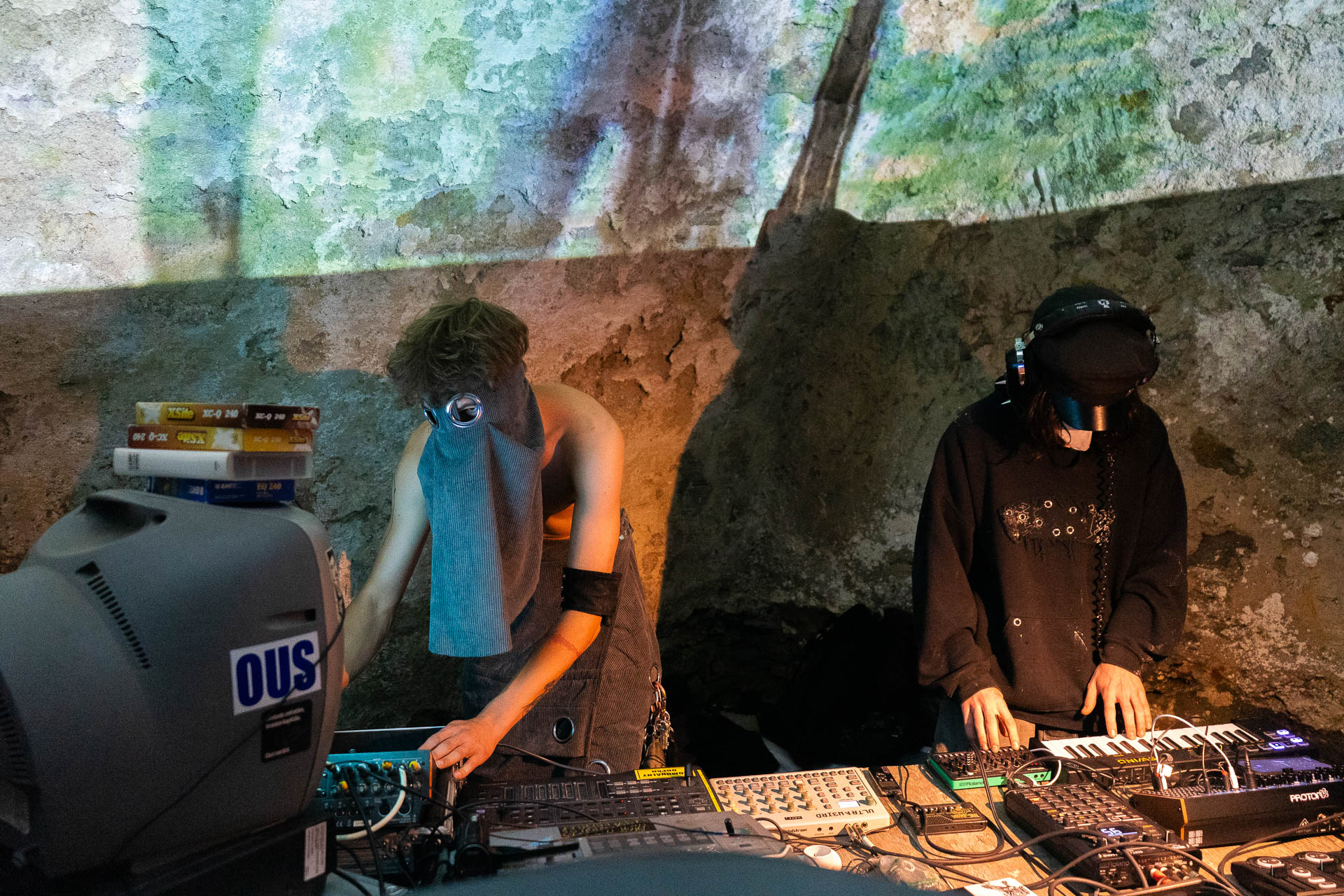
Michaela Cagáňová, curator and artist, adds: “For me, authenticity and sincerity in creating the festival are key. No one tries to be perfect, so I also find a safe space there. Besides that, there is a wide diversity of styles, musical and fashion-wise. Rap concert, pop, neo-folk. Everyone goes to everything, no one has a defined style, and everyone meets together at some concert. Punks with ezo and emo with gobli-cors.”
Realshit in Slovakia repeatedly presents a unique musical lineup with a rich accompanying program, but it is also going through a challenging period that the cultural community is experiencing. Its enchanting energy shows many qualities of Generation Z that older generations could learn from. Solidarity, tolerance, and diversity are not empty words here but fundamental building blocks of the entire event. The DIY identity and functioning based on mutual help and the desire to create an alternative world make Realshit as real as it can be.


The text is part of the PERSPECTIVES project – a new brand for independent, constructive, and multiperspective journalism. The project is funded by the European Union. The expressed opinions and positions are those of the author(s) and do not necessarily reflect the views of the European Union or the European Education and Culture Executive Agency (EACEA). The European Union or EACEA do not assume any responsibility for them.