When even the last glaciers melt
Kapitál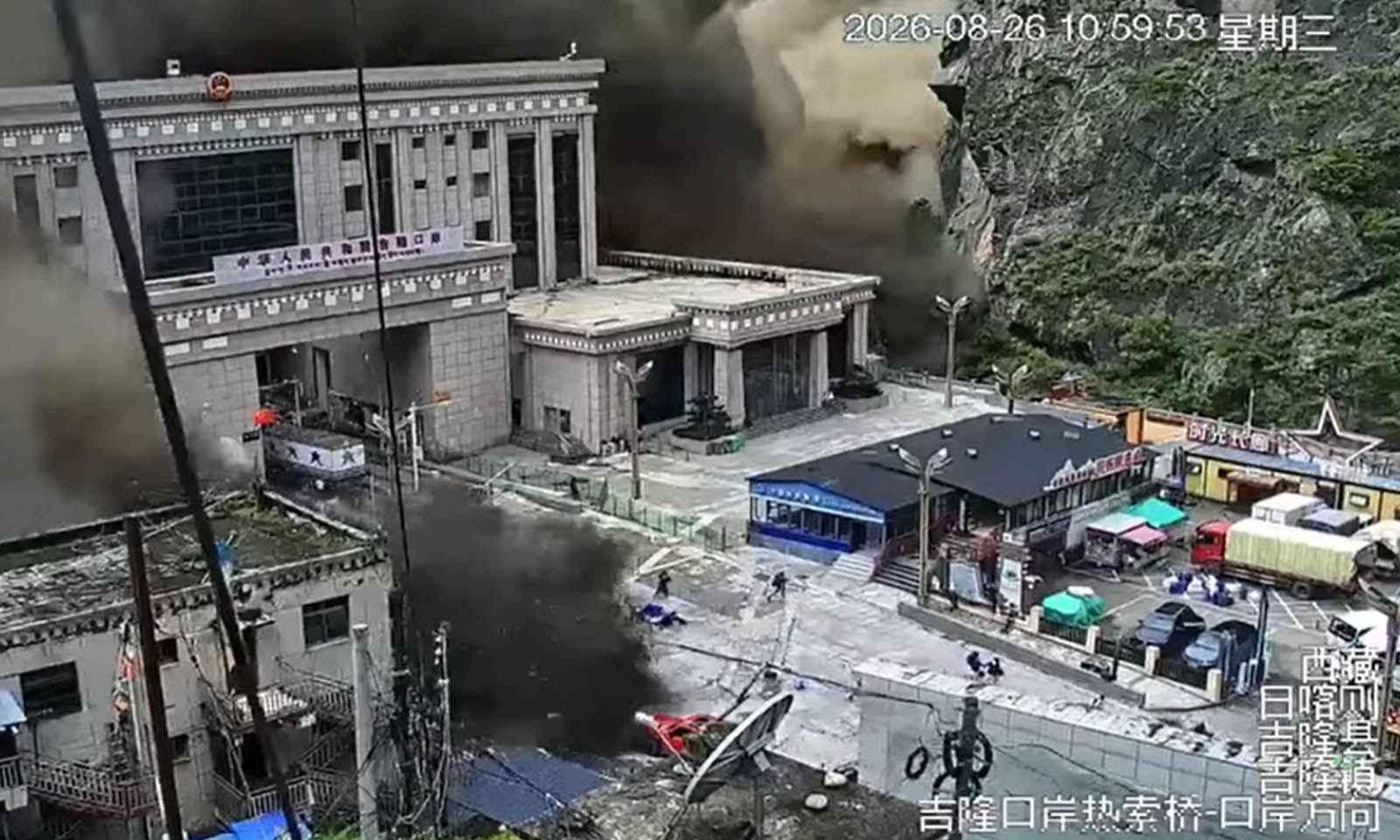
In the famous theatrical play Max Frisch's Hitler and the End of the World , a decent, wealthy city dweller hosts two suspicious men in his attic. Although he sees them carrying barrels of gasoline, installing an incendiary fuse, and openly talking about setting fires, he turns a blind eye to the reality. He does not want to disturb his comfort and does not want to admit what is happening. And he wants to stay on good terms with them. In the end, in a desperate attempt to maintain the illusion of peace, he himself hands them matches. The entire house burns down. Along with him and his family.
In the famous theatrical play Biedermann and the Arsonists by Max Frisch, a decent, wealthy city dweller hosts two suspicious men in his attic. Although he sees them carrying barrels of gasoline, installing an incendiary fuse, and openly talking about setting fires, he closes his eyes to reality. He does not want to disrupt his comfort and does not want to admit what is happening. And he wants to stay on good terms with them. In the end, in a desperate attempt to maintain the illusion of peace, he himself hands them matches. The entire house burns down. Including him and his family.
Max Frisch originally wrote this work as a metaphor for the creeping rise of totalitarian regimes of the 20th century, which society closed its eyes to out of cowardice. I am convinced that our global civilization is precisely in this position today. We are like Gottlieb Biedermann, who looks directly at barrels of gasoline in his own attic, but instead of putting out the fire, he seeks a new economic opportunity.
The play also features a fire brigade, which sees the impending fire, passively comments on it, but does nothing to prevent it. Today, this fire brigade is embodied by world leaders, intellectuals, and scientific panels, who analyze climate catastrophe at length and express concern, but delay real actions. We are witnesses to an absurd theater where academic debates and bureaucratic statements replace real efforts to save the planet, while arsonists in suits continue to strike matches.
Sirens will not help us
Terrifying videos from Nepal after the devastating flood have touched us all. The collapse of a glacier on the Nepal-Tibet border washed away entire villages. The disaster claimed over 1428 victims (and the number is still rising) and thousands are missing. As Professor Anjal Prakash, one of the main authors of the scientific reports of the Intergovernmental Panel on Climate Change (IPCC), said: “No siren can outpace a landslide of a mountain mass that collapses within seconds.”
Warning systems fail because the real failure occurred much earlier. The loss of lives is also large because current business builds infrastructure and hotels in risky river valleys simply because it is more profitable financially. The International Centre for Integrated Mountain Development confirms in its reports that modern construction ignores traditional knowledge of local communities. Developers, seeking quick profit, have occupied dangerous flood-prone areas that indigenous inhabitants have consciously avoided for generations.
Our economists only shrug their shoulders at this. Vladimir Baláž views the tragedy through cold numbers. In his article The Himalayas Have the Last Word, he states that earthquakes and floods in developing regions have only marginal significance for global financial flows, as long as the money flows can be redirected elsewhere. He concludes his reflection with a chilling sentence: “Economic laws apply everywhere: one person’s misfortune is another’s happiness.”
This approach is very dangerous. It shows the absolute blindness of market technocracy. It refuses to see human tragedies because they do not fit into growth tables. We also directly contribute to this disaster. Mass and commercial tourism have turned the Himalayas into a ruthless business. For the comfort of Western travelers, luxury resorts are being built in pristine valleys. Thousands of airplanes and helicopters emit emissions for “experience-based instant tourism.” These planes melt exactly those glaciers that people come to admire. The bill for the climate catastrophe, however, will be paid with the lives of poor local people.
Climate apocalypse as a new market
While on one side of the world melting ice kills and destroys, the economic system on the other side turns the same planetary disaster into a new profit sphere. Arctic ice is melting at an unprecedented rate, but instead of issuing a global warning, the market immediately seeks new opportunities.
Will the sea open? Then a new trade route will be established.
Will the ice disappear? New territories will be opened for shipping, oil, gas, and mineral extraction.
Will a new corridor between China and Europe be created? Companies will immediately start using it for faster cargo transport.
This is exactly what is happening today in the Arctic. China has already launched regular container shipping along this route; the journey to Britain can take about 18 days instead of over 40 via the Suez. Russia, through Rosatom, controls a large part of the Northern Sea Route and provides nuclear icebreakers, without which regular commercial shipping would be much more complicated. The Arctic thus becomes a symbol of both the climate crisis and trade. What the climate catastrophe reveals and unleashes from under the ice immediately becomes a target in ruthless battles for power and new markets.
A new space for profit has opened, and the system has a strong motivation to exploit it. The question of what it will do to the environment and the people living there often comes only afterward. Or not at all. Maritime transport produces massive emissions and black carbon (soot), which settle on snow and ice, reducing their ability to reflect sunlight. This dramatically accelerates the warming of the entire Arctic region.
It is one big (mis)cycle because the climate crisis melts ice, and the melted ice then “opens up new economic opportunities.” These are then reflected in economic activity, which brings further transportation and extraction, thus more emissions and pressure on the ecosystem. And so, the climate crisis deepens further. Capitalism can even turn a climate disaster into a new market. That is why Baláž’s claim that “business will go on” is a terrifying capitulation to this perverted logic of profit. Our economic system rewards those who profit from the melting Earth instead of stopping it. The blind faith of our economists in the endless market mechanism only legitimizes the fact that while the world burns or melts, business opens a new branch on its ruins.
Who profits and who pays the bill?
The problem is that today’s market ignores the lives of our children unless it can profit immediately from them. When a new profit space appears, the system simply has an inexorable motivation to exploit it. It does not ask what it will do to our world. The profit from faster transport and accessible resources is privatized into the accounts of states and companies that own the infrastructure. Huge cargo ships now flow through the frozen Arctic seas, and aggressive extraction of fossil fuels is launched directly in the north. The threat of massive oil spills in the frozen sea, where oil cannot be cleaned up, leaves destroyed homes solely on the shoulders of local people. These are costs that do not fit into corporate accounts; someone else simply pays.
Economists call this negative externalities. It means that corporations transfer the real costs of pollution and resource plundering onto society, cynically considering them as side damages for which they do not intend to take responsibility or pay. If these hidden environmental costs are not included in the overall price of products and transportation, the market will continue rewarding those who damage the living space the most. Scientific data from the latest – Sixth Assessment Report of the IPCC – also provide hard evidence that we live in a reality of deep climate injustice. According to the UN panel’s reports, today between 3.3 and 3.6 billion people live in highly vulnerable areas to climate change. Most importantly, in the most vulnerable regions of the world, there have been up to 15 times more deaths in the last decade due to floods, droughts, and storms compared to low-vulnerability countries.
From an environmental economics perspective, this is a pure asymmetry. Elites collect the profits, while the poorest populations, which have contributed almost nothing to global emissions, pay this ecological debt with their own lives. The Arctic and Himalayas thus pose the same uncomfortable question: If we can turn the shrinking of Earth’s ice cover into a new business, can we still distinguish economic opportunity from signs of global ecological collapse?
Or will we truly be a unique animal species that acts in a way that ensures its own extinction because it is not economically profitable to do otherwise?
Waiting is no longer a strategy
As concerned mothers, we refuse to passively sit “on the attic” and wait for the flames to start licking through the floor into our children’s rooms. We do not want to wait until this crisis affects each of us personally, because then it will be too late. This is no longer a legitimate strategy.
We must ask. And ask aloud what we can do right now so that short-term profits of companies are not more important than a world where our children can live safely.
We can no longer passively wait for the bureaucratic “fire brigade,” which holds all the power and budgets, to issue only formal statements instead of real actions.
Because they also express some kind of concern. But it is a different concern than ours. Our concern is the driving force for action, while for politicians it is just an alibi phrase to cover inaction. Based on their current steps, it looks like they will not only fail to extinguish the fire but either watch it passively or actively stoke the flames under pressure from fossil fuel business.
We must change this state together. Let’s unite and demand systemic changes. Let’s exert continuous pressure on politicians and support solutions that protect the future from profit-driven activities that ignore nature, climate, and the lives of ordinary people. If we, who care about survival, do not create this social pressure, no one else will do it for us.
And let’s also tell Mr. Baláž and all those who claim that “business will go on”: No, Mr. Baláž. When humanity collapses, no business will continue. This “business” is fundamentally human activity, and dead communities do not trade!
Let’s not allow the Biedermanns of this world to hand the last match to the arsonists!

The text was created with the support of the Rosa Luxemburg Foundation, with representation in the Czech Republic. The publisher is fully responsible for the content; the views expressed in the text do not necessarily represent the foundation’s position.