First they took away our stars, now they want to take away the night
Krytyka Polityczna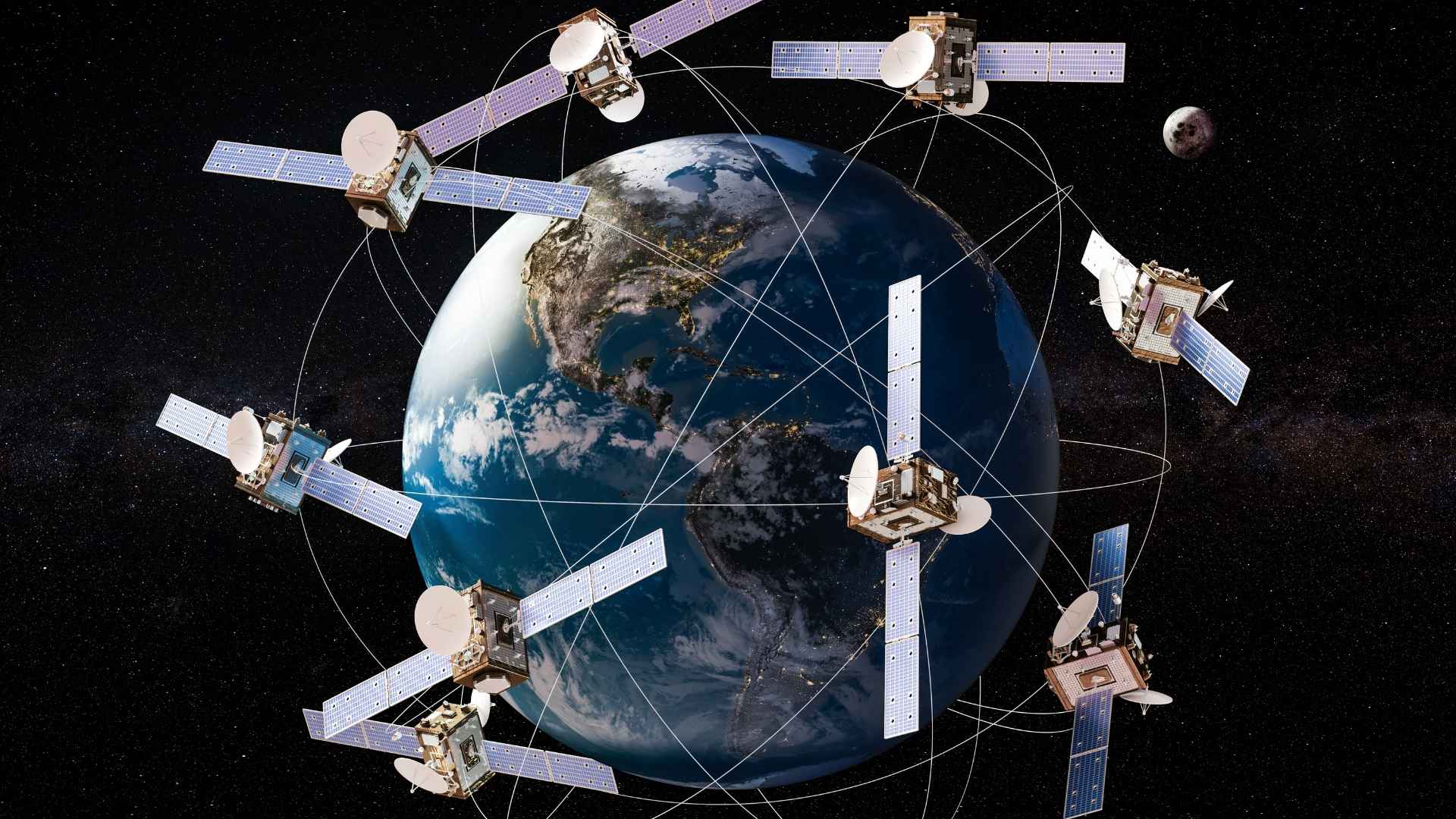
The institution established to maintain order in the ether and regulate what reaches our orbit is losing to capitalism and the enormous ambitions of eccentric CEOs from Silicon Valley. The post First they took away our stars, now they want to take away the night first appeared on Krytyka Polityczna.
In early July, the American Federal Communications Commission (FCC) approved the placement of a gigantic mirror in low orbit, which on demand is to reflect sunlight to areas currently in darkness. The project is led by Reflect Orbital, headed by Ben Nowack, a former employee of SpaceX.
It won't end with just one mirror. The company from Hawthorne, California, aims to deploy 5,000 mirrors in orbit by the end of the decade, and by 2035 – ten times more. This ambitious project is expected to attract a wide range of users. These include rescue services, construction companies, farmers, solar farms, and the military. A beam of light with a diameter of 5 km, nearly 20 square kilometers, is enough to turn night into day in Radzyń Podlaski, Lądek Zdrój, Skawina, Brzeziny, or Pruszków – with intensities ranging from a full moon, through streetlamp illumination, to "white day" – costing $5,000 per hour.
But before the first mirror appears in orbit, let's ask: what is night – and do we currently have true nights?
True darkness is becoming a luxury good
From an astronomical point of view – yes. At night, the Sun illuminates the other half of the planet, and from our perspective, it dips below 18 degrees below the horizon. It is then dark. Sometimes completely, and sometimes not, when the full Moon is bright enough for a person to cast a shadow. It is under these conditions that we evolved, just like all other species. We and other "diurnal" animals need this time to rest and gather strength. Nocturnal animals, on the other hand, are active precisely then.
The emergence of various inventions that somewhat deprived the night of its "nightliness," from street lamps, gas lamps, and later electric lights, to flashing screens, disrupted our environment. We humans suffer and do not get enough sleep. Nocturnal animals are disoriented, their navigation senses malfunction, they become more vulnerable to predators, and they have difficulty hunting.
Light has become, in fact, pollution. Who remembers science programs about space, which informed us that there are billions of galaxies in the universe, and within them billions of stars? Just look up and absorb the vastness of space.
But not at all.
In today’s cities, at night, you can see at most a few dozen stars, if any at all. Scientists in the journal "Science" calculated that based on the decrease in star visibility, the night sky is getting brighter by about 10 percent each year.
Stars are becoming a luxury good that only the privileged can afford
Seeing stars is becoming a luxury that only a few can afford. It’s not enough to look out the window or go a little outside the city. You need to go on a trip to one of the few places far enough from "civilization" so that the night sky is truly dark. There is even a dedicated network of such places, united under Dark Sky International. There are nearly 300 of them, guaranteeing the experience of a real night. In Poland, there are two Dark Sky Parks – one in the Izera Mountains, the other in Bieszczady.
The answer to these problems is understanding that a true night is necessary for us and our environment. It’s not about turning off all lights and living in Egyptian darkness, but about smart lighting of our cities and questioning whether every part of them needs to be illuminated so intensely and throughout the entire night.
Thousands of satellites and space mirrors
But even if we completely solve this problem, and stars and the Milky Way appear again at zenith, there will be flashes of thousands of satellites zipping at high speed across low orbit. There are already over 11,000 Starlink satellites in space (two-thirds of all satellites in low orbit). In the coming years, their number is expected to increase several times. Add to this 50,000 mirrors from Reflect Orbital and dozens, perhaps hundreds of thousands of others planned by American companies to be placed in low orbit, and the space above our heads will be more crowded than Zakopianka road.
Currently, it’s similar. To launch a mission around the Moon, Artemis II had to wait for the right moment so as not to collide with one of Elon Musk’s satellites Elon Musk. The risk of collision with a satellite or one of over a hundred million pieces of space debris is increasing. A collision could trigger the so-called Kessler Syndrome – a chain of successive collisions leading to a rapid increase in space debris and significantly hindering the use of Earth's orbit.
Who controls space?
This is not the end of the controversies. Astronomers point out that thousands of mirrors could hinder astronomical observations, and the "rabbits" they cast during maneuvers could damage equipment on Earth and on other satellites. It could also be dangerous if a moving mirror blinds a pilot of an aircraft. Reflect Orbital defends itself with a responsibility strategy, but we know how life is – beautiful until the first Dieselgate.
A completely separate issue is whether space, especially our low orbit, which is a shared space for all Earth's inhabitants, should be appropriated by American business (spoiler – it should not, as stated in the 1967 treaty).
The FCC has approved all this. An institution that for nearly a hundred years has been responsible for allocating radio bands for various communication services – including television, mobile phones, and Wi-Fi. It also grants permission for deploying satellite constellations, including Starlink. The issue is that “the risk of damage related to Reflect Orbital’s solar reflector is beyond the scope of the Commission’s competence” – states the Commission itself.
An institution that issues permits for hundreds of thousands of American satellites in the future, and assesses the associated risks, does not have the competence to evaluate those risks. It’s not just about internet satellites or large mirrors, but also other projects, including space power plants transmitting energy to Earth via high-energy beams or space AI centers. Some projects are so strange that even the FCC notes them in its document titled Spectrum Abundance for Weird Space Stuff.
To put it simply – the institution created to maintain order in the ether and regulate what reaches our orbit is losing to capitalism and the enormous ambitions of eccentric Silicon Valley CEOs. And we, just as we currently lack stars in the night sky, may soon have no night at all. And all this for just $5,000 per hour (cheaper in a package).
Jan Ochnio – geographer, climatologist, journalist, co-founder and deputy editor-in-chief of the independent local portal zpruszkowa.pl
The post First they took our stars, now they want to take our night first appeared on Krytyka Polityczna.