Europe appears open. Competitiveness instead of cohesion and second-class membership.
Krytyka Polityczna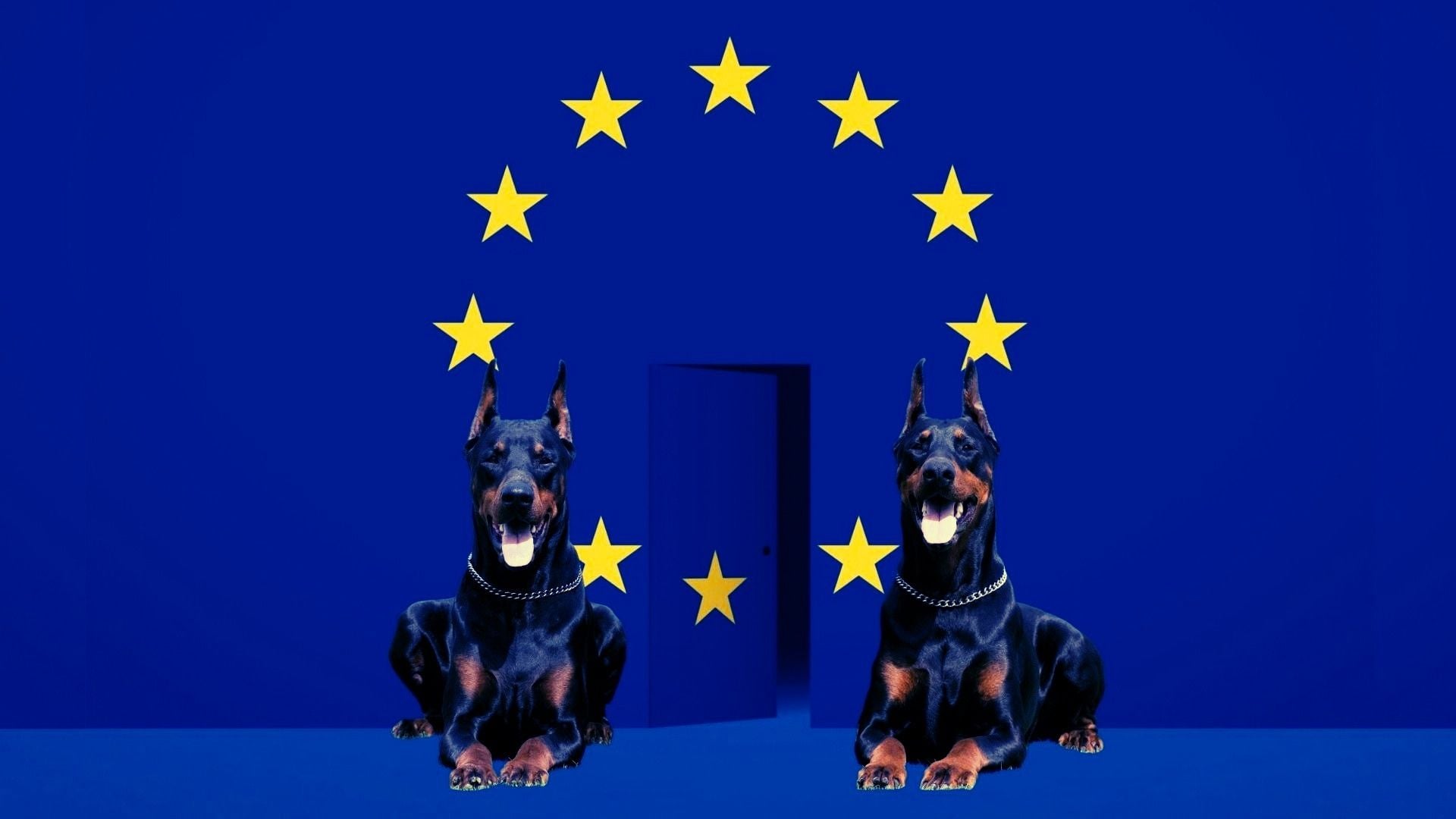
The European Union intends to seriously join the global economic competition. Unfortunately, the European center aims to do this by tightening the purse strings for less affluent regions of the EU and tightening the screws outside the EU periphery. The post Europe seemingly open. Competitiveness instead of cohesion and second-class membership first appeared on Krytyka Polityczna.
While the Polish public opinion is busy with daily scandals and national political squabbles, the government in Warsaw faces the most serious challenge of this year – and it will not be a clash with Karol Nawrocki. Negotiations regarding the shape of the next EU budget perspective, which should be concluded by the end of this year, will determine the direction of European integration for the next seven years, or perhaps even longer, as the adopted solutions will likely also influence the upcoming Multiannual Financial Framework (MFF) of the European Union.
Poland may lose billions from EU funds
Poland has already gone through this several times, usually with good results, as recalled by the famous “yes, yes, yes” of Prime Minister Kazimierz Marcinkiewicz from 2005, when the MFF for 2007-2013 was negotiated. After that famous event, Warsaw could still declare success twice more, as the next two budget perspectives were also favorable for Poland. In the just-concluded framework covering 2021-2027, we were once again the largest beneficiary of EU funds. About two-thirds of these were cohesion funds, and one-third was support for agriculture from the Common Agricultural Policy (CAP).
The upcoming seven-year period will probably be much less generous for Poland. The European Commission proposes that the future budget amount to 1.76 trillion euros, which is nominally two-thirds more than in 2021-2027. However, this does not mean that Warsaw will have proportionally more money at its disposal. In recent turbulent years, the old values concerning convergence, cohesion, climate, or green economy have been set aside, replaced by competitiveness, risky innovations, and fierce economic rivalry among global powers. On one hand, it’s hard to be offended that the EU is trying to find its place in a world with an overly assertive Washington, increasingly expansionist Beijing, and aggressive Moscow. On the other hand, such a shift in approach could be disadvantageous for Poland, as the priority will shift to supporting the stronger, not the weaker.
In line with this strategic change, the EC plans to reduce the share of cohesion, agricultural, and migration policies in the entire EU budget from 62% to 43%. Cohesion and agricultural policies will be combined into a single program called the National and Regional Partnership Plans (KRPP), which will amount to 771 billion euros. The associations with the KPO (National Recovery and Resilience Plan) are very appropriate, as receiving these funds will most likely also depend on implementing specific reforms and adhering to EU standards. The EC also plans to expand its control over the expenditure of EU funds by increasing the pool of funds at its disposal. Mainly, this concerns the European Competitiveness Fund, which could reach 207 billion euros. The Horizon Europe program, supporting science and technology development, would receive 155 billion euros, and the EU’s international policy would get 190 billion.
Competitiveness and security are the two main values of the upcoming EU budget perspective, which is reflected in the proposed division of funds. According to analysis by the Polish Economic Institute, in constant prices (i.e., adjusted for inflation), Poland received nearly 130 billion euros from cohesion and agricultural policies in 2021-2027. Under the EC’s proposal, for 2028-2034, Poland would receive about 10 billion euros less for these purposes. Poland will not be an exception – exactly every EU country, according to the EC’s proposal, will be proportionally disadvantaged in cohesion and agriculture.
Six wealthy EU countries want deeper cuts
This is just the beginning of problems. Following the emergence of a group of countries aiming for greater savings, the Cypriot presidency, which held the EU Council presidency in the first half of 2026, presented a proposal to reduce the next MFF from 1.76 to 1.73 trillion euros. These changes were quite cosmetic – for example, cohesion and agriculture would lose one billion euros, the competitiveness fund 8 billion, and Horizon Europe 6 billion. Unfortunately, these delicate cuts proposed by Nicosia were unlikely to satisfy the wealthy core countries of Europe, for whom cohesion is no longer a priority; they want to seriously engage in the technological race.
At the end of September, leaders of six member states (Germany, Austria, the Netherlands, Sweden, Denmark, and Finland) sent a letter to the current Irish presidency, demanding significantly deeper changes. They believe that cuts in the EU’s seven-year budget should reach even hundreds of billions of euros, not just over 30 billion as proposed by Cyprus. Simultaneously, the group of austerity advocates demands shifting the focus even more towards competitiveness and security, so that this area gains relative to the current financial framework. Consequently, the cuts proposed by the “group of six” would primarily affect cohesion and agriculture, which so far absorbed the overwhelming majority of European funds flowing over the Vistula. Of course, this does not mean Poland could not obtain additional funding sources from the refined competitiveness policy, but it would have to compete with Europe's leading economies in this area.
The so-called friends of cohesion emerge in opposition
In response to this bleak outlook, an initiative called the “Friends of Cohesion” was also formed. This is a group of 17 Central and Eastern European and Southern European countries opposing the cuts proposed by the six austerity countries. The Friends of Cohesion do not oppose funding for innovation, technology, and defense; however, they do not want this to come at the expense of economic convergence and agricultural producers. Before the proposed cuts, EU Commission President Ursula von der Leyen also warned in her speech at the European Parliament. According to her, the proposal to cut the MFF by several hundred billion euros over the next seven years would deprive the EU of its advantages and ability to respond in critical moments.
As if that were not enough, the European Parliament also criticizes the Commission’s budget proposal. According to the EP, the budget should be 10% larger, but the EC should be deprived of control over the expenditure on competitiveness, which should instead be overseen by independent experts. The Irish presidency has a different opinion, proposing cuts of an additional 159 billion euros in the MFF, but not from cohesion and agriculture. According to Politico, 38 billion euros were cut from foreign aid, 75 billion from competitiveness, and at least 22 billion from reserve funds. The most affected would be the European Commission itself. According to EC officials, cuts in flexibility would cause Europe to lose the ability to assist farmers and regions during crises caused by climate change or geopolitical tensions. The “Friends of Cohesion” welcomed the Dublin proposal, while the “stingy six” were quite the opposite.
EU expansion, but with second-class membership
Deep changes will probably also affect the EU’s expansion policy. Declaring itself a united Europe, the EU plans to admit a whole group of countries from different regions of the continent. There are even talks of eight. Montenegro is closest to integration, having already joined NATO, and may join the EU by 2028. Negotiations are also ongoing with Albania, which plans to join the European Community in 2030. Moldova, associated with the Union since 2014, which received candidate status in 2022, and began accession negotiations two years later, is also relatively close. The biggest problem for Moldova is its territorial integrity, as the government in Chisinau does not control its entire territory – mainly Transnistria in the east, although there is also the Gagauz autonomy in the south. Also in 2024, Ukraine began accession negotiations, which faces many more issues – ongoing war, opposition from EU farmers, and rampant corruption. Other countries in the EU orbit include Bosnia and Herzegovina, Serbia, North Macedonia, and Armenia.
However, this opening of the EU to new countries is only superficial. At the same time, the Union plans a thorough overhaul of the accession process, including a series of transitional periods. There is talk of a ten-year probationary period during which new member states would not have full access to the common market and agricultural policy. Also planned is the introduction of so-called safeguard clauses, which would oblige newly admitted members to refrain from vetoing EU decisions and blocking the accession of subsequent countries. The question is whether such a second-class member status will satisfy potential candidates. Kyiv has already announced that partial membership in the EU does not interest them.
Europe is thus becoming less willing to share its wealth and increasingly distrustful of neighboring countries aspiring to a United Europe. However, it is the less affluent regions of the Union and its peripheries that have much greater potential for economic growth than old money from the West, ironically, from the Old Continent. Clearly, the core of Europe still believes that the less wealthy are primarily a burden.
The post Europe seemingly open. Competitiveness instead of cohesion and second-class membership first appeared on Krytyka Polityczna.