Blood and diesel on his hands
Voxeurop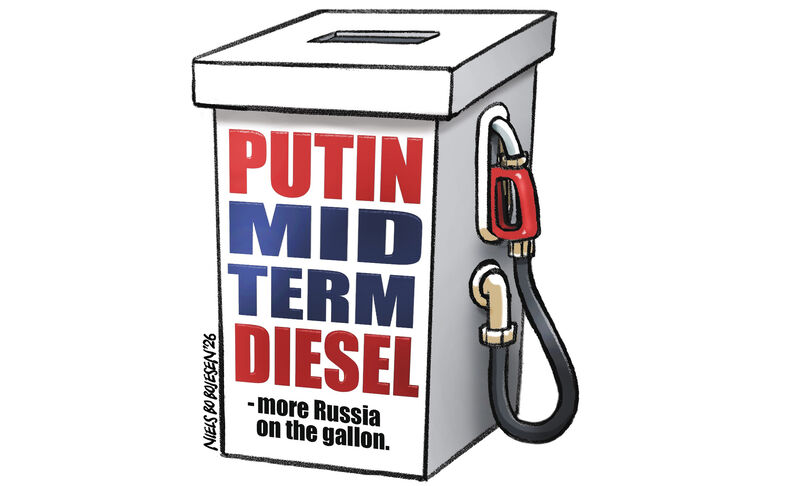
Amid geopolitical tensions, a new US-Russia energy deal raises questions about the motives behind lifting sanctions and the impact on Ukraine. With election season approaching, how will these controversial moves influence global stability and US political strategy?
Who cares about war and sanctions, as long as business can continue as normal? This is what Donald Trump appears to be implying with the new energy agreement between the United States and Russia, revealed on 9 October. According to the US president, Russia has committed to supplying several million tonnes of diesel to the US and global markets in the short term, in order to drive down prices, particularly for consumers across the Atlantic.
The agreement means that the US government is effectively lifting the economic sanctions that specifically target imports of Russian hydrocarbons. For Kyiv, the deal is “a weak decision, unworthy of our partners”.
More :In Northern Europe, joining the defence ‘is a matter of survival’
Another surprise was Trump’s announcement of an immediate ceasefire on attacks targeting Russian and Ukrainian energy infrastructure. This was apparently a unilateral decision, and Ukrainian President Volodymyr Zelensky was never consulted. The US President’s surprise announcements have provoked outrage throughout Europe, with many countries criticising the US agreement and reaffirming their support for Ukraine.
There is, however, a strategy behind Trump’s diesel deal. With mid-term elections looming, and shaping up to be particularly difficult for the Republican camp, the US President is making a flurry of promises – some of them utterly ludicrous – to rally voters. Lowering prices at the pump by tapping into Russian resources is part of this strategy, regardless of how effective the deal may or may not be, or the fact that such a deal is expressly prohibited by US law.