Jan Bierhanzl: The left and Christianity can inspire each other
Kapitál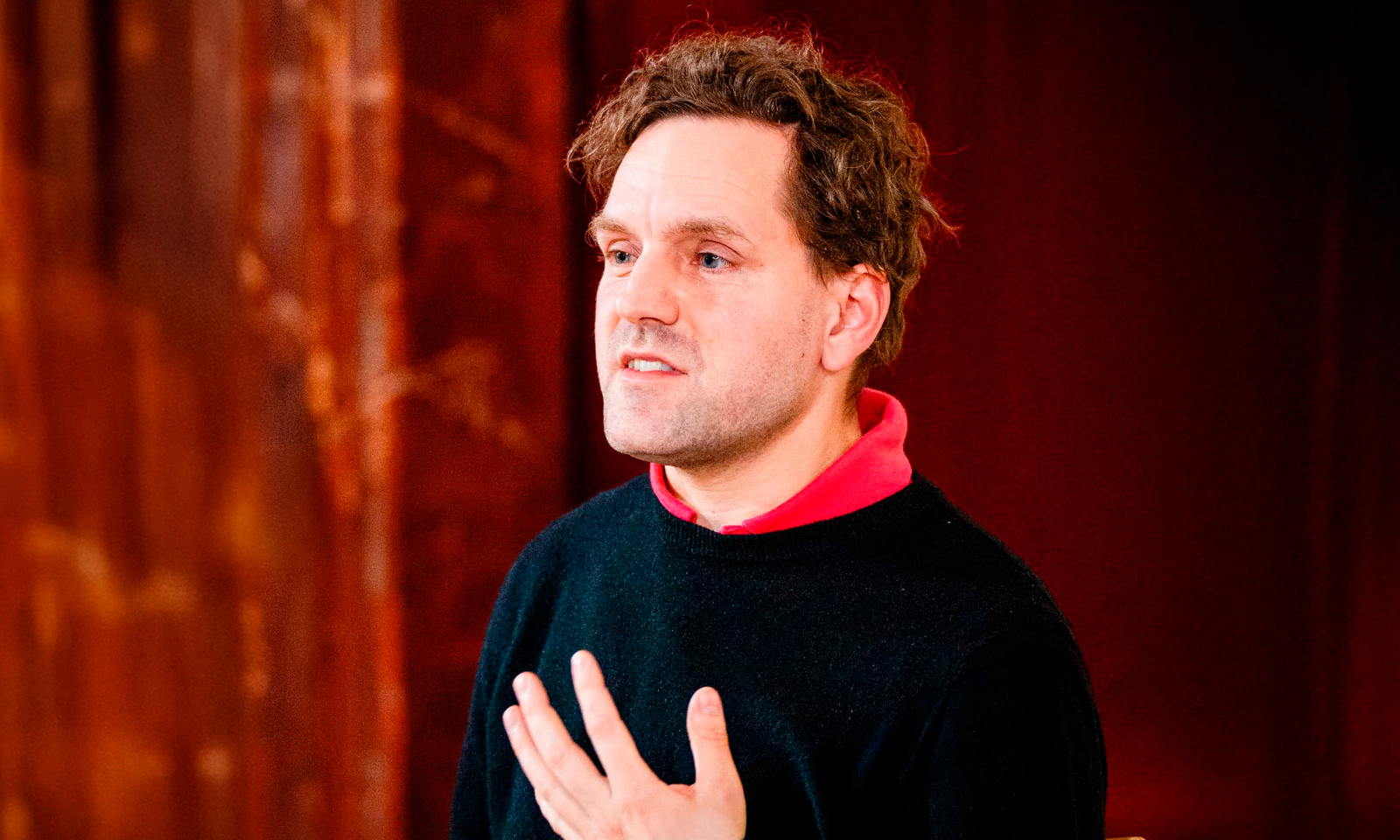
Can Christianity and Marxism inspire each other in the effort to create a fairer society? Czech philosopher Jan Bierhanzl, in an interview with Peter Daubner, explores the emancipatory potential of Christianity, liberation theology, and feminist critique of church power structures. He also discusses criticism of productivism, the "imperial way of life," the ecological crisis of capitalism, and the issue of housing as a material condition of human freedom. Using the example of the tenant movement, he demonstrates how collective action can open up possibilities for a more solidaristic and sustainable way of life.
Can Christianity and Marxism inspire each other in the pursuit of a more just society? Czech philosopher Jan Bierhanzl, in conversation with Peter Daubner, explores the emancipatory potential of Christianity, liberation theology, and feminist critique of church power structures. He also discusses critiques of productivity, the "imperial way of life," the ecological crisis of capitalism, and the question of housing as a material condition of human freedom. Using the example of the tenant movement, he shows how collective action can open up possibilities for a more solidaristic and sustainable life.
Currently, you are preparing a book titled Christianity without Theocracy. What does a Christianity that contributes to liberation and emancipation without claiming political dominance look like?
The term Christianity without theocracy originates from Ernst Bloch. As a heterodox Marxist, he drew heavily from radical religious traditions, criticized so-called liberal theology, and argued that religion does not need to be demythologized but rather de-democratized—that is, freed not from all popular religious ideas but only from hierarchical power structures based on the concept of God as an absolute ruler. Various myths and religious ideas are, on the contrary, essential for emancipation as reservoirs of utopia. We may perhaps associate Christianity too closely with images of the pope, bishops, etc. In this context, I always think of feminist liberation theologian Rosemary Radford Ruether, who was Catholic but said that her Catholicism does not identify with the pope.
Which Christian traditions and movements develop this emancipatory potential, and how is rejection of dominance connected with political engagement in them?
There are many Christian movements that reject tyranny as their organizational principle and at the same time do not dismiss folk traditions and ideas as backward: from the French workers' priest movement and early texts of Marxist Louis Althusser, who sought an alliance between Christianity and Marxism and liberation of religious life of Catholic youth from feudal and capitalist structures of the church at the time, to liberation theology and its emphasis on the perspective of the poor and the inseparability of faith from social practice fighting unjust structures in the world, including church ones, to feminist liberation theology and eco-theology. Christianity without theocracy is therefore not Christianity without politics but without a certain notion of tyranny. On the contrary, it can be very political: many liberation theologists, for example, identified with democratic socialism.
What can liberation theology offer to the secular left?
I believe that liberation theology can offer the secular left a religious or moral experience of fascination, which can be a driving force for emancipation. Whether it’s ethical outrage "the poor and the Earth are crying," or some form of mysticism that liberation theologian Leonardo Boff describes as experienced by people organizing together in the fight for justice. Ernst Bloch called this fascination or mysticism, which is necessary for emancipation, a warm current of Marxism in his grand synthesis.
And what can feminist and Marxist critique offer to churches?
Christian emancipatory currents have already integrated many elements of feminist and Marxist critique; for example, liberation theology explicitly worked with Marxism as one of the methods of social sciences that helps us see the problems of the contemporary world. In the Catholic environment, which otherwise incorporated many principles of liberation theology into its social teaching, it is unfortunately still necessary to remind that it is unacceptable for any organization to exclude women from participation in power. Specifically, in the Central European post-communist context, it would certainly be good if churches, in defending human dignity according to their social teaching, more often considered class analysis. Is it acceptable, for example, that a church advocating social justice lives as a rentier, as in the case of the Prague Archdiocese, which rents out apartments above affordable prices in cooperation with major developers?
Why does a philosopher seeking an emancipatory alternative turn to Christianity as well?
As a philosopher, I turn to Christianity as a common way of life and spirituality, into which I was thrown in childhood, in the second half of the 1980s, by my parents' conversion. In the then late-normalization society, the church environment represented a certain breath of freedom. I only fully realized that the Christian environment is also a source of oppression when I studied in France, where I encountered a strongly class-divided church, but at the same time, I also first encountered emancipatory currents such as workers' priests or Christian socialism. Theoretically, I see that the tradition of thought on human emancipation, rooted in Hegel and Marx, almost exclusively considers humans as activity or productivity and underestimates the experience of passivity or receptivity. However, I believe these experiences are crucial as a driving force for initiating emancipation itself. It is precisely liberation theology—or generally emancipatory currents in religious thought—that offers such an experience of fascination or social mysticism.
What is the relationship between Marxism and Christianity?
The relationship between Marxism and Christianity is a major topic that already has its own various traditions. Generally, I recommend the important book by Roland Boer Red Theology. In the Czechoslovak context, we can recall the so-called Marxist-Christian dialogue at the end of the 1960s, where Ernst Bloch's reception also played a significant role. The thinking of this relationship also varies depending on whether you approach more from one or the other tradition. For Ernst Bloch, the radical core of Christianity is one of the currents of Marxism that forms a dialectical unity with the cold current of Marxism. For the founder of liberation theology, Gustavo Gutiérrez, Marxism is merely one of the tools of social critique that theology needs to analyze the current state of the world, but it no longer necessarily needs it for judging this state or for practice.
Can these traditions be combined in a common emancipatory project?
Similar to the relationship between phenomenology and Marxism, various definitive syntheses have usually failed. There will always be some tension between them, but this does not change the fact that today, especially in societies with one of the highest levels of wealth inequality in Europe, mutual inspiration is, in my view, very necessary.
In your texts, you criticize productivity and the environmentally unsustainable way of life of human civilization. Which specific experience or social practice gives you reason to believe that a more solidaristic and ecologically sustainable way of life is feasible?
I think of an example of a practice that is not strictly environmental but relates to a more solidaristic way of life. One characteristic of the imperial way of life, which, driven by the ideology of continuous growth, draws increasingly more from the spirit of this ideology—at the expense of sustainability, especially in large cities—is the constant increase in housing and rental prices. The experience of the tenant movement within the nationwide Tenant Initiative exemplifies such an attempt at a solidaristic and sustainable life for people who earn their living through work and pay rent that actually increases every year. Philosopher Eva von Redecker would say that members of the Tenant Initiative are claiming their "freedom to stay": to stay in their apartment, neighborhood, city. And also the freedom to regenerate their labor power and not be forced to work more and more to meet the "needs" of the continuous rent increase.
In what ways is our daily life imperial, and to what extent can this way of life be changed by individual decisions, given that it is rooted in the very functioning of capitalism?
German social scientists Ulrich Brand and Markus Wissen discuss the imperial way of life as the very functioning of capitalism in their book of the same name. The imperial way of life means that people's daily practices largely rely on unlimited appropriation of resources, disproportionate demands on global and local ecosystems, and cheap labor from elsewhere. A good example is the annual increase in car sizes and the popularity of SUVs at a time when we know that high fossil fuel consumption endangers life on Earth. The relationship between individual decisions and structures was already addressed by Karel Kosík in a text from the late 1950s. The structures of capitalism do not exist by themselves but are actually constantly reproduced by "a million times repeated daily routines." And this daily routine can change. Therefore, structures can also change.
You state in one text that the issue of housing is an overlooked topic in philosophy. What does this neglect reveal about how philosophy perceives humans and their freedom?
In the phenomenological tradition and existentialism I studied, housing mainly functions as a metaphor: "homelessness" as a metaphor for the plight of the modern human, "poetic dwelling" of a person in the world. Various Marxist or critical-theoretical analyses point out that these metaphors often have an unacknowledged class dimension. As Emmanuel Levinas writes in one text, Dasein never goes hungry.
How does Levinas differ from this approach?
One of the bright exceptions in 20th-century philosophy, in my view, is Levinas. In his philosophical anthropology, as known from Totality and Infinity, he emphasizes that dwelling is a fundamental ontological category without which the existence of a separate being in the world cannot be thought. According to Levinas, the possibility of settling in one's dwelling is not only a condition of work that "comes out of the house and returns to the house" but also that the objective world "is situated in relation to my dwelling." While some existentialists, through metaphors of "homelessness," highlight their unacknowledged class position, Levinas's philosophical anthropology shows how philosophy can be useful for various social policies, including the Housing First approach.

The text was created with the support of the Rosa Luxemburg Foundation, with representation in the Czech Republic. The publisher is fully responsible for the content; the views expressed in the text do not necessarily represent the position of the foundation.